OpenLab #005: Perceived Effort, Confidence & the Central Governor with Lex
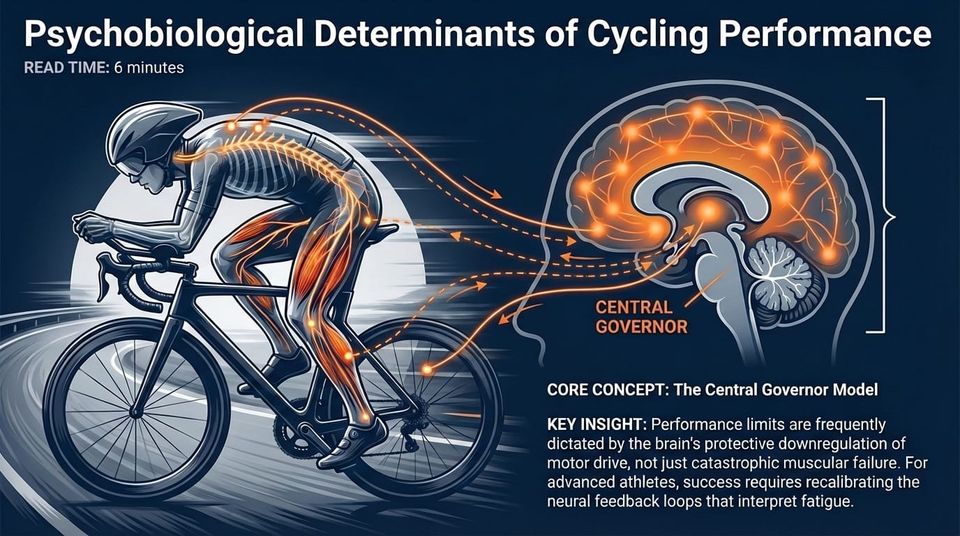
In cycling, the cessation of effort rarely stems from catastrophic muscular failure. Instead, performance limits are frequently dictated by the brain’s protective downregulation of motor drive—a mechanism often framed within the Central Governor Model.
While physiological capacity (VO2max, lactate threshold) sets the theoretical ceiling for performance, psychobiological factors such as self-efficacy and the Rating of Perceived Exertion (RPE) determine how much of that capacity is accessible during competition.
In other words, you don’t stop pedalling because your muscles physically fail, you stop because the effort feels too high to continue.
For the advanced athlete, the challenge lies not only in expanding physical potential but in recalibrating the neural feedback loops that interpret fatigue. How can you train or ‘trick’ your brain into thinking it is not nearly as close to the limit than it thinks it is. In practice this could be the difference for the sprinter in a hard & hilly midsection of a race to barely make it over that kicker in the back of the bunch or getting dropped. Fighting for victory or DNF.
To help us explore the central theorem behind the power of Confidence and the Central Governor in Sport, we are joined by Lex Ligtenberg, who holds a Master’s of Sport Psychology and is the founder behind Mind My Ride. Specifically, he focuses on cyclists, their mindset, and how to unlock their full potential.
Learn more here.
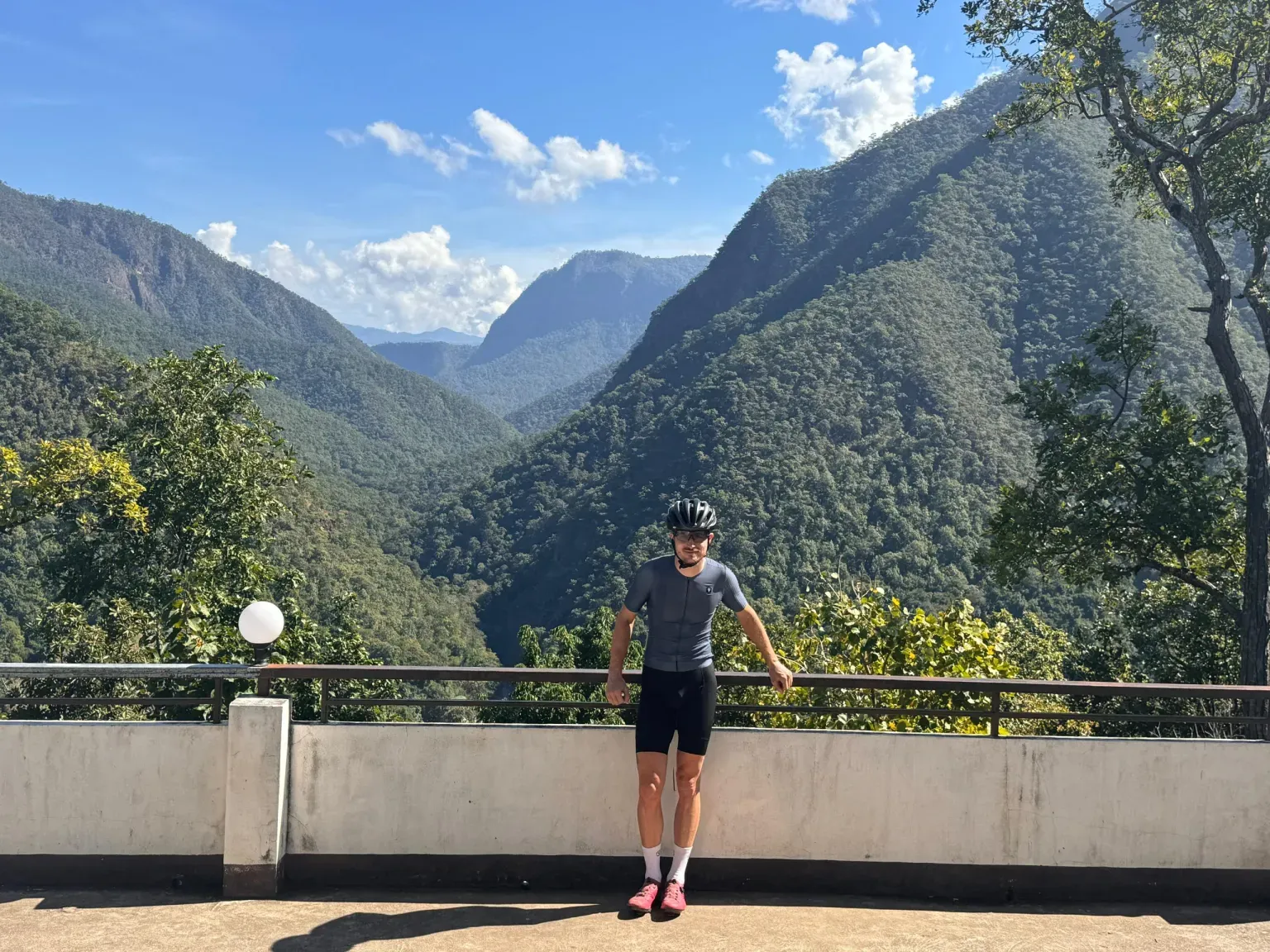


Lex Ligtenberg
In short, this OpenLab briefing examines the mechanistic interplay among confidence, cognitive load, and perceived effort to optimize training architecture.
Executive Summary – The Brief
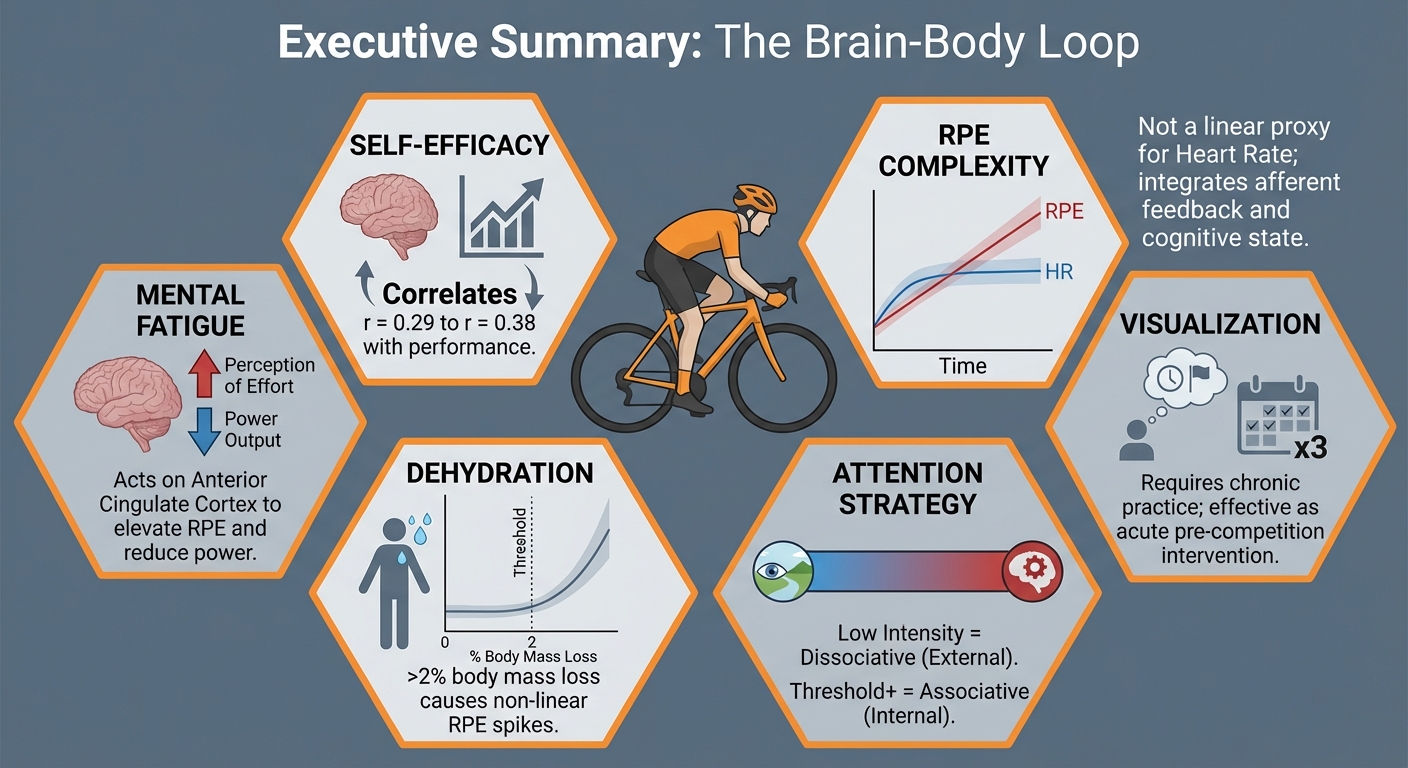
• Self-efficacy acts as a significant moderator of performance, with correlations typically ranging from r = 0.29 to r = 0.38 depending on sport type and gender cohorts.
• RPE is not a linear proxy for heart rate; it is a complex integration of afferent feedback (thermal, respiratory, muscular) and central cognitive state.
• Mental fatigue, induced by cognitive demands outside of training, acts on the anterior cingulate cortex to elevate RPE, reducing power output at equivalent physiological costs.
• Attentional strategies must shift based on intensity: dissociative strategies (external distraction) reduce RPE at low-to-moderate intensities, while associative strategies (internal monitoring) are required for optimal performance at and above threshold.
• Dehydration exerts a non-linear effect on RPE, with meaningful elevations in perceived effort and decrements in performance typically emerging after body mass loss exceeds 2%.
• Visualization requires chronic practice for maximum efficacy but also functions as a potent acute intervention in the hours immediately preceding competition.
The Science at a Glance
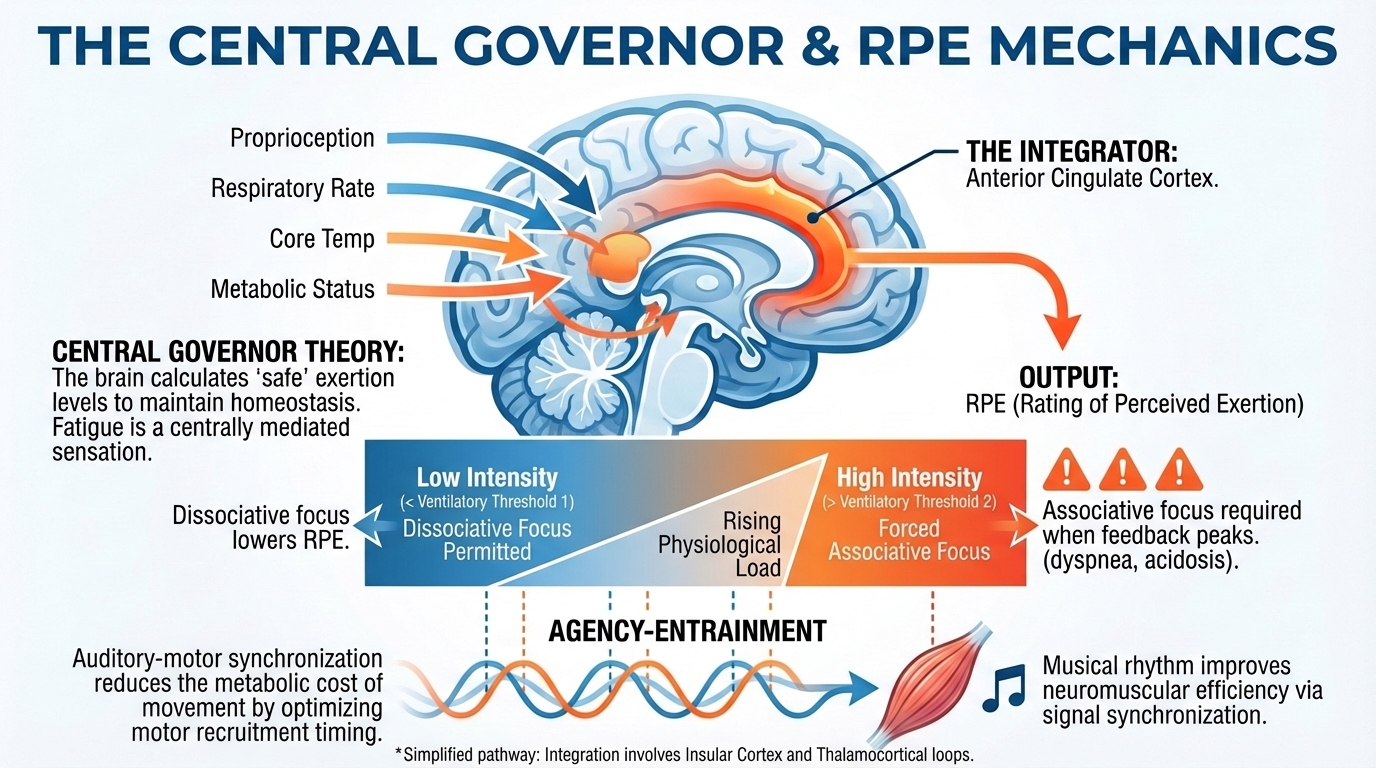
The regulation of endurance performance is best understood through the lens of psychobiological models like the Central Governor Theory, which posits that the brain continuously calculates ‘safe’ exertion levels to maintain homeostasis. Fatigue is thus a centrally mediated sensation rather than purely a peripheral failure event.
This central regulation integrates multiple sensory inputs—proprioceptive feedback, respiratory rate, core temperature, and metabolic status—into a unified conscious sensation: the Rate of Perceived Exertion (RPE). Crucially, this integration occurs in the anterior cingulate cortex, a brain region also responsible for cognitive control.
Consequently, high cognitive load (mental fatigue) competes for neural resources, causing athletes to perceive physical work as more demanding even when muscle glycogen and contractile function remain sufficient.
In practice this means a rider must continuously introspect and measure: how much am I suffering right now, and for how long is this effort sustainable?
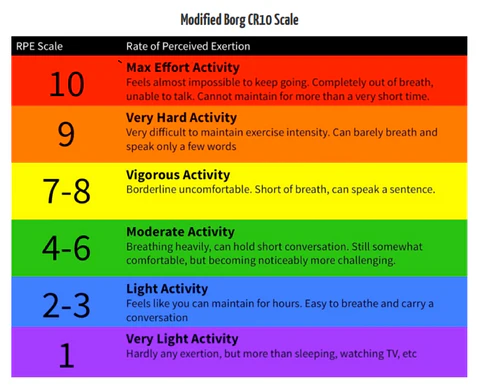
To make this concrete, the Borg and Modified Borg RPE scales offer a standardised framework for quantifying that internal experience.
The original Borg scale runs from 6–20 (broadly mapping to heart rate divided by 10), while the Modified Borg CR10 scale runs from 0–10 and is generally more intuitive for athletes in field settings.
A rating of 7 on the CR10 corresponds to a ‘very hard’ effort where speech becomes difficult; 9–10 represents a maximal or near-maximal output. Learning to read and report your RPE consistently is the first practical step in recalibrating the central governor.
Foundational Principles:
1. The Intensity-Attention Threshold:
The efficacy of attentional focus is intensity-dependent. At low intensities, dissociative strategies (music, scenery) effectively lower RPE by diverting attention from mild afferent feedback. ‘I only need to reach that tree on the horizon.’ However, as intensity approaches the lactate threshold, the magnitude of physiological feedback (dyspnea, acidosis) overwhelms external stimuli.
At this tipping point, performance is optimized by switching to associative strategies—focusing on rhythm, breathing, and power output—to manage rather than ignore the discomfort.
A critical nuance, however: power output is an output variable, not a fixed target. Form of the day, ambient temperature, cumulative fatigue, and hydration status all influence what wattage your body can sustain at a given RPE.
The risk of anchoring exclusively to a power number is that it creates a cognitive dissociation: you see a figure on your screen, and that number generates a perceived effort, rather than the other way around.
The more productive approach is to learn to seek a target RPE first, then observe what power naturally emerges from it.
On a poor day, an RPE-led approach prevents premature collapse; on a strong day, it prevents unnecessary self-limiting based on numbers you have never been trained to exceed.
This shift has particular impact in variable weather and environmental conditions, and in helping athletes learn to perform independently of what the screen tells them.
2. The Agency-Entrainment Mechanism:
Rhythmic auditory stimulation (music) reduces metabolic cost not merely through distraction but through entrainment—synchronizing motor output with auditory rhythm improves neuromuscular efficiency.
Furthermore, 'musical agency' (the sense of creating sound through pedaling) has been shown to reduce RPE more effectively than passive listening, suggesting that the psychological sense of control modulates the interpretation of effort.
Scientist’s Insight:
It is critical to distinguish between ‘trait confidence’ (general belief) and ‘state confidence’ (momentary belief). Research indicates that state confidence—measured immediately before or during competition—is a far stronger predictor of performance.
This suggests that confidence is a volatile variable subject to acute manipulation via warm-up protocols and self-talk, rather than a fixed personality characteristic.
Confidence is arguably the most impactful and underappreciated lever available to the competitive cyclist — a topic we will explore in depth in a dedicated future issue.
The Decision Matrix
Use this framework to select psychobiological interventions based on training context and environmental constraints.
The Protocol
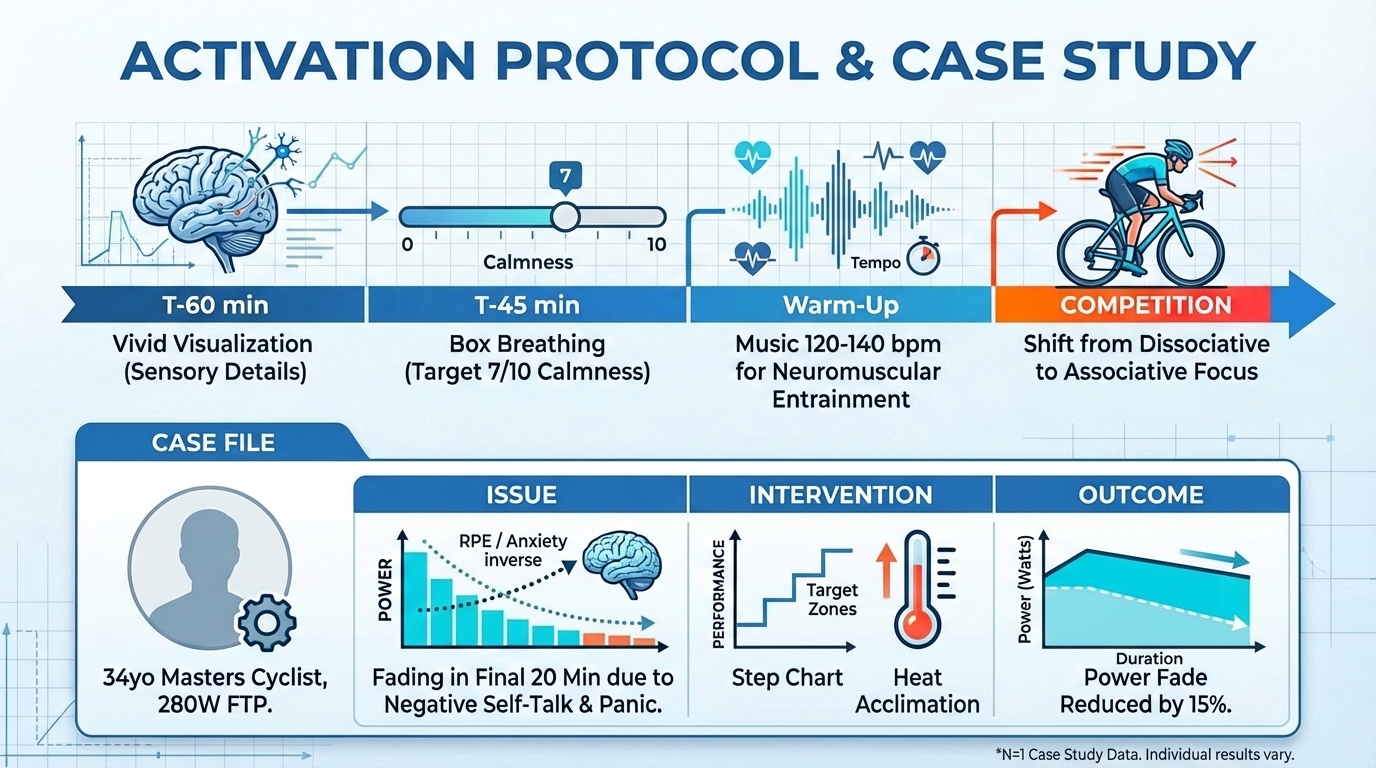
This sequence integrates psychological priming with physiological warm-up to optimize state confidence and RPE calibration.
- T-Minus 60 Minutes (cognitive priming)
Execute 5–10 minutes of vivid visualization. Include sensory details (sound of wind, burning sensation in legs) and successful execution of specific tactical cruxes (e.g., the decisive climb).
Visualisation is a powerful method when applied to specific cruxes in a race. Use as many sensory details as you can possibly imagine and prepare at least two visualisation scenarios: one for when things go as planned, and one for when perceived effort is higher than desired.
Key questions to guide your visualisation:
• How long will it take you to reach the top of the climb?
• When will you feel what sensation in your legs?
• What does your perceived effort look like, ideally, at the halfway point?
• Which thoughts might arise that could hurt your performance?
• What will you focus on during different sections?
• What is the most difficult part, and what is your strategy at that exact moment?
The more detail, the more of an automated response it becomes under race pressure. For a comprehensive step-by-step guide to building and refining your visualisation practice, see: Visualisation Boosts Performance in Cyclists (by Lex)
- T-Minus 45 Minutes (autonomic regulation)
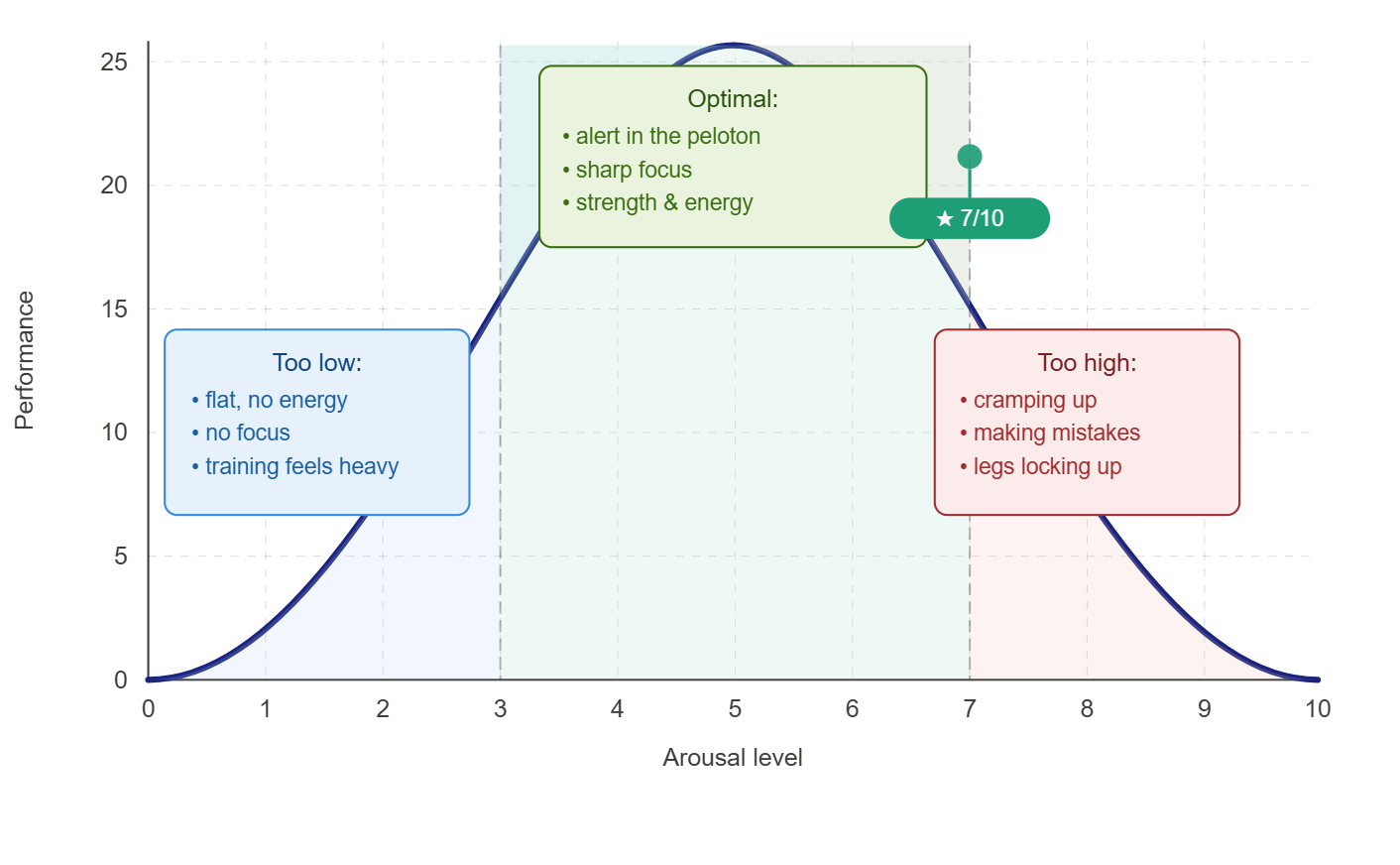
Perform diaphragmatic breathing or Box Breathing to modulate pre-competition arousal. Aim for a subjective calmness rating of roughly 7/10.
Why 7/10 specifically? The answer lies in the Yerkes-Dodson Law, one of the most robust findings in performance psychology. It describes an inverted-U relationship between arousal and performance: too little arousal (below ~5/10) leaves you flat, under-activated, and cognitively sluggish; too much arousal (above ~8/10) tips into anxiety, tunnel vision, and deteriorating motor control. The peak of the curve — the optimal performance zone — sits at a moderate-to-high arousal level, broadly corresponding to that 7/10 feeling of being alert and ready without being overwhelmed.
In practical terms, this means pre-race nerves are not the enemy. A certain degree of activation is not only normal but necessary. The goal of Box Breathing at this stage is not to eliminate arousal, but to steer it toward the top of the curve — controlled intensity rather than anxious panic. For a deeper look at how to work with competition nerves rather than against them, see: Wedstrijdspanning als wielrenner: 3 tips om ermee te dealen (dutch)
- Warm Up (Neuromuscular Entertainment)
Utilize music with a tempo of 120–140 bpm to match target cadence.
Transition from dissociative listening to associative focus during priming efforts (e.g., 3 x 1 minute at threshold).
Associative focus in this context could be something along the lines of: ‘This is going to hurt, but it needs to in order to prepare for the race.’
4. Competition Phase (Effort Management)
Early Phase: Dissociative focus if intensity permits.
A good example of dissociative focus is to ‘live’ from corner to corner or from landmark to landmark. ‘I just need to get to the next corner’ or ‘I just need to survive to that tree.’ You shift your visual and cognitive focus from internal stimuli to external stimuli. The optimal anchor point depends on the race: in a criterium, corner-to-corner is feasible; in a classic or multi-day stage race, ‘house to house’ or ‘tree to tree’ will suit better.
Critical Phase: Switch to task-relevant self-talk (‘Hold 300 watts’, ‘Breathe deep’) rather than emotional self-talk (‘This hurts’).
A useful analogy is distinguishing cold thoughts from hot thoughts. Cold thoughts are rational, tactical cues that help during the early stages of suffering when RPE is around 8 but rising: ‘Keep your aero posture’, ‘push-pull-push-pull’, ‘follow the wheel’. But there comes a point, when you reach your perceived limit, where logical statements lose their effect.
At that moment, motivational hot thoughts can be deployed: ‘This is what you trained for all winter’, ‘This is the deciding move’, ‘If you let go now it is over.’
This final compartment should be reserved for the truly decisive moments — using it too frequently risks eroding self-image and self-worth.
Case Study:
Athlete Profile: 34-year-old Masters cyclist
FTP 280W.
Scenario: Athlete consistently fades in the final 20 minutes of 3-hour road races despite adequate fueling and volume.
Analysis: Data review showed highly variable cadence and heart rate spikes during the fade, correlating with negative self-talk reported in post-race logs. The athlete was using dissociative strategies (thinking about the finish) during high-intensity surges, leading to panic when pain signals broke through.
Intervention: Implemented 'Segmented Pacing'—breaking the final hour into 10-minute blocks with specific associative goals (e.g., 'maintain 90rpm'). Introduced heat acclimation training to lower thermal strain RPE.
Outcome: Power fade reduced by 15% over 8 weeks. RPE at threshold remained constant, but 'willingness to tolerate' increased.
Limits of Application
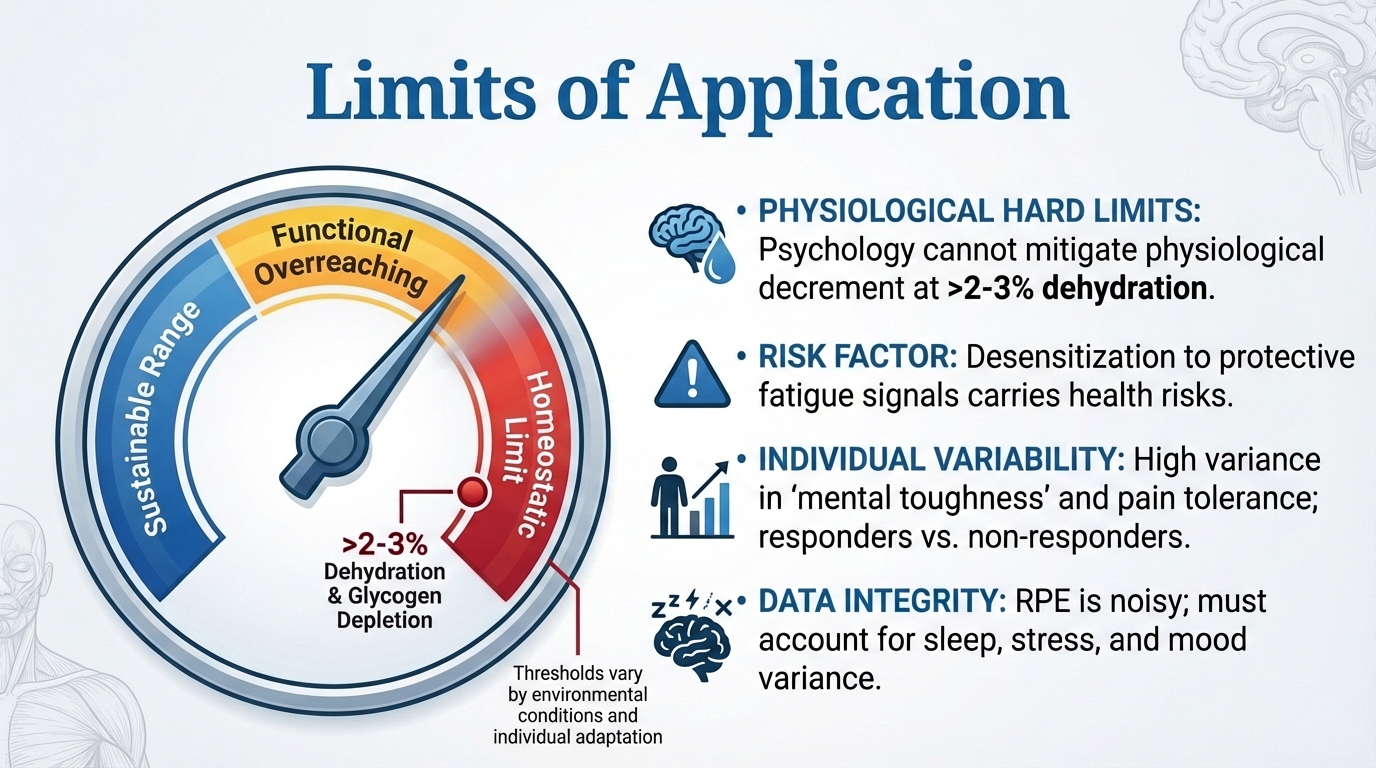
While psychological interventions can alter the perception of effort, they cannot override genuine physiological failure points such as glycogen depletion or significant dehydration (>2-3% body mass). The Central Governor Model describes a protective mechanism; suppressing its signals entirely (e.g., through extreme dissociation or pharmacological means) carries health risks.
Furthermore, individual variability in pain tolerance and 'mental toughness' is significant; strategies that work for responders may show negligible effects in non-responders.
RPE is inherently noisy; day-to-day variance due to sleep, stress, and mood must be factored into data analysis.
Kind regards,
Lex Ligtenberg and Dr. Thomas Mortelmans
Disclaimer
The information provided in this newsletter is for educational purposes only and does not constitute medical advice. Exercise physiology is highly individual; what works for elite populations may not apply to everyone. Always consult with a physician before making significant changes to your training, nutrition, or supplementation protocols. The Scientist's Notebook and ESQ Coaching accept no liability for injuries or health issues arising from the application of these concepts.
References
- Cycling in the Absence of Task-Related Feedback: Effects on Pacing and Performance - PMC
- Perceived Exertion Zones - Pro Cycling Coaching
- Motivation and self-efficacy in cycling and running athletes: a person-centered approach - PMC
- Revisiting the Self-Confidence and Sport Performance Relationship: A Systematic Review with Meta-Analysis - PMC
- RPE: How to use Rating of Perceived Exertion in Training and Racing - CTS
- Virtual Training of Endurance Cycling – A Summary of Strengths, Weaknesses, Opportunities and Threats
- Cultivating Mental Strength for Peak Cycling Performance
- Threshold Training for Cycling: Strategies, Workouts, and Intervals | JOIN
- Self-Efficacy in High-Performance Sports: A Systematic Review and Meta-Analysis - PMC
- Mind Matters: Psychological skills for cycling - Source Endurance
- Self-Efficacy and Sports Performance | Sports Psychology Today
- Lactate kinetics at the lactate threshold in trained and untrained men - PMC
- Effect of distance feedback on pacing strategy and perceived exertion during cycling - PubMed
- Relationships Between Muscle Fatigue Characteristics and Markers of Endurance Performance - PMC
- Effects of heat and humidity on cycling training and performance: A narrative review - PMC
Found this useful?
Get articles like this and free training calculators in your inbox every week.
Recommended reads
If this was useful, these are the other research-driven newsletters I actually read.
Member discussion