Snippet #033: What Your Muscle Oxygen Sensor Is Actually Reading
Near-infrared spectroscopy (NIRS) shines near-infrared light through skin into muscle and reads how much hemoglobin and myoglobin is
Snippet #032: Muscle Memory Is Written in Your DNA's Dimmer Switches
DNA methylation works like a set of dimmer switches sitting on top of your genes, turning each one down or
Snippet #031: Why Humid Air Kills Performance Even in Moderate Heat
Sweat cools the body only when it evaporates, and evaporation depends on the water vapor pressure difference between skin and
Snippet #030: Cold Water After Lifting Can Quietly Undercut Long-Term Muscle Gains
Cold water immersion after resistance training is associated with blunted satellite cell activity and reduced phosphorylation of p70S6 kinase, a
Snippet #029: How the Heart Resets After Hard Effort
When exercise ends, the parasympathetic branch of the autonomic nervous system, suppressed during hard efforts, gradually reactivates. This reactivation rate
Snippet #028: Capillary Density and the Last Mile of Oxygen Delivery
Endurance training stimulates angiogenesis, the growth of new capillaries (the smallest blood vessels) around muscle fibers. Studies show the number
Snippet #027: Your Energy Systems Run Together, Not in Sequence
The aerobic and oxygen-independent pathways of energy production operate simultaneously from the first second of exercise.
Their relative share
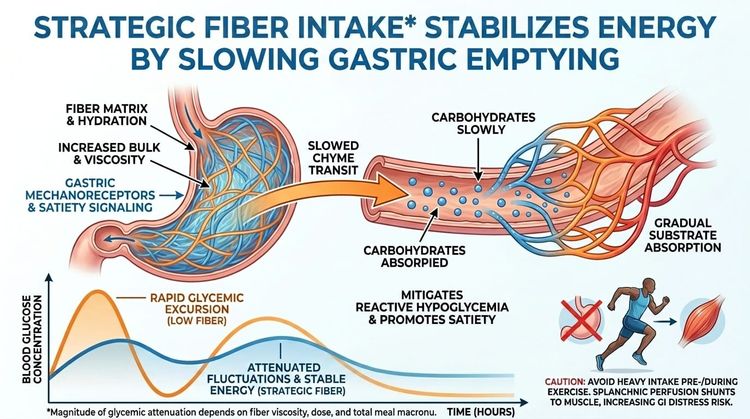
Snippet #026: Strategic Fiber Intake Stabilizes Energy by Slowing Gastric Emptying
Dietary fiber acts as a structural and viscous matrix in the digestive tract, attenuating the rate at which chyme leaves
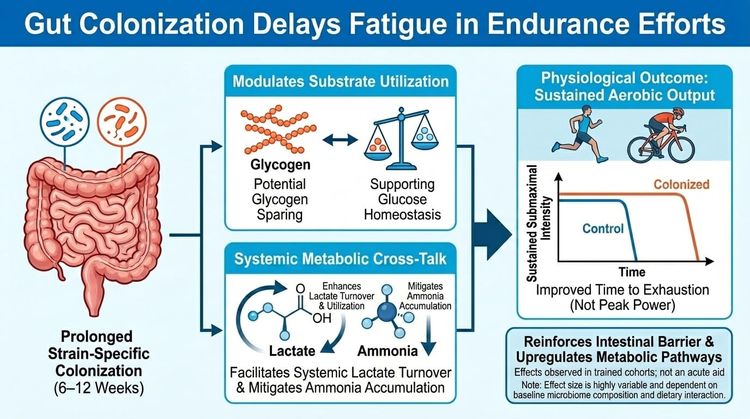
Snippet #025: Gut Colonization Delays Fatigue by Preserving Carbohydrate Availability During Endurance Efforts
Specific gut bacteria typically require a prolonged supplementation period of six to twelve weeks to induce functional shifts within the
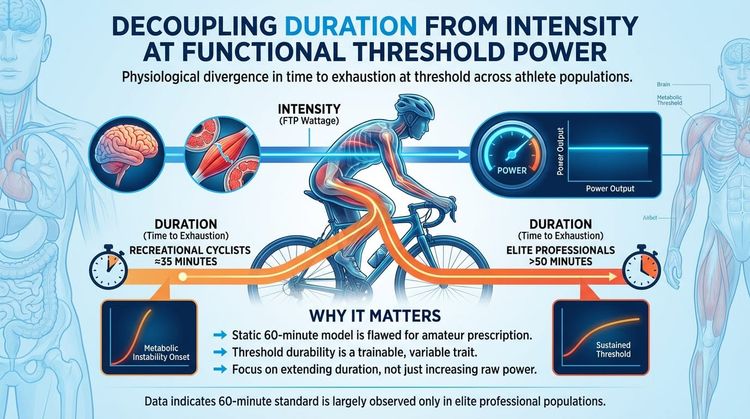
Snippet #020: Decoupling Duration from Intensity at Functional Threshold Power
Core Insight
While Functional Threshold Power (FTP) is theoretically defined as the highest power sustainable for one hour, physiological data