

Latest
19
Oct

Entry #043: Easy, Hard, or In Between: How Endurance Athletes Split a Training Week Across Intensity Zones
A coach I trained under years ago kept a worn spiral notebook in which he logged every session his athletes
16 min read
16
Oct
Snippet #040: Why the Same Training Produces Such Different Results
Give hundreds of sedentary adults the same 20-week aerobic program and the spread of outcomes is striking.
In the
4 min read
14
Oct
OpenLab #012: The Same Hour, Twice: Norm Alvis on Five Hour Records and the Ninety-Eight Days Between Two of Them
Same rider, same velodrome, same event, ninety-eight days apart. The one thing Norman Alvis changed was the coach, and the confounds are as large as the finding.
16 min read
12
Oct
Entry #042: The Invisible Engine: What Strength Training Really Does for Endurance Athletes
The conversation about strength training for endurance athletes used to be short. For most of the twentieth century the prevailing
16 min read
09
Oct
Snippet #039: Protecting Muscle While Losing Fat in Endurance Athletes
A sustained caloric shortfall drives fat loss, but some weight shed in a deficit can come from lean tissue rather
4 min read
07
Oct

OpenLab #011: What Fits: Norm Alvis on Four Decades of Pairing Proven Training With a Changing Life
Norman Alvis says the science is proven and the art is the fit. The evidence agrees with him more than it usually agrees with a claim that broad.
15 min read
05
Oct
Entry #041: Running Economy: The Efficiency Dimension That Separates Two Equal Engines
Put two runners side by side who share an identical ceiling for oxygen uptake, the same lactate thresholds, the same
16 min read
02
Oct
Snippet #038: Carbohydrates Refill Your Fuel Tank. Protein Repairs the Engine.
After endurance exercise, stored muscle fuel (called glycogen) is what powered you, and carbohydrate is the only nutrient that refills
4 min read
30
Sep
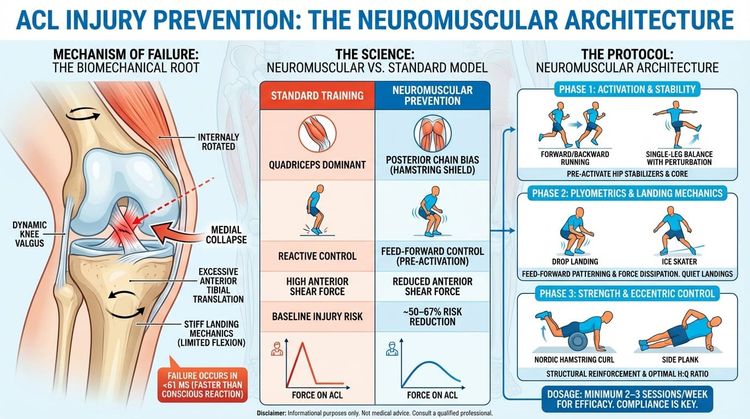
Open Lab #010: Preventative strategy and training methodology to prevent ACL Injuries - RevaCenter
We spend a disproportionate amount of time obsessing over engine displacement—VO2max, lactate thresholds, and mitochondrial density—while often neglecting
13 min read
28
Sep
Entry #040: Training in the Furnace: How Heat Acclimation Rebuilds the Endurance Engine
Every endurance athlete knows the feeling of a body in revolt on a hot day. The pace that felt easy
15 min read