Training Zones Calculator
📋 WHAT ARE TRAINING ZONES?
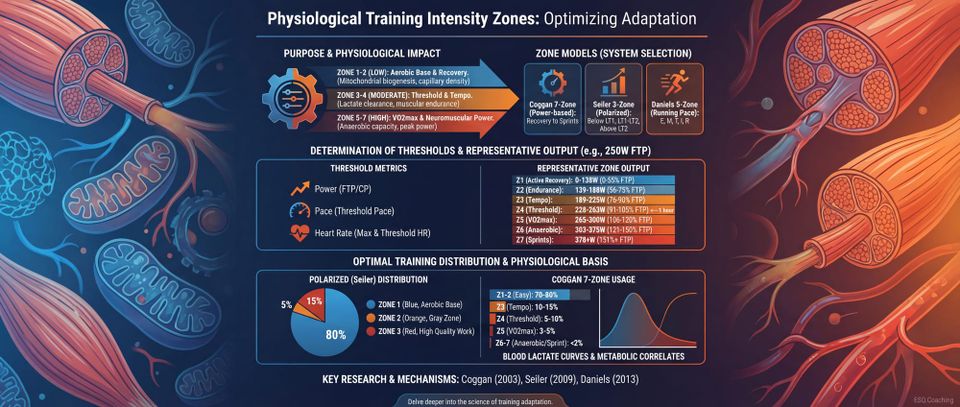
Training zones divide your intensity range into bands, each targeting a different physiological system. Training in the right zone ensures you get the adaptation you want.
| Zone | What It Trains | Feel |
|---|---|---|
| Recovery | Active recovery, blood flow | Very easy, can chat freely |
| Endurance | Aerobic base, fat oxidation | Comfortable, could go for hours |
| Tempo | Aerobic power, lactate clearance | "Comfortably hard" |
| Threshold | Lactate tolerance, FTP | Hard but sustainable for 20–60 min |
| VO₂max | Maximum oxygen uptake | Very hard, 3–8 min efforts |
| Anaerobic | Glycolytic capacity | Extremely hard, < 2 min |
| Sprint | Neuromuscular power | All-out, < 30 seconds |
🎯 STEP-BY-STEP GUIDE
STEP 1: Select Your Sport
- Cycling: Zones in watts (and W/kg if you enter weight)
- Running: Zones in min/km pace
- Swimming: Zones in min/100m pace
STEP 2: Choose a Zone System
| System | Zones | Best For |
|---|---|---|
| Coggan 7-Zone | 7 | Cycling with power meter |
| Seiler 3-Zone | 3 | Polarised training (any sport) |
| Daniels 5-Zone | 5 | Running training plans |
STEP 3: Enter Your Threshold
- Cycling: FTP in watts (e.g., 250W)
- Running: threshold pace in min/km (e.g., 4:30)
- Swimming: threshold pace in min/100m (e.g., 1:40)
- Optionally enter body weight for W/kg display
To find your threshold, use our calculator:
 Thomas Mortelmans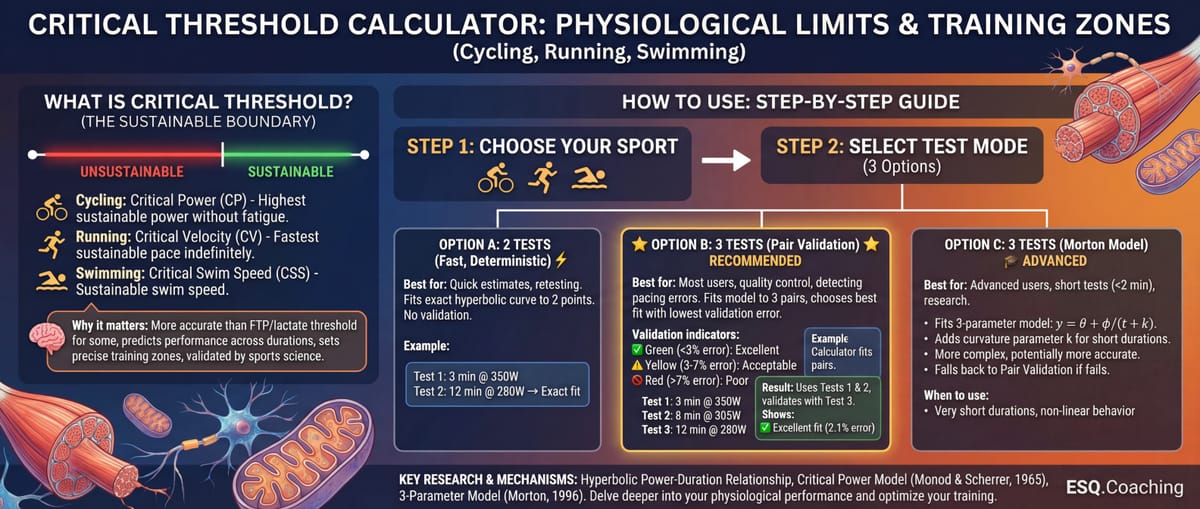
STEP 4: Read Your Zones
Each zone shows the intensity range, a description, and suggested session types.
VO₂ Max Development (8 Weeks):
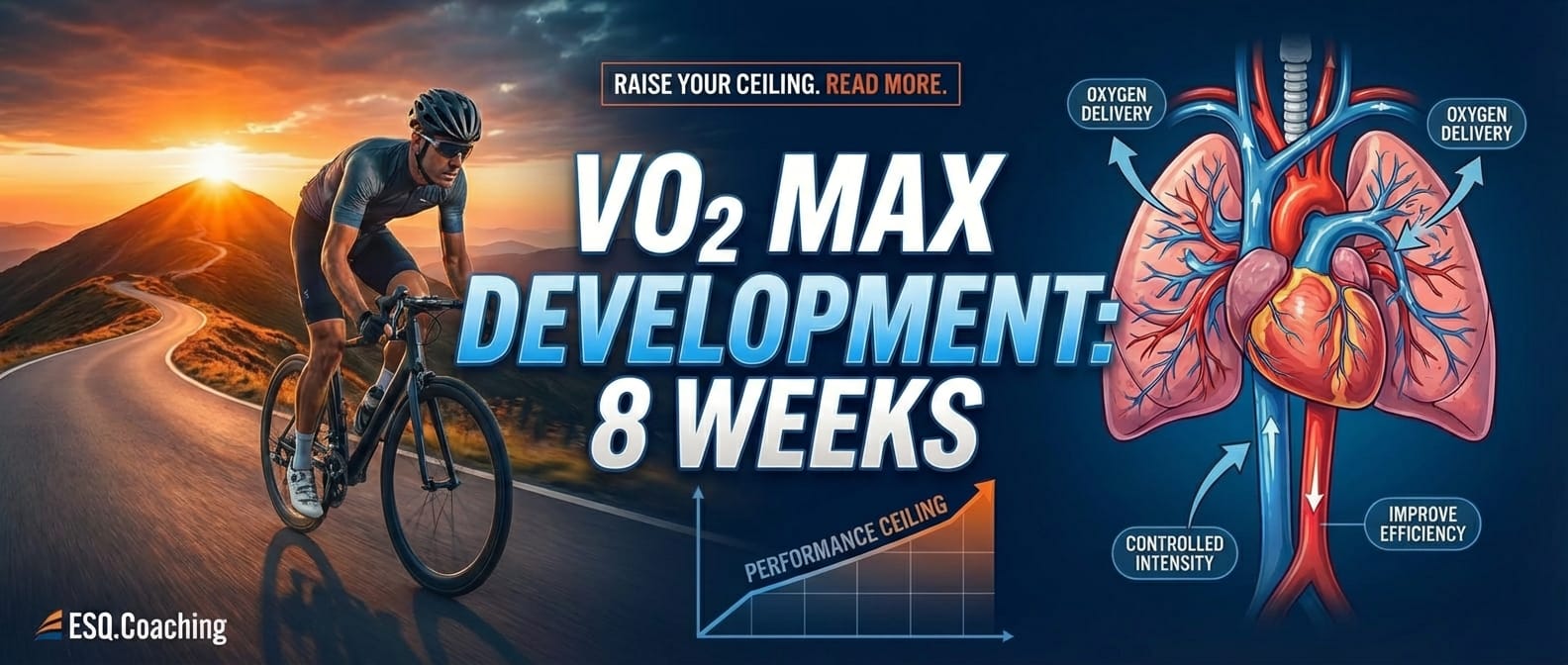
Your aerobic ceiling is limiting everything downstream.
This 8-week VO₂max block is for riders who already train consistently but feel capped in hard efforts above threshold. The goal is not “suffering better,” but increasing the amount of oxygen you can actually turn into power.
If long intervals feel fine but short, repeatable efforts keep breaking you, this is the block you’re missing. View plan here
🔬 SCIENTIFIC BASIS
Coggan 7-Zone System
Andrew Coggan (2003) — "Training and Racing Using a Power Meter"
| Zone | Name | % of FTP | Duration |
|---|---|---|---|
| 1 | Active Recovery | < 55% | Any |
| 2 | Endurance | 55–75% | 1–5+ hours |
| 3 | Tempo | 75–90% | 20–60 min |
| 4 | Threshold | 90–105% | 10–30 min |
| 5 | VO₂max | 105–120% | 3–8 min |
| 6 | Anaerobic | 120–150% | 30s–2 min |
| 7 | Neuromuscular | > 150% | < 30s |
Seiler 3-Zone System
Seiler (2009) — "What is best practice for training intensity and duration distribution in endurance athletes?"
| Zone | Boundary | Lactate |
|---|---|---|
| Zone 1 (Low) | Below VT1 | < 2 mmol/L |
| Zone 2 (Threshold) | VT1 to VT2 | 2–4 mmol/L |
| Zone 3 (High) | Above VT2 | > 4 mmol/L |
Key finding: Elite endurance athletes spend ~80% in Zone 1, ~5% in Zone 2, ~15% in Zone 3 — the "polarised" distribution.
Daniels 5-Zone System
Jack Daniels (2013) — "Daniels' Running Formula"
| Zone | Name | % of Threshold Pace |
|---|---|---|
| E | Easy | 59–74% |
| M | Marathon | 75–84% |
| T | Threshold | 83–88% |
| I | Interval | 95–100% |
| R | Repetition | 105–120% |
Disclaimer
The information provided in this newsletter is for educational purposes only and does not constitute medical advice. Exercise physiology is highly individual; what works for elite populations may not apply to everyone. Always consult with a physician before making significant changes to your training, nutrition, or supplementation protocols. The Scientist's Notebook and ESQ Coaching accept no liability for injuries or health issues arising from the application of these concepts.