OpenLab #003: How to train for triathlon: a guide for the absolute beginner with Lucas Van Deynze
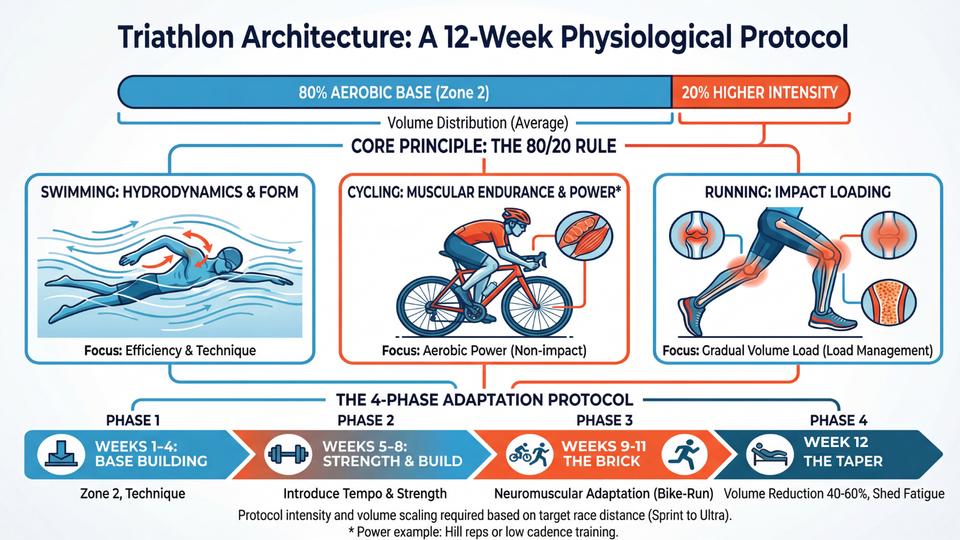
The transition from a single-sport athlete to a triathlete represents an integrative adaptation of physiological systems. It requires the body to manage diverse mechanical loads, regulate homeostatic stress across different environments, and refine complex neuromuscular coordination. For the novice, the primary challenge is not the absence of metabolic potential, but the absence of a structured framework to manage cumulative load. This briefing translates the physiological demands of swimming, cycling, and running into a 12-week architecture designed to optimize aerobic development and musculoskeletal resilience while minimizing the risk of overtraining.
... And to help us on this journey, we have none other than Lucas Van Deynze joining us in this OpenLab edition. Lucas is a so-called endurance machine that represented Belgium at multiple european and world triathlon championships. He now is aiming to compete at the World Ironman Championships in Hawaii in 2027,
Today, he walks us through on how to begin with triathlon as an absolute beginner and highlights clear watch-outs. You can find Lucas´ socials at the end of this newsletter.

Executive Summary — The Brief / TL;DR
- Multidisciplinary Adaptation: Triathlon demands efficient cardiovascular redistribution and the rapid recalibration of motor patterns during transitions (swim to bike, bike to run), particularly when transitioning from the non-weight-bearing recruitment of cycling to the high-impact mechanics of running.
- Polarized Intensity Distribution: Evidence suggests that approximately 80% of training should be performed at low intensities (below the first ventilatory threshold) to stimulate mitochondrial biogenesis and capillary density, with 20% reserved for high-intensity bouts to drive maximal oxygen uptake (VO2max).
- Hydrodynamic Efficiency: Swimming is primarily limited by technique and drag; early investment in stroke mechanics reduces the metabolic cost of overcoming hydrodynamic resistance and prevents compensatory injuries.
- Progressive Loading: Running presents the highest risk of musculoskeletal injury due to eccentric loading and ground reaction forces. Volume increases should be gradual (often guided by a ~10% weekly progressionto allow for the slower adaptation rates of connective tissues compared to contractile muscle. This is especially a watch-out for beginning triathletes.
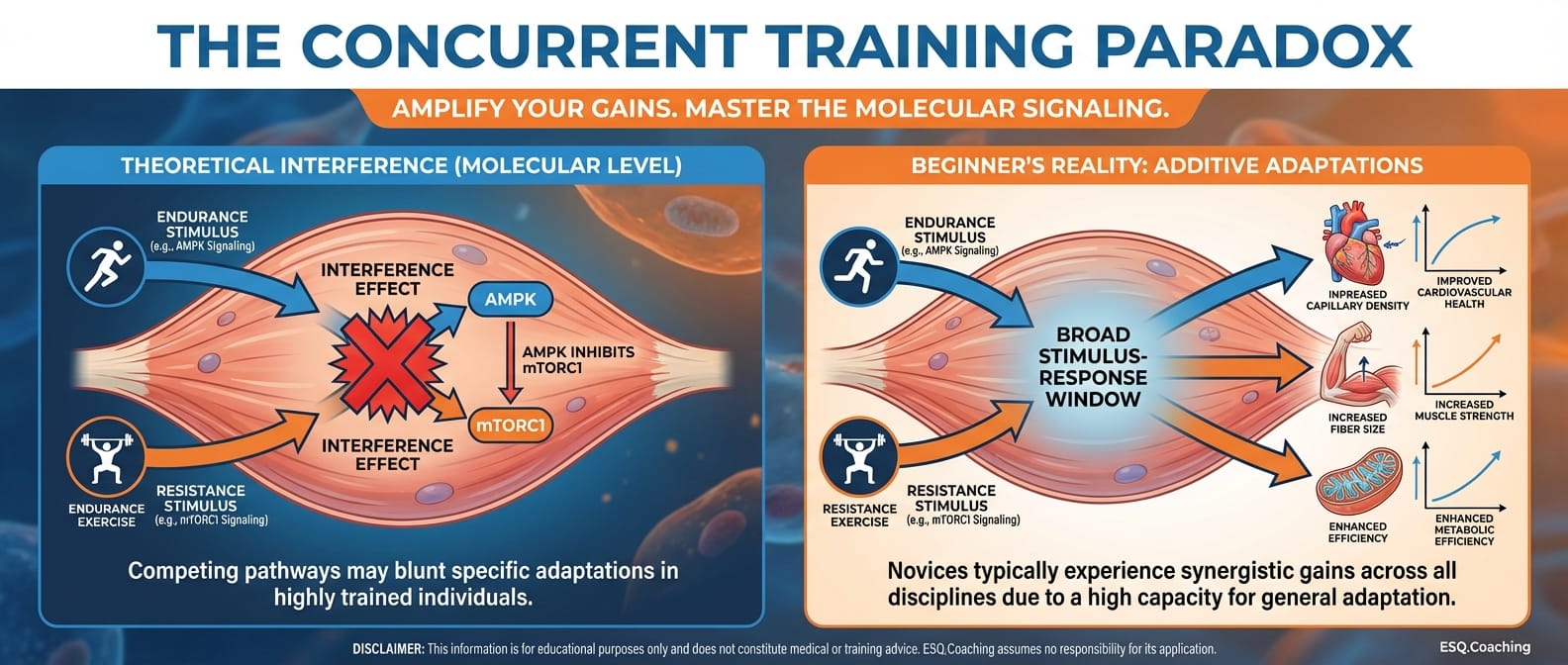
- The Concurrent Training Paradox: While high-volume endurance and resistance training can theoretically induce an "interference effect" at the molecular level (e.g., AMPK vs. mTORC1 signaling), beginners typically experience additive adaptations across all disciplines due to a broad stimulus-response window.
- Nutrient Timing: Post-exercise nutrition should prioritize glycogen resynthesis and provide adequate amino acids to support protein turnover, particularly following sessions that induce significant muscle damage.
The Science at a Glance
| Discipline | Primary Stimulus | Adaptation | Fatigue Cost | Primary Risk |
|---|---|---|---|---|
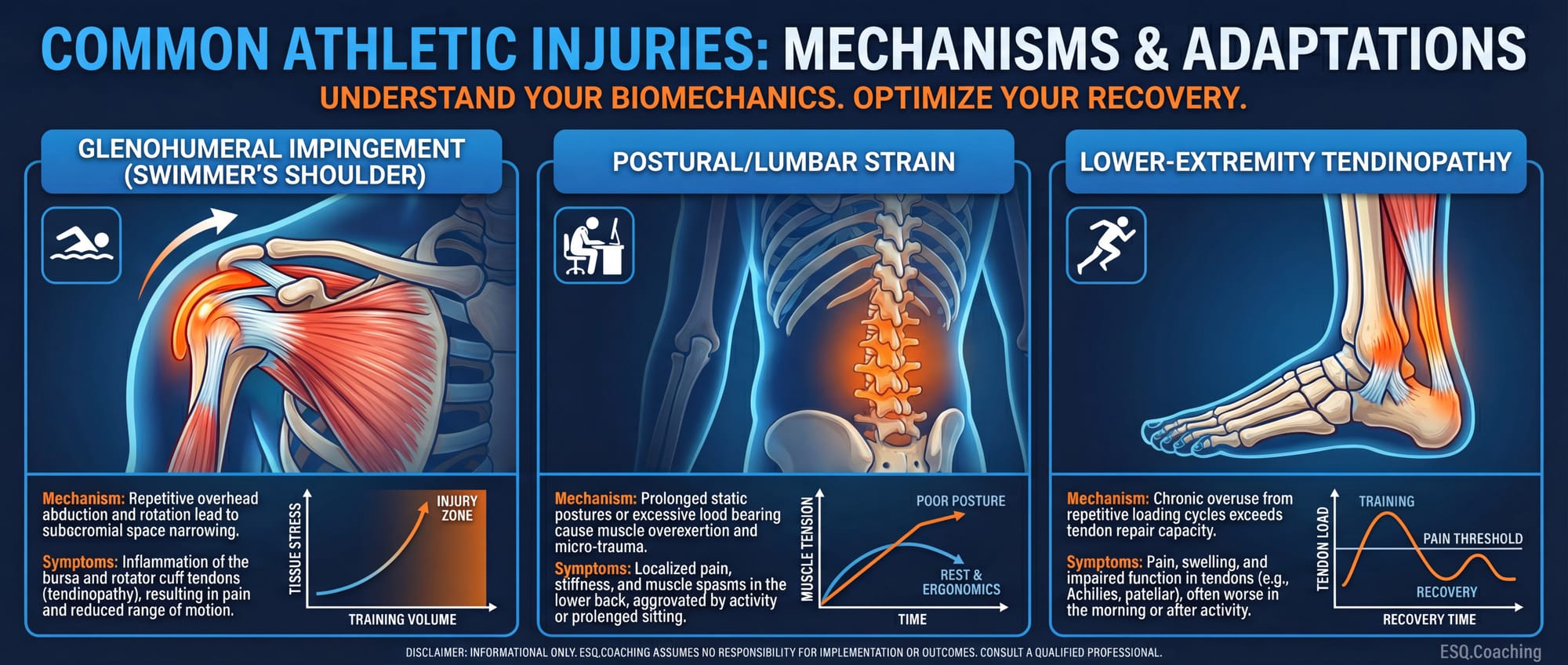
| Swimming | Hydrodynamic/Technical | Biomechanical Efficiency & Propulsive Force | Moderate (Neuromuscular) | Glenohumeral Impingement or Swimmer´s shoulder |
| Cycling | Low-Impact Aerobic | Oxidative Capacity & Power at Threshold | Moderate (Metabolic) | Postural/Lumbar Strain |
| Running | High-Impact Loading | Bone Mineral Density & Tendon Stiffness | High (Musculoskeletal) | Lower-Extremity Tendinopathy |
Foundational Principles
1. The Principle of Progressive Overload and Adaptation
The body responds to localized and systemic stress through physiological remodeling, often modeled as the fitness-fatigue relationship. For the novice, training must exceed a minimum threshold to trigger mitochondrial biogenesis—the expansion of the mitochondrial network—but remain below the threshold that precipitates maladaptation or injury. Consistently low-intensity training facilitates these cellular adaptations with lower systemic recovery costs.
2. Managing Concurrent Demands
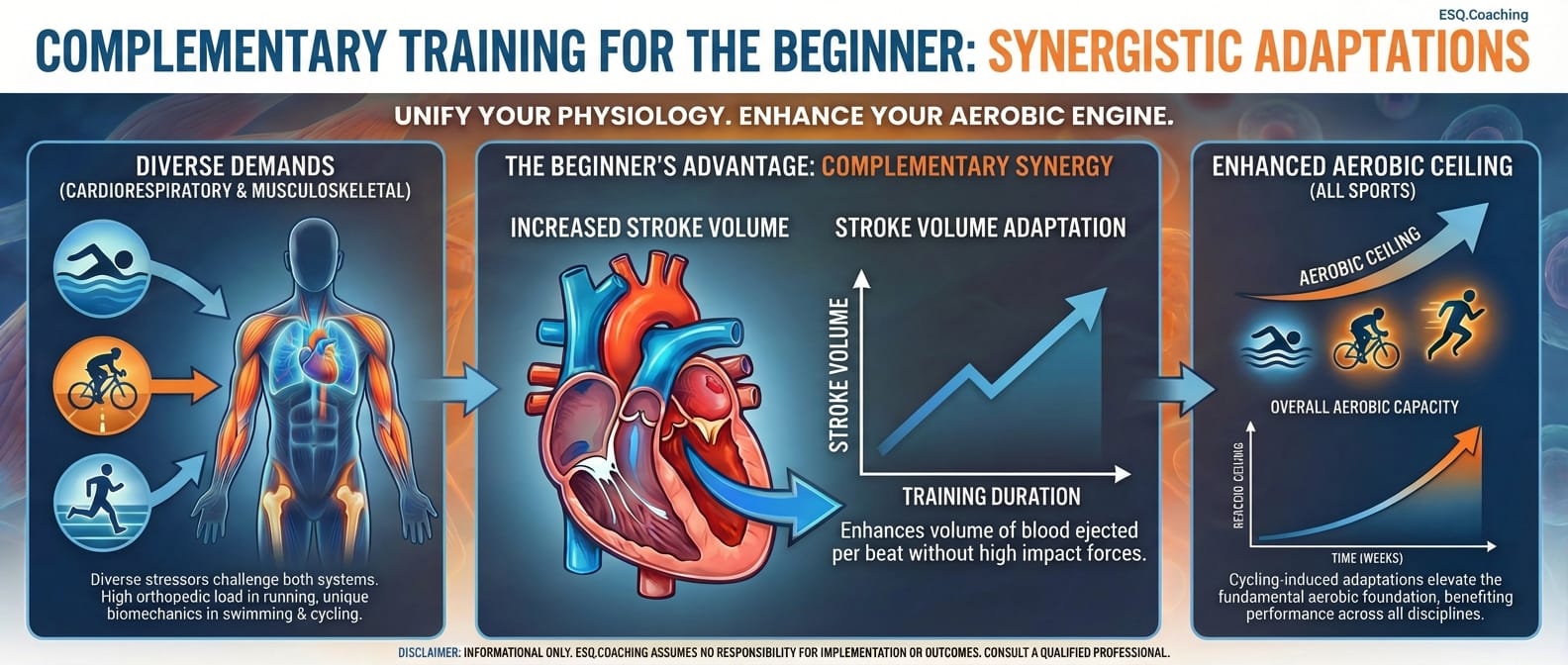
Training for three disciplines simultaneously places diverse demands on the cardiorespiratory and musculoskeletal systems. However, for the beginner, these demands often complement one another. For instance, cycling increases stroke volume (the volume of blood ejected per heart beat) and peripheral oxidative capacity without the high orthopedic stress associated with running, thereby enhancing the aerobic ceiling for all three sports.
"A common pitfall for beginners is 'intensity stagnation'—performing most sessions at a moderate intensity that is too high to allow for adequate recovery, yet too low to maximize VO2max adaptations. A polarized approach preserves the autonomic nervous system for high-quality, high-intensity sessions. A simple heart rate monitor can make a huge difference"
Scientist’s Insight
The Decision Matrix
To optimize adaptation, athletes must identify their primary "rate-limiting factor." This allows for the precise allocation of technical focus and metabolic energy.
| If you are... | Your Classification | Training Priority |
|---|---|---|
| Inefficient buoyancy/high drag | Mechanically Limited | 3x Technical Swim sessions (focus on horizontal alignment and catch). |
| High RPE on low-intensity efforts | Aerobically Limited | 85% of sessions in Zone 2 to develop the aerobic base, without neglecting supra-threshold efforts. |
| Persistent soft-tissue sensitivity | Resilience Limited | 2x Strength sessions focusing on posterior chain and joint stability.* |
| Struggling with post-bike running | Transition Limited | Inclusion of short "Brick" sessions to stabilize neuromuscular recruitment. |
Lucas: Strength, stability, mobility, and injury-prevention exercises are something I give all my athletes. Their bodies are often not prepared at all for the training load, and if they do not strengthen their bodies with these specific exercises, the risk of injuries and minor issues becomes very high. You can download the following mobility routine for free on my website (Dutch):
https://training.lucasvandeynze.be/mobiliteitsroutine
The Protocol
- Phase 1: Aerobic Foundation (Weeks 1-4)
Establish a consistent frequency of 1-2 sessions per discipline per week, focused almost entirely on Zone 2 intensity. Swimming sessions should prioritize neuromuscular "feel" for the water and basic stroke mechanics to reduce metabolic waste during the swim leg. - Phase 2: Metabolic Development (Weeks 5-8)
Introduce one "Tempo" or threshold session per week in cycling or running to improve lactate clearance and fractional utilization of VO2max. Implement specific resistance training to enhance musculoskeletal durability in the lower extremities.
In the form of sport-specific strength training, this can be done by swimming with paddles, cycling in a very heavy gear, and doing hill repetitions when running. The latter is also particularly useful for improving running technique.
- Phase 3: Neuromuscular Integration (Weeks 9-11)
Incorporate weekly Brick Workouts (e.g., a 45-minute cycle followed by a 15-minute run). These sessions facilitate the transition of motor unit recruitment patterns from the concentric, circular demands of cycling to the eccentric, oscillatory demands of running. - Phase 4: Functional Taper (Week 12)
Exponentially reduce training volume by 40-60% while maintaining training frequency and including short bouts of race-pace intensity. This reduction in load facilitates the resolution of accumulated fatigue while maintaining the "readiness" of neuromuscular pathways.
Triathlon - From Capacity to Control (4 Weeks):
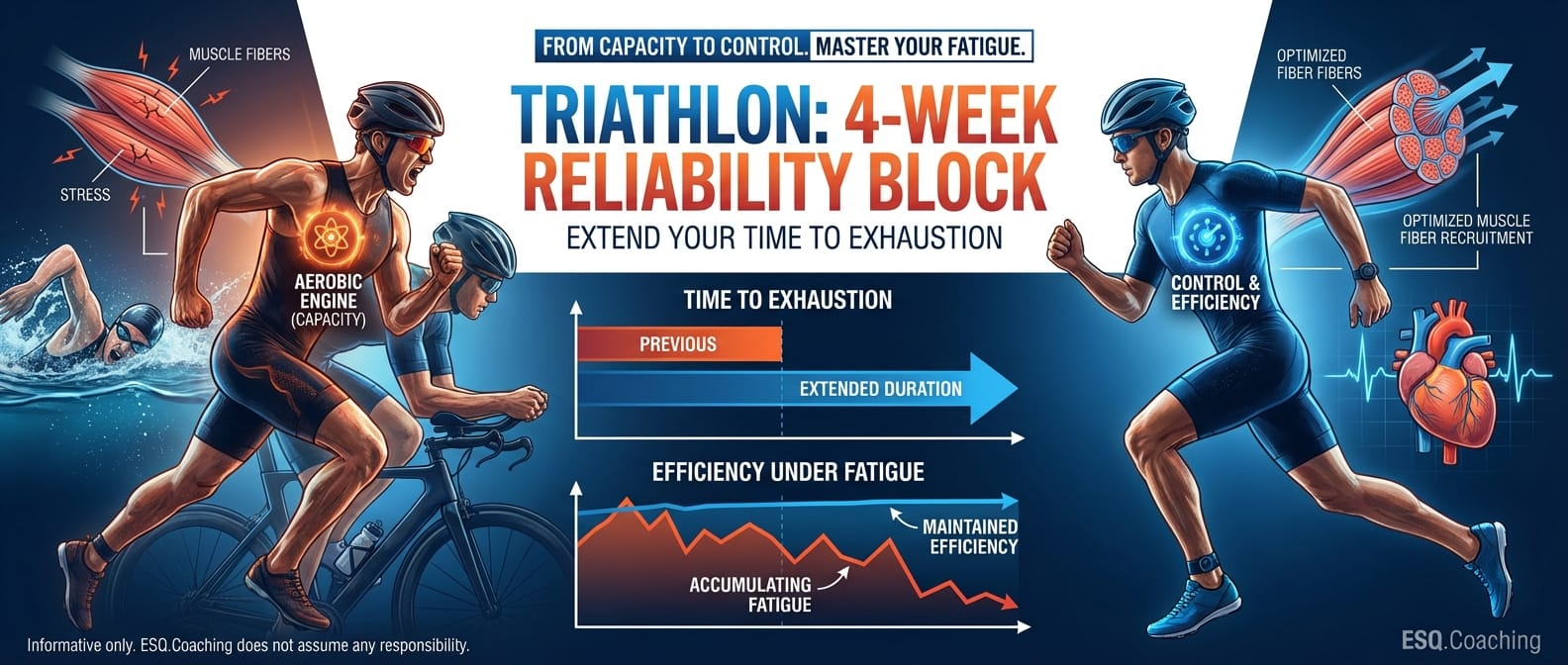
Fitness isn’t the problem. Durability is.
This 4-week triathlon block is built to improve how long you can hold quality across swim, bike, and run as fatigue accumulates. The goal is control, not maximal effort.
Use this when you feel fit, but execution falls apart late. View Plan here
Case Study: The "Time-Crunched" Novice
Athlete A is a 40-year-old with significant occupational stress and moderate baseline fitness. Early assessments indicated a high heart rate relative to power/pace, suggesting limited aerobic efficiency.
- The Struggle: In week 3, the athlete exhibited signs of sympathetic overreach, including "heavy legs" and sleep disturbances, likely due to the additive effects of life and training stress.
- The Adjustment: Training volume for the long-duration run was reduced by 20%, and recovery protocols were prioritized to mitigate autonomic fatigue.
- The Result: By week 9, the athlete’s heart rate at the same submaximal running pace had decreased significantly. This indicates improved aerobic efficiency, likely driven by increased stroke volume and improved substrate utilization (greater reliance on lipid oxidation). The athlete successfully completed the event with stable pacing throughout.
Triathlon training is an exercise in managing physiological trade-offs. By respecting the adaptation rates of soft tissues and utilizing a polarized intensity distribution, athletes can transform the competing demands of three sports into a synergistic stimulus for cardiorespiratory health and athletic performance.
Lucas` Key Takeaways
95% of the triathletes I coach want to do too much, too soon. They ramp up their training too quickly, train at intensities that are too high, and pay too little attention to recovery. The result is predictable: injuries and nagging issues appear, and performance stalls. Yes, I fell into the same trap more than once earlier in my career.
If you want to perform better, staying healthy and injury-free is a hard requirement. That means training smarter and building a solid balance between load and recovery before increasing volume or intensity.
The main areas that usually need work are:
- Train at the right intensity. Use objective tools, for example a heart rate monitor.
- Make your body stronger and speed up recovery through appropriate strength and mobility exercises.
- Look beyond training alone and take the time to optimize your sleep and nutrition patterns.
We hope you enjoyed this edition of the Scientist`s Notebook and catch you on the next one!
Best regards,
Lucas Van Deynze and Dr. Thomas Mortelmans
As promised, be sure to check out the Instagram of Lucas! 🚀
 Thomas Mortelmans
Disclaimer
The information provided in this newsletter is for educational purposes only and does not constitute medical advice. Exercise physiology is highly individual; what works for elite populations may not apply to everyone. Always consult with a physician before making significant changes to your training, nutrition, or supplementation protocols. The Scientist's Notebook and ESQ Coaching accept no liability for injuries or health issues arising from the application of these concepts.
PS: Curious to know what you liked today.Tap here for a 45-second anonymous survey. I read every single note!
Annotated References
- Etxebarria N, et al. (2019). Training and Competition Readiness in Triathlon. This review discusses the multidisciplinary nature of triathlon and the importance of balancing training across sprint and Olympic distances.
- Hughes DC, et al. (2018). Adaptations to Endurance and Strength Training. A study detailing how prolonged training enhances human performance through specific cellular and molecular adaptations.
- Arsoniadis G, et al. (2022). Acute and Long-Term Effects of Concurrent Resistance and Swimming Training on Swimming Performance. Research indicating that dry-land resistance training can complement swimming sessions without hindering performance when managed correctly.
- Eriksson M. (2017). Beginner triathlon training with Gale Bernhardt | EP#54. An expert interview focusing on a 9-12 week training structure for beginners to successfully complete their first sprint triathlon.
- Selles-Perez S, et al. (2019). Polarized and Pyramidal Training Intensity Distribution: Relationship with a Half-Ironman Distance Triathlon Competition. This paper explores how different training distributions affect triathlon performance in recreational athletes.
- Helgerud J, et al. (2007). Aerobic high-intensity intervals improve VO2max more than moderate training. A study demonstrating that high-intensity intervals are superior to long slow distance for increasing maximal oxygen uptake.
- Miguel-Ortega Á, et al. (2025). Triathlon: Ergo Nutrition for Training, Competing, and Recovering. A comprehensive guide on nutritional requirements and physiological demands for multi-sport endurance events.
- Forsythe B. (2019). Endurance Athletes: How You Can Avoid Injury as You Hit Peak Training. An article emphasizing protective routines and fueling strategies to prevent overuse injuries in endurance sports.
- Horowitz J. (2024). 10 essential strength moves for preventing injury. Research showing that strengthening the hip and core significantly reduces injury rates in novice runners.
- TrainerRoad. (2017). How Do I Achieve the Proper Balance of Power, Aerodynamics, and Sustainability?. This resource discusses the trade-offs between bike fit, power output, and aerodynamic efficiency.
- Moore IS. (2016). Is There an Economical Running Technique? A Review of Modifiable Biomechanical Factors Affecting Running Economy. A review of biomechanical factors that athletes can modify to improve their running efficiency.
- Blackmon H. (2016). Using Brick Workouts in Triathlon Training. Explains the practical application of back-to-back discipline training to prepare for the specific transitions of race day.
- Ironman. (2024). Race-day Fueling, Simplified. A guide to basic endurance nutrition and hydration strategies for triathlon competition.
- Doherty R, et al. (2021). The Sleep and Recovery Practices of Athletes. This study highlights the individual variance in optimal sleep and the necessity of recovery modalities for managing fatigue.
- Yeaton J. (2025). Why rest and recovery is essential for athletes. An expert perspective on how rest maximizes performance by allowing the body to return from a high-stress to a "heal" state.
Found this useful?
Get articles like this and free training calculators in your inbox every week.
Recommended reads
If this was useful, these are the other research-driven newsletters I actually read.
Member discussion