Snippet #006: Rapid Glucose Absorption Accelerates Recovery Through Insulin-Mediated Transport
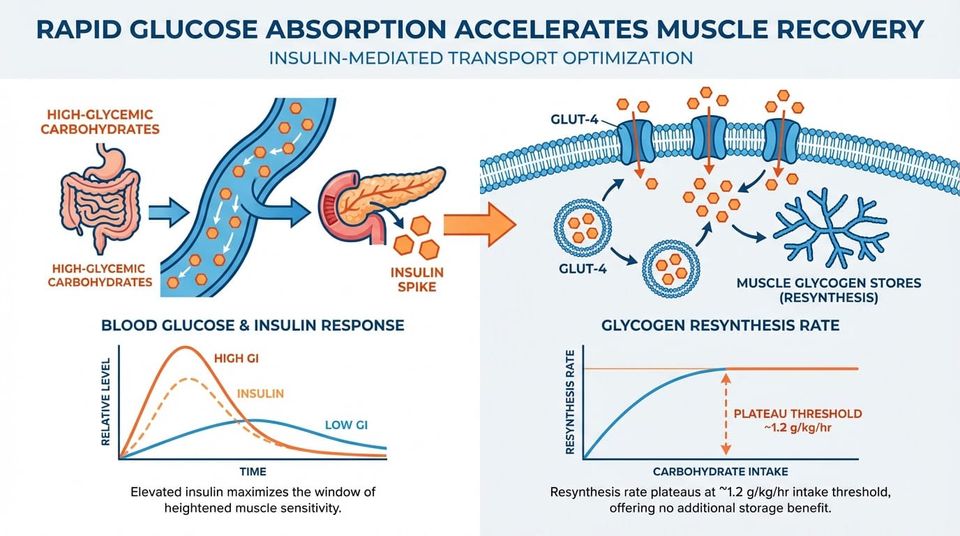
High-glycemic carbohydrates promote superior muscle glycogen restoration compared to low-glycemic alternatives due to the speed at which they enter the bloodstream. This rapid absorption triggers a significant release of insulin, the hormone responsible for regulating energy storage. Insulin signals specialized transport proteins, known as GLUT-4, to move to the surface of muscle cells. These proteins act as temporary gates, facilitating a more aggressive uptake of glucose from the blood to replenish glycogen stores when the muscle is most receptive.
This mechanism is critical for athletes attempting to recover between sessions separated by limited time. While complex carbohydrates are generally preferred for daily nutrition, the urgent need for replenishment following exhaustive effort demands sources that spike blood sugar quickly to maximize the window of heightened insulin sensitivity. Understanding this distinction allows for strategic nutritional choices that match the specific urgency of the next physical demand.
These accelerated rates of resynthesis naturally plateau at intakes of roughly 1.2 grams per kilogram per hour, meaning consumption beyond this threshold offers no additional storage benefit regardless of the carbohydrate source.
This Margin Snippet is drawn from Entry #005 of The Scientist’s Notebook: Comparing whey protein and carbohydrate-based recovery strategies after endurance exercise.
PS: I build this for you, so tell me how I'm doing!Leave anonymous feedback herein less than a minute.
Cantó, C., & Auwerx, J. (2009).
PGC-1α, SIRT1 and AMPK, an energy-sensing network that controls energy expenditure.
Current Opinion in Lipidology, 20(2), 98–105.
Fernandez-Marcos, P. J., & Auwerx, J. (2011).
Regulation of PGC-1α, a nodal regulator of mitochondrial biogenesis.
The American Journal of Clinical Nutrition, 93(4), 884S–890S.
Disclaimer
The information provided in this newsletter is for educational purposes only and does not constitute medical advice. Exercise physiology is highly individual; what works for elite populations may not apply to everyone. Always consult with a physician before making significant changes to your training, nutrition, or supplementation protocols. The Scientist's Notebook and ESQ Coaching accept no liability for injuries or health issues arising from the application of these concepts.
Found this useful?
Get articles like this and free training calculators in your inbox every week.
Recommended reads
If this was useful, these are the other research-driven newsletters I actually read.


Member discussion