Snippet #021: Sodium drives fluid retention to restore plasma volume
Core Insight
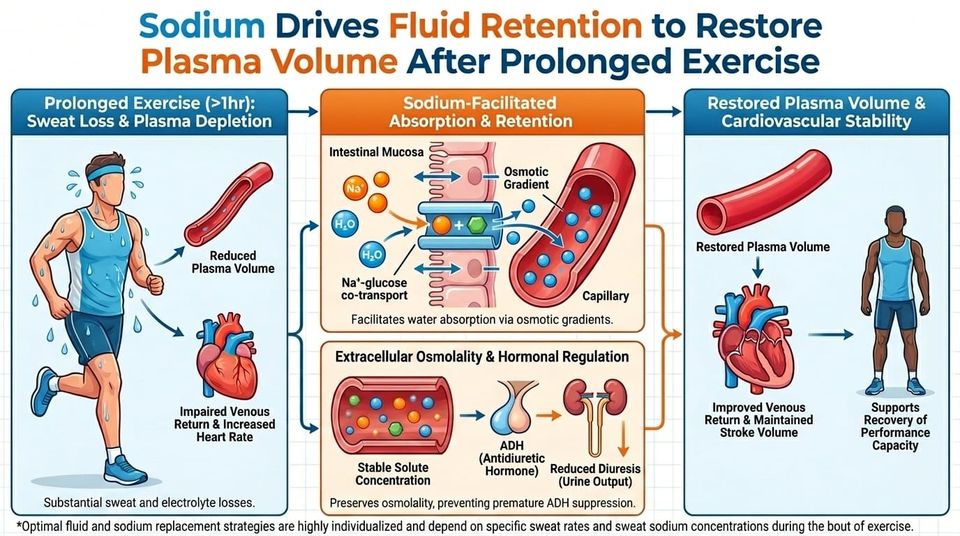
When athletes rehydrate after prolonged exertion, replacing water alone is often inefficient for stabilizing internal fluid compartments. The inclusion of sodium in recovery beverages facilitates water absorption across the intestinal mucosa via established osmotic gradients and co-transport mechanisms.
This process aids in the restoration of plasma volume, the fluid component of the blood necessary for maintaining stroke volume and sustaining tissue perfusion. By preserving extracellular osmolality, sodium prevents the premature suppression of antidiuretic hormone (ADH), thereby mitigating the rapid loss of newly ingested fluids through excessive diuresis.
Why It Matters
Preserving plasma volume is critical for cardiovascular hemodynamics, as a reduction in total blood volume impairs venous return and forces a compensatory increase in heart rate to maintain adequate cardiac output.
When athletes face repeated training sessions within a short recovery window, optimizing this fluid retention helps ensure the cardiovascular system is physiologically prepared to handle the hemodynamic and thermoregulatory strain of a subsequent workout.
Gradescale: Your physiology, decoded. Join the waitlist now.
 Thomas Mortelmans
Boundary Statement
This specific sodium-dependent fluid restoration mechanism is primarily relevant for individuals experiencing substantial sweat and electrolyte losses during continuous efforts exceeding one hour, rather than those completing brief or low-intensity sessions.
References:
- Shirreffs et al. 1996, Post-Exercise Rehydration in Man: Effects of Volume Consumed and Drink Sodium Content
- Shirreffs & Maughan 1998, Volume Repletion After Exercise-Induced Volume Depletion in Humans: Replacement of Water and Sodium Losses
- Sawka et al. 2007, American College of Sports Medicine Position Stand: Exercise and Fluid Replacement
Disclaimer
The information provided in this newsletter is for educational purposes only and does not constitute medical advice, diagnosis, or treatment. Always seek the advice of your physician or other qualified health provider with any questions you may have regarding a medical condition or before starting any new fitness or nutrition regimen. The Scientist’s Notebook and ESQ Coaching are not liable for any injuries or damages that may occur from the application of the information contained herein.
Found this useful?
Get articles like this and free training calculators in your inbox every week.
Recommended reads
If this was useful, these are the other research-driven newsletters I actually read.
Member discussion