Entry #024: Menstrual Cycle Synching vs. Autoregulation in Female Endurance Athletes
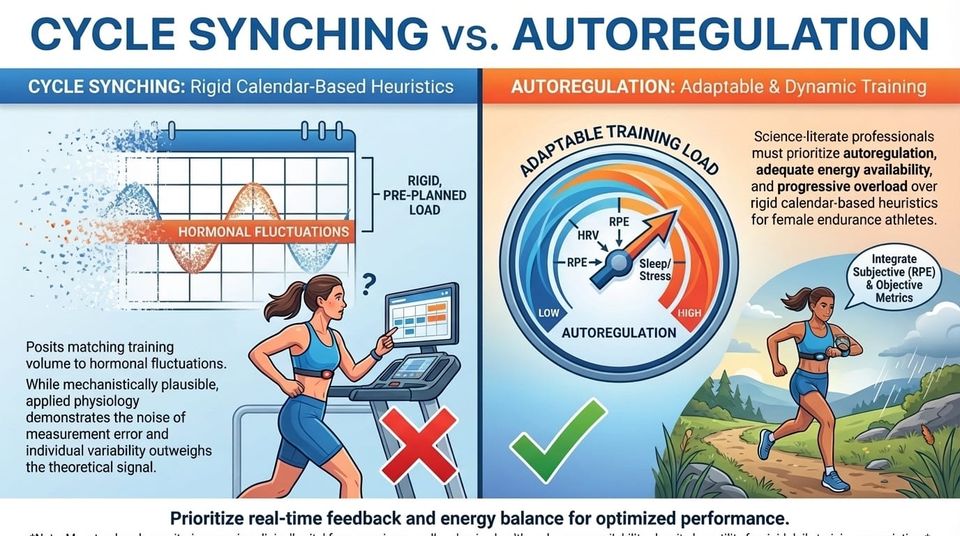
Cycle synching has gone mainstream. The idea is that female athletes should plan their training around the hormonal phases of the menstrual cycle. It now shows up in fitness apps, coaching programs, and wellness content everywhere.
The basic reasoning doesn't sound unreasonable. Estrogen rises in the first half of your cycle and is thought to support energy and strength. Progesterone dominates the second half and tends to feel more draining. Why not train with those rhythms rather than against them?
Here's the problem: when researchers actually test this in trained athletes, the performance differences between phases are so small they barely register. The science behind the individual hormones is real. The leap from that to a rigid, calendar-based training plan is not.
The evidence points away from calendar predictions and toward daily autoregulation, solid nutrition, and consistent progressive training.
Executive Summary – The Brief:
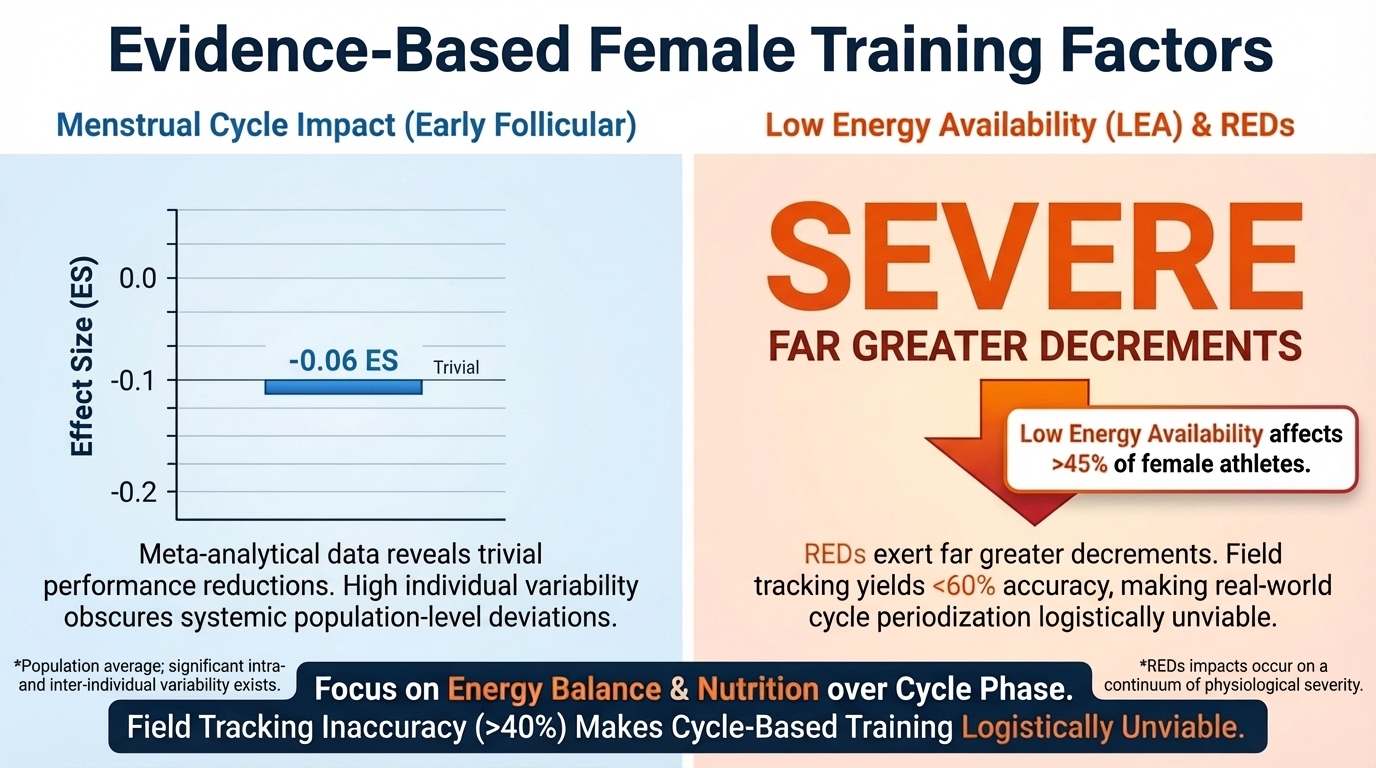
· Meta-analyses show only a tiny effect size (approximately -0.06) for performance changes during the early follicular phase. Too small to justify restructuring an entire training program around.
· The proposed mechanisms, estrogen boosting neural drive and improving fat burning, don't produce meaningful performance differences in well-trained athletes when tested systematically.
· Much of the foundational research in this area is methodologically flawed: ovulation was rarely confirmed, temperature-based tracking was used despite known inaccuracy, and the studies assumed a neat 14-day luteal phase that most women don't actually have.
· Low energy availability, affecting an estimated 45% of female athletes, causes hormonal disruption far greater than anything driven by cycle phase. It's the bigger problem, and it's frequently ignored.
· Common tracking methods like basal body temperature and calendar estimates identify the correct cycle phase less than 60% of the time, making precise phase-based programming unreliable in practice.
· Autoregulation, adjusting daily training load based on how the athlete actually feels and recovers, is better supported by the evidence for female athlete performance management.
The Science at a Glance:
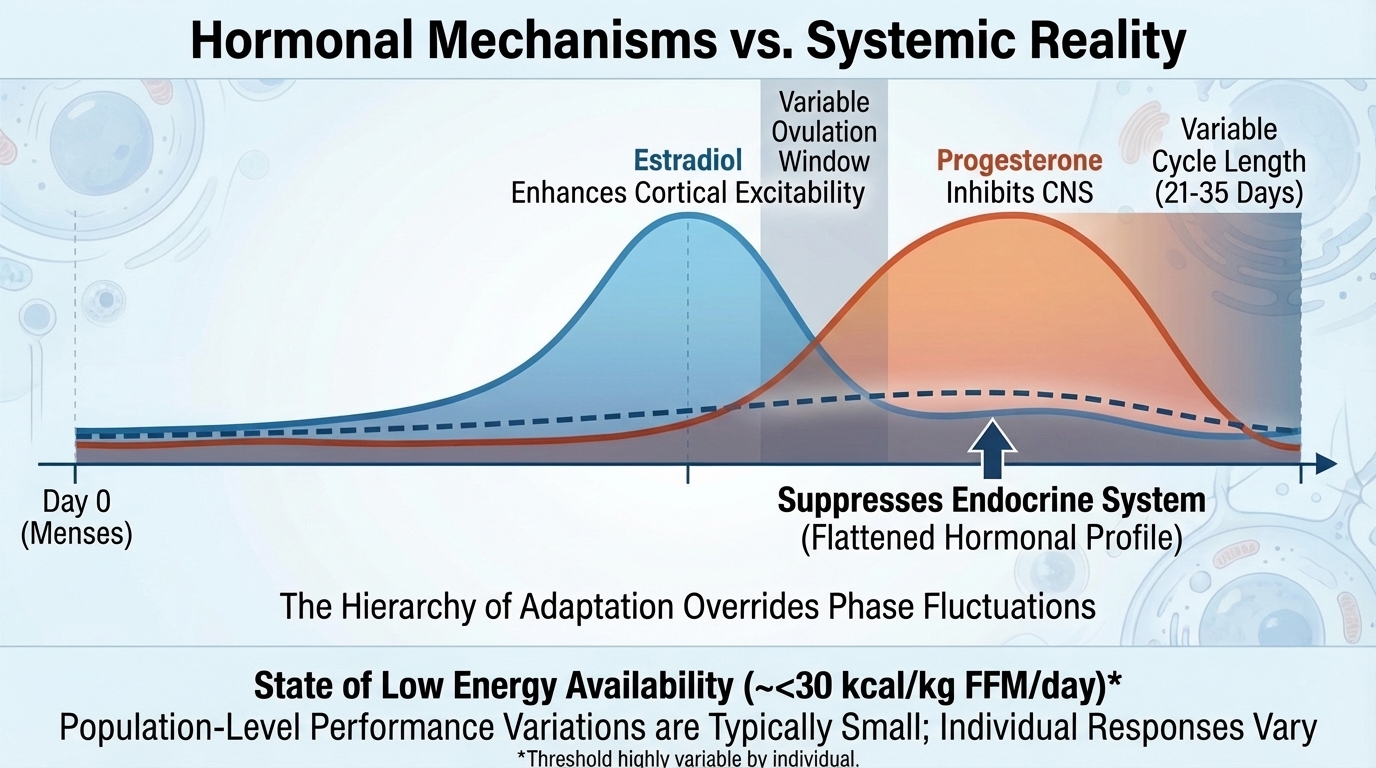
The theoretical case for cycle synching starts with real hormonal biology. In the late follicular phase, rising estrogen is thought to sharpen neural drive and boost force production. In the luteal phase, elevated progesterone slows the central nervous system and raises the body's temperature set point, which can make exercise feel harder in the heat. Estrogen is also believed to help the body burn more fat; progesterone may work against that.
These mechanisms are plausible. But when researchers look at actual performance data across the cycle, strength output, endurance, power, the differences between phases are statistically trivial.
The gap between the theory and the real-world data comes down to poor methodology in the foundational studies. Many never confirmed whether participants were actually ovulating. Others mixed naturally cycling women with those using hormonal contraceptives, combining two completely different hormonal environments in the same dataset.
Foundational Principles
The hierarchy of adaptation overrides phase fluctuations
The variables that actually drive training adaptation, food intake, carbohydrate availability, and sleep, matter far more than reproductive hormone fluctuations.
When an athlete's energy intake drops below 30 kcal per kilogram of fat-free mass per day, the body begins downregulating hormonal systems and performance suffers significantly. That effect is far larger than anything cycle phase produces.
Scientist's Insight:
Trying to optimize training through cycle synching while underfueling is a waste of coaching resources. The hormonal disruption caused by relative energy deficiency in sport (RED-S) undermines the very system that cycle synching is trying to work with.
The fallacy of standardized menstrual chronobiology
· The 28-day cycle is a population average, not a biological standard. Using it as a template introduces error from the start.
· The 14-day luteal phase is equally a statistical artifact. Real luteal phases vary, sometimes significantly, from cycle to cycle in the same person.
· Normal cycle length runs from 21 to 35 days, and both the timing and intensity of hormonal peaks differ substantially between individuals.
Temperature tracking and calendar methods fail to correctly identify ovulation in up to 40% of cases. Prescribing training intensity based on an assumed phase often adds random noise to an athlete's program rather than precision.
The Decision Matrix:
Before deciding whether any cycle-based adjustments are appropriate, practitioners need to assess the athlete's actual situation, not just what day of her cycle she's on.
Diagnostic logic:
· Assess energy availability. Is the athlete consistently eating enough? Optimal energy availability sits above 45 kcal/kg FFM/day. If she's severely underfueling (below 30 kcal/kg FFM/day), cycle synching is irrelevant. Restoring nutrition is the only priority.
· Evaluate menstrual regularity. Does she have regular natural cycles in the 21–35 day range? If she's amenorrheic, has irregular cycles, or uses hormonal contraception, cycle-based periodization doesn't apply.
· Quantify symptom burden. Does she experience severe, performance-impairing symptoms — significant cramping, disrupted sleep, GI distress — at specific points in her cycle? If so, targeted daily adjustments during those windows are warranted.
· Verify training consistency. Has she completed at least 12 months of structured, progressive training? Without that baseline, apparent cycle-related fluctuations are more likely explained by inconsistent training than by hormones.
Self-Classification
Category A – The symptomatic eumenorrheic athlete
Decision rationale: Use daily autoregulation. Keep the overall training block intact, but adjust session intensity on days when symptoms genuinely impair output.
Category B – The hormonally suppressed or contraceptive-using athlete
Decision rationale: Set cycle synching aside entirely. Focus on consistent progressive overload and ensuring energy availability is adequate.
Category C – The asymptomatic eumenorrheic athlete
Decision rationale: Follow standard progressive periodization. Day-to-day performance variation is far more likely driven by sleep, stress, and carbohydrate availability than by cycle phase.
Gradescale: Your physiology, decoded. Join the waitlist now.
 Thomas Mortelmans
The Protocol:
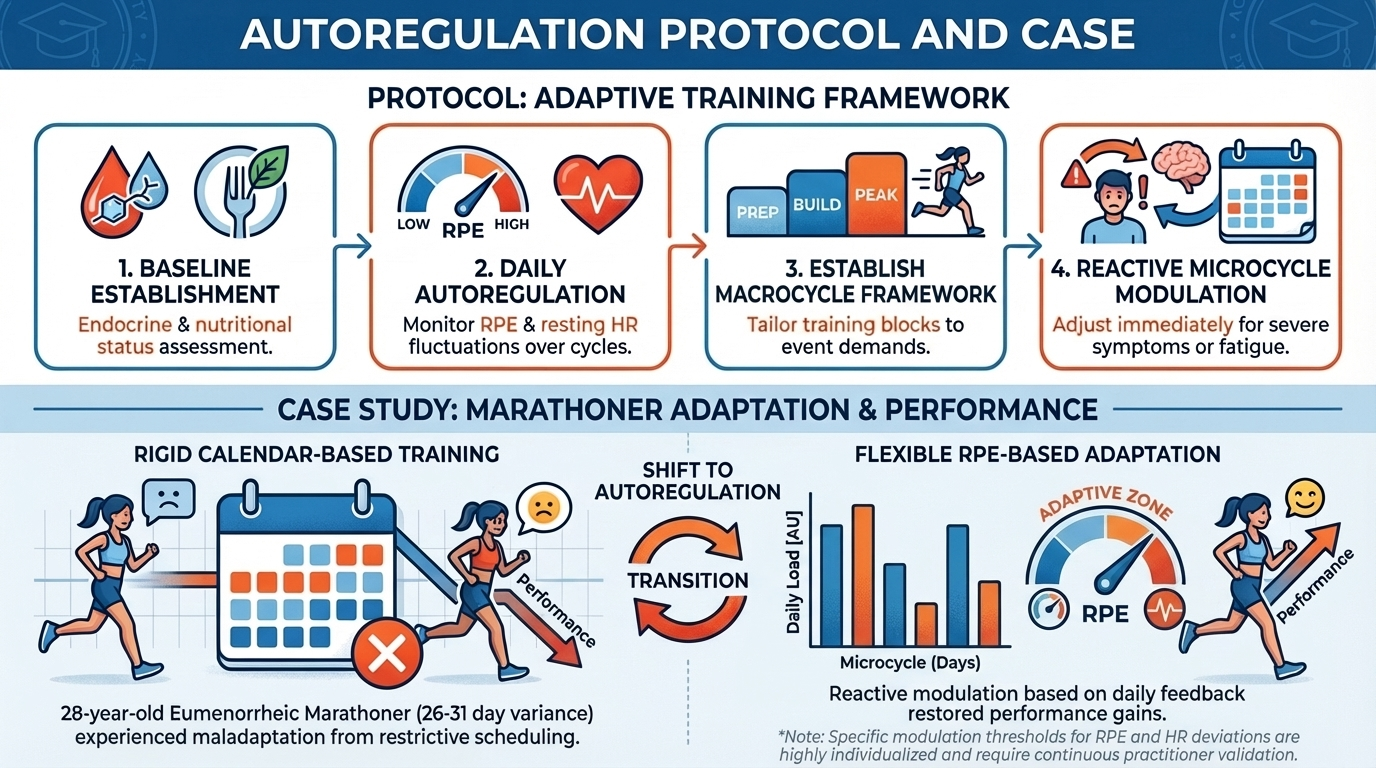
1. Establish the nutritional and hormonal baseline first. Before adjusting any training variables, confirm the athlete isn't underfueling. Carbohydrate intake should match the demands of the training load.
2. Replace calendar tracking with daily readiness metrics. Use perceived exertion (RPE), resting heart rate, and a simple daily symptom check to guide load decisions. These signals are more accurate than any phase prediction.
3. Build the training block around the sport's demands. Structure the macrocycle around what the event requires: VO2max development, lactate threshold, neuromuscular power. Not around an anticipated hormonal window.
4. Adjust sessions reactively, not proactively. If an athlete is dealing with significant cramping or unusually high fatigue, shift that session's intensity down, say from Zone 4 intervals to Zone 2 steady-state. Base that call on how she feels that day, not the calendar.
5. Track symptoms alongside training data. Record the severity of cramping, sleep quality, and GI issues next to training outputs. Over three to six cycles, real individual patterns will emerge. Expect noise; look for signal.
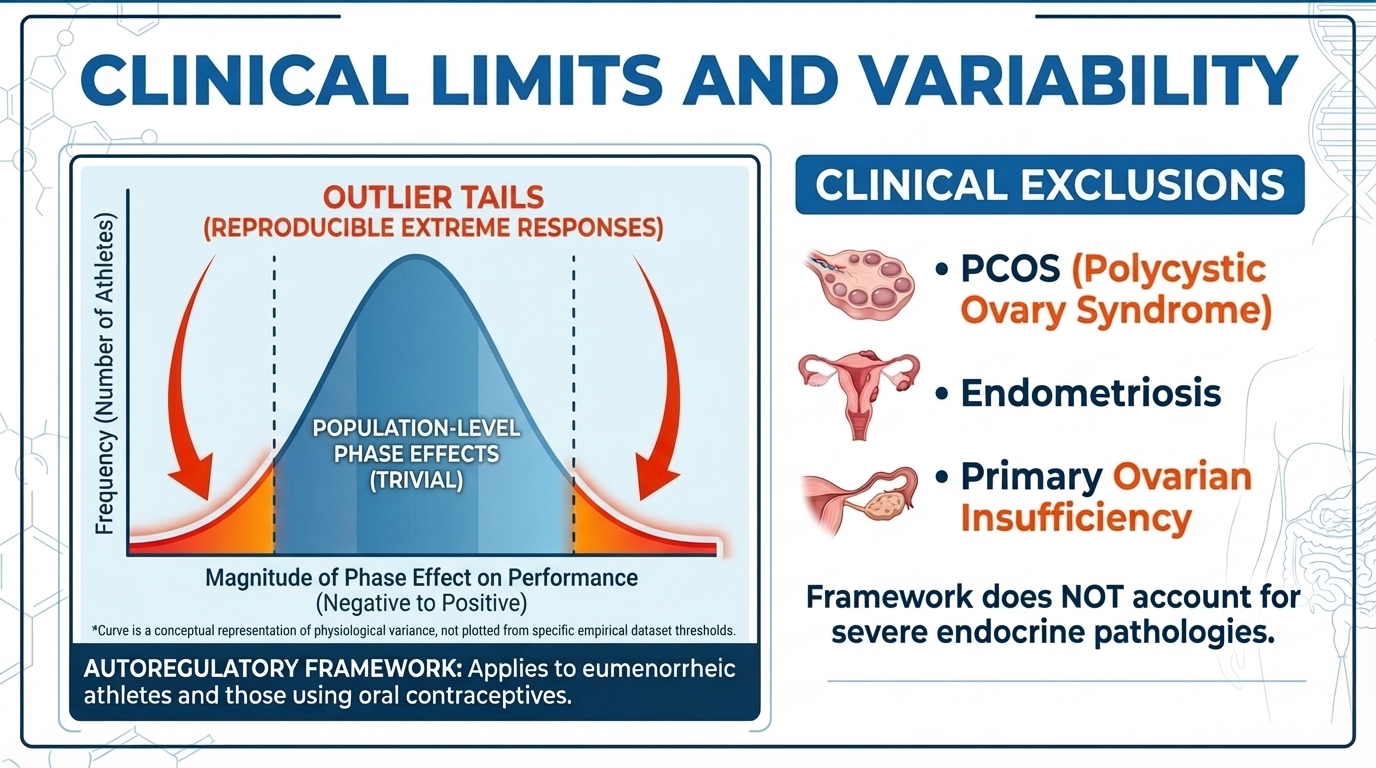
This framework is based on research in naturally cycling athletes and those using oral contraceptives. It is not a guide for managing clinical conditions like PCOS, endometriosis, or primary ovarian insufficiency. Those require specialist medical care.
Population-level trivial effects don't mean zero effect for every individual. A small number of athletes may show real, reproducible responses to cycle phase. If that appears to be the case, document it carefully over multiple cycles before drawing conclusions. Don't generalize from one athlete's experience to a whole team.
Best regards,
Dr. Thomas Mortelmans
Disclaimer
The information provided in this newsletter is for educational purposes only and does not constitute medical advice. Exercise physiology is highly individual; what works for elite populations may not apply to everyone. Always consult with a physician before making significant changes to your training, nutrition, or supplementation protocols. The Scientist's Notebook and ESQ Coaching accept no liability for injuries or health issues arising from the application of these concepts.
References
2. The Impact of Menstrual Cycle Phase on Athletes’ Performance: A Narrative Review - PMC
3. Menstrual cycle and exercise | TRIA Blog
11. Is Cycle Synching a Breakthrough for Women's Health or a Fad? | TIME
12. Hormones, periods, and peak performance in women's sport | EF Pro Cycling
15. How should women approach exercise? | Alyssa Olenick, PhD (Part 1) - The Proof
16. Psychological Resilience in Young Female Athletes - PMC
18. Prescribing exercise for women - PMC
24. The Optimal Training Frequency for Female Athletes During the Season - Relentless Athletics
25. Wearable Biosensing and Machine Learning for Data-Driven Training and Coaching Support - PMC
26. How to Use Cycle Syncing to Train With Your Menstrual Cycle – Doc Lyss Fitness
29. The impact of menstrual cycle phase on the performance of female athletes—Systematic review - PMC
Found this useful?
Get articles like this and free training calculators in your inbox every week.
Recommended reads
If this was useful, these are the other research-driven newsletters I actually read.

Member discussion