Entry #023: Concurrent Strength Training Architecture for Endurance Performance
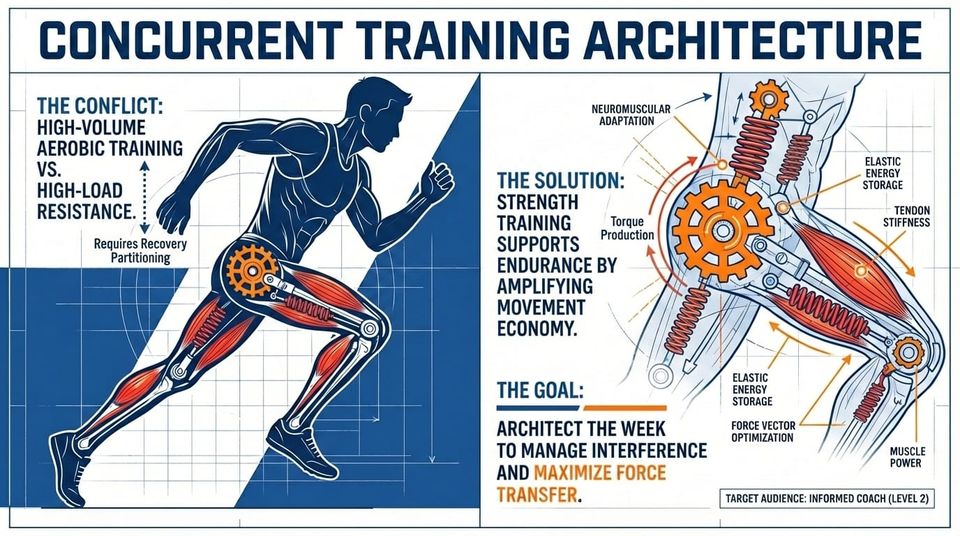
For decades, a persistent tension has existed in endurance coaching: the conflict between the necessity of high-volume aerobic training and the potential benefits of high-load resistance work. Historically, many coaches avoided heavy strength training due to fears of the "interference effect"—the notion that building strength inevitably compromises mitochondrial density or capillary development.
However, contemporary research has refined this paradigm. We now understand that when programmed correctly, strength training does not compete with endurance adaptations but rather amplifies them through a different physiological pathway: movement economy.
The challenge for the informed coach is not deciding if an athlete should lift, but rather how to architect the training week to minimize fatigue and maximize the transfer of force into speed.
Executive Summary – The Brief:
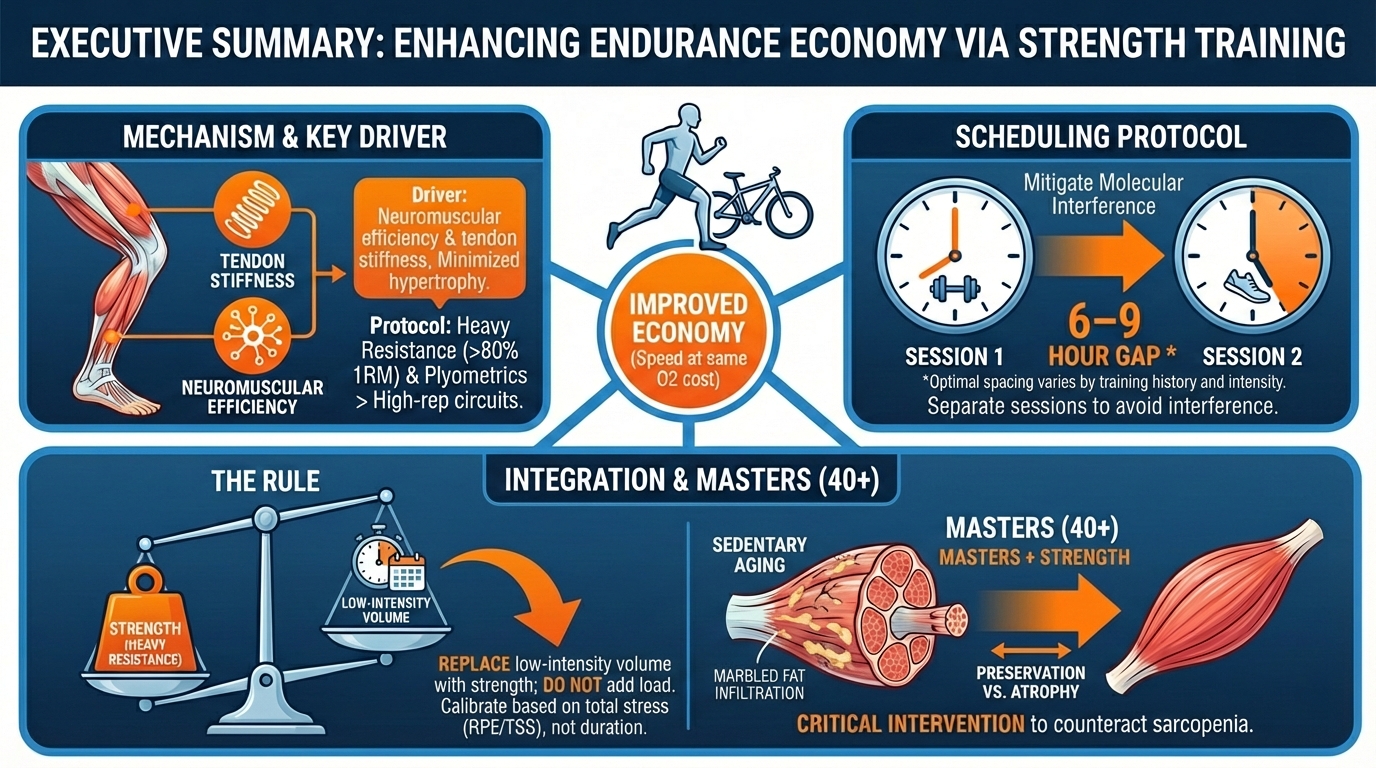
• Strength training improves performance primarily by enhancing Running Economy (RE) or Cycling Economy, allowing athletes to sustain higher speeds at the same oxygen cost.
• The mechanisms of improvement are neuromuscular (better muscle recruitment) and structural (stiffer tendons), rather than hypertrophic (increased muscle mass).
• Heavy resistance training (>80% 1RM) and plyometric training are typically superior to high-repetition, low-weight circuits for improving economy.
• The "interference effect" is largely a scheduling issue; separating strength and endurance sessions by at least 6-9 hours minimizes potential negative interactions.
• For Masters athletes (40+), strength training is critical; it is the primary intervention to counteract age-related muscle fiber loss (sarcopenia) and power decline.
• Effective implementation requires replacing a portion of low-intensity endurance volume with strength work, rather than simply adding load on top of a full schedule.
The Science at a Glance:
The primary goal of integrating strength work into an endurance program is to improve the metabolic cost of movement.
While endurance training improves the engine (heart and lungs), strength training upgrades the chassis. Research consistently shows that heavy resistance and explosive training can improve Running Economy by 2% to 8%.
This improvement is driven by two main factors: increased tendon stiffness and improved motor unit recruitment. Stiffer tendons act like tighter springs, storing and returning elastic energy more efficiently with each stride, which reduces the oxygen demand on the muscles.
Simultaneously, heavy loading teaches the nervous system to recruit muscle fibers more quickly and synchronously (Rate of Force Development), reducing the "neural cost" of maintaining a given pace.

Foundational Principles:
1. Neural over Hypertrophic Adaptation: Endurance athletes should train for strength and power, not muscle size. High-load, low-repetition training targets the nervous system, improving how the brain recruits muscle fibers without adding significant body mass, which could be detrimental to power-to-weight ratios.
2. The Preservation of Fast-Twitch Function: Endurance training typically shifts muscle fibers toward a slower, more oxidative profile. However, Type IIA fibers are crucial for surges, hill climbs, and finishing kicks. Strength training maintains the contractility and force potential of these powerful fibers, creating a more versatile athlete who can handle changes in pace without rapid neuromuscular fatigue.
Scientist’s Insight: Many coaches worry that heavy lifting will leave athletes' legs too heavy for quality interval sessions.
This is a valid concern only if the sequencing is incorrect. The physiological stress of strength training is primarily neuromuscular, not metabolic.
When separated by adequate recovery, the acute fatigue from lifting dissipates quickly, whereas the structural benefits to the tendons and neural benefits to recruitment patterns provide a long-term performance enhancement.
The Decision Matrix
To implement concurrent training effectively, coaches must diagnose the athlete's current status and limitations. Use this framework to select the appropriate modality.
Scheduling Logic (The Interference Solution)
• Scenario A (Ideal): Strength and Endurance on separate days. Risk of molecular interference is near zero.
• Scenario B (Common): Strength and Endurance on the same day. Perform the priority session first. If the goal is aerobic adaptation, run first. If the goal is neuromuscular power, lift first. Ideally, separate sessions by at least 6 hours to allow signaling pathways to reset.
Gradescale: Your physiology, decoded. Join the waitlist now.
 Thomas Mortelmans
Volume Management
• The "Replacement Rule": Do not simply add two hours of gym work to a maxed-out schedule. Reduce low-intensity endurance volume by 10-15% to accommodate the new neural stress. Total training stress must remain balanced.
The Protocol:
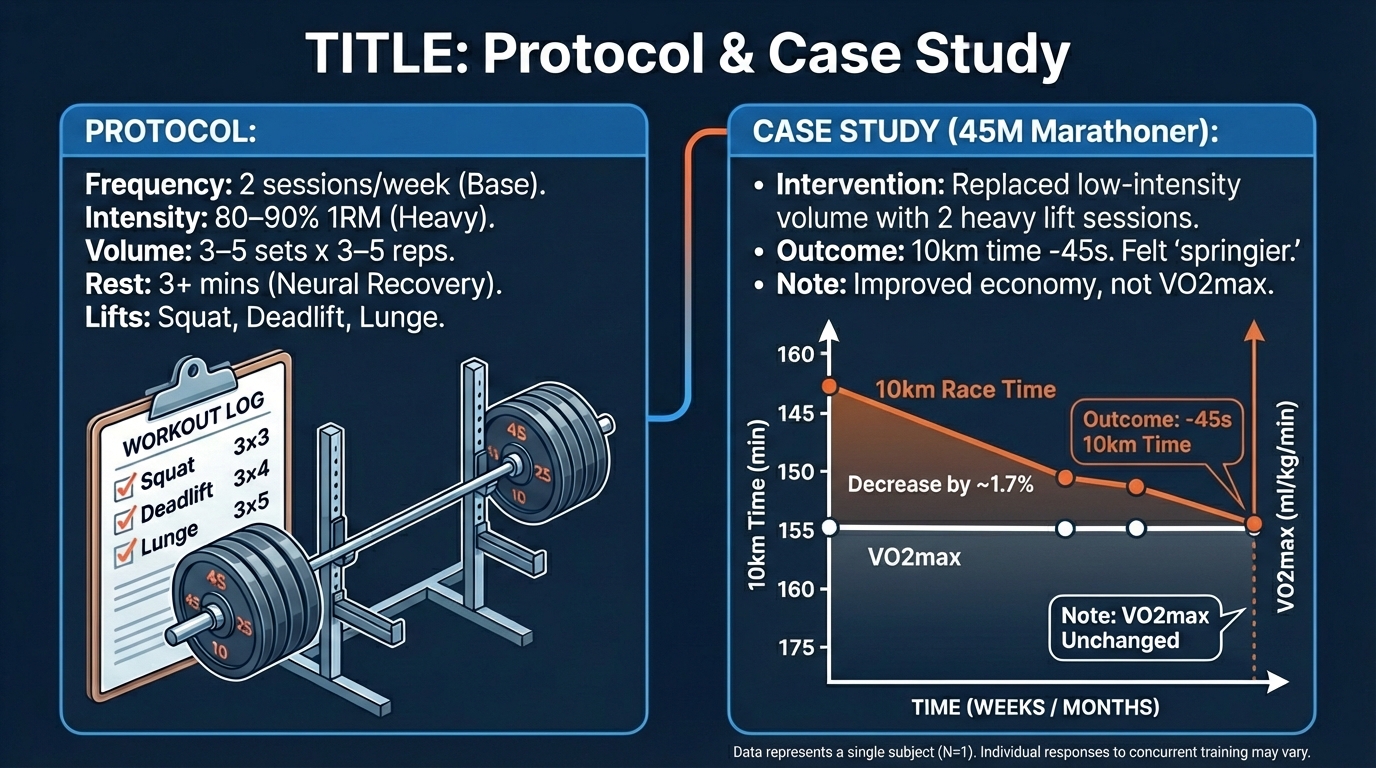
1. Frequency: 2 sessions per week during Base/Prep phases; 1 maintenance session per week during Competition phases.
2. Core Lifts: Focus on multi-joint movements (Squat, Deadlift, Lunge, Step-up). Avoid isolation machines unless for specific rehab.
3. Intensity Zone: 80-90% of 1-Repetition Maximum (1RM). If the weight feels light, it is not generating the required neural stimulus.
4. Volume: 3 to 5 sets of 3 to 5 repetitions. Rest intervals must be long (3 minutes+) to ensure full neural recovery between sets.
5. Plyometric Integration: For athletes with established strength bases, include 2-3 sets of pogo jumps or box jumps (low volume, max intent) prior to or contrasted with heavy lifts.
Power you can’t repeat is decoration.
This 8-week muscular endurance block is designed to increase how long you can hold meaningful power once fatigue is already present. Sweet spot first, control later, no wasted matches.
Choose this if you feel strong early in rides but fade when the work actually matters. View Plan here

Case Study:
Athlete Profile: 45-year-old male marathoner, 3:15 PB, plateaued for 3 years. Reports feeling "flat" in the final 10km.
Intervention: Replaced one 45-minute recovery run and 15 minutes of junk volume with two 45-minute strength sessions.
Phase 1 (Weeks 1-4): Anatomical adaptation. Moderate weights, focus on technique. Athlete reported legs felt "heavy" on runs; this is normal acute fatigue.
Phase 2 (Weeks 5-12): Maximal Strength. 4 sets of 4 reps on Trap Bar Deadlift and Split Squats. Heavy loading.
Outcome: At Week 12, the athlete's 10km time trial improved by 45 seconds with no significant change in VO2max. The athlete reported feeling "springier" and maintained cadence significantly better in the final kilometers. The initial fatigue was a temporary cost for a permanent economy upgrade.
Limits of Application:
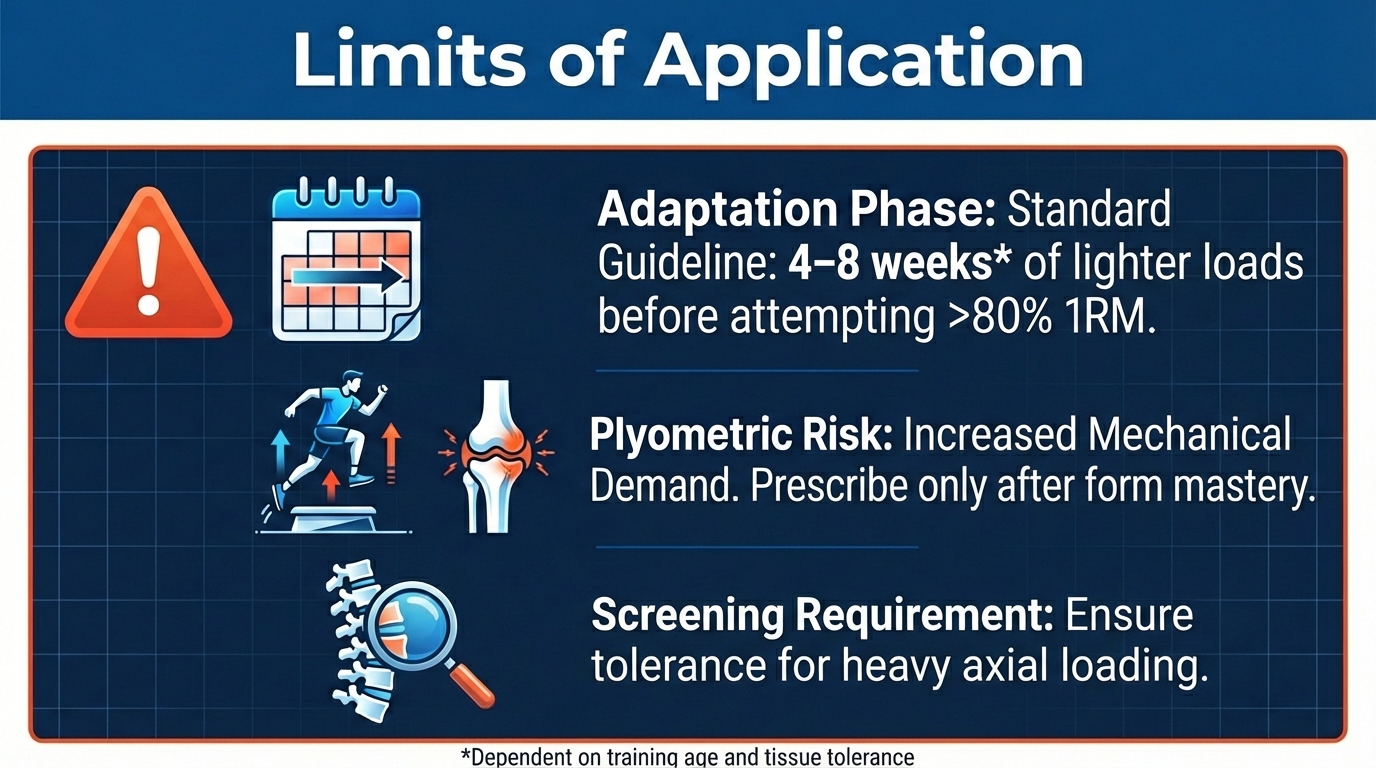
While the evidence for strength training is robust, individual response varies. Athletes with no history of resistance training require a longer adaptation phase (4-8 weeks) with lighter loads to prepare connective tissue before attempting the heavy loads (>80% 1RM) described here.
Furthermore, the benefits of plyometrics are high but come with increased injury risk if form is poor; these should only be prescribed when an an athlete demonstrates competence in basic landing mechanics and sufficient strength reserve.
Finally, this briefing assumes the athlete has no contraindications to heavy axial loading.
Best regards,
Dr. Thomas Mortelmans
If you want to see what I read to keep my own work sharp outside this newsletter, this is the list.
 Thomas Mortelmans
Disclaimer
The information provided in this newsletter is for educational purposes only and does not constitute medical advice. Exercise physiology is highly individual; what works for elite populations may not apply to everyone. Always consult with a physician before making significant changes to your training, nutrition, or supplementation protocols. The Scientist's Notebook and ESQ Coaching accept no liability for injuries or health issues arising from the application of these concepts.
References:
3. Optimizing strength training for running and cycling endurance performance: A review - PubMed
4. Resistance Training’s Effect on Endurance Performance
5. Strength Training for Endurance Athletes -
6. Strength Training Among Male Master Cyclists—Practices, Challenges, and Rationales - PMC
7. Strength Training Improves Running Economy, Durability, and Fatigued
9. Neuromuscular fatigue and recovery after strength and power training - Sci-Sport
10. Untitled Source
Found this useful?
Get articles like this and free training calculators in your inbox every week.
Recommended reads
If this was useful, these are the other research-driven newsletters I actually read.




Member discussion