Snippet #012: Blocking Central Fatigue Signals to Extend Endurance Capacity
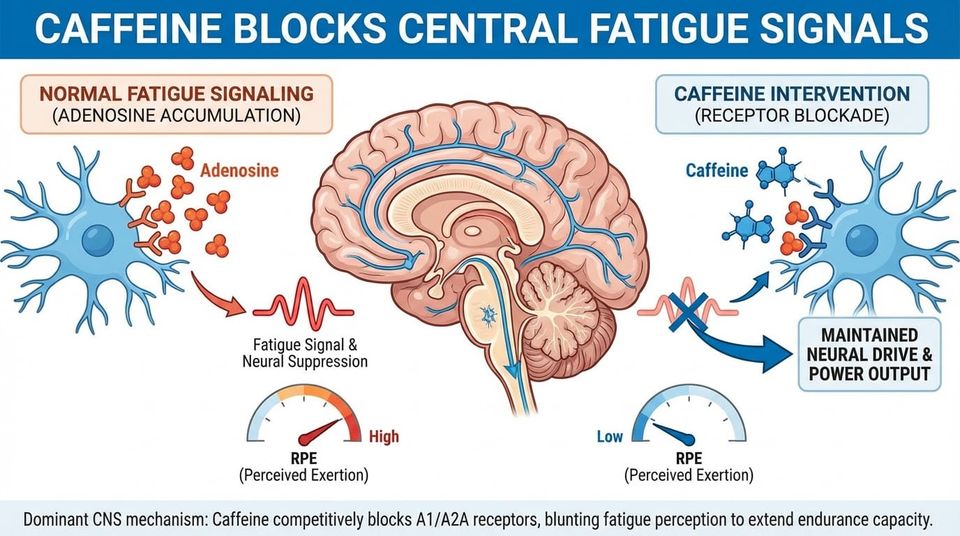
The primary driver of caffeine’s performance benefit is not metabolic energy production, but the blockade of adenosine receptors in the central nervous system. As physical work accumulates, adenosine naturally builds up in the brain, binding to specific receptors (A1 and A2A) to signal fatigue and suppress neural activity. Caffeine molecules structurally mimic adenosine, effectively parking in these receptor sites to prevent the fatigue signal from docking, thereby maintaining neural drive despite increasing physiological stress.
This mechanism directly reduces the Rate of Perceived Exertion (RPE) during sustained efforts. By blunting the brain's reception of fatigue signals, an athlete can maintain higher power outputs or paces for a longer duration before the conscious sensation of effort becomes limiting.
While caffeine may also influence muscle calcium mobilization, research suggests the central nervous system effect remains the dominant pathway for performance gains in both recreational and elite populations.
PS: How was today’s newsletter?Share your anonymous ratingin less than a minute. I’m all ears!
Reference:
Davis JK, Green JM. Caffeine and anaerobic performance: ergogenic value and mechanisms of action. Sports Med. 2009;39(10):813-32. doi: 10.2165/11317770-000000000-00000. PMID: 19757860.
The plans you find here are built on a simple truth: Adaptation only happens when you apply the right stress, at the right time, in the right dose.
 Thomas Mortelmans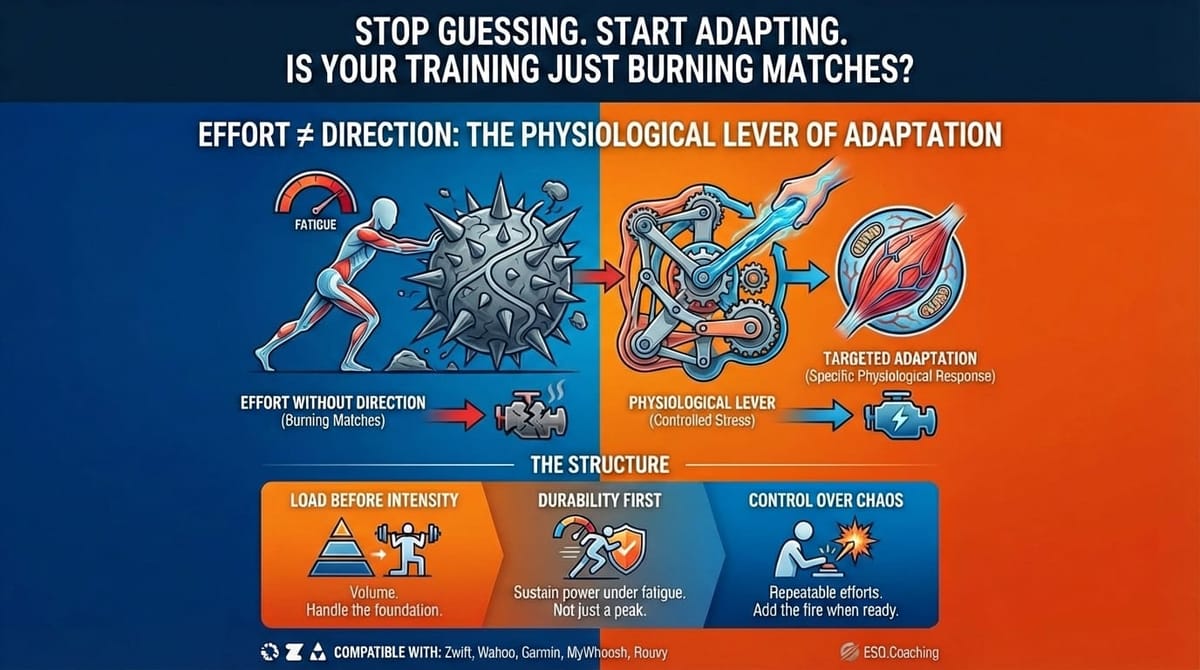
Found this useful?
Get articles like this and free training calculators in your inbox every week.
Recommended reads
If this was useful, these are the other research-driven newsletters I actually read.


Member discussion