Entry #012: The influence of probiotics and gut health on endurance performance and recovery
Most of us treat our digestive systems like an afterthought—until it fails us at mile 30.
We obsess over power meters, lactate thresholds, and aerodynamic drag, yet we often ignore the "hidden organ" that dictates whether our fuel actually makes it to the working muscle.
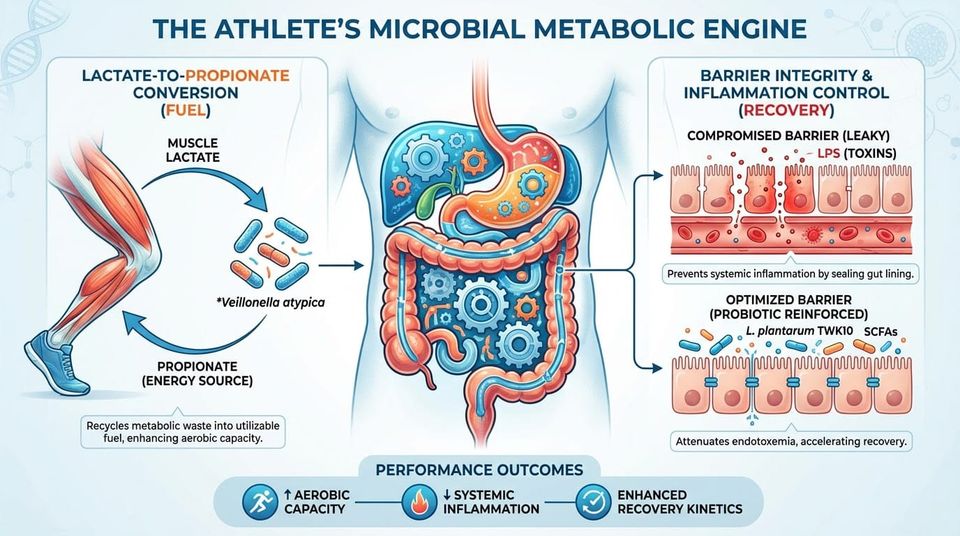
For decades, gut health was relegated to the realm of general wellness. However, recent data from elite endurance populations suggests the microbiome is not just about digestion; it is a metabolic engine that can actively recycle waste products into fuel.
Now that we have talked about fueling strategies in previous editions, we need to address the machinery that processes that fuel. If your gut barrier is compromised, or your microbial diversity is low, your expensive gels and training volume are hitting a biological ceiling.
If you are new here, feel free to learn more about our mission at The Notebook on the following page:
 Thomas Mortelmans
Executive Summary
- Aerobic Enhancement: Meta-analytic data indicates probiotic supplementation can improve aerobic capacity by ~5.9% and time-to-fatigue by up to 16% in trained populations.
- The Lactate Recycler: Specific bacteria, notably Veillonella atypica, metabolize systemic lactate into propionate, a short-chain fatty acid that fuels performance.
- Inflammation Control: Probiotics strengthen tight junction proteins, reducing "leaky gut" (endotoxemia) and the subsequent systemic inflammation that hampers recovery.
- Strain Specificity: Not all "bugs" work. Lactobacillus plantarum TWK10 and Veillonella show the most promise for endurance metrics.
- Immune Defense: Strategic supplementation reduces the severity and duration of Upper Respiratory Tract Infections (URTI) during heavy training blocks.
The Science at a Glance
We often view fatigue as a failure of the heart or legs. The table below illustrates how the microbiome acts as a third pillar of endurance limitation.
| Physiological Metric | Standard State (Untrained Gut) | Optimized Microbiome (Probiotic/Prebiotic) | The Mechanism |
|---|---|---|---|
| Lactate Dynamics | Accumulates in blood; causes fatigue signaling. | Recycled into Propionate. | Veillonella species use lactate as a carbon source, converting waste to energy. |
| Systemic Inflammation | Elevated post-exercise (Endotoxemia). | Attenuated; faster resolution. | Strengthened epithelial barrier prevents LPS (toxin) translocation into blood. |
| Glycogen Resynthesis | Dependent solely on dietary intake. | Enhanced via Gluconeogenesis. | Propionate supports liver glucose production during long efforts. |
| Immune Status | "Open Window" suppression post-exercise. | Maintained sIgA levels. | Modulation of mucosal immune response reduces URTI risk. |
Foundational Principles
1. The "Second Liver" Concept
We used to think of the gut as a tube for absorption. It is more accurate to view it as a metabolic organ. In elite marathon runners, we see a proliferation of Veillonella atypica. This bacterium essentially "eats" lactate. It passes from the blood into the gut, where Veillonella converts it into propionate. Propionate is then re-absorbed and used as a fuel source. This is a symbiotic feedback loop: you run, you produce lactate, the bacteria eat it, and they give you energy back.
2. Short-Chain Fatty Acids (SCFAs) as Signaling Molecules
The primary currency of gut health is SCFAs: Acetate, Propionate, and Butyrate. These are produced when bacteria ferment dietary fiber. Butyrate is particularly potent; it increases mitochondrial biogenesis (making more energy factories in your cells) and oxidative muscle fiber proportion. If you are starving your microbiome of fiber, you are starving your mitochondria of these signaling molecules.
3. The Endotoxemia Threshold
During heat stress or high intensity, blood flow is diverted from the gut to the skin and muscles. This causes intestinal ischemia (lack of oxygen), leading to "leaky gut." Bacterial toxins (Lipopolysaccharides or LPS) leak into the bloodstream, triggering systemic inflammation. This inflammation impairs recovery and performance. Probiotics upregulate "tight junction" proteins, essentially sealing the gaps in the gut lining to prevent this leakage.
Scientist’s Insight:
"The athlete’s microbiome functions as a specialized metabolic organ. It doesn't just digest food; it dictates the inflammatory cost of your training session. A permeable gut is a performance limiter, regardless of your VO2max."
Power you can’t repeat is decoration.
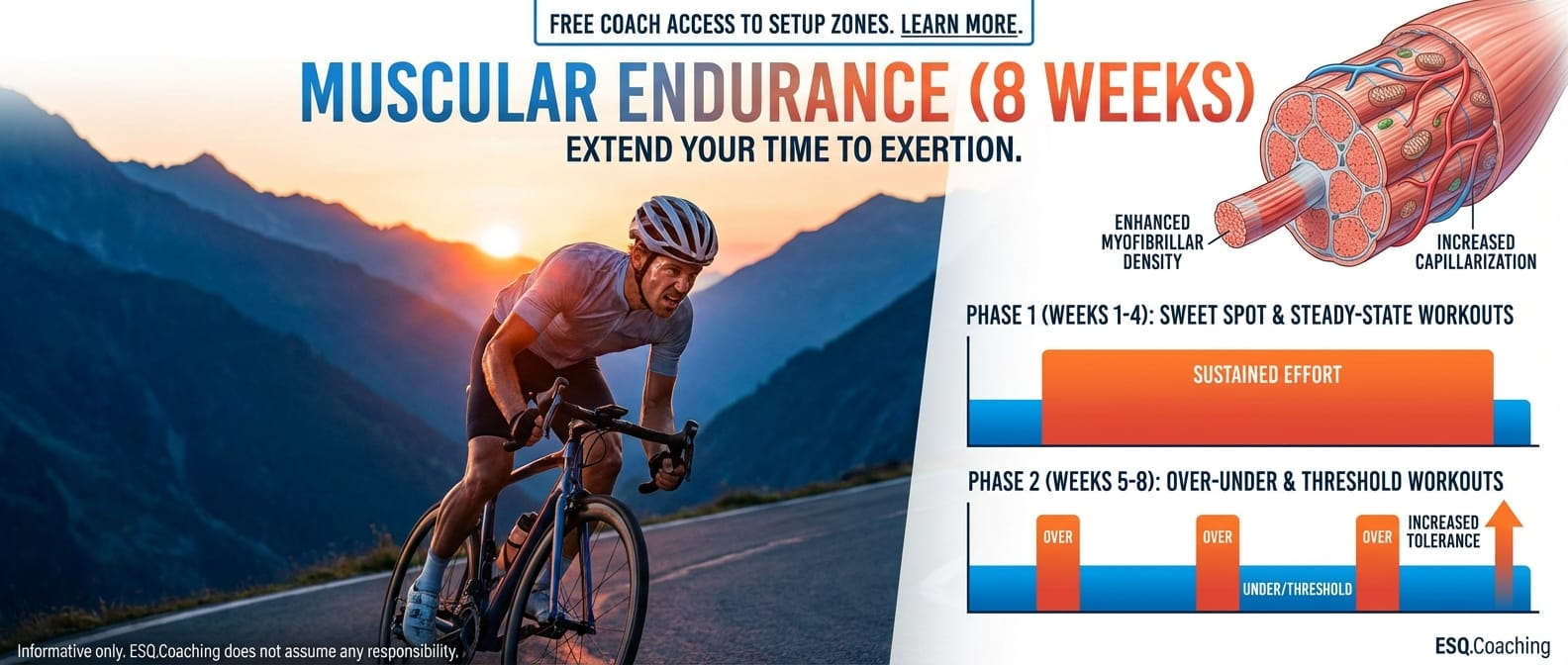
This 8-week muscular endurance block is designed to increase how long you can hold meaningful power once fatigue is already present. Sweet spot first, control later, no wasted matches.
Choose this if you feel strong early in rides but fade when the work actually matters. View Plan here
The Decision Matrix
Use this matrix to determine if a gut-focused intervention is a priority for your current training block.
| Category | Symptoms / Profile | Priority Level | Recommended Focus |
|---|---|---|---|
| The GI Distress Athlete | Bloating, nausea, or "runner's trots" during long/intense efforts. | Critical | Repair barrier function. Focus on Lactobacillus & Bifidobacterium blends + strict fiber timing. |
| The "Sick-prone" Responder | Frequently catches colds (URTI) after heavy training weeks; slow recovery. | High | Immune modulation. Lactobacillus helveticus or L. casei for sIgA support. |
| The Optimizer | No GI issues, plateaued performance, looking for the final 1-2%. | Moderate | Metabolic enhancement. Focus on L. plantarum TWK10 for mitochondrial & lactate benefits. |
The Protocol
Implementation requires precision. Randomly taking a supermarket yogurt will not suffice.
1. Strain Selection
Look for these specific strains on the label. "Proprietary blends" without strain identification are often under-dosed.
- Performance: Lactobacillus plantarum TWK10 (Evidence for endurance capacity).
- General Recovery/GI: Multi-strain containing Bifidobacterium lactis and Lactobacillus acidophilus.
2. Dosage
- Effective Dose: 1 × 10⁹ to 3 × 10¹⁰ CFU (Colony Forming Units) per day.
- Note: Higher doses (9 × 10¹⁰) have shown dose-dependent benefits in some studies, but start lower to avoid initial gas/bloating.
3. Duration & Timing
- Minimum Course: 4 to 6 weeks. Colonization takes time.
- Timing: Take with a meal containing some fat (improves survival through stomach acid).
- Pre-Competition: Start at least 4 weeks out from your "A" race. Do not start a new protocol race week.
4. The Prebiotic Synergist
Probiotics need food. Co-ingest with Resistant Starch (cooled potatoes/rice, green bananas) or soluble fiber supplements to fuel SCFA production.
Case Study: "Mark" and the Non-Linear Path
Hypothetical scenario based on clinical data patterns.
The Athlete: Mark, 35, 3:15 marathoner.
The Problem: Mark consistently fades at kilometer 32 due to mild nausea and cramping, preventing him from utilizing his fitness. His legs feel "heavy" for days post-long run.
The Intervention:
- Weeks 1-2: Initiated L. plantarum (3 × 10¹⁰ CFU) + increased daily resistant starch intake.
- The "Noise": Mark actually reported increased bloating in Week 2. This is common as the microbial population shifts. We persisted but adjusted fiber intake timing away from workouts.
- Weeks 4-6: Bloating resolved. Mark reported "cleaner" long runs—less GI awareness.
- Outcome: At Week 8, Mark performed a progressive long run. While his heart rate at threshold remained similar, his localized muscle fatigue was lower, and he reported zero nausea.
Analysis: The lack of nausea suggests improved barrier function (less endotoxemia). The reduced leg heaviness correlates with reduced systemic inflammatory cytokines (IL-6, TNF-α). Progress wasn't instant, but the physiological cost of his effort was reduced.
Best regards,
Dr. Thomas Mortelmans
PS: Your honesty helps me grow.Let me know what you think(completely anonymous) in under 30 seconds!
If you want to see what I read to keep my own work sharp outside this newsletter, this is the list.
 Thomas Mortelmans
Disclaimer
The information provided in this newsletter is for educational purposes only and does not constitute medical advice. Exercise physiology is highly individual; what works for elite populations may not apply to everyone. Always consult with a physician before making significant changes to your training, nutrition, or supplementation protocols. The Scientist's Notebook and ESQ Coaching accept no liability for injuries or health issues arising from the application of these concepts.
Annotated References
- Frontiers in Nutrition (2025) Link This review examines the current evidence for microbiome-based strategies to optimize athletic performance, highlighting the specific benefits of probiotic supplementation.
- PMC (2023) Link A study detailing the interaction between gut microbiota and physical performance, emphasizing the metabolic pathways involved in energy regulation.
- Frontiers in Physiology (2025) Link This article explores the specific gastrointestinal functional changes and microbiota composition found in elite endurance athletes compared to controls.
- PMC (2025) Link Recent research focused on the impact of gut health interventions on recovery kinetics following muscle-damaging exercise protocols.
- PMC (2024) Link An investigation into the mechanisms by which intestinal barrier integrity influences systemic inflammation and subsequent athletic capacity.
- PMC (2022) Link A comprehensive look at how exercise training itself acts as a stressor that modifies the gut microbiome composition in humans.
- Applied Physiology, Nutrition, and Metabolism (2024) Link This study demonstrates that combining probiotics with aerobic exercise leads to greater antioxidant capacity and VO2max improvements than probiotics alone.
- Nature Medicine (2019) Link The landmark study identifying Veillonella atypica as a performance-enhancing microbe that metabolizes exercise-induced lactate into propionate.
- PubMed (2018) Link Clinical trial data showing that Lactobacillus plantarum TWK10 supplementation significantly improves endurance performance and muscle mass in humans.
- Nature Medicine (2019) - Full Text Link The full text of the pivotal research demonstrating the causal link between Veillonella inoculation and increased treadmill run time in mice.
- PubMed (2019) Link A dose-response study on L. plantarum TWK10 confirming benefits for body composition and physiological adaptation to exercise.
- PMC (2020) Link A systematic review summarizing the effects of various probiotic strains on physical performance across different athletic populations.
- PubMed (2021) Link Meta-analysis focusing on the efficacy of probiotics in reducing the incidence and severity of upper respiratory tract infections in athletes.
- Frontiers in Immunology (2015) Link Foundational research explaining how psychological and physical stress increases gut permeability (leaky gut) and drives low-grade inflammation.
- Science Advances (2023) Link Investigates how specific gut bacteria-derived metabolites influence motivation for exercise via the gut-brain axis.
Disclaimer: The content provided in this newsletter is for informational purposes only and is not intended as medical advice, diagnosis, or treatment. Always seek the advice of your physician or other qualified health provider with any questions you may have regarding a medical condition or before beginning any new supplementation or training protocol. The Scientist’s Notebook and ESQ Coaching accept no liability for any damages or injuries arising from the application of this information.
Found this useful?
Get articles like this and free training calculators in your inbox every week.
Recommended reads
If this was useful, these are the other research-driven newsletters I actually read.


Member discussion