Entry #014: The use of Finnish and Infrared sauna for recovery and training
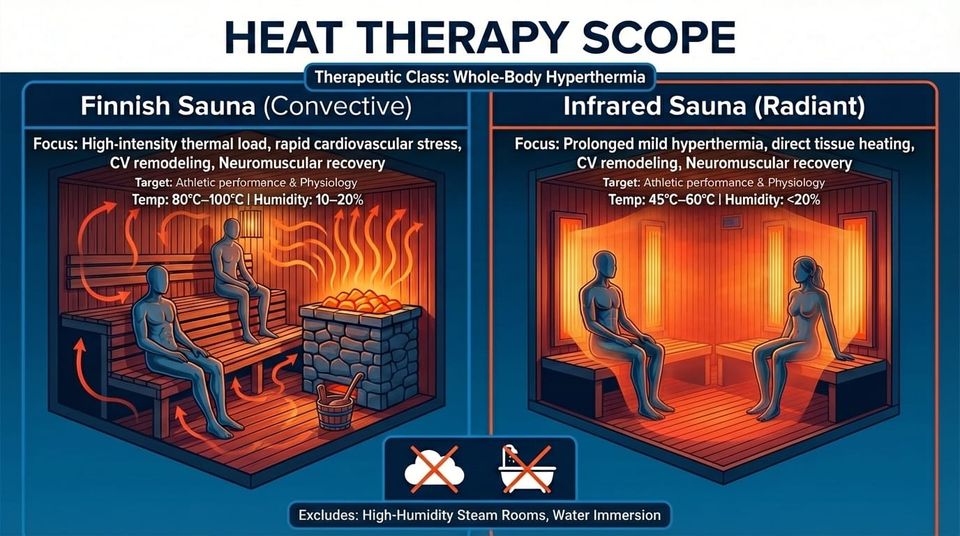
This guidance applies to the integration of passive heat therapy—specifically traditional Finnish sauna and infrared sauna—into recovery and training protocols for athletes and active populations.
It addresses the physiological mechanisms of heat adaptation, cardiovascular remodeling, and neuromuscular recovery. The recommendations assume a baseline of health free from unstable cardiovascular conditions and are distinct from active recovery modalities or cold therapy.
This synthesis distinguishes between the high-temperature convective heat of Finnish saunas and the lower-temperature radiant heat of infrared systems, clarifying where each modality is most effective.
Quantitative Anchors
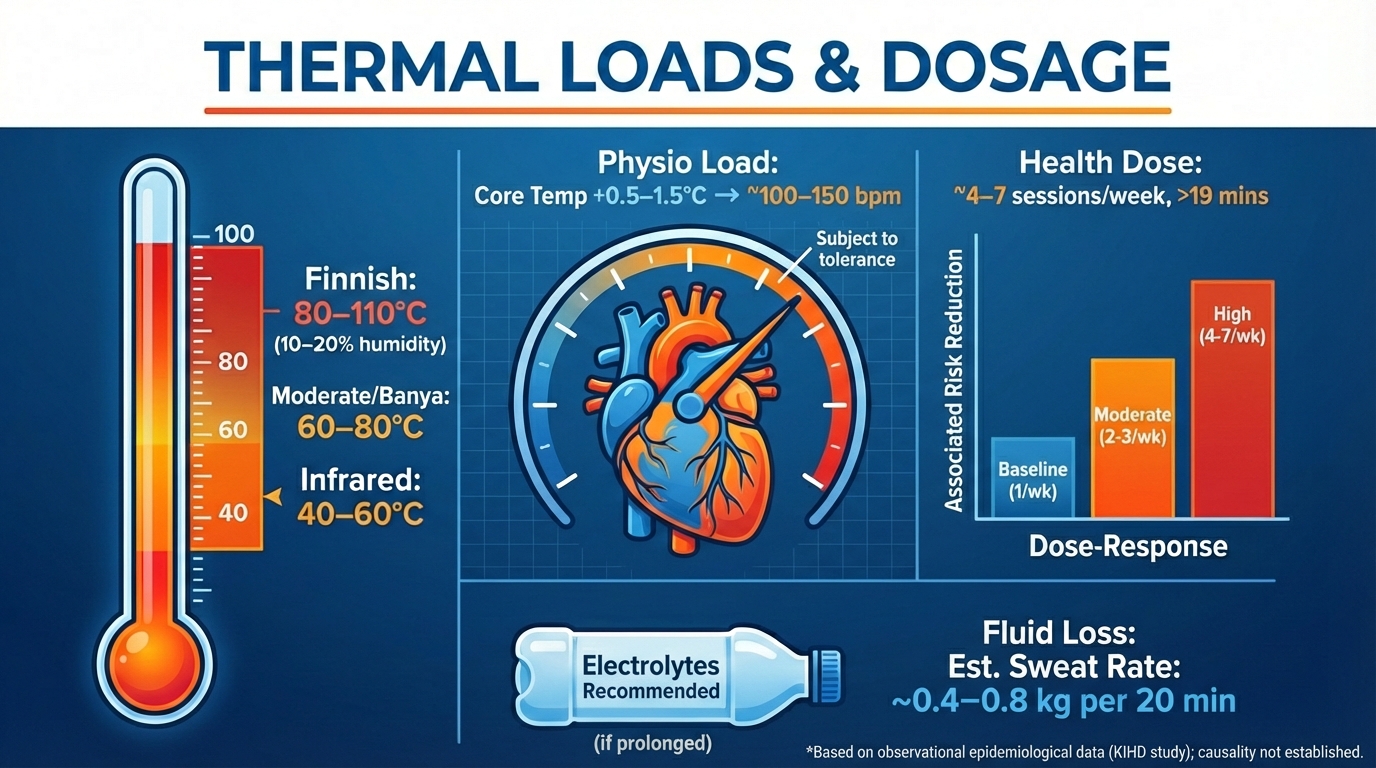
Effective implementation relies on adhering to specific thermal and temporal boundaries.
• Traditional Finnish saunas typically operate between 80 °C and 110 °C with low humidity (10–20%).
• Infrared saunas function at significantly lower air temperatures of 40 °C to 60 °C.
• Physiological adaptation is driven by core temperature elevation, typically increasing by 1–2 °C during a session.
• This elevation drives heart rate increases of approximately 30 beats per minute per degree Celsius of core temperature rise.
• Heart rate often peaking between 100 and 150 beats per minute—a load comparable to moderate-intensity aerobic exercise.
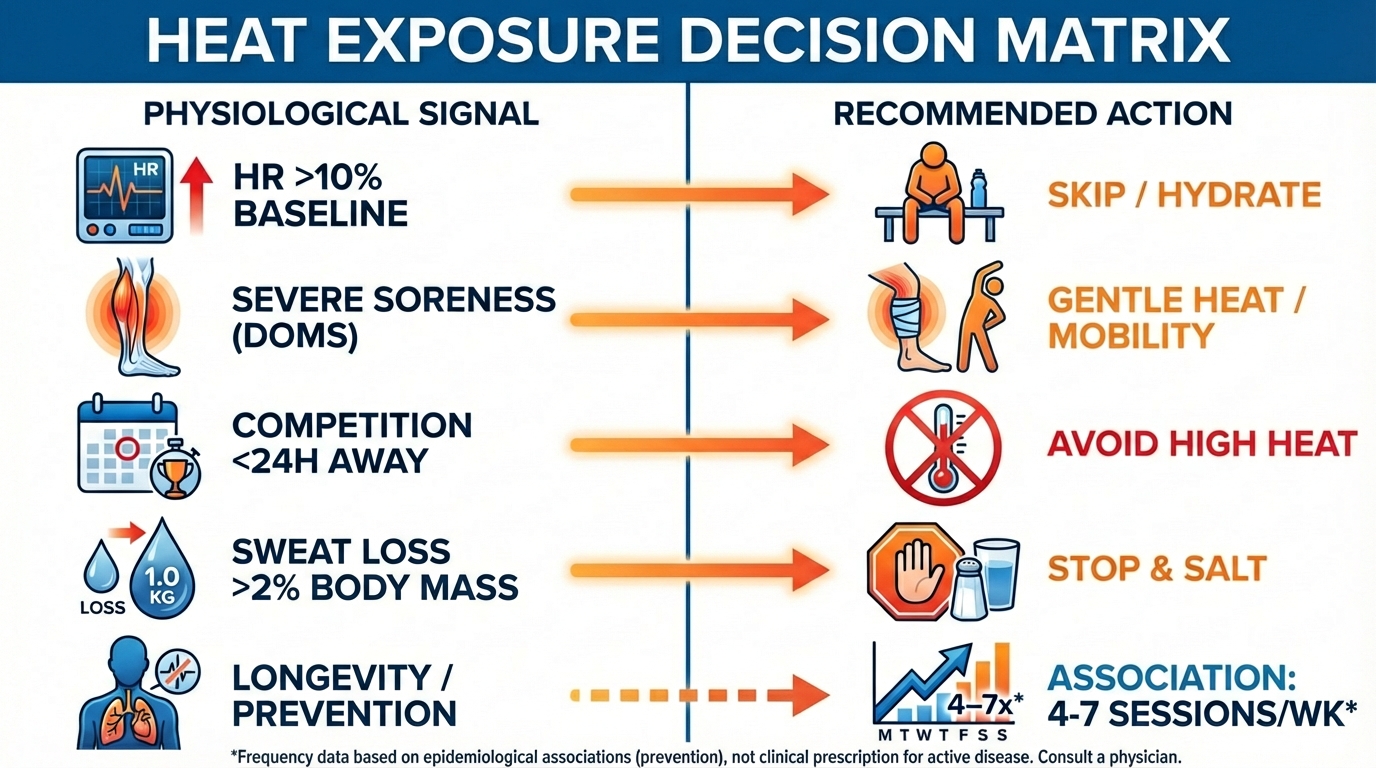
• For long-term cardiovascular and mortality benefits, epidemiological data suggests a frequency of 4–7 sessions per week is superior to 1–2 sessions.
• Session durations exceeding 19 minutes providing maximal protection.
• For athletic heat acclimation, protocols typically require 2–4 weeks of consistent exposure.
• This consistent exposure means 3 or more sessions weekly.
• Fluid losses during a standard 20-minute session range from approximately 0.4 to 0.8 kg.
• This necessitates precise rehydration strategies that include electrolytes, particularly sodium, rather than water alone.
Modality Selection
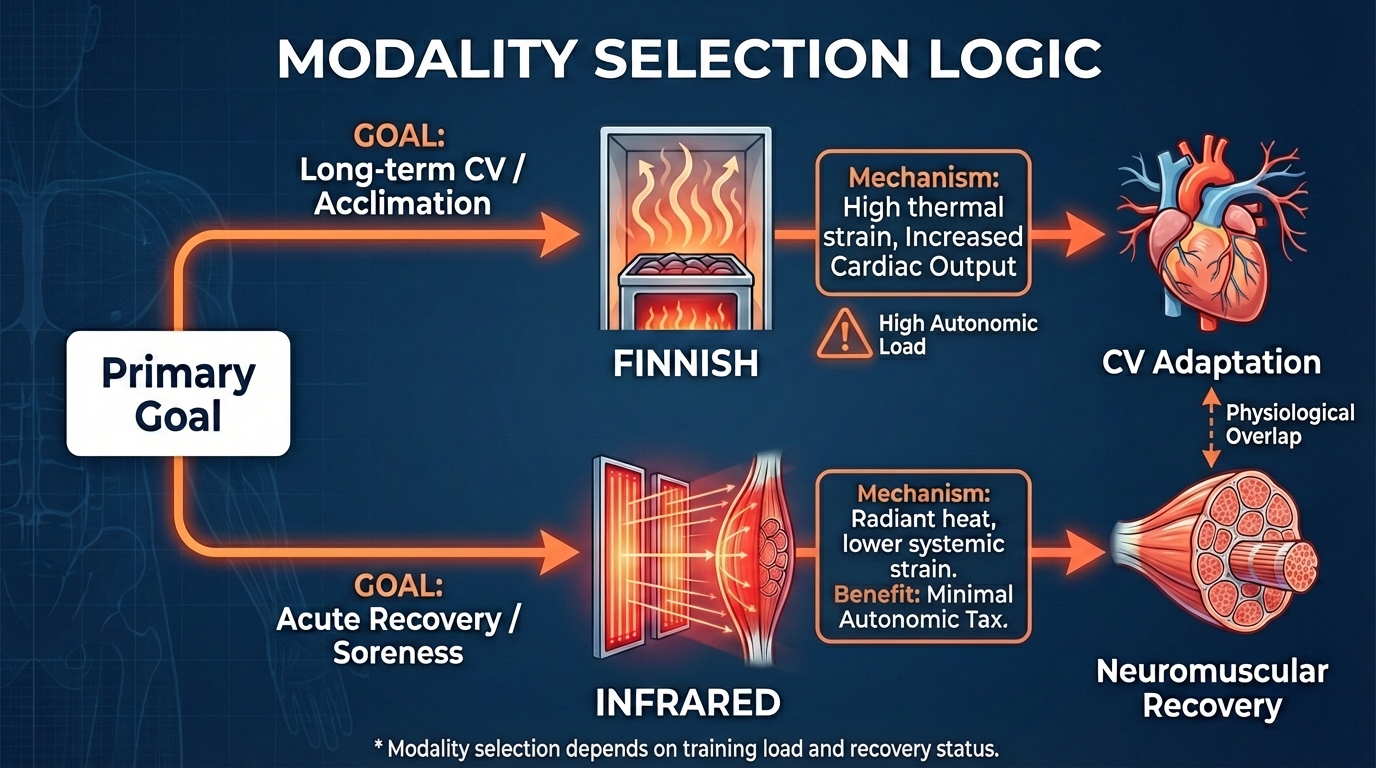
Practitioners must select the sauna modality based on the primary physiological objective and the proximity to peak performance demands. If the goal is long-term cardiovascular adaptation, endothelial function improvement, or heat acclimation, traditional Finnish sauna is the superior choice due to its higher thermal load and robust evidence base regarding mortality reduction and plasma volume expansion.
However, this high systemic strain comes with a cost: traditional sauna exposure can impair neuromuscular performance for up to 24 hours post-session due to accumulated fatigue and fluid loss. Therefore, if maximal physical performance is required the next day, traditional sauna should be cautiously managed or avoided.
Conversely, if the goal is acute neuromuscular recovery, reduction of subjective soreness, or relaxation without heavy cardiovascular taxation, infrared sauna is the logical preference. Its radiant heat warms the body directly at lower ambient temperatures, reducing systemic strain and minimizing the next-day performance decrements associated with hotter environments.
Decision-makers must also weigh logistical constraints; infrared units allow for longer, more tolerable sessions (up to 45 minutes) and are often more accessible, whereas Finnish saunas require shorter, more intense exposures to achieve similar core temperature thresholds.
Protocol Integration
• For acute recovery, sauna sessions are best positioned post-exercise.
• An infrared protocol typically involves 20–45 minutes at 40–60 °C to facilitate neuromuscular recovery and reduce soreness, making it suitable during high-intensity training blocks where maintaining power output is critical.
• For heat acclimation and endurance enhancement, a Finnish sauna protocol is applied post-training for 15–30 minutes at 80–100 °C.
• This should be repeated 3–4 times weekly for a minimum of 3 weeks to drive plasma volume expansion and lower heart rate at a given workload.
• In scenarios prioritizing long-term health span and cognitive protection, a high-frequency approach (4–7 times weekly) is recommended, utilizing Finnish sauna for 20 minutes or more per session.
• This can be periodized by utilizing the off-season or lower-intensity training phases to maximize these adaptations without competing for recovery resources.
• Rehydration protocols must be strictly enforced, initiating fluid intake within 30 minutes post-session with electrolyte-rich beverages to prevent dehydration-induced fatigue.
Decision Framework
 Thomas Mortelmans
Safety and Contraindications
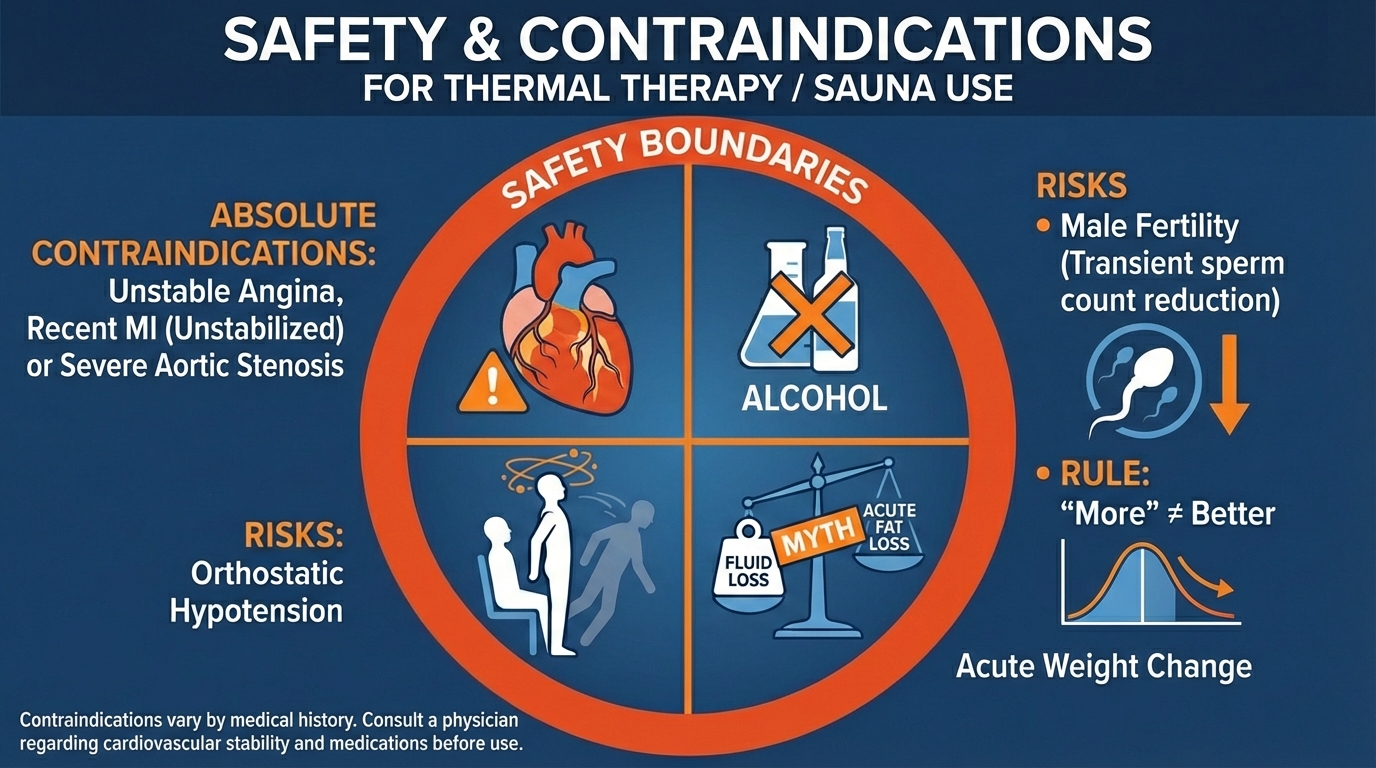
While generally safe, sauna use has distinct boundaries. Absolute contraindications include unstable angina, recent myocardial infarction (within 2 weeks), and severe aortic stenosis.
Individuals with low blood pressure are at risk for orthostatic hypotension upon standing after heat exposure due to rapid vasodilation. Alcohol consumption around sauna sessions drastically increases the risk of hypotension and arrhythmia and is strictly prohibited.
Male fertility is a specific consideration; sustained scrotal heating can temporarily reduce sperm count and motility. While these effects are reversible within months of cessation, athletes actively attempting conception may wish to limit exposure. Furthermore, the 'more is better' fallacy applies; extending duration beyond tolerance leads to heat exhaustion rather than adaptation.
Finally, relying on sauna for weight loss is mechanistically flawed as losses are fluid-based and rapidly regained; framing it as a metabolic weight-loss tool is inaccurate and potentially dangerous if rehydration is neglected.
I hope you enjoyed today`s content and have a great start of you week!
Kind regards,
Dr. Thomas Mortelmans
Power you can’t repeat is decoration.
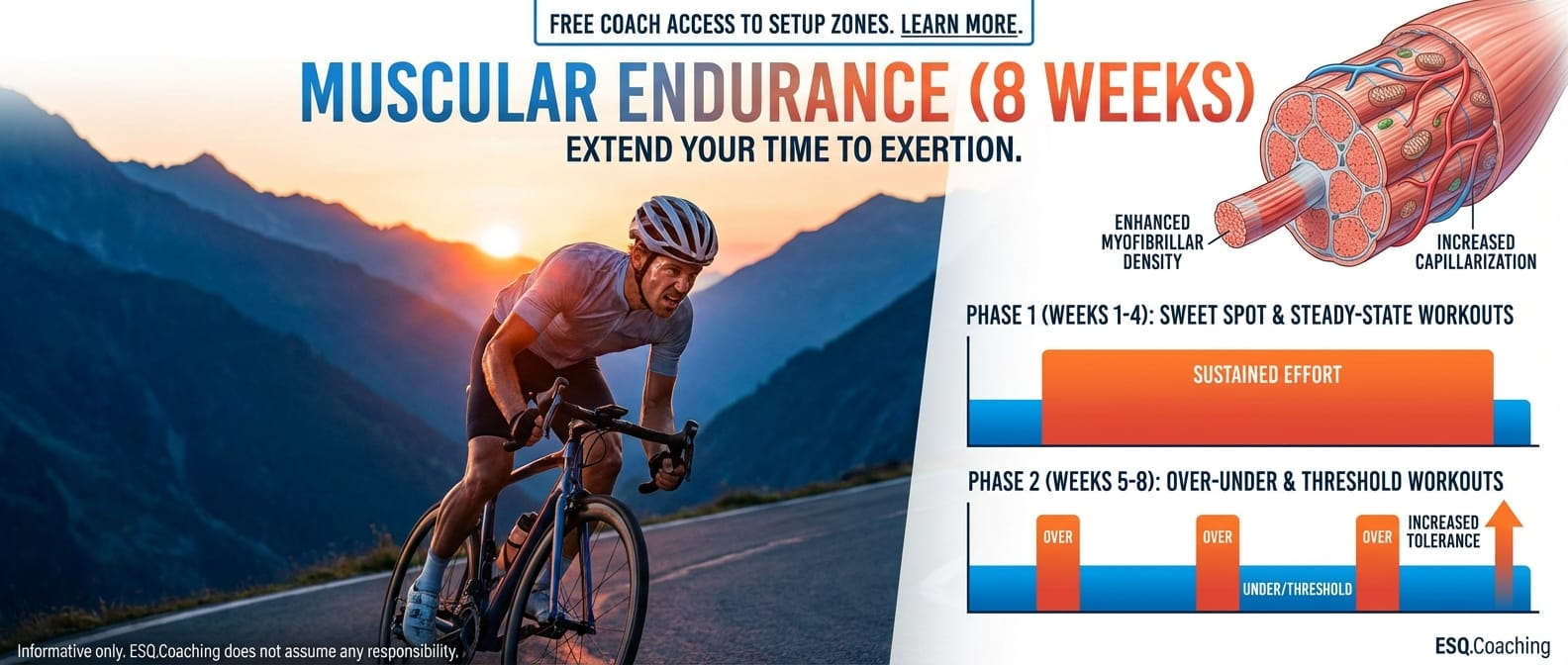
This 8-week muscular endurance block is designed to increase how long you can hold meaningful power once fatigue is already present. Sweet spot first, control later, no wasted matches.
Choose this if you feel strong early in rides but fade when the work actually matters. View Plan here
Disclaimer
The information provided in this newsletter is for educational purposes only and does not constitute medical advice. Exercise physiology is highly individual; what works for elite populations may not apply to everyone. Always consult with a physician before making significant changes to your training, nutrition, or supplementation protocols. The Scientist's Notebook and ESQ Coaching accept no liability for injuries or health issues arising from the application of these concepts.
References
1. Infrared sauna can accelerate recovery and support performance in team sport athletes | Summary: Article discussing recovery benefits of infrared sauna for athletes.
2. Infrared Sauna Benefits vs. Traditional Sauna Benefits: Which Is Best? | Summary: Blog comparing health benefits of infrared and traditional saunas.
3. The Effect of Passive Heating on Recovery and Performance: A Systematic Review | Summary: Review of passive heating methods like saunas and their impact on sports recovery.
4. Sauna therapy and acute heart failure: implications for treatment | Summary: Discussion of sauna use in the management and treatment of heart failure.
5. Therapeutic Benefits of Sauna Bathing for Heart Health | Summary: Detailed analysis of cardiovascular benefits from sauna bathing.
6. Sauna-induced effects on neuromuscular recovery | Summary: Investigation on how sauna use influences muscle recovery.
7. Systematic Review of Sauna Use: Effects on Long-Term Mortality | Summary: Evidence supporting sauna use for improving life expectancy.
8. Does Sauna Increase Testosterone? | Summary: Blog examining sauna use and its effect on testosterone levels.
Found this useful?
Get articles like this and free training calculators in your inbox every week.
Recommended reads
If this was useful, these are the other research-driven newsletters I actually read.

Member discussion