Entry #018: Top supplements for longevity and ahtletic performance
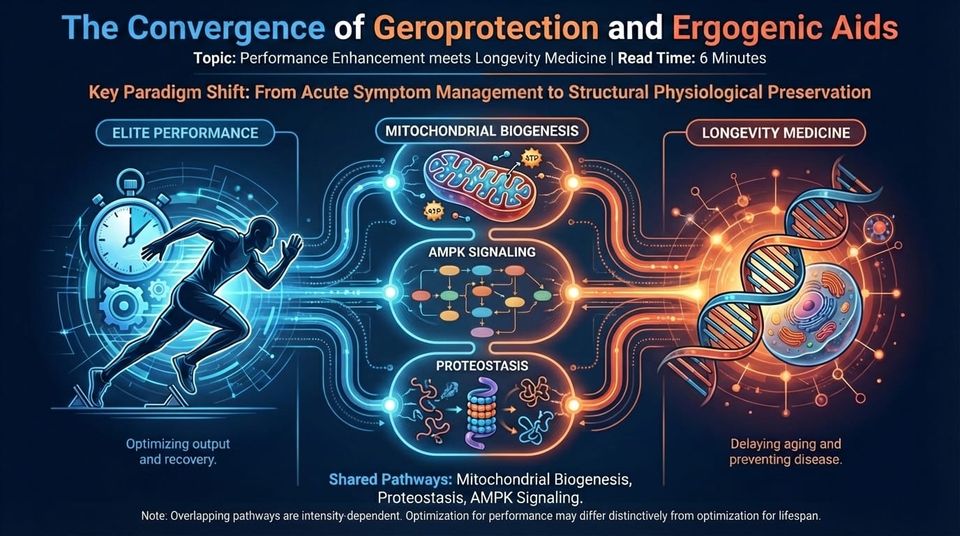
The traditional demarcation between performance enhancement and longevity medicine is dissolving. Emerging data from 2024 and 2025 indicate that the molecular pathways governing elite endurance adaptation—specifically mitochondrial biogenesis, proteostasis, and AMPK signaling—are highly convergent with those targeted by leading geroprotective interventions.
For the masters athlete and the science-literate coach, this necessitates a paradigm shift: supplementation strategies should no longer be categorized merely by their immediate ergogenic output, but by their capacity to modulate systemic aging hallmarks.
We are moving from a model of acute symptom management (buffering metabolic acidosis, attenuating fatigue) to one of structural physiological preservation.
Executive Summary – The Brief
• Mechanistic Convergence: Agents previously viewed solely as performance enhancers (Creatine, Taurine) or longevity drugs (NMN, Rapamycin) exert pleiotropic effects, simultaneously enhancing cellular bioenergetics and extending healthspan in mammalian models.
• NAD+ Dynamics: Nicotinamide Mononucleotide (NMN) supplementation (600–1200 mg/day) has demonstrated dose-dependent improvements in skeletal muscle oxygen extraction and ventilatory thresholds in specific populations, potentially independent of cardiac stroke volume changes.
• The BCAA Paradox: Isolated Branched-Chain Amino Acid supplementation may limit muscle protein turnover due to substrate unavailability; full-spectrum Essential Amino Acids (EAAs) enriched with Leucine are required to overcome the rate-limiting stoichiometry of protein synthesis.
• Mitochondrial Quality Control: Urolithin A and CoQ10 target distinct mitochondrial phases—mitophagy (clearance of dysfunction) and electron transport chain function, respectively—offering a dual approach to cellular energetics.
• Buffering Capacity: Beta-alanine and Sodium Bicarbonate remain the gold standard for managing H+ accumulation in high-intensity domains, with Beta-alanine requiring chronic loading (4–10 weeks) to achieve carnosine saturation.
• Polyphenol Timing: While chronic polyphenol loading (e.g., Resveratrol, Curcumin) supports endothelial function and recovery, acute high-dose antioxidant ingestion immediately post-exercise may blunt the reactive oxygen species (ROS) signaling required for hormetic adaptation.

The Science at a Glance
Foundational Principles
1. The Bioenergetic Intersection
Interventions that enhance mitochondrial efficiency for athletic output often confer longevity benefits by reducing reactive oxygen species (ROS) leak and preserving cellular integrity. For instance, NAD+ boosters do not merely provide substrate for ATP generation; they activate sirtuins (SIRT1/SIRT3), which deacetylate key metabolic enzymes, thereby coupling endurance capacity with genomic stability.
2. Stoichiometric Constraints in Anabolism
Muscle protein synthesis (MPS) operates via threshold-dependent kinetics contingent on the availability of all essential amino acids. The "BCAA Paradox" highlights that increasing Leucine (the trigger) without sufficient EAAs (the substrate) fails to sustain maximal MPS and may negatively impact protein balance. Effective supplementation requires complete EAA profiles to support the anabolic signal initiated by Leucine.
Scientist’s Insight
The distinction between "fueling" and "signaling" is critical. Carbohydrates are fuel; Leucine and NMN are signals. Leucine signals mTORC1 to synthesize tissue, while NMN supports sirtuin activity for repair.
The efficacy of these signals depends heavily on the background metabolic environment—specifically, the presence of adequate substrates (EAAs for Leucine, methyl donors for NMN metabolism) to execute the signaled instructions.

 Thomas Mortelmans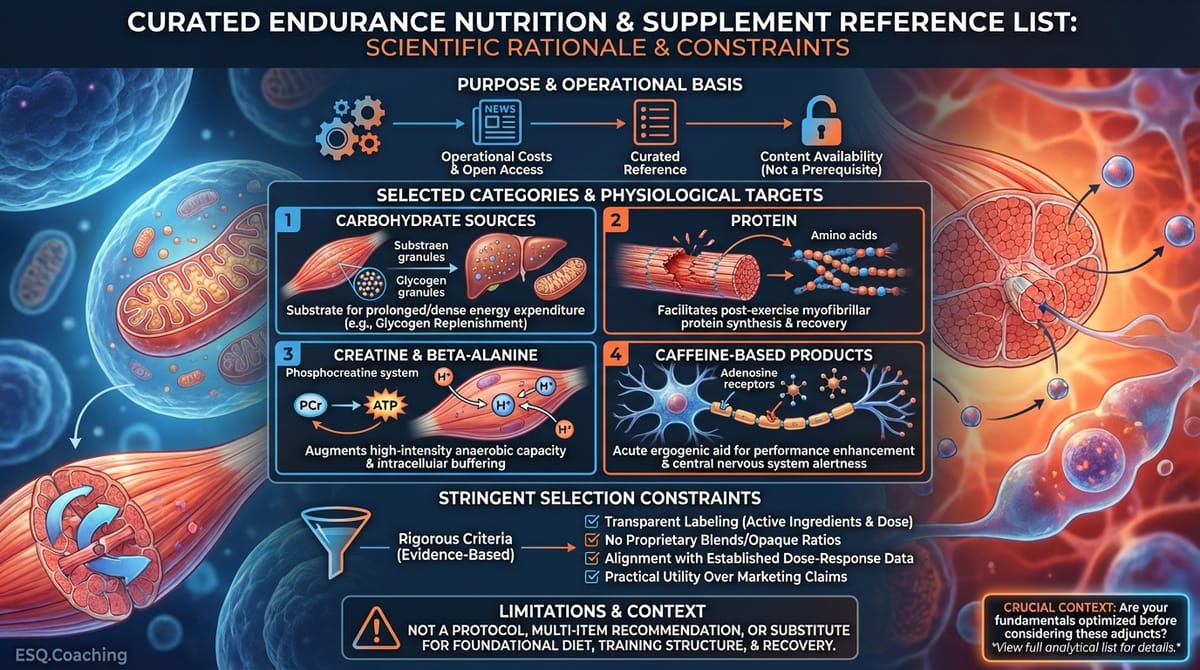
The Decision Matrix

Doses studied in the literature

The efficacy of these interventions is subject to significant inter-individual variability. For example, the conversion of dietary nitrates to nitric oxide is dependent on the oral microbiome, rendering some athletes "non-responders." Similarly, NAD+ precursor bioavailability varies by delivery mechanism (liposomal vs. powder) and individual salvage pathway efficiency.
Furthermore, while animal models (murine/primate) show robust longevity benefits from agents like Taurine and NMN, multi-decade human longitudinal data remains forthcoming.
Athletes must view these protocols as probabilistic optimization rather than guaranteed performance enhancement, acknowledging that measurement noise in field testing can obscure small but meaningful physiological changes.
Cheers,
Dr. Thomas Mortelmans
PS: Curious to know what you liked today.Tap here for a 45-second anonymous survey. I read every single note!
Legal Disclaimer
The information provided in this newsletter is for educational purposes only and does not constitute medical advice, diagnosis, or treatment. Always seek the advice of your physician or other qualified health provider with any questions you may have regarding a medical condition or before starting any new fitness or nutrition regimen. The Scientist’s Notebook and ESQ Coaching are not liable for any injuries or damages that may occur from the application of the information contained herein.
If you want to see what I read to keep my own work sharp outside this newsletter, this is the list.
 Thomas Mortelmans
References
4. Taurine deficiency as a driver of aging |
6. The role of zinc in athletic performance |
7. Can Magnesium Enhance Exercise Performance? |
8. Fruit-Derived Polyphenol Supplementation for Performance and Recovery |
9. The Importance of Vitamin D for Athletes |
11. Sodium Bicarbonate Supplements and Exercise Performance |
12. Effects of acute supplementation of Panax ginseng on endurance running in a hot & humid environment |
13. Nitrates for Cyclists: Does Beetroot Make you Faster? |
Found this useful?
Get articles like this and free training calculators in your inbox every week.
Recommended reads
If this was useful, these are the other research-driven newsletters I actually read.
Member discussion