Snippet #015: Gut Microbiota Adapt to Metabolize Systemic Lactate During Endurance Efforts
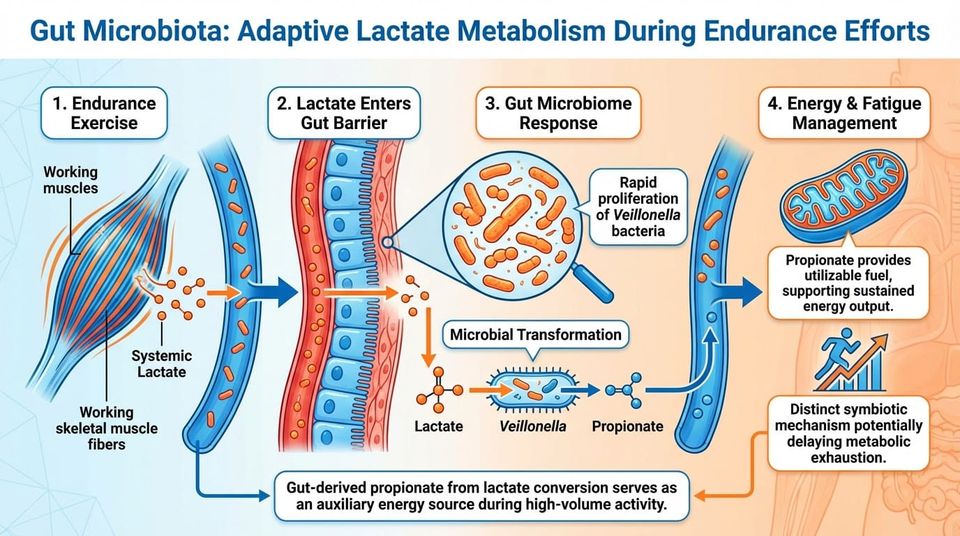
Current research identifies the intestinal microbiome as a responsive metabolic organ rather than a static passenger during physical exertion. During prolonged endurance efforts, the systemic accumulation of lactate appears to trigger a rapid proliferation of specific lactate-metabolizing bacteria, notably the genus Veillonella.
These bacteria effectively consume lactate produced by working muscles that has crossed into the gut barrier, converting this metabolic byproduct into propionate, a short-chain fatty acid that the human body can subsequently utilize for energy. This process represents a distinct symbiotic mechanism where the microbiome adjusts its composition to harvest fuel from the athlete's exercise-induced metabolic waste.
This implies that fatigue management is not solely the domain of muscular or cardiovascular systems but is partially regulated by the gut environment. By breaking down circulating lactate and synthesizing usable fuel, this microbial adaptation supports sustained energy output and may play a functional role in delaying the onset of metabolic exhaustion during high-volume training blocks or competition.
While these specific shifts in lactate-metabolizing taxa are well-documented in elite marathon and ultramarathon runners, the extent to which similar rapid adaptations occur in recreational athletes performing shorter duration exercise requires further investigation.
Reference:
Scheiman J, Luber JM, Chavkin TA, MacDonald T, Tung A, Pham LD, Wibowo MC, Wurth RC, Punthambaker S, Tierney BT, Yang Z, Hattab MW, Avila-Pacheco J, Clish CB, Lessard S, Church GM, Kostic AD. Meta-omics analysis of elite athletes identifies a performance-enhancing microbe that functions via lactate metabolism. Nat Med. 2019 Jul;25(7):1104-1109. doi: 10.1038/s41591-019-0485-4. Epub 2019 Jun 24. PMID: 31235964; PMCID: PMC7368972.
The plans you find here are built on a simple truth: Adaptation only happens when you apply the right stress, at the right time, in the right dose.
 Thomas Mortelmans
Disclaimer
The information provided in this newsletter is for educational purposes only and does not constitute medical advice. Exercise physiology is highly individual; what works for elite populations may not apply to everyone. Always consult with a physician before making significant changes to your training, nutrition, or supplementation protocols. The Scientist's Notebook and ESQ Coaching accept no liability for injuries or health issues arising from the application of these concepts.
Found this useful?
Get articles like this and free training calculators in your inbox every week.
Recommended reads
If this was useful, these are the other research-driven newsletters I actually read.
Member discussion