Entry #022: Nutritional Architecture for Body Composition Optimization
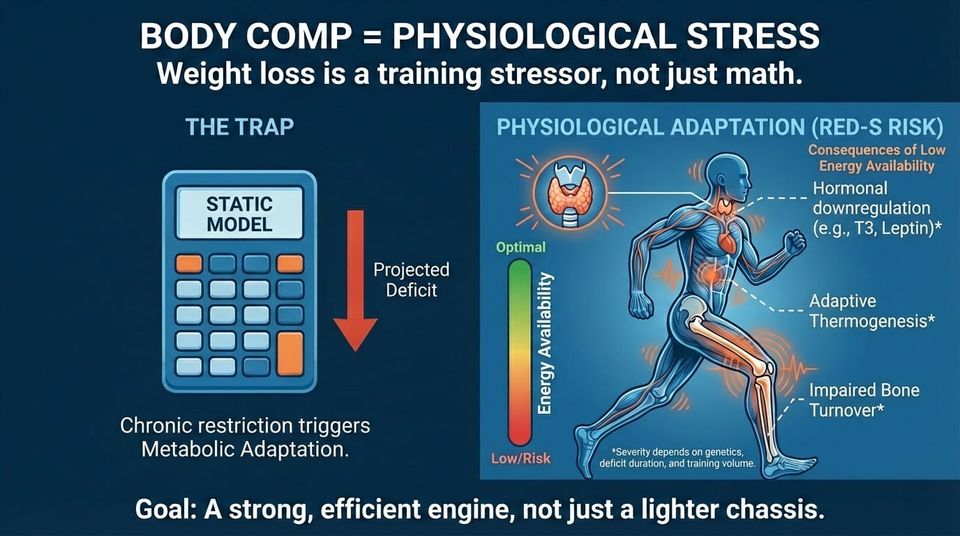
The goal of improving your power-to-weight ratio creates a natural conflict in your training. You are trying to eat less to reduce body fat, while simultaneously asking your muscles to adapt and grow from training. These two signals naturally work against each other.
A frequent mistake is thinking that weight loss is just a simple math problem of calories in versus calories out. This approach ignores how your body’s hormones and metabolism will slow down if you do not have enough energy left over to support your health.
Executive Brief
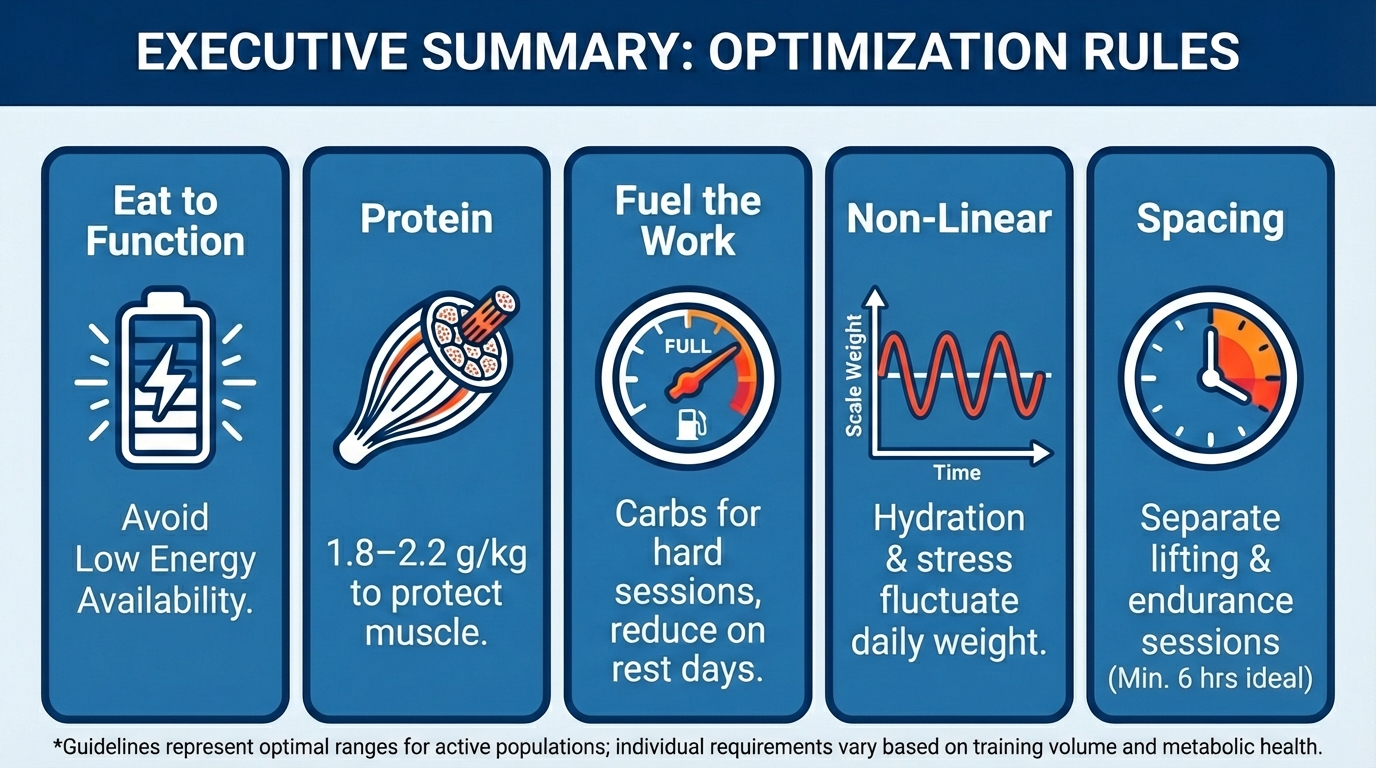
• Energy Thresholds: Your body struggles to function properly when 'Energy Availability' (energy left over after exercise) drops below roughly 30 calories per kilogram of lean mass. Safe weight changes typically happen in the 30–45 calorie range.
• Protein Needs: When eating fewer calories, endurance athletes need much more protein—often over 2.0 grams per kilogram of body weight—to stop the body from breaking down muscle tissue for fuel.
• The Deficit Limit: Cutting more than 500 calories a day is risky. It is strongly linked to muscle loss and a drop in thyroid hormone levels that controls metabolism.
• Carb Timing: 'Fuel for the work required' is the main rule. Cutting carbs all the time hurts performance; cutting them only on easy days helps burn fat and also will help with becoming fat-adapted, a topic which has been getting increased attention over the past few weeks.
• Ups and Downs: Weight loss is rarely a straight line. Factors like blood volume changes, carb storage, and water retention from inflammation can mask your progress.
• Lifting Weights: Combining strength training with endurance work is mandatory to keep your muscle while losing weight, even though balancing the two types of training can be difficult.
The Science at a Glance
Principle 1: Priorities of the Body
When energy is low, the body cares more about fuel than keeping big muscles. Without enough protein and heavy lifting to send a 'keep this' signal, the body will break down muscle tissue to get amino acids for energy.
You cannot starve fat off an athlete while training hard without also starving the muscle, unless you eat enough protein to protect it.
Principle 2: Energy Availability (The Fuel Gauge)
Energy Availability is the energy left for your body after subtracting exercise costs. Research shows that body systems start to shut down when this number drops too low (around 30 calories/kg of lean mass). The goal is a 'controlled instability' zone—usually 35–40 calories/kg—where fat is burned but health stays stable.
Principle 3: Fueling for Power
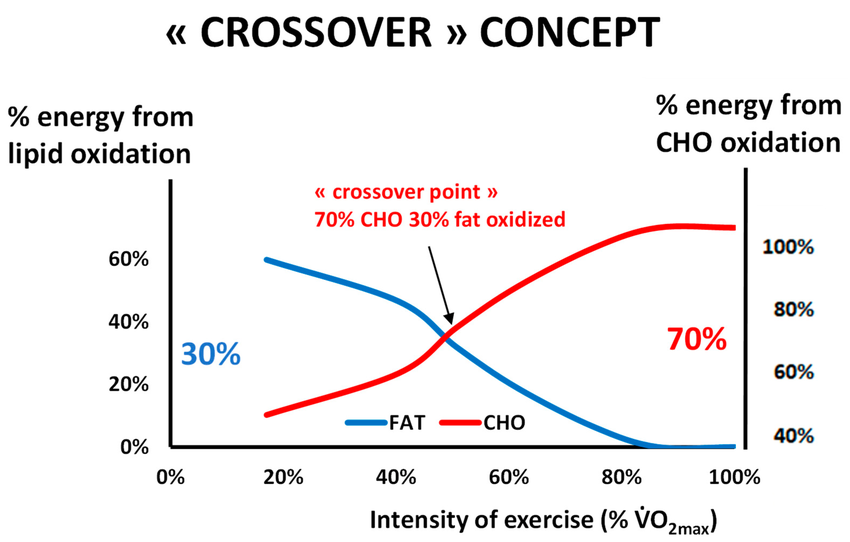
The body burns the most fat at moderate intensities. At high intensities, it burns mostly sugar (carbohydrates). Therefore, you must match carb intake to how hard you are training. Cutting carbs on hard days ruins the workout and provides no benefit.
The Decision Matrix
This framework describes signals used in sports-nutrition research to characterise when intentional weight loss has been studied as lower or higher concern. It cannot establish that a weight-loss plan is safe for an individual athlete. Menstrual disturbance, recurrent injury, marked fatigue, low energy availability or disordered eating warrant assessment by an appropriate healthcare professional.
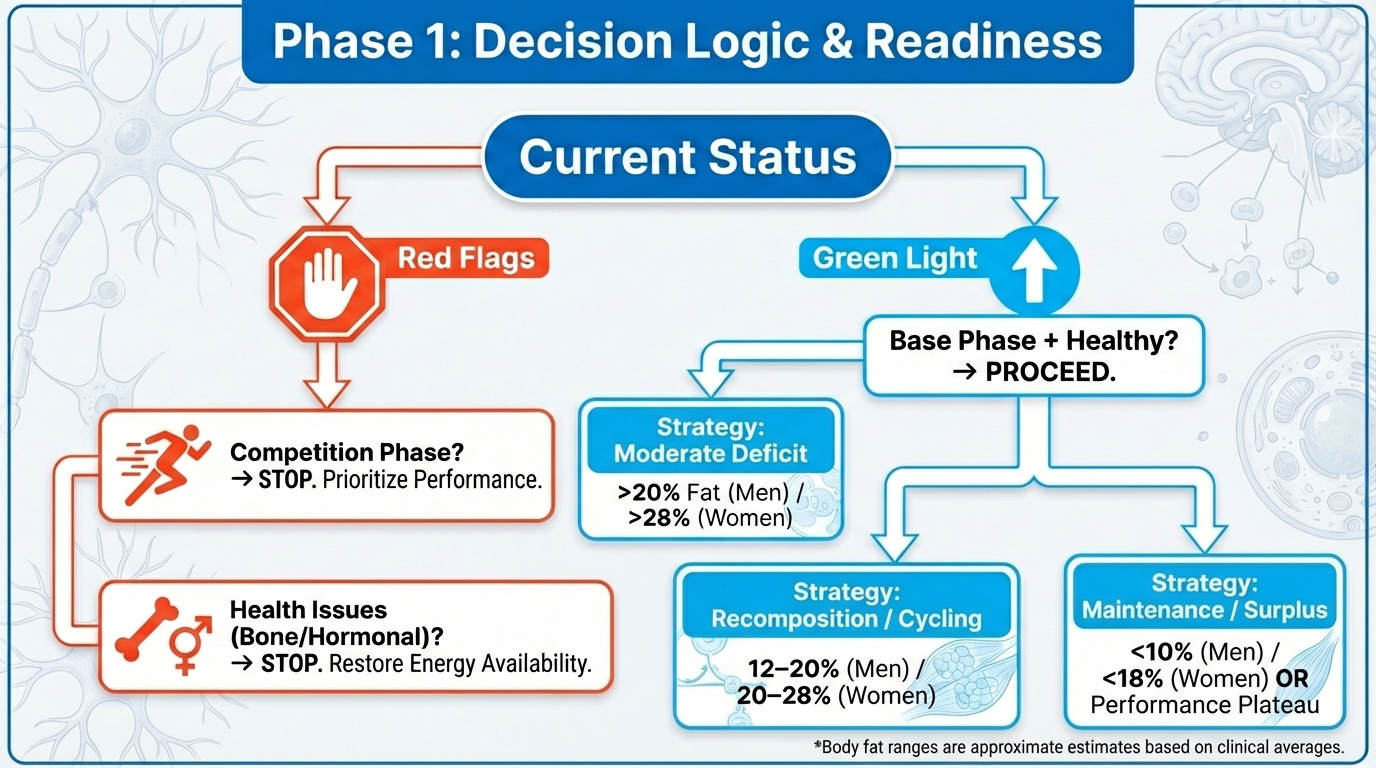
Simple Check: If an athlete sees performance drop significantly (power goes down, heart rate recovers slowly) even if they haven't reached their goal weight, the cost of the diet is too high. Stop the deficit immediately.
The Protocol
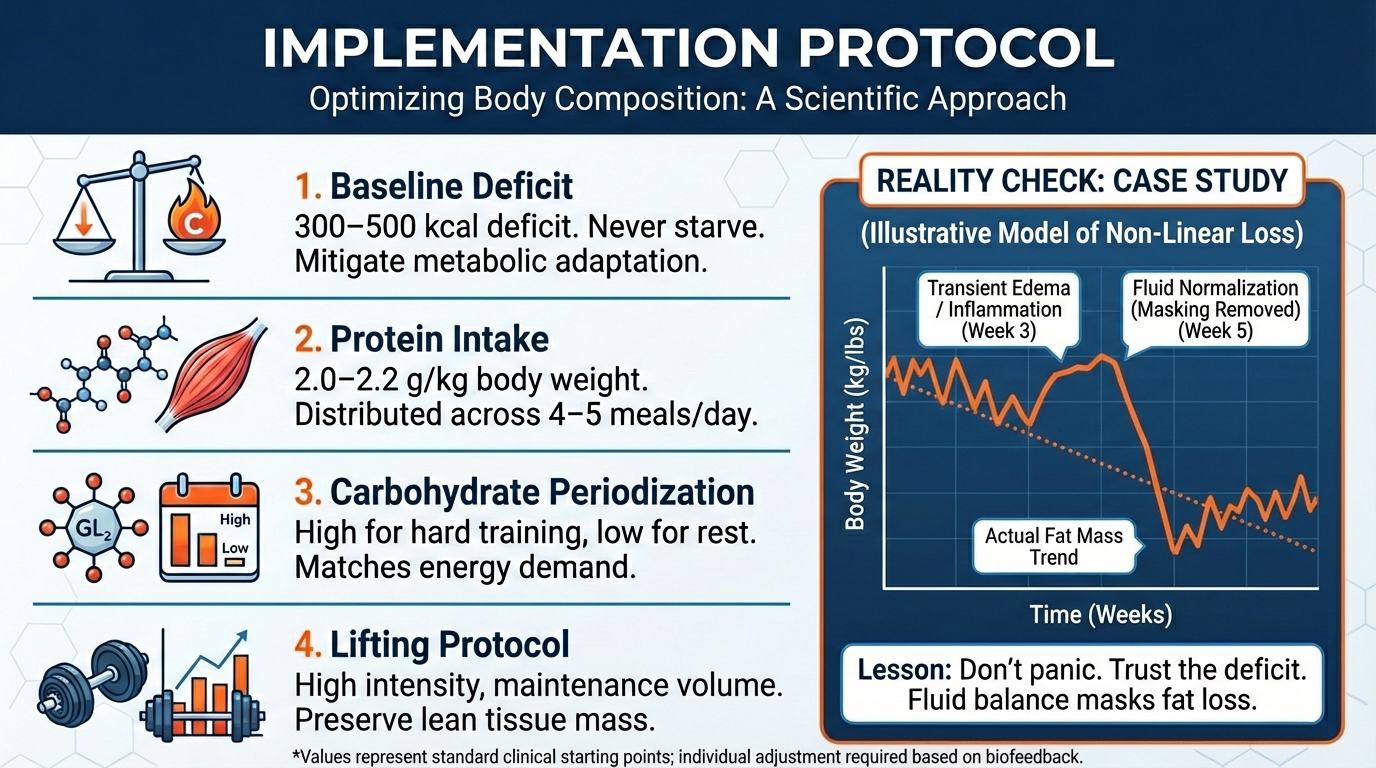
1. Starting Point
Estimate Fat-Free Mass (Lean Mass) using a scan or skinfolds. Calculate how many calories are burned daily using a reliable activity tracker.
Goal: A deficit of 250–500 calories per day maximum.
2. Protein Targets
• Set protein intake at 1.8–2.2 grams per kg of total body weight.
• Aim for 4–5 servings of protein per day.
• Each serving should be 25–35g.
• Space protein intake every 3–4 hours to help muscle repair.
• Consume roughly 25g of high-quality protein within 45 minutes after training.
3. Carb Timing (The Switch)
• Hard Days (Intervals/Long Rides): 6–8 g/kg Carbs. Eat mostly before, during, and after training. Do not cut calories these days.
• Easy Days (Recovery/Zone 2): 2–3 g/kg Carbs. Create the calorie deficit on these days.
• During Training: Eat 60–90g of carbs per hour for sessions over 90 mins to protect fuel stores and lower stress.
4. Strength Work
Include 2 sessions/week of heavy lifting (>80% max effort) to tell the body to keep muscle.
Case Study: The Reality of Weight Loss
• Subject: Male Cyclist
• Initial Weight: 74kg
• Goal Weight: 71kg
Plan: Cut 400 calories per day.
• Week 1-2: Weight drops to 72.5kg. Power stays good.
• Week 3: Weight goes back up to 73.2kg even though he stuck to the diet.
Analysis: He trained more. His blood volume increased and his muscles stored more fuel and water. Stress hormones also caused water retention.
Action: Stuck to the plan. Did not cut more calories.
• Week 5: The "Whoosh" effect. Weight dropped and settled at 71.8kg.
Result: 2.2kg loss over 6 weeks. Power stayed the same (Power-to-weight improved).
Key Lesson: Short-term weight swings are often just water and hydration, not fat. Reacting to the scale every day leads to mistakes.
Hope you enjoyed today`s edition.
Best regards,
Dr. Thomas Mortelmans
Long events don’t fail at the start. They fail late.
This 12-week Gran Fondo plan focuses on fatigue resistance, fueling under load, and holding power deep into long efforts. Not peak numbers, but repeatable performance when it counts.
Use this if you want to finish strong instead of just finishing. View Plan here

Disclaimer
The information provided in this newsletter is for educational purposes only and does not constitute medical advice. Exercise physiology is highly individual; what works for elite populations may not apply to everyone. Always consult with a physician before making significant changes to your training, nutrition, or supplementation protocols. The Scientist's Notebook and ESQ Coaching accept no liability for injuries or health issues arising from the application of these concepts.
Evidence and references
1. Nutritional Strategies for Supporting Endurance and Adaptation | Summary: Research article providing insights into nutritional interventions for optimizing endurance performance.
2. Metabolic Responses to Exercise Training | Summary: This study discusses the metabolic and hormonal changes seen in response to training under different dietary conditions.
3. The Role of Macronutrient Timing in Body Composition | Summary: Article examining how the timing of food intake affects muscle repair and body composition.
4. Energy Balance and Muscle Proteolysis | Summary: Research focusing on the relationship between energy intake, exercise, and muscle breakdown.
5. Protein Intake Recommendations for Athletes | Summary: Review of protein guidelines aimed at enhancing athletic performance and muscle maintenance.
6. Mechanisms of Lipid Oxidation in Endurance Training | Summary: Investigates how fat burning is controlled during endurance exercises.
7. Carbohydrate Periodization and Performance Outcomes | Summary: Discusses timing carbohydrate intake in relation to fuel usage during varied training intensities.
8. Thresholds of Energy Availability in Athletes | Summary: Provides critical insights into energy availability levels that affect hormonal and performance outcomes in athletes.
Found this useful?
Get articles like this and free training calculators in your inbox every week.
Recommended reads
If this was useful, these are the other research-driven newsletters I actually read.


Member discussion