Entry #028: Block and reverse periodization vs traditional + polarized
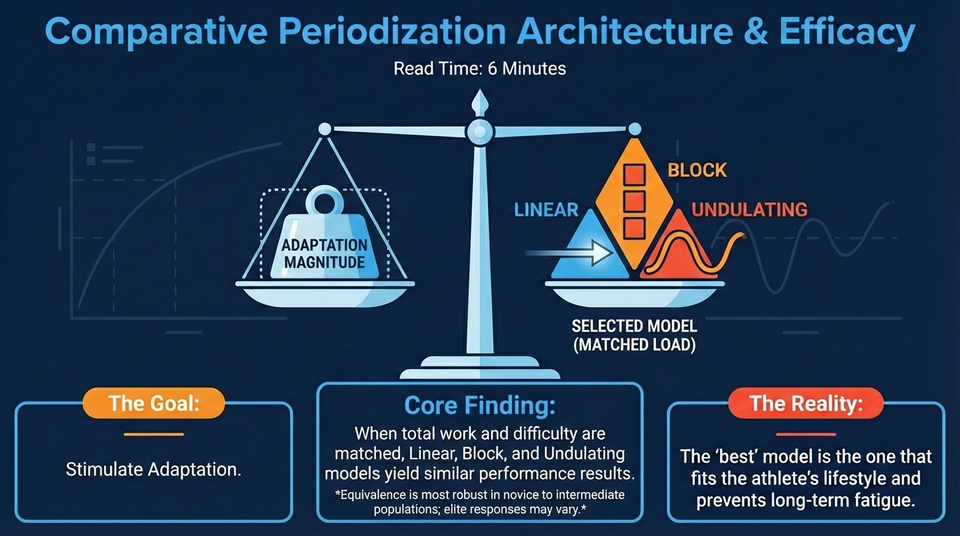
The way we organize training stress—periodization—remains a hot topic in exercise science. While the goal is to adjust volume, intensity, and frequency to stress the body and trigger recovery and growth, the reality is simple.
Recent reviews of research show a surprising result: when the total amount of work and difficulty are the same, the specific plan (Linear, Block, or Undulating) often leads to very similar performance results. This finding suggests that sticking rigidly to one 'perfect' method isn't necessary.
For the coach or athlete, the decision is not which model is best in a lab, but which one fits the athlete's life—avoiding the loss of fitness from long linear phases, the deep fatigue of intense blocks, or the confusion of mixing everything together.
Executive Summary – The Brief:
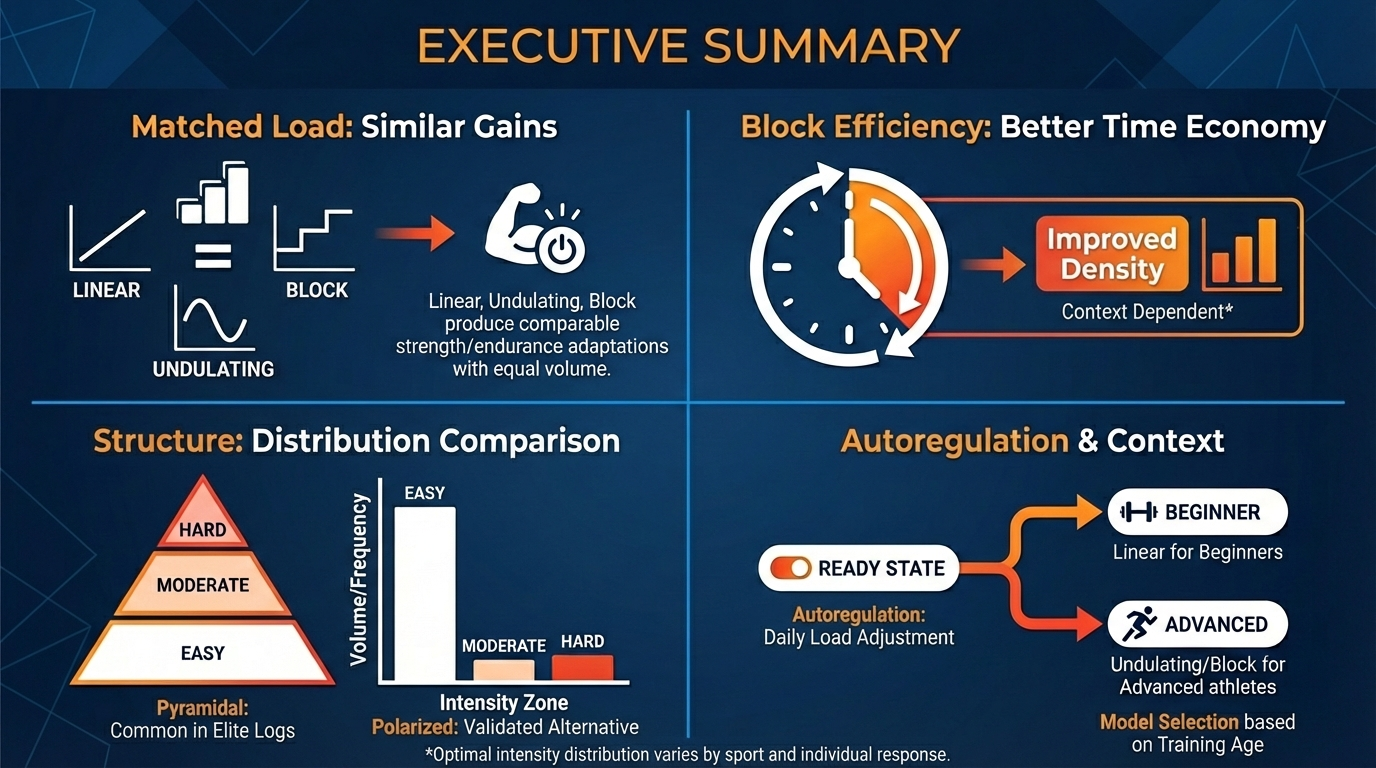
• Equivalence of Matched Load: Research summaries show that when total work and intensity are the same, Linear, Undulating, and Block models produce similar improvements in endurance and strength.
• Block Efficiency: While the final results may be similar, Block training has shown better time efficiency. Some athletes reached similar fitness levels with significantly fewer total training hours (e.g., ~120 fewer hours in kayakers) compared to mixed models.
• The Polarized vs. Pyramidal Nuance: Although Polarized training (80/20 split) is often called optimal, looking at elite training logs shows a 'Pyramidal' style is very common (lots of easy, some moderate, little hard). This structure may work better for many athletes.
• Reverse Periodization Validity: Current evidence does not show that Reverse periodization (starting fast, finishing long) is physically better than traditional models, though it may offer a nice mental change or help during rehab.
• Autoregulation Efficacy: Adjusting training based on how you feel (using rating of perceived exertion or speed) consistently helps strength gains by accounting for daily energy levels and readiness.
• Context-Dependent Selection: Linear models remain great for beginners due to steady progression; Undulating and Block models are often needed for advanced athletes to avoid getting stuck in a rut.
The Science at a Glance:
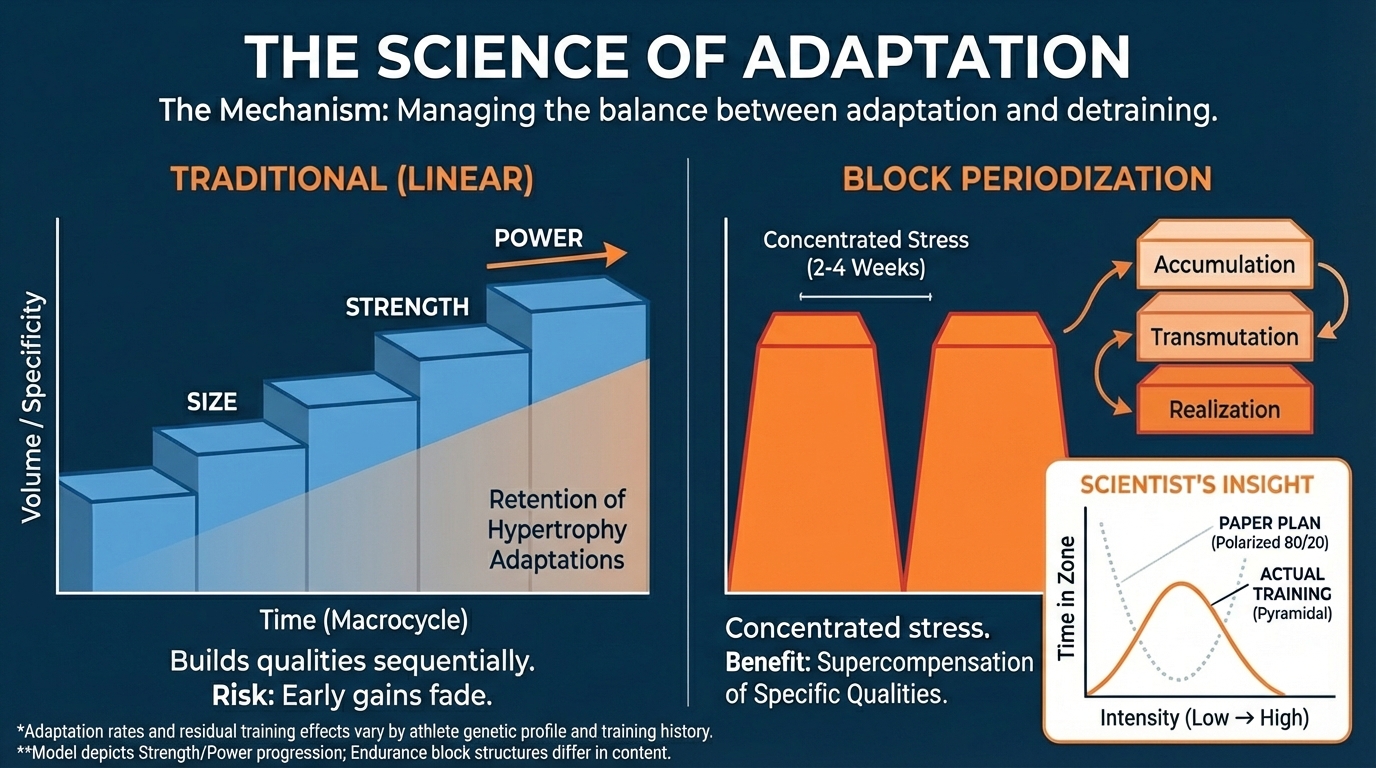
The main reason periodization works is that it manages the balance between getting used to training and losing fitness. Traditional (Linear) periodization builds qualities one by one (Size -> Strength -> Power), but faces the issue of 'detraining,' where fitness gained early fades before the race.
Block periodization tries to fix this by focusing hard on one thing for short phases (2-4 weeks). While some data suggest Block training gives a bigger boost to aerobic power in specific groups, other comparisons show no big difference in race times when total work is equal.
Physically, the adaptations differ slightly: Traditional models may improve muscle efficiency steadily, while Block models appear to boost blood oxygen capacity quickly due to the concentrated stress.
Foundational Principles:
1. The Principle of Stimulus Concentration vs. Distribution
Growth comes from the size and newness of the stress. Block periodization assumes that hitting one target hard sends a clearer signal to the body than trying to do everything at once. However, this causes high fatigue and can backfire if the concentrated load overwhelms your recovery.
It is critical to distinguish between the plan on paper and what actually happens. Research shows that while many plans aim for Polarized (80% Easy, 20% Hard), elite athletes often drift toward Pyramidal structures because moderate fatigue builds up. The benefits of Polarized training in studies are often seen when compared to poorly designed plans, rather than solid Pyramidal ones.
2. The Autoregulatory Imperative
Fixed plans assume your body adapts in a straight line, which rarely happens. Autoregulation (adjusting load based on speed or effort) accounts for the ups and downs of biology—sleep, food, and life stress. Evidence suggests that flexible groups often beat fixed-plan groups because they avoid wasting energy on bad days and push harder on good days.
The Decision Matrix:
The Protocol: Implementing a Concentrated Block Mesocycle
This protocol outlines a 4-week Block structure designed to break plateaus in advanced athletes. It assumes you have a solid training background.
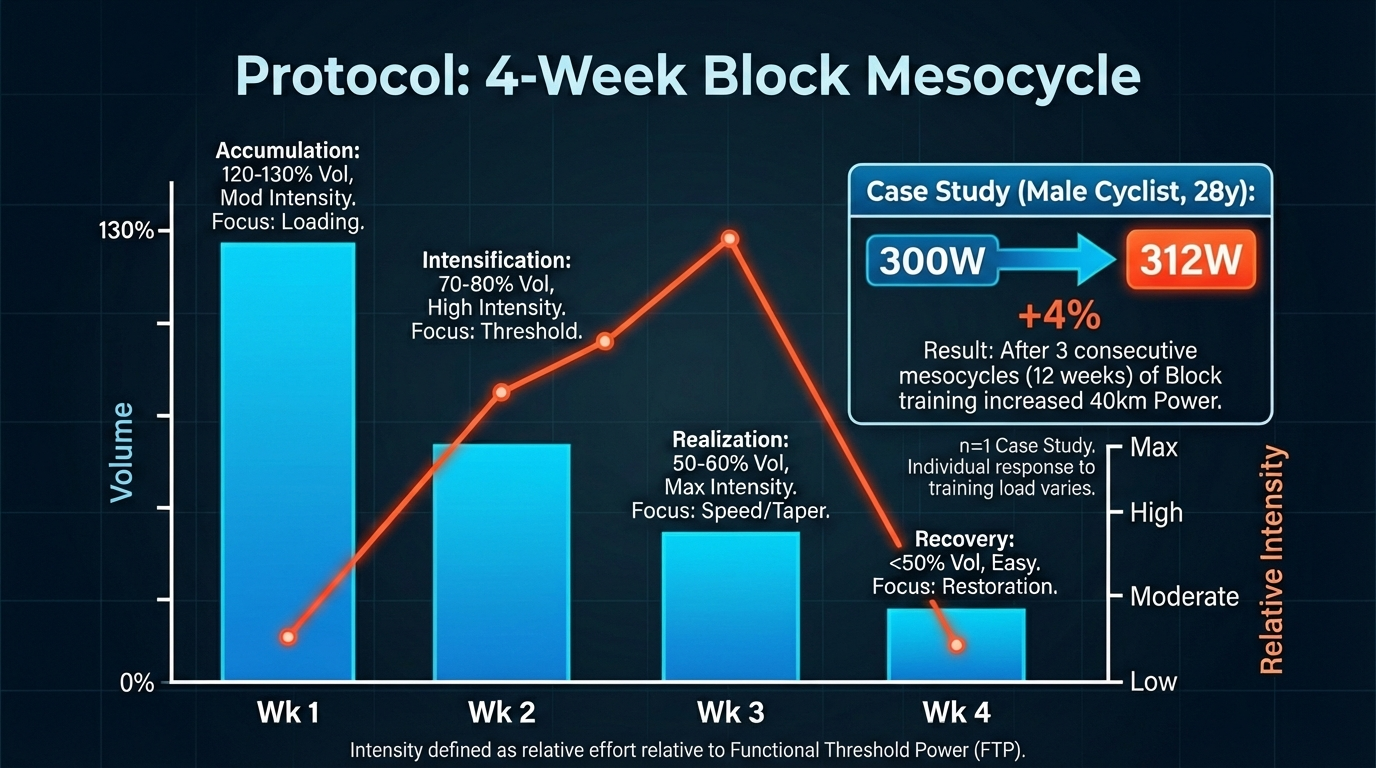
Week 1: Accumulation (High Volume / Moderate Intensity)
• Focus: Aerobic capacity / Muscle endurance.
• Volume: 120-130% of average weekly load.
• Intensity: 60-75% of max; strictly easy/moderate.
• Goal: Create deep fatigue; drain fuel stores; push the aerobic system.
Week 2: Intensification (Moderate Volume / High Intensity)
• Focus: Threshold / Strength.
• Volume: 70-80% of average.
• Intensity: Hard intervals or >85% heavy loads.
• Goal: Turn general fitness into specific power; high tension on muscles.
Week 3: Realization (Low Volume / Maximal Intensity)
• Focus: Speed / Max Power.
• Volume: 50-60% of average.
• Intensity: Race pace or >90% max; high speed.
• Goal: Shed fatigue (taper) while keeping muscles sharp.
Week 4: Recovery / Transition
• Focus: Active recovery.
• Volume: <50% of average.
• Intensity: Low (Easy zone only).
• Goal: Complete restoration of energy and mood.
Case Study:
Subject: Male Cyclist, 28 years old. Training age: 10 years.
Status: Stuck at 40km Time Trial power (300W) for 18 months using Linear plans.
Intervention: Switched to Block Periodization to fix 'stagnant' training.
Execution
• Performed three consecutive Block cycles (12 weeks).
• Accumulation blocks focused solely on Zone 2 volume (15h/week).
• Intensification blocks introduced hard threshold work (4x15min).
• Realization blocks used short, very hard intervals (40/20s).
Outcome
• 40km Power increased to 312W (+4%).
• Aerobic max increased by 3.5%.
Note on Variability: Subject reported higher tiredness and moodiness during Accumulation weeks compared to Linear training. Performance gains were bumpy, with numbers actually dipping during Week 1 of each block before improving.
Limits of application
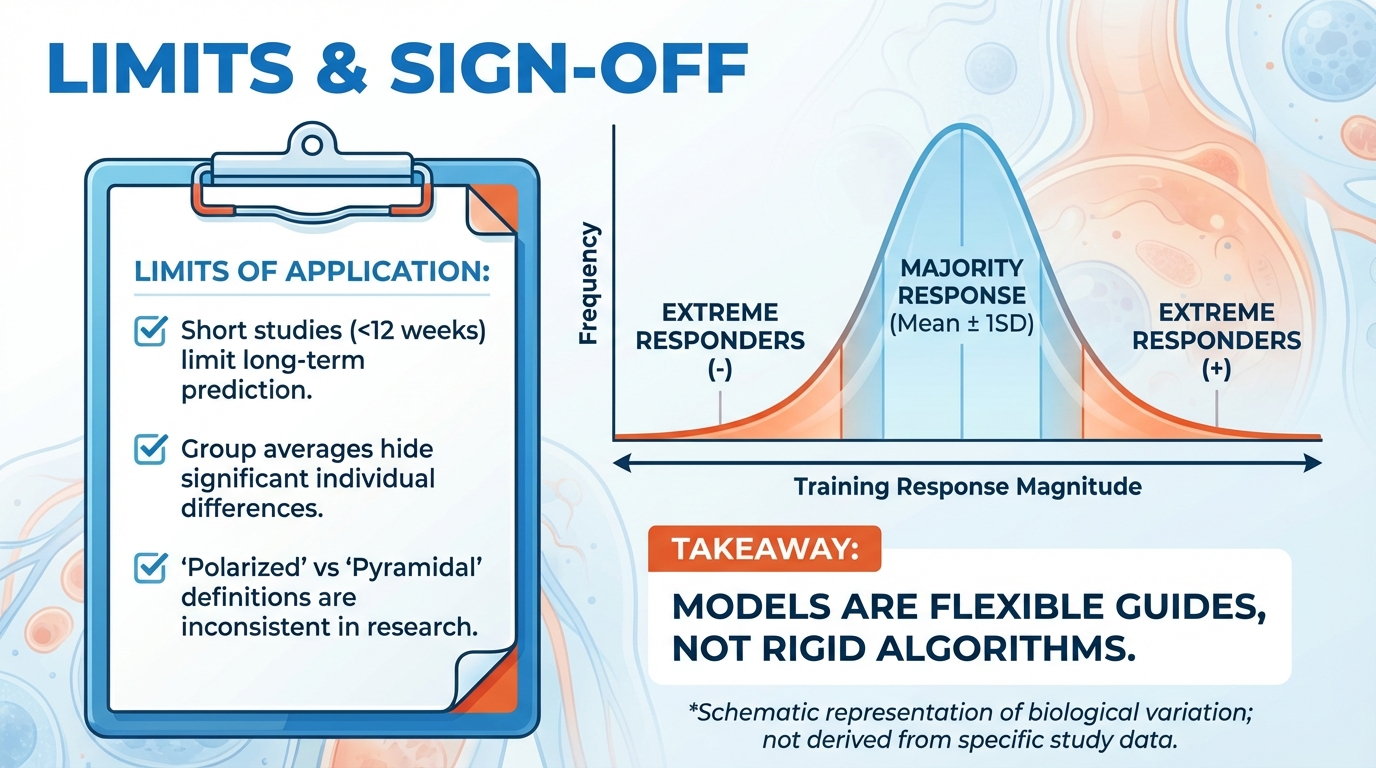
The research on periodization is limited because studies use different methods. Most studies are short (<12 weeks), making it hard to predict results for multi-year athlete development.
Furthermore, 'equivalence' in study results does not mean everyone responds the same way; individual differences are significant and often hidden by group averages.
Finally, the definitions of 'Polarized' and 'Pyramidal' are often mixed up in research, complicating how we apply intensity rules. Coaches must view these models as flexible guides rather than rigid algorithms.
Best regards,
Dr. Thomas Mortelmans
References:
2. Polarized training is not optimal for endurance athletes - Sportsmith.
3. Reverse Periodization for Improving Sports Performance: A Systematic Review - PMC.
4. Traditional vs Block Periodized Strength Training - NSCA.
6. Reverse Periodization for Improving Sports Performance: A Systematic Review - PubMed.
7. Block periodization of endurance training – a systematic review and meta-analysis - PMC.
10. Concurrent Resistance Training - AIM7.
12. Autoregulated Periodization - Brookbush Institute.
16. Do we Know about Complex-Contrast Training? A Systematic Scoping Review - PMC.
Disclaimer
The information provided in this newsletter is for educational purposes only and does not constitute medical advice. Exercise physiology is highly individual; what works for elite populations may not apply to everyone. Always consult with a physician before making significant changes to your training, nutrition, or supplementation protocols. The Scientist's Notebook and ESQ Coaching accept no liability for injuries or health issues arising from the application of these concepts.
Found this useful?
Get articles like this and free training calculators in your inbox every week.
Recommended reads
If this was useful, these are the other research-driven newsletters I actually read.




Member discussion