Entry #027: Sleep Physiology and Performance Architecture
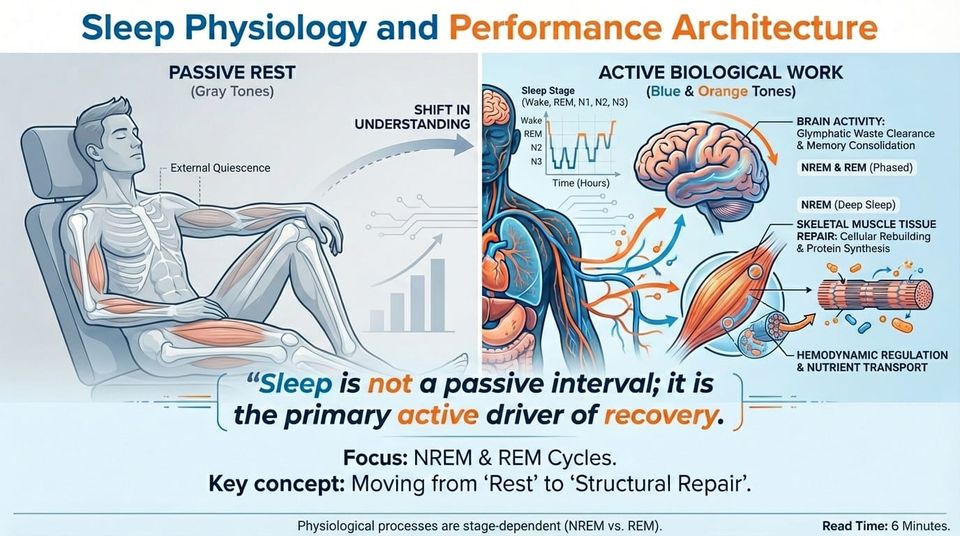
The prevailing model of athletic adaptation frequently treats sleep as a passive interval between training stimuli, yet the physiological reality is that sleep functions as the primary active driver of recovery.
For the endurance athlete, the distinction between merely resting and achieving structural physiological repair is determined by sleep architecture—specifically the quality of Non-Rapid Eye Movement (NREM) and Rapid Eye Movement (REM) cycles.
Current literature indicates that sleep deprivation is not simply a state of fatigue but a breakdown-focused environment characterized by impaired fuel storage, hormonal imbalance, and the buildup of waste products in the brain.
This briefing examines the mechanics of sleep as a performance variable, moving beyond hygiene basics to explore the hormonal and metabolic interactions that dictate long-term athletic development.
Executive Summary – The Brief
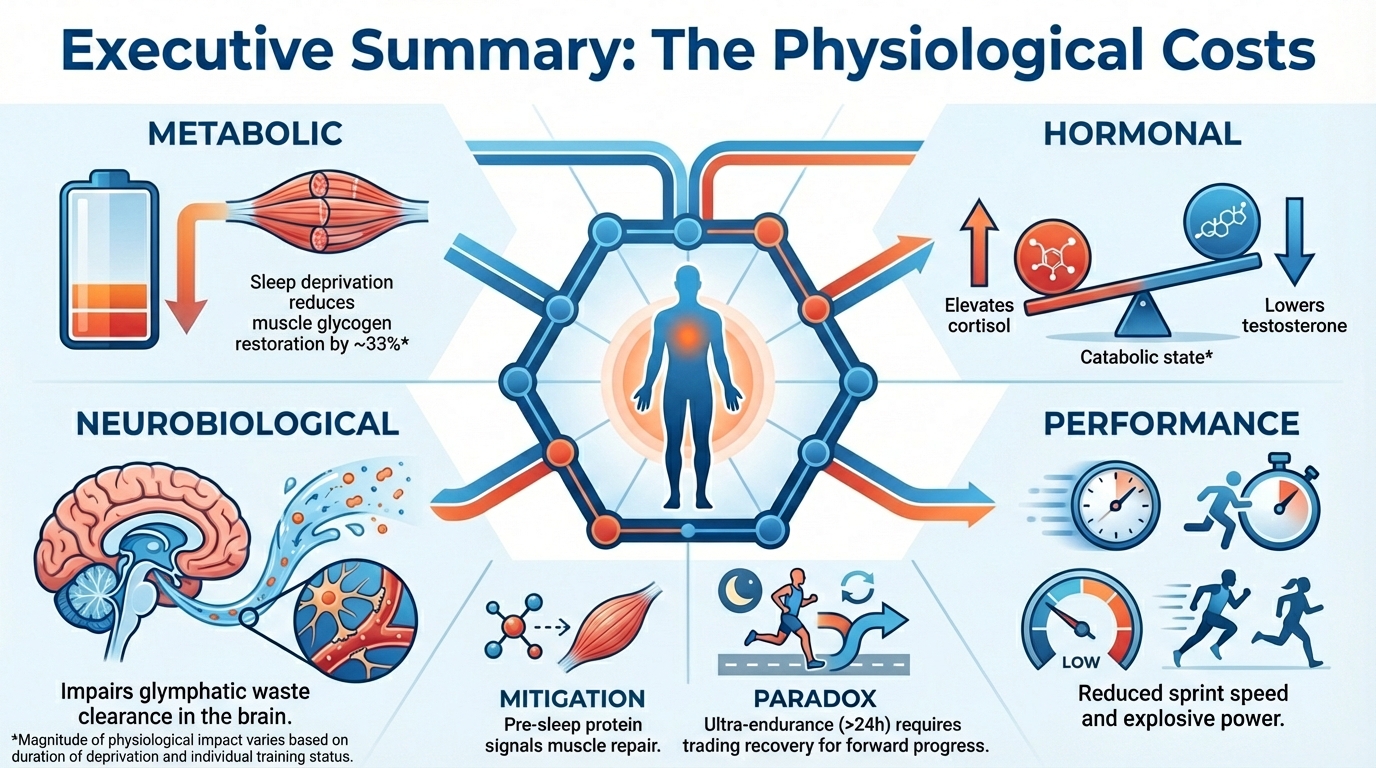
• Metabolic Impairment: Sleep deprivation significantly blunts the refilling of muscle fuel stores. Deprived athletes may experience a reduction in glycogen restoration of roughly one-third compared to rested controls.
• Hormonal Environment: Periods of sleep restriction can notably lower testosterone levels while elevating cortisol, creating a catabolic environment that inhibits muscle repair and tissue rebuilding.
• Neurobiological Clearance: The glymphatic system, responsible for clearing metabolic waste products from the brain, is primarily active during sleep; deprivation compromises this cleaning process, impairing cognitive function and reaction time.
• Performance Metrics: Analysis of performance data indicates that sleep deprivation clearly reduces sprint speed and explosive power, while sleep extension protocols demonstrate measurable gains in reaction time and accuracy.
• Pre-Sleep Nutrition: Ingestion of protein prior to sleep sustains amino acid availability in the blood and enhances overnight muscle protein synthesis.
• The Ultra-Endurance Paradox: While chronic sleep aids training, data from ultra-endurance events (>24h) suggests a non-linear relationship where faster finishers often accumulate less sleep, highlighting a trade-off between physical capacity and staying awake.
The Science at a Glance
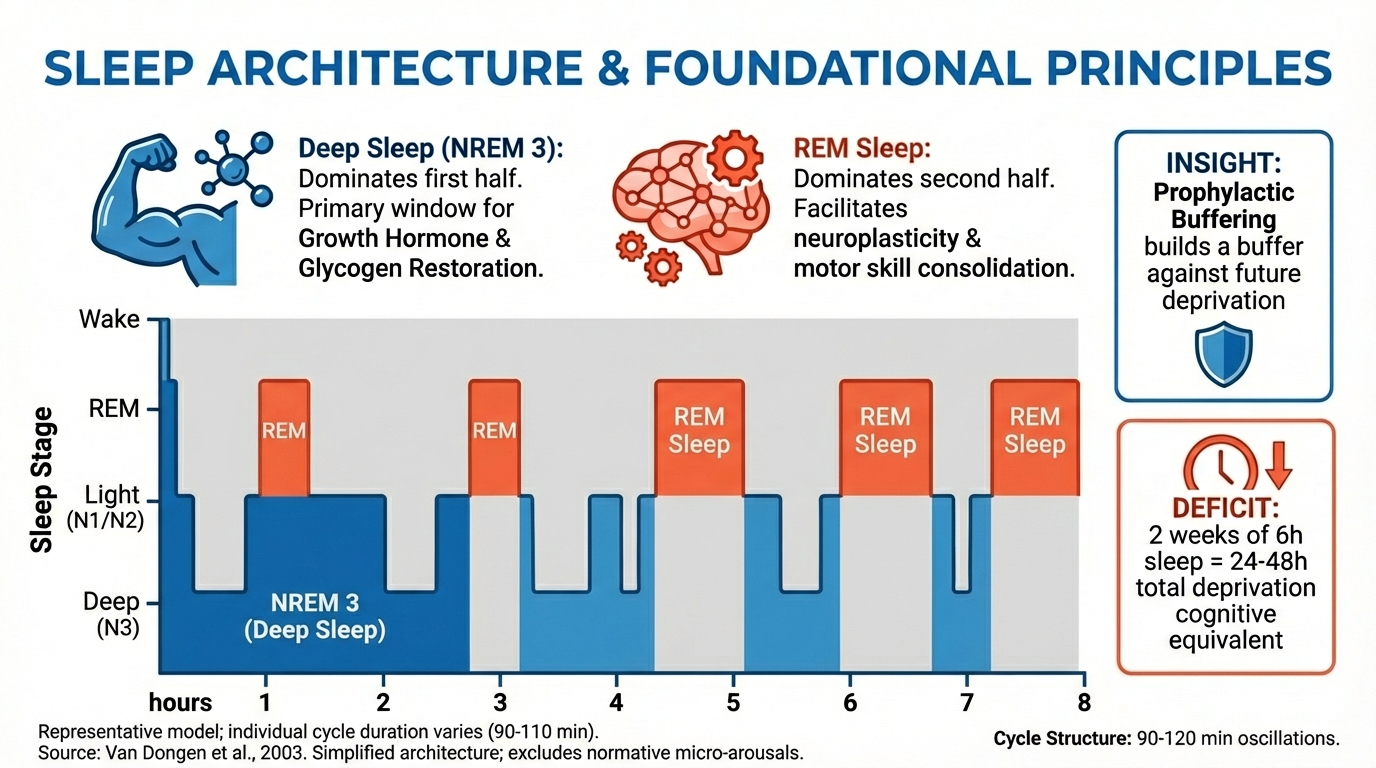
Sleep architecture is organized into cycles of 90–120 minutes, oscillating between Deep Sleep and REM stages. Deep Sleep (NREM Stage 3) predominates in the first half of the night and is the primary window for growth hormone release, with a majority of the daily total secreted here.
This phase is critical for physical recovery, including tissue repair and glycogen restoration. Conversely, the latter half of the night is REM-dominant, facilitating skill consolidation and mental sharpness. Disruption of this architecture—whether through total deprivation or poor timing—misaligns the body's internal clock with its recovery systems, leading to systemic maladaptation.
Foundational Principles
1. Metabolic and Hormonal Restoration
Recovery is fuel-dependent. The energy theory of sleep posits that waking activity builds sleep pressure, while sleep facilitates the restoration of cellular energy stores. The observed deficit in glycogen resynthesis following deprivation suggests that sleep loss induces a state of temporary insulin resistance, directly limiting energy availability for subsequent training sessions.
Scientist’s Insight:
The impact of sleep loss is not linear. Chronic restriction (e.g., sleeping 6 hours/night for two weeks) results in cognitive and physiological deficits equivalent to staying awake for 24-48 hours. Athletes often underestimate these deficits because their feeling of sleepiness plateaus, even while objective performance metrics continue to degrade.
2. Neuroplasticity and Motor Learning
Specific brain wave patterns during light sleep are linked to the consolidation of movement memory. Post-training sleep facilitates the transfer of motor skills from short-term storage to stable long-term memory networks. This process improves movement efficiency and reaction time, independent of additional physical practice.
'Sleep banking'—extending sleep duration prior to a known period of deprivation (e.g., travel or ultra-events)—appears to build a buffer against sleep pressure. This prophylactic strategy offers protection against the acute performance drops associated with subsequent sleep loss.
The Decision Matrix
The Protocol
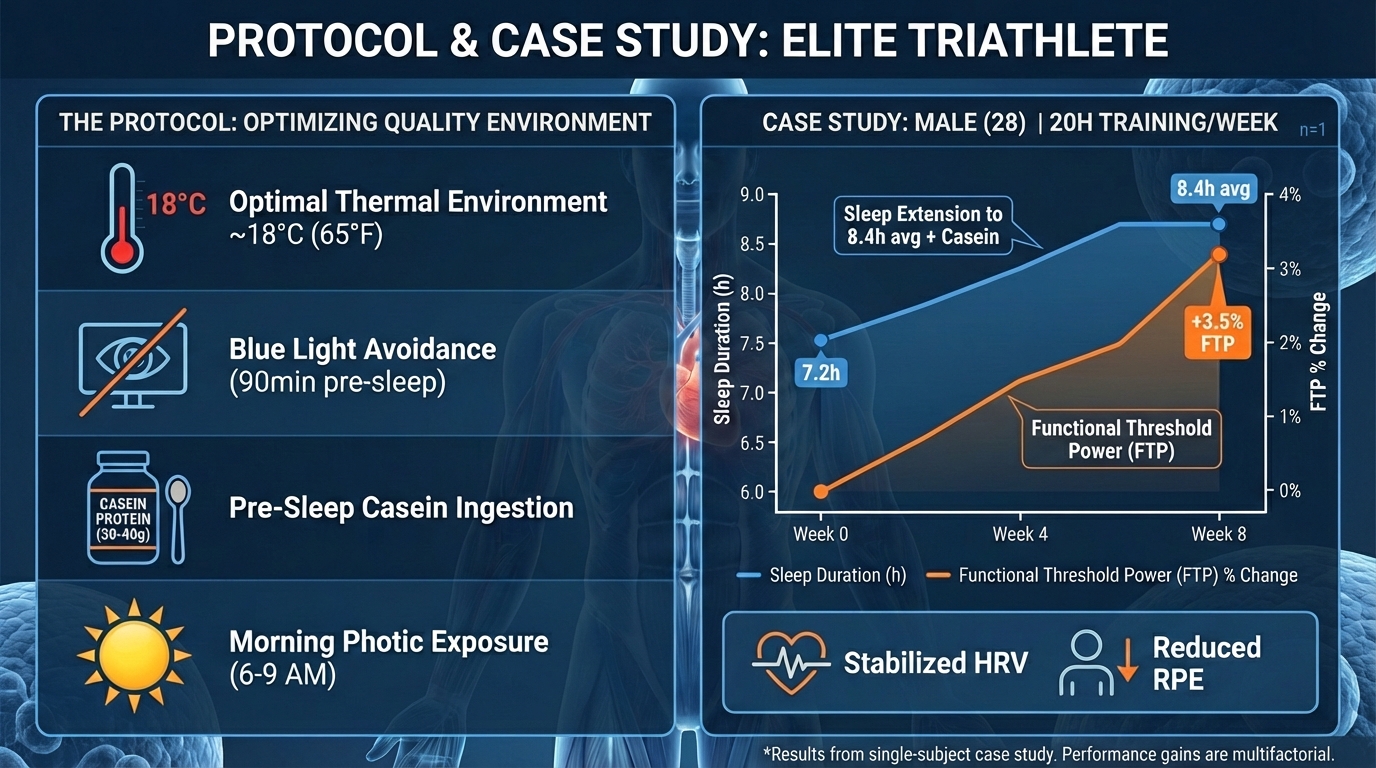
1. Baseline Assessment: Determine individual sleep need by averaging duration over a 14-day period of unrestrained sleep (e.g., off-season). Target this duration +30-60 minutes during heavy training blocks.
2. Environmental Control: Maintain ambient temperature at ~18°C (65°F). Eliminate blue light exposure 90 minutes pre-sleep to prevent melatonin suppression.
3. Nutritional Support: Ingest 30-40g of slow-digesting protein (casein) 30 minutes pre-sleep to sustain overnight amino acid availability and muscle repair signaling.
4. Strategic Napping: Utilize 20-minute naps for alertness (clearing sleep pressure) or 90-minute naps for full-cycle recovery (growth hormone/memory consolidation). Avoid 30-60 minute durations to minimize grogginess.
5. Circadian Alignment: Anchor wake times. Use morning light exposure (6:00-9:00 AM) to shift rhythms for early competition schedules.
Limits of Application
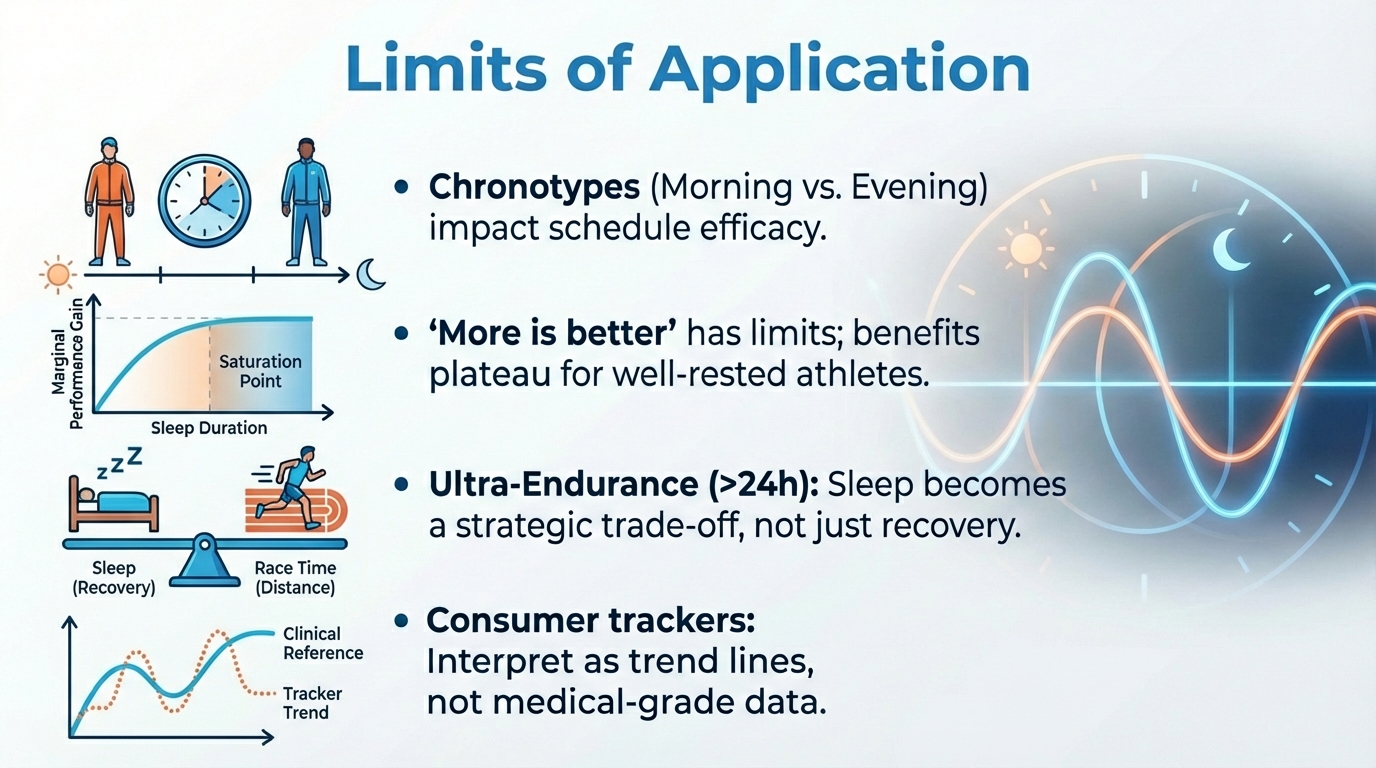
The application of sleep science requires nuance regarding individual variability. Chronotypes (morning vs. evening preference) significantly influence the efficacy of fixed training schedules.
Furthermore, the "more is better" paradigm has limits; while sleep extension benefits sleep-deprived athletes, benefits plateau for well-rested individuals. In ultra-endurance contexts (>24h), the relationship between sleep and performance changes; sleep becomes a strategic decision between cognitive maintenance and forward progress, rather than a pure physiological recovery tool.
Finally, consumer sleep trackers often overestimate sleep duration and underestimate wakefulness; data should be interpreted as trend lines rather than medical-grade sleep analysis.
Best regards,
Dr. Thomas Mortelmans
References
- Guilherme et al., The Role of Sleep on Physical and Cognitive Performance of Ultra-Endurance Athletes: A Systematic Review
- Kong et al., Effects of Sleep Deprivation on Sports Performance and Perceived Exertion in Athletes and Non-Athletes: A Systematic Review and Meta-Analysis
- TeachMePhysiology, Consciousness and Sleep: REM and Stages of Sleep
- dos Santos et al., Sleep and Nutritional Profile of Endurance and Ultra-Endurance Running Athletes
- Charest & Grandner, Sleep and Athletic Performance: Impacts on Physical Performance, Mental Performance, Injury Risk and Recovery, and Mental Health
- Brinkman et al., Physiology of Sleep
- American Academy of Sleep Medicine, Study Shows Sleep Extension Improves Athletic Performance and Mood
- Bradshaw & Betts, Chrono-Nutrition: Implications for Athlete Health and Performance
- Superpower, A Guide to Endurance and Recovery: Useful Biomarkers to Test
- Augsburger et al., Circadian Regulation for Optimizing Sport and Exercise Performance
- Thryve Health, Best Digital Biomarkers for Longevity, Recovery, and Stress
- Conessa et al., Sleep-Related Motor Skill Consolidation and Generalizability After Physical Practice, Motor Imagery, and Action Observation
- Doherty et al., The Sleep and Recovery Practices of Athletes
- van Loon, Protein Ingestion Prior to Sleep: Potential for Optimizing Post-Exercise Recovery
- Debarnot et al., Sleep Contribution to Motor Memory Consolidation: A Motor Imagery Study
Disclaimer
The information provided in this newsletter is for educational purposes only and does not constitute medical advice. Exercise physiology is highly individual; what works for elite populations may not apply to everyone. Always consult with a physician before making significant changes to your training, nutrition, or supplementation protocols. The Scientist's Notebook and ESQ Coaching accept no liability for injuries or health issues arising from the application of these concepts.
Found this useful?
Get articles like this and free training calculators in your inbox every week.
Recommended reads
If this was useful, these are the other research-driven newsletters I actually read.
Member discussion