OpenLab #008: Allostatic Load: The Hidden Stress Budget in Endurance Training

Picture an age-group cyclist who has trained diligently for months. Power numbers are up, the training log looks clean, and the coach is satisfied. Then race week arrives, along with a high-stakes work deadline, two sleepless nights, and an international flight. On race day, the legs that were supposed to fly feel like concrete. The athlete blames a bad night's sleep. The real culprit is invisible, and it has been accumulating for weeks.
That invisible culprit is allostatic load: the cumulative physiological price the body pays for adapting to every stressor it encounters, not just the ones that happen in training. Understanding this concept may be the most underused performance lever available to the age-group endurance athlete.
Most endurance athletes obsess over training load. They log every kilometre, track every session's load, and periodise their season with surgical precision. Yet they routinely ignore the work project that ran three weeks over deadline, the newborn who turned sleep into a rumour, or the anxiety-fuelled four-hour screen binge the night before a key workout. The body does not know the difference. It keeps a running tab regardless.
Today, we are honoured to have Dr. Sebastian Sitko walk us through the science of allostatic load and what it means for the endurance athlete who is also trying to hold down a job, a family, and a respectable FTP.

About our guest: Dr. Sebastian Sitko
Dr. Sebastian Sitko is a professor and researcher in sport science at the University of Zaragoza, where his work bridges physiology, training theory, and real-world athletic performance. He is also a practicing cycling coach at www.sitkotraining.com, where he works with professional and amateur cyclists across all levels. He is the author of Cycling 2.0: Evidence-Based Training for Peak Performance on the Bike.
 Mi tienda
His approach is built on a simple premise: the science should be rigorous, but the application must be honest about the full life the athlete is actually living.
"Training in a vacuum is a fiction. Every athlete carries a life into every session, and the body accounts for all of it."
Dr. Sebastian Sitko (Dr. Sitko's site)
The Brief
- Allostatic load was first defined by Bruce McEwen and Eliot Stellar in 1993 as the multi-system "wear and tear" the body accumulates through repeated exposure to stress (physical, psychological, and environmental) over time.
- In endurance athletes, non-training stressors (work, sleep deprivation, relationship conflict, travel) activate the same hormonal stress cascades as hard training sessions and compete for the same finite recovery resources.
- The primary biological mediators of allostatic load include cortisol, catecholamines, inflammatory cytokines, and autonomic nervous system tone. When these are chronically dysregulated, performance adaptation breaks down.
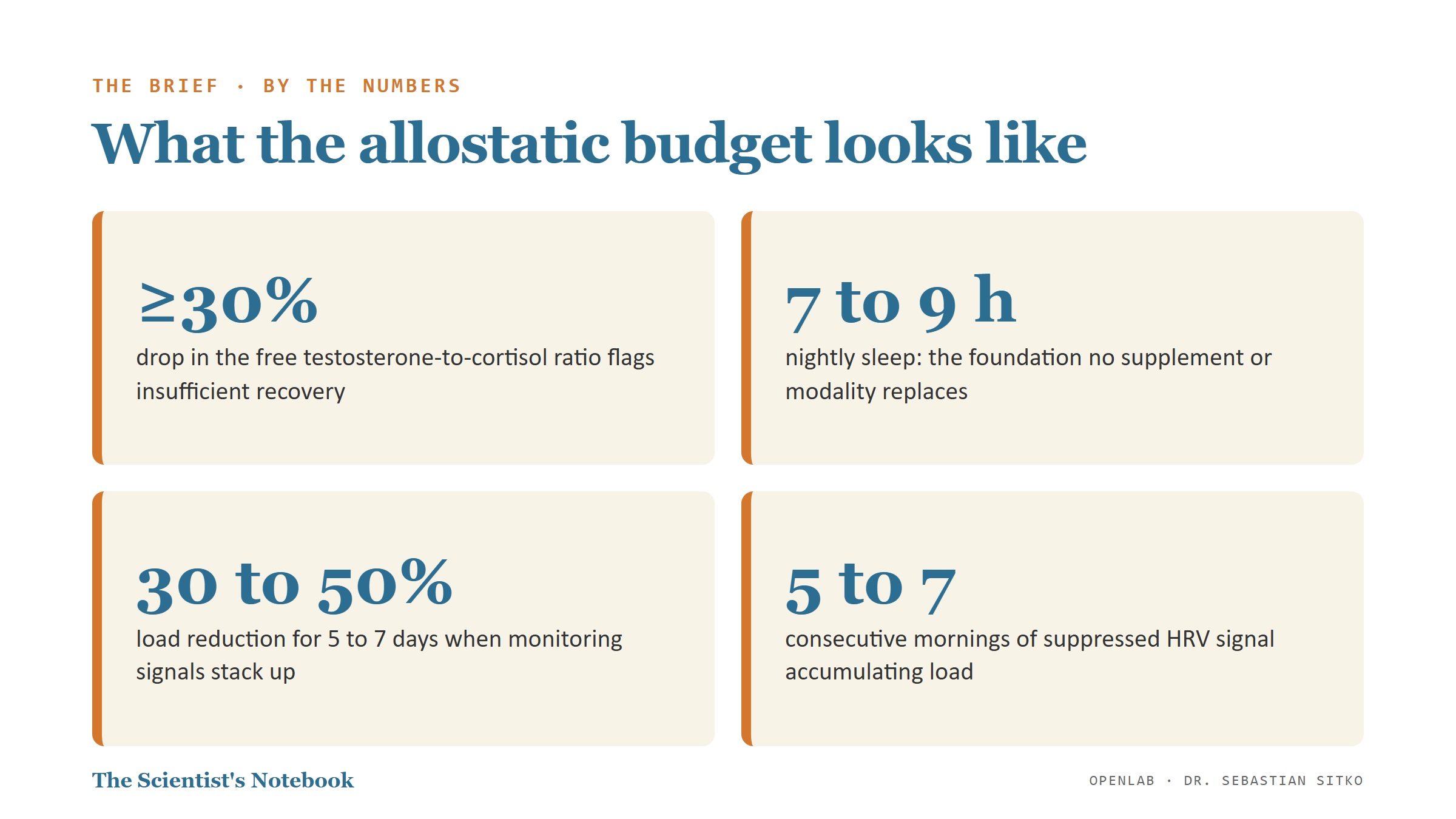
- A ≥30% decrease in the free testosterone-to-cortisol ratio has been proposed as a biochemical indicator of insufficient recovery and a red flag for non-functional overreaching.
- Practical monitoring tools (HRV, resting heart rate, subjective wellness scales, and session RPE) can track allostatic load without a laboratory, provided they are used consistently and honestly.
- Managing allostatic load is not only about reducing training stress. It requires auditing the full life budget: sleep, nutrition, cognitive load, and emotional stress all count.
The Science at a Glance
To understand allostatic load, we first need to understand allostasis. Homeostasis is the body's tendency to maintain stable internal conditions. Allostasis, literally "stability through change," is the active process by which the body anticipates and adapts to challenges by adjusting its set points: raising heart rate before an effort, mobilising glucose before a sprint, elevating cortisol before a dawn alarm. Allostasis is not pathology. It is the body doing its job.
Allostatic load is what happens when the system is called upon too often, for too long, or without adequate recovery. The tab runs up. Stress hormones that should be transient become chronically elevated. Inflammatory markers that should spike and clear start to accumulate. Autonomic balance tips toward sympathetic dominance. The body has shifted from adaptive to maladaptive, from getting stronger to breaking down.
For the endurance athlete, this is not an abstract concern. The training stimulus itself is a form of allostatic load, a deliberate, controlled stressor designed to provoke adaptation. The problem arises when training stress is stacked on top of an already burdened system. A five-hour ride on a well-rested, unstressed athlete produces adaptation. The same ride on a sleep-deprived athlete who just survived a brutal board meeting and a cross-timezone flight produces something closer to damage.
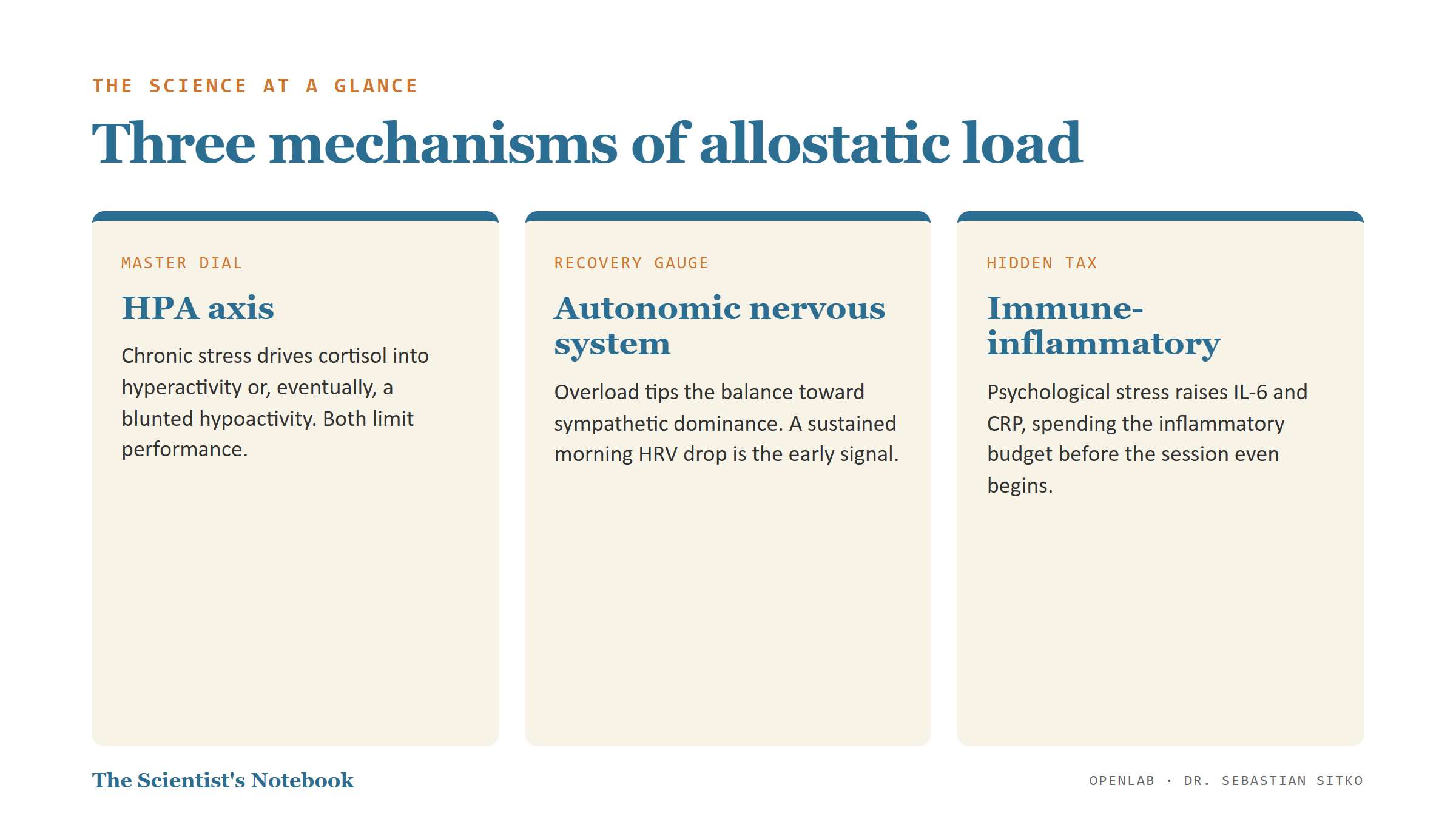
Three biological mechanisms are worth understanding in detail.
The HPA axis: the master stress dial
The hypothalamic-pituitary-adrenal (HPA) axis is the body's central stress-response system. When a stressor is perceived (whether a hill climb at threshold or an unanticipated email from a difficult client), the hypothalamus triggers a cascade that culminates in cortisol release from the adrenal glands. Cortisol mobilises energy, suppresses inflammation acutely, and prepares the body to respond.
Under chronic stress, however, the HPA axis can shift into either hyperactivity (chronically elevated cortisol, accelerating muscle catabolism and immune suppression) or hypoactivity (a blunted cortisol response, associated with advanced overtraining, where the system has essentially exhausted its stress-response capacity). Both states are performance-limiting. Both are the product of accumulated allostatic load.
Scientist's Insight, Dr. Sebastian Sitko: Physical exercise is itself a type of allostatic load for the HPA axis. What determines whether that load produces adaptation or breakdown is almost entirely determined by the context in which it lands: how much allostatic burden the athlete was already carrying.
The autonomic nervous system: the recovery gauge
The autonomic nervous system (ANS) coordinates the balance between sympathetic drive (the "go" system) and parasympathetic tone (the "recover" system). In a well-recovered athlete, parasympathetic dominance at rest enables deep sleep, efficient digestion, immune maintenance, and tissue repair. Allostatic overload tips the balance toward chronic sympathetic tone: the body stays in a low-grade alert state even when it should be recovering.
Heart rate variability (HRV), the millisecond-to-millisecond variation between heartbeats, is the most accessible window into this balance. High HRV reflects parasympathetic dominance and good recovery capacity. A sustained downward trend in morning HRV, independent of acute training load, is one of the most reliable early signals that allostatic load is accumulating faster than the system can clear it.
The immune-inflammatory cascade: the hidden tax
Hard training is acutely inflammatory. Muscle damage triggers cytokine release; the immune system mobilises; repair begins. This is the intended mechanism of adaptation. But chronic psychological stress generates its own inflammatory signal (a low-grade, persistent elevation of pro-inflammatory cytokines including interleukin-6 (IL-6) and C-reactive protein (CRP)) that competes with, and sometimes blocks, the clean inflammatory response to training.
The practical consequence is an athlete who trains hard and recovers poorly not because the training volume is excessive in isolation, but because the inflammatory budget is already spent before the session begins. Frequent minor infections, slow wound healing, and persistent muscle soreness that does not resolve with rest are all clinical signals that this mechanism is at play.
Foundational principles
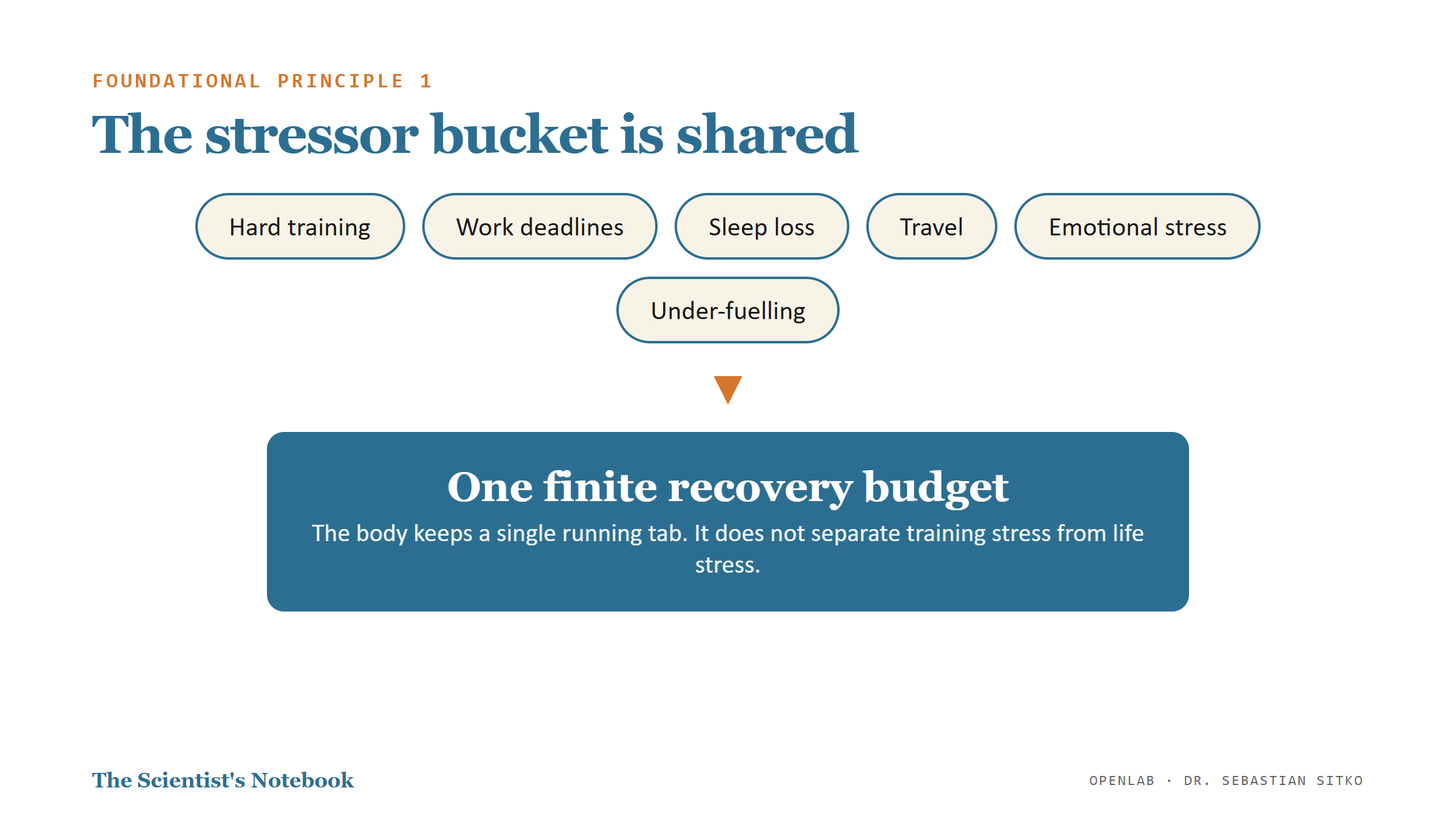
Principle 1: the stressor bucket is shared
The body does not maintain separate accounts for training stress and life stress. There is one bucket, and everything fills it. A demanding work project does not simply disappear when the athlete steps onto the bike. The cortisol it generated this morning is still circulating. The sleep it cost last night has not been returned. The cognitive load it imposed has not been offloaded.
This has a direct and underappreciated implication for training prescription. A training plan built around physiological principles alone (progressive overload, periodisation, specificity) will systematically misfire if it treats the athlete as a body without a life. The athlete who presents to Monday's threshold session having spent the weekend managing a family emergency is not the same athlete who did the same session three weeks ago. The numbers on the plan are identical. The bucket is not.
Scientist's Insight, Dr. Sebastian Sitko: When an age-group athlete tells me their legs felt terrible on a session that should have been manageable, my first question is never about training. It is about what happened in the 48 hours before the session: sleep quality, psychological stressors, travel, nutrition. The legs are usually just reporting what the system already knew.
Principle 2: allostatic load is cumulative and invisible until it isn't

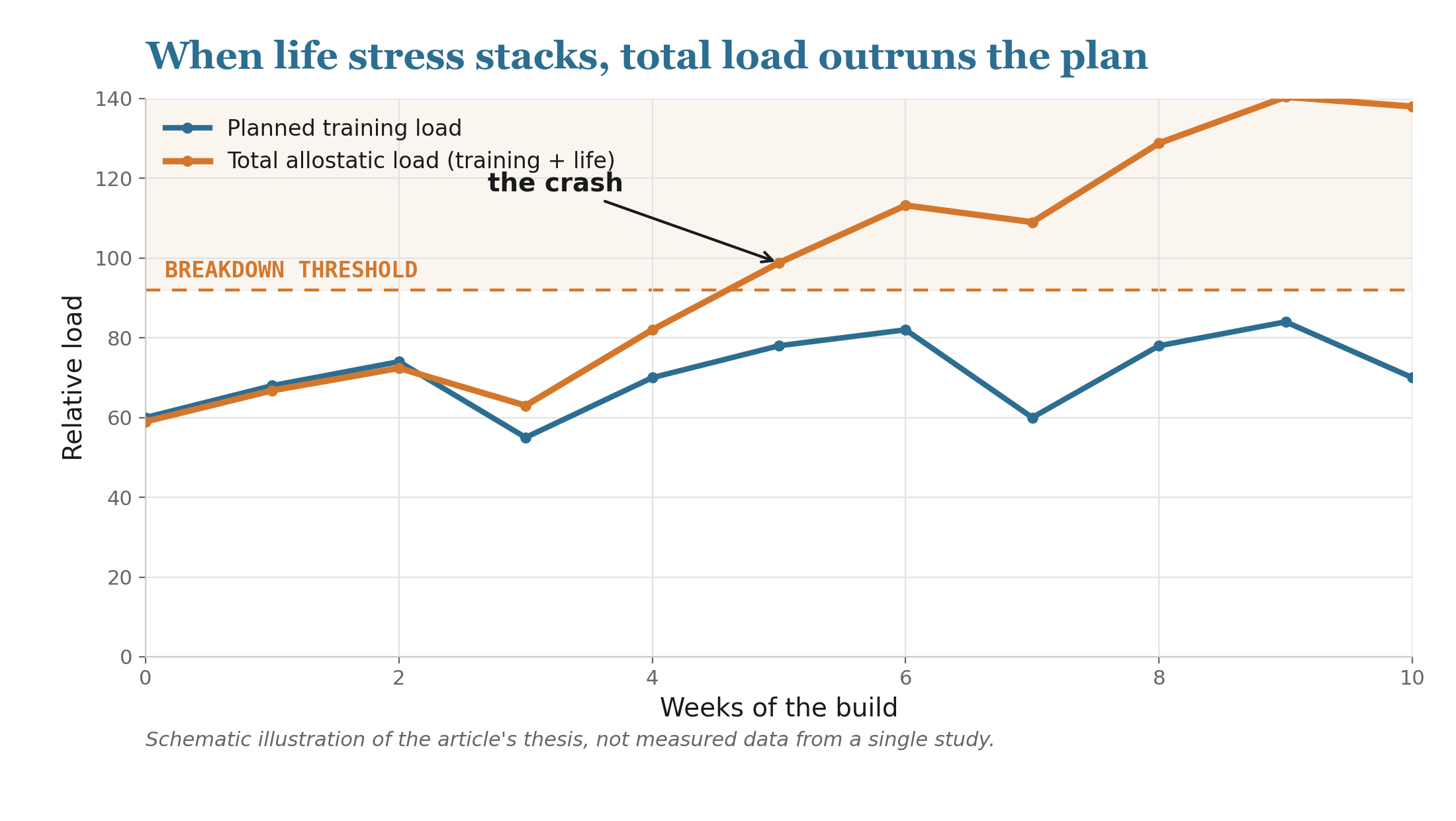
One of the most dangerous features of allostatic load is that it accumulates quietly. Unlike acute training fatigue (which the athlete can feel in their legs, their motivation, and their power output), allostatic load builds below the threshold of conscious awareness. The athlete continues to feel "fine" while the biomarkers tell a different story. Then, abruptly, the system tips and the athlete crashes: a prolonged illness, a sudden performance plateau, a motivational collapse, or a hormonal crash that takes months to resolve.
This is the mechanism behind what coaches often call unexplained underperformance: the athlete who has done everything right by their training log but is getting slower. In many of these cases, the explanation is not in the training log at all. It is in the life log that no one was keeping.
Principle 3: recovery is a system-wide process
Most athletes understand recovery as the period between hard training sessions. They eat their recovery meal, foam roll their legs, and consider the account settled. In reality, recovery from allostatic load requires restoration across every system that has been stressed: neuroendocrine, immune, autonomic, musculoskeletal, and cognitive. An athlete who sleeps poorly, remains cognitively overloaded, and eats inadequately is not recovering, regardless of how many easy spin days appear on their calendar.
Sleep deserves special mention. It is the single most powerful recovery tool available to any athlete, and it is the first casualty of modern life stress. Inadequate sleep elevates cortisol, reduces growth hormone secretion, impairs glycogen resynthesis, suppresses immune function, and directly degrades neuromuscular performance. No amount of training sophistication compensates for chronic sleep restriction. An athlete sleeping six hours in a demanding life context is already running a real allostatic deficit before they touch the pedals.
Measuring and Managing Allostatic Load
In a research setting, allostatic load indices are constructed from panels of biomarkers spanning neuroendocrine, autonomic, inflammatory, and metabolic systems. These typically include cortisol, dehydroepiandrosterone (DHEA), blood pressure, resting heart rate, HDL cholesterol, HbA1c, CRP, and IL-6. Scoring algorithms flag values in the high-risk quartile and sum them into a composite index. This is valuable science, but it is not practical for the age-group athlete in training.
Fortunately, several accessible tools provide useful, if incomplete, windows into the allostatic state.
Heart rate variability (HRV)
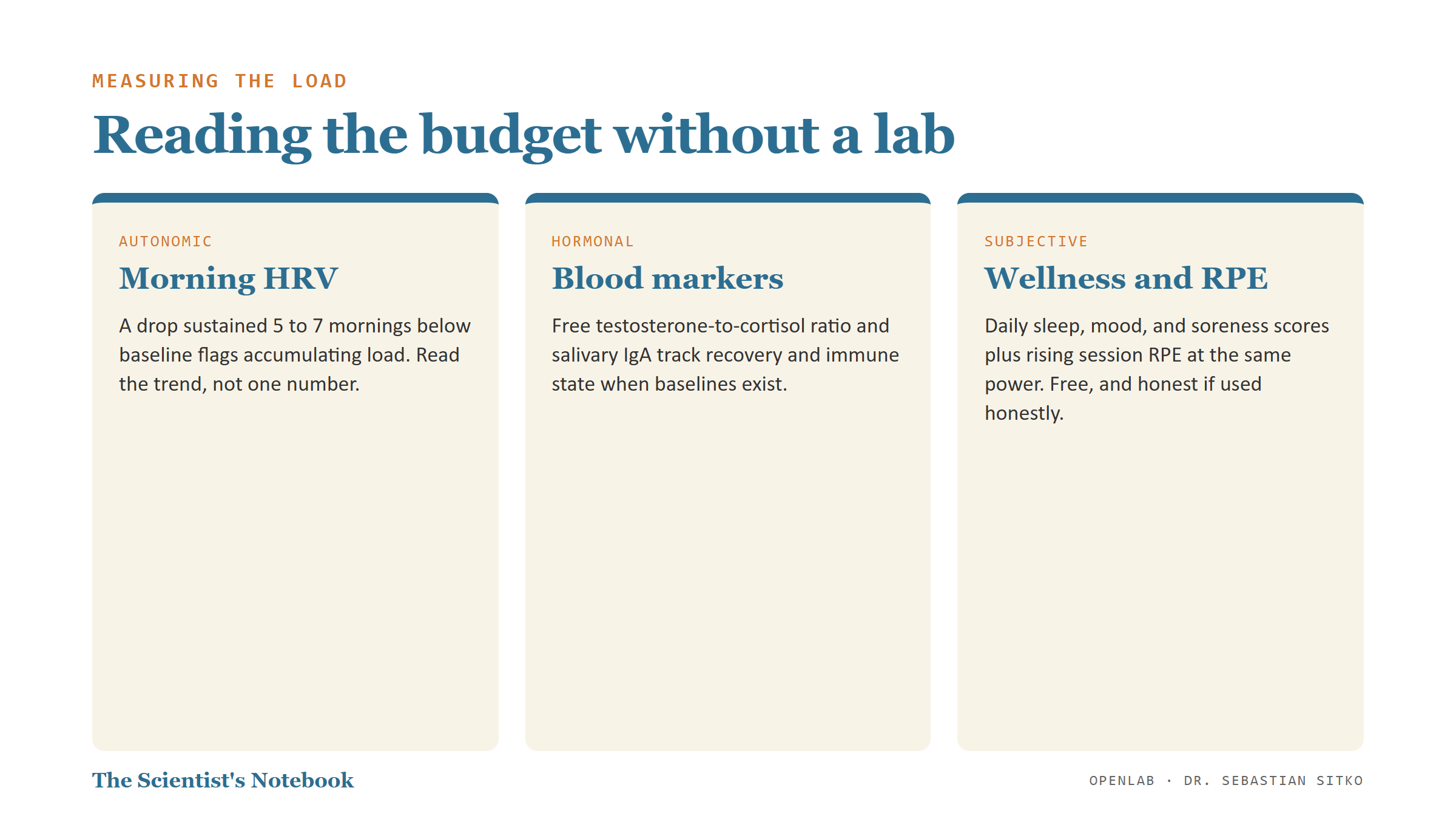
Morning HRV, measured consistently with a validated device, is the most practical non-invasive proxy for autonomic recovery status. The absolute number matters less than the individual trend. A sustained suppression of HRV (sustained meaning five to seven consecutive mornings below the individual's rolling baseline) is a strong signal of allostatic stress, independent of training load. Because HRV responds to all stressors, not just training, it integrates the full allostatic picture in a single number.
The critical caveat: HRV is only useful if measured consistently, at the same time each morning, under the same conditions, and interpreted against individual norms rather than population averages. An HRV of 65 means nothing without knowing that this athlete's baseline is 82.
Scientist's Insight, Dr. Sebastian Sitko: I tell athletes to treat HRV as a check-engine light, not a diagnosis. A suppressed number tells you something is off somewhere in the system. It does not tell you whether the problem is training, sleep, infection, or emotional stress. That interpretation requires context, which is why the training log and the life log need to be read together.
Hormonal markers
For athletes with access to periodic blood testing, the free testosterone-to-cortisol ratio (fT/C) is the most studied hormonal indicator of training-recovery balance. A decrease of 30% or more from the individual's baseline has been proposed as a threshold for insufficient recovery. A ratio below 0.35 × 10⁻³ has been suggested as a marker of overtraining risk. These thresholds require individual baseline data to be meaningful, and should be interpreted alongside other indicators, not in isolation.
Resting blood lactate, creatine kinase (CK), and salivary immunoglobulin A (IgA) each provide complementary information about recovery status and immune function. A consistent downward trend in salivary IgA is a recognised early warning of immunosuppression: the physiological state in which the athlete becomes vulnerable to repeated minor infections.
Subjective wellness monitoring
Despite the appeal of objective biomarkers, validated subjective scales remain remarkably predictive of allostatic status. Daily self-report of sleep quality, fatigue, mood, muscle soreness, and motivation (typically scored on a five-point scale and tracked over time) captures the athlete's integrated sense of their own system state. When multiple wellness domains simultaneously decline over five to seven days, the signal is clear even without a blood draw.
The key is consistency and honesty. Wellness monitoring fails when athletes report what they think a compliant athlete should feel rather than what they actually feel. Creating a training environment (whether self-coached or with a coach) where honest reporting is safe is as important as choosing the right scale.
Scientist's Insight, Dr. Sebastian Sitko: Session RPE is one of the most underused monitoring tools available. When the RPE for a submaximal session rises meaningfully over consecutive weeks (the same power feels harder), that is a direct readout of accumulated allostatic load interfering with the physiological response to exercise. It costs nothing and requires no technology.
A practical framework for managing the load
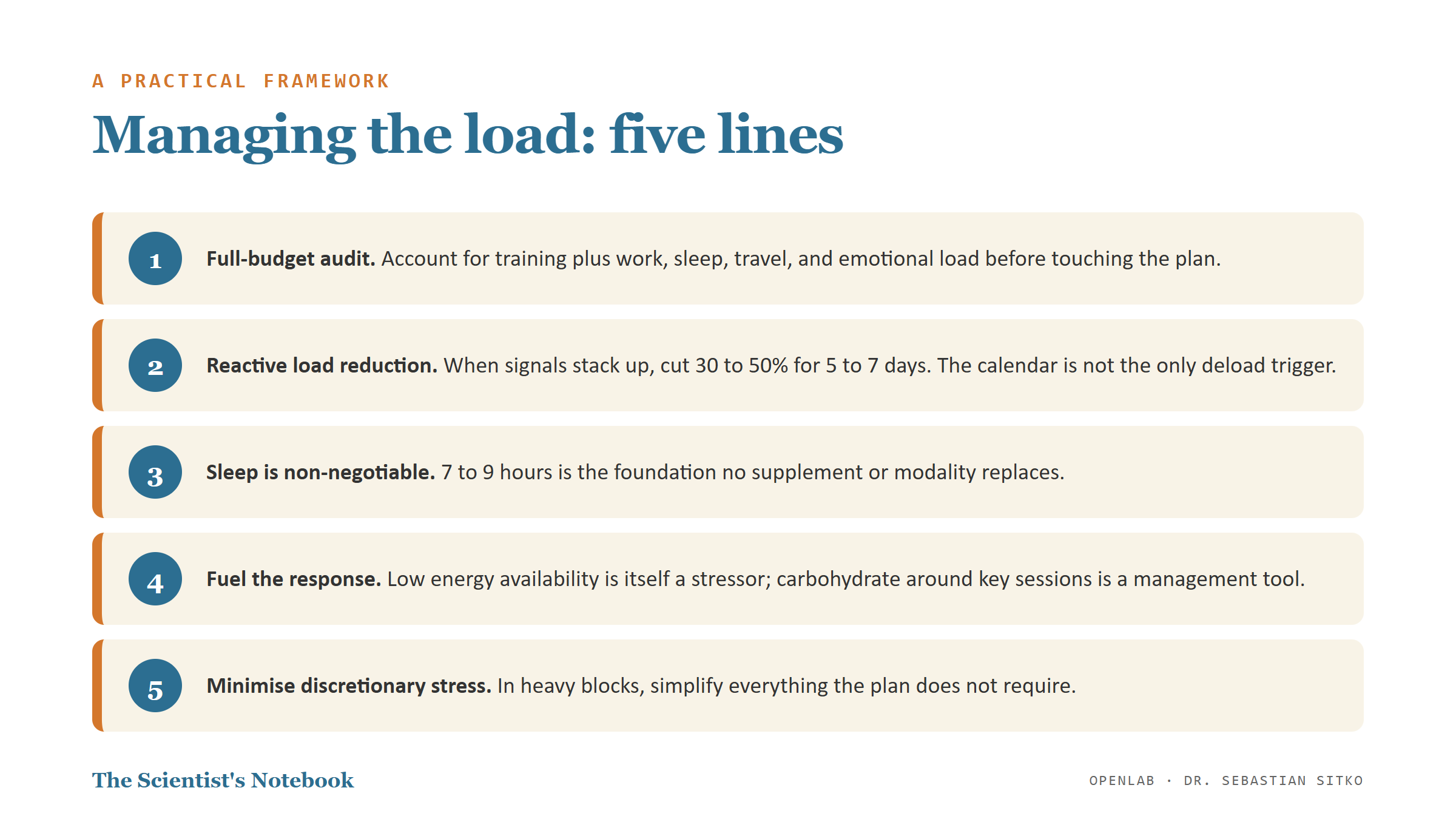
Managing allostatic load is not about doing less. It is about being honest about the full system budget and making intelligent trade-offs. The framework Sitko uses is built for the age-group endurance athlete navigating real life alongside serious training, and it runs along five lines.
The full-budget audit
Sitko's starting point, before designing or modifying a training plan, is a full audit of allostatic inputs. This means accounting not only for training load (hours, intensity, frequency) but also for occupational demands, sleep duration and quality, major life stressors, travel burden, social obligations, and nutritional status. The training plan is the one variable the athlete can most directly control; every other variable sets the context into which the plan must fit.
A practical tool he recommends is a simple weekly stress inventory completed at the start of each week: rate each domain (training load, work stress, sleep quality, emotional stress, nutrition adequacy) on a scale of one to five. The sum provides a crude but useful allostatic load estimate. In his framework, weeks above a defined personal threshold are the trigger for planned load reduction, not as a concession, but as precision management.
Strategic load reduction, not just deload weeks
Most periodised plans include scheduled deload weeks every three to four weeks. This is sound practice, but allostatic load does not respect the calendar. Reactive load management (reducing training volume or intensity in response to elevated allostatic signals) is as important as proactive periodisation. An athlete who rigidly executes the planned hard week during a period of extreme life stress is not demonstrating discipline. They are accumulating damage.
Sitko's decision rule is simple: when multiple monitoring indicators simultaneously signal elevated allostatic load (suppressed HRV, declining wellness scores, elevated RPE at submaximal efforts), he reduces training load by 30 to 50% for five to seven days, prioritises sleep above all other recovery interventions, and removes discretionary stressors where possible. Progressive loading resumes only when indicators return to individual baseline.
Sleep as a non-negotiable
If allostatic load management were reduced to a single intervention, it would be sleep. The research is unequivocal: seven to nine hours of high-quality sleep per night is the foundation on which every other recovery process depends. No supplement, no recovery modality, and no training technique compensates for chronic sleep restriction.
The sleep hygiene Sitko points to for the endurance athlete includes consistent sleep and wake times (including non-training days), a cool and dark sleep environment, removing bright screens for 60 minutes before bed, and strategic caffeine cutoffs (typically no later than early afternoon). For athletes in high-stress life periods, a 20-minute mid-day nap has been shown to partially offset the performance costs of a compromised night, not a replacement, but a useful bridge.
Nutrition: fuelling the allostatic response
Chronic low energy availability is both a stressor in its own right and a force multiplier for every other allostatic stressor. An athlete in sustained energy deficit has elevated cortisol, suppressed anabolic hormones, impaired immune function, and degraded cognitive performance (the full allostatic load profile) even in the absence of heavy training. In endurance sport, where low energy availability is common and sometimes inadvertently encouraged, this is a real practical concern.
Carbohydrate availability deserves particular attention. Chronically low carbohydrate intake impairs HPA axis regulation, elevates cortisol responses to exercise, and reduces the anabolic signalling that drives training adaptation. For athletes in high-stress periods, ensuring adequate carbohydrate availability around key sessions is not a luxury: it is a direct allostatic management tool.
Deliberate stress minimisation
During periods of high training load, Sitko's approach is to deliberately minimise every controllable non-training stressor. In practice that means simplifying nutrition choices rather than introducing new dietary experiments, keeping sleep environments consistent during travel, reducing discretionary digital and social demands, and protecting cognitive recovery time. Every adaptation competes for the same physiological resources. Resources spent adapting to unnecessary complexity are resources not spent adapting to training.
The Protocol and a Hypothetical Case
Editorial note: the case below is a hypothetical illustration of the physiology. It is not a case from Dr. Sitko's coaching practice. We would welcome an anonymised real case from his practice for a future revision.
The protocol Sitko uses to help clear an accumulated allostatic load runs over four weeks.
A four-week allostatic load reset protocol
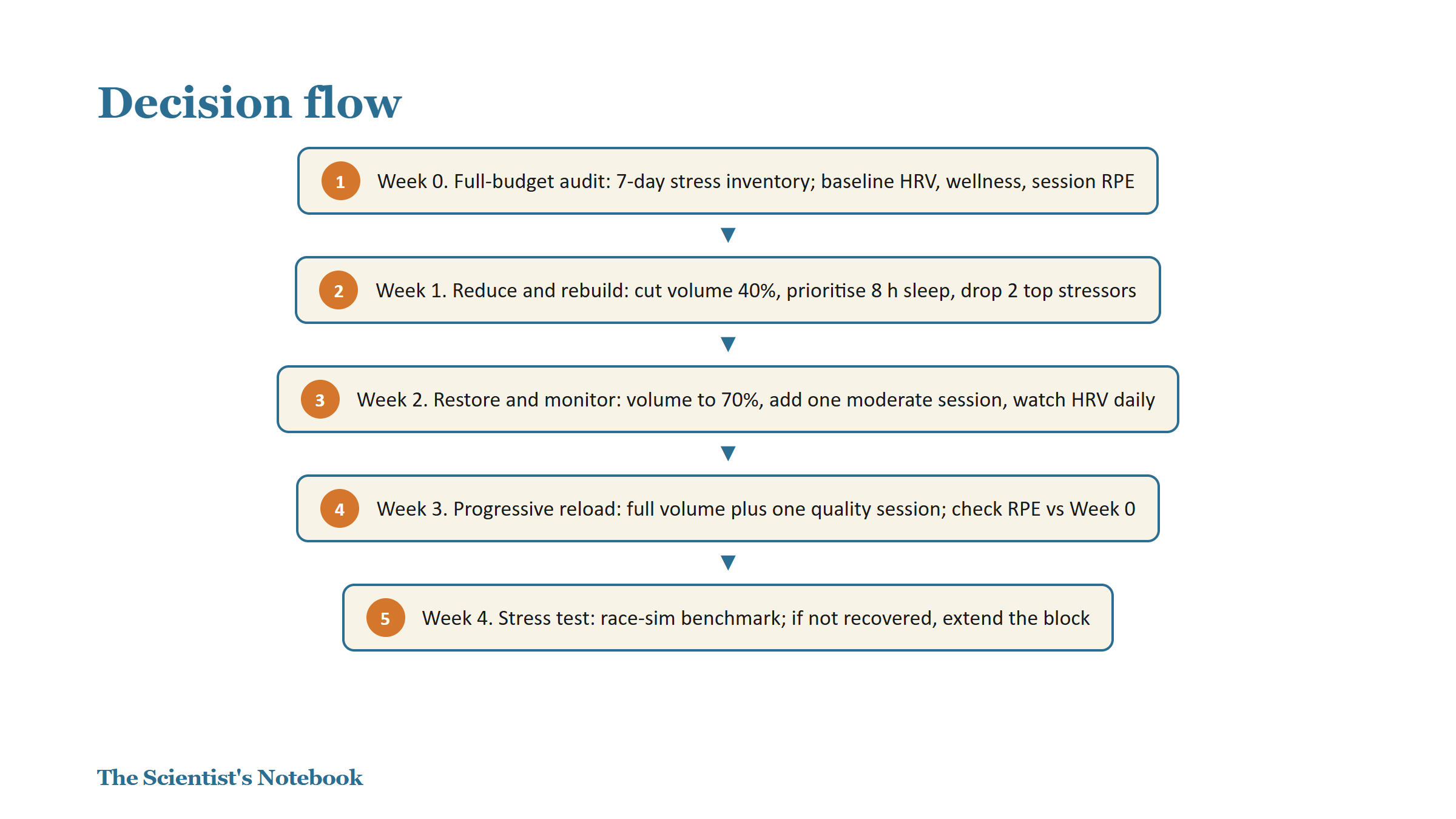
- Week 0, full-budget audit. Complete a seven-day stress inventory across all domains. Establish individual baselines for morning HRV, wellness scores, and session RPE at a defined submaximal effort. Progressive loading does not begin until baselines are documented.
- Week 1, reduce and rebuild. Cut training volume by 40%, and maintain one low-intensity session per day. Prioritise eight hours of sleep above all other scheduling decisions. Eliminate the two highest discretionary stressors identified in the audit.
- Week 2, restore and monitor. Return volume to 70% of previous load. Add one moderate-intensity session. Monitor HRV and wellness daily. Do not progress if indicators remain suppressed.
- Week 3, progressive reload. Return to full volume with one quality session. Evaluate RPE at the defined submaximal benchmark. A meaningful RPE reduction versus Week 0 indicates allostatic recovery. If it is not observed, hold at this level for an additional week.
- Week 4, stress test. Complete a race-simulation or high-quality benchmark session. If performance is tracking toward pre-overload levels, the system has cleared. If not, extend the recovery block rather than forcing the progression.
The hypothetical athlete
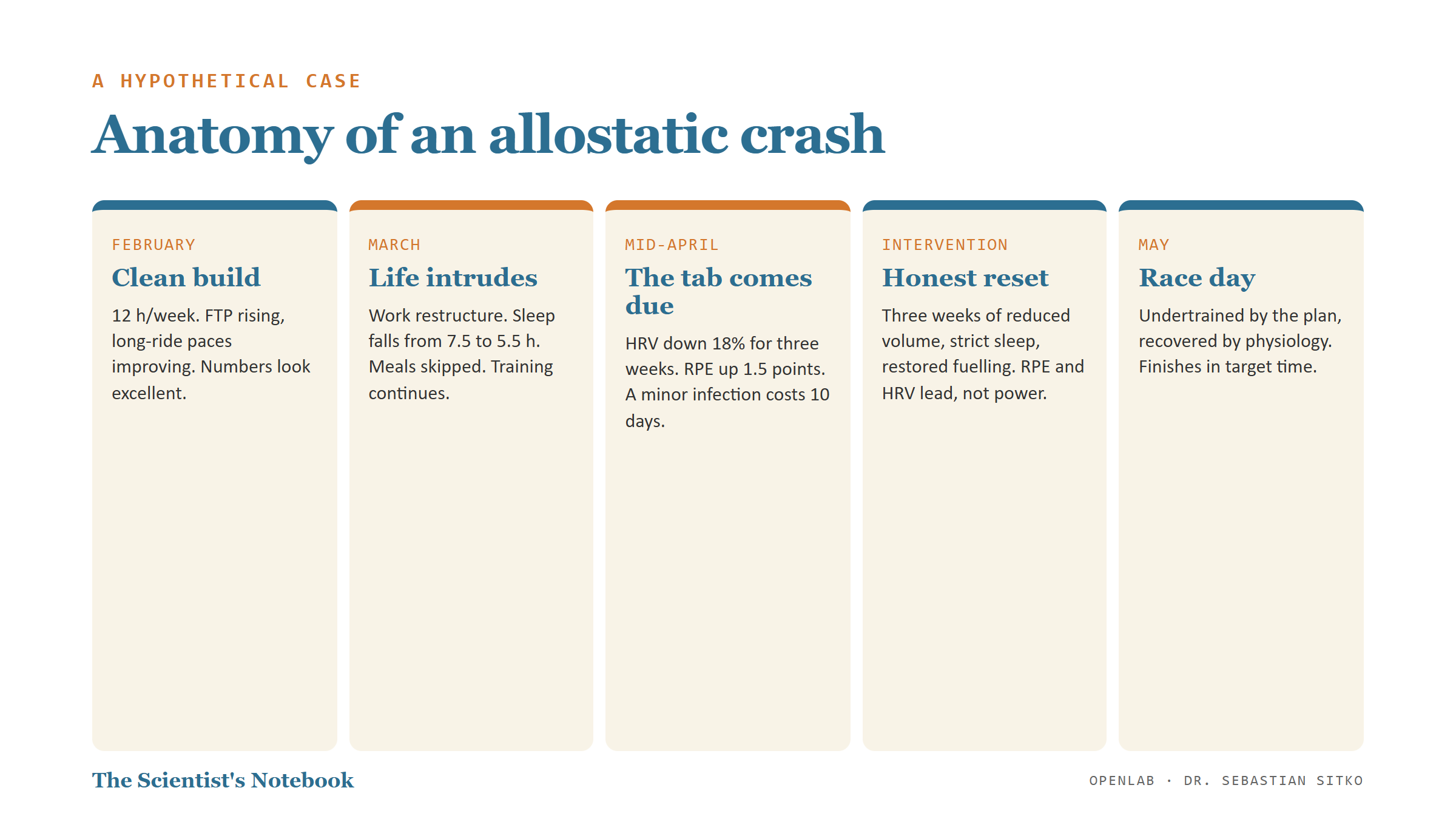
Consider a 42-year-old age-group cyclist, eight years in the sport, training twelve hours per week. Her season's key race is a Gran Fondo in May. In February, she begins a structured build phase. Her training metrics look excellent: FTP is rising, long ride paces are improving. In March, her company undergoes a restructure. She takes on a second role, her sleep drops from seven-and-a-half hours to five-and-a-half, and she starts skipping meals during busy days. She keeps training because the numbers still look acceptable.
By mid-April, her HRV has dropped 18% below her winter baseline and stayed there for three weeks. Her session RPE at her standard threshold effort has risen by 1.5 points. She develops a respiratory infection, minor, but it costs her ten days of training. She blames bad luck and poor immune fortune. She switches to a different recovery supplement.
The diagnostic: this is a textbook allostatic load presentation. The training plan was appropriate. The life budget collapsed beneath it. The infection was not bad luck: it was a predictable consequence of sustained immunosuppression from cortisol excess and sleep deprivation. The missed training was not the primary problem; it was the symptom.
The intervention: three weeks of honest volume reduction (not elimination), strict sleep prioritisation, and temporary withdrawal from occupational overcommitment wherever possible. Session RPE and HRV monitoring replace performance metrics as the primary feedback loop during this period. Carbohydrate intake is audited and brought to adequacy. The supplement is irrelevant.
She starts the Gran Fondo four weeks later, undertrained by the plan but recovered by her physiology. She finishes in her target time. The supplement had not changed. The allostatic budget had.
Close off
The endurance athlete's body is a biological accounting system. It keeps a running total of every stressor, planned and unplanned, physical and psychological, voluntary and imposed. It does not forgive debts because the training plan said this was supposed to be a hard week. It does not extend credit because the race is only four weeks away.
The athletes who sustain high performance over years are rarely the ones who train hardest. They are the ones who have learned to read their own accounting system honestly and to make the trade-offs the system requires, including the trade-off of reducing training when life has already spent the budget.
Sitko's parting suggestion is a small one: pick one monitoring tool this season (morning HRV, a simple wellness score, or even just an honest weekly stress audit), use it for eight weeks, then look back at the data and decide whether the body was trying to tell you something you were not listening to.
We hope this OpenLab has reframed how you think about stress, all of it, not just the kind that comes in watts and kilometres.
Best regards,
Dr. Sebastian Sitko and Dr. Thomas Mortelmans
Limits of application
Most allostatic load research has been conducted in clinical and occupational populations rather than trained athletes. The biomarker thresholds discussed in this article (fT/C ratios, HRV suppression cut-offs) are derived largely from studies of male athletes, with significant individual variability. Female athletes face additional hormonal complexity (menstrual cycle phase modulates cortisol responses, HRV, and perceived stress) that is substantially underrepresented in the literature.
The practical monitoring tools described here (HRV, subjective wellness, session RPE) are sensitive but not specific. They signal that something is wrong; they do not diagnose what. Individual response to allostatic stress is large, and what constitutes "high load" for one athlete may be manageable for another. The framework is best treated as a starting point for informed self-experimentation, not as a clinical protocol.
And finally: allostatic load management should not become another source of allostatic stress. An athlete who obsessively monitors every biomarker, anxiously reads every HRV number, and guilt-spirals over a missed hour of sleep has added a new stressor to the budget. The goal is awareness and intelligent response, not surveillance.
A note on our guest
Dr. Sebastian Sitko is a sport scientist at the University of Zaragoza and a practicing cycling coach whose work sits where physiology meets the messy reality of an athlete's week. The reason we asked him for this OpenLab is exactly that refusal to treat training as something separate from the life around it: the whole-athlete, whole-budget view of stress that runs through this piece. You can find his coaching and his book Cycling 2.0 at Dr. Sitko's site, and his research and updates on Instagram and X.
Train smart,
Dr. Sebastian Sitko
References
- McEwen BS, Stellar E. Stress and the individual: mechanisms leading to disease. Arch Intern Med. 1993;153(18):2093-2101. PMID 8379800. The original formulation of allostatic load, defining it as the cumulative physiological cost the body pays for adapting to chronic stress.
- McEwen BS. Stress, adaptation, and disease: allostasis and allostatic load. Ann N Y Acad Sci. 1998;840:33-44. PMID 9629234. Elaborates allostasis and the failure modes through which repeated or inefficient stress responses turn adaptation into disease.
- Bonilla DA, Stout JR, Gleeson M, et al. The 4Rs framework of sports nutrition: an update with recommendations to evaluate allostatic load in athletes. Life (Basel). 2025;15(6):867. PMID 40566521. Proposes a practical allostatic load index for athletes inside a rehydrate-refuel-repair-recuperate recovery framework.
- Meeusen R, Duclos M, Foster C, et al. Prevention, diagnosis, and treatment of the overtraining syndrome: joint consensus statement of the ECSS and ACSM. Med Sci Sports Exerc. 2013;45(1):186-205. PMID 23247672. The reference clinical framework for overreaching and overtraining, including HPA-axis dysfunction and the limits of current markers.
- Urhausen A, Kindermann W. Diagnosis of overtraining: what tools do we have? Sports Med. 2002;32(2):95-102. PMID 11817995. Reviews hormonal and biochemical markers of overtraining, including the free testosterone-to-cortisol ratio, and concludes none are diagnostic in isolation.
- Adlercreutz H, Härkönen M, Kuoppasalmi K, et al. Effect of training on plasma anabolic and catabolic steroid hormones and their response during physical exercise. Int J Sports Med. 1986;7 Suppl 1:27-28. PMID 3744643. Origin of the free testosterone-to-cortisol ratio as a recovery marker and of the 30% decrease threshold referenced in this article.
- Buchheit M. Monitoring training status with HR measures: do all roads lead to Rome? Front Physiol. 2014;5:73. PMID 24578692. Comprehensive review of resting and submaximal heart rate and HRV as practical, individualised monitoring tools in endurance athletes.
- Steptoe A, Kivimäki M. Stress and cardiovascular disease. Nat Rev Cardiol. 2012;9(6):360-370. PMID 22473079. Reviews the pathways linking chronic psychological stress to inflammatory and autonomic dysregulation and cardiovascular risk.
- Derman W, Schwellnus M, Jordaan E, et al. Illness and injury in athletes during the competition period at the London 2012 Paralympic Games. Br J Sports Med. 2013;47(7):420-425. PMID 23537560. Large surveillance study showing how accumulated load and non-training stressors track with illness rates in elite athletes.
- Nédélec M, Halson S, Abaidia AE, et al. Stress, sleep and recovery in elite soccer: a critical review of the literature. Sports Med. 2015;45(10):1387-1400. PMID 26206724. Examines sleep as a primary recovery mechanism and the performance and hormonal costs of its disruption.
- Mountjoy M, Sundgot-Borgen J, Burke L, et al. The IOC consensus statement: beyond the Female Athlete Triad, Relative Energy Deficiency in Sport (RED-S). Br J Sports Med. 2014;48(7):491-497. PMID 24620037. Defines the multi-system consequences of chronic low energy availability in athletes.
- Sitko S, Artetxe X, Bonnevie-Svendsen M, et al. What is "zone 2 training"? Experts' viewpoint on definition, training methods, and expected adaptations. Int J Sports Physiol Perform. 2025;20(11):1614-1617. PMID 40010355. The guest contributor's expert-panel paper on low-intensity training and the adaptations it drives.
- Sitko S, Cirer-Sastre R, López-Laval I. An update of the Allen & Coggan equation to predict 60-min power output in cyclists of different performance levels. Int J Sports Med. 2023;44(13):983-987. PMID 37802084. The guest contributor's study refining field-based threshold estimation across cyclist performance levels.
- Sitko S. Cycling 2.0: Evidence-Based Training for Peak Performance on the Bike. sitkotraining.com. The guest contributor's evidence-based training manual (32 chapters, roughly 200 studies) for cyclists and coaches.
If you have 60 seconds, I would value your anonymous feedback: link.
Health disclaimer
This post discusses endurance-training science for educational purposes. It is not medical advice, not a diagnosis, and not a substitute for clinical care. Individual response to training, sleep deprivation, and multi-day exertion varies substantially, and what applies to a research cohort or a world-class athlete may not apply to you.
Consult a qualified physician, sports medicine specialist, or registered dietitian before changing your training, fuelling, or sleep strategy if you have a cardiovascular, metabolic, psychiatric, or sleep-related condition; are recovering from injury or illness; are pregnant; are on medication that affects heart rate, hydration, glucose regulation, or sleep; or have concerns about exercise tolerance.
Ultra-endurance events impose real physiological and psychological loads. Persistent chest pain, fainting, acute confusion beyond the predictable late-race window, severe dehydration, sustained loss of coordination, or any mental-health symptoms that outlast the immediate post-event dip warrant professional care and are not signals to push through.
No outcome is guaranteed. The protocols, anchors, and case material in this post are descriptive, drawn from peer-reviewed evidence and a guest contributor's lived experience, and should be treated as inputs to an informed conversation with your own coach and clinicians, not as prescriptions.
Found this useful?
Get articles like this and free training calculators in your inbox every week.
Recommended reads
If this was useful, these are the other research-driven newsletters I actually read.



Member discussion