Entry #035: The Aging Engine: What Masters Athletes Reveal About Mitochondrial Decline
A muscle biopsy from a seventy year old cyclist who has trained for three decades does not read like a textbook chapter on aging.
Under the microscope the mitochondria are dense, well organized, and connected into long networks. The enzymes that burn fat and sugar sit at levels you would expect to find in a recreationally active man in his twenties. Capillaries crowd around each fiber.
If a researcher handed you this sample with no birth date attached, you would guess young.
Then you look at a biopsy from a sedentary man of the same age, and the contrast is brutal: fewer mitochondria, smaller and fragmented, lower enzyme activity, sparse capillaries, and scattered fibers carrying the telltale signatures of genetic damage.
Same number of birthdays. Two very different engines.
That contrast is the central puzzle of this entry. Mitochondrial decay is real, and it is one of the most reliable hallmarks of biological aging.
Oxidative capacity falls, the machinery for building new mitochondria gets quieter, and damage accumulates in the small genome that mitochondria carry.
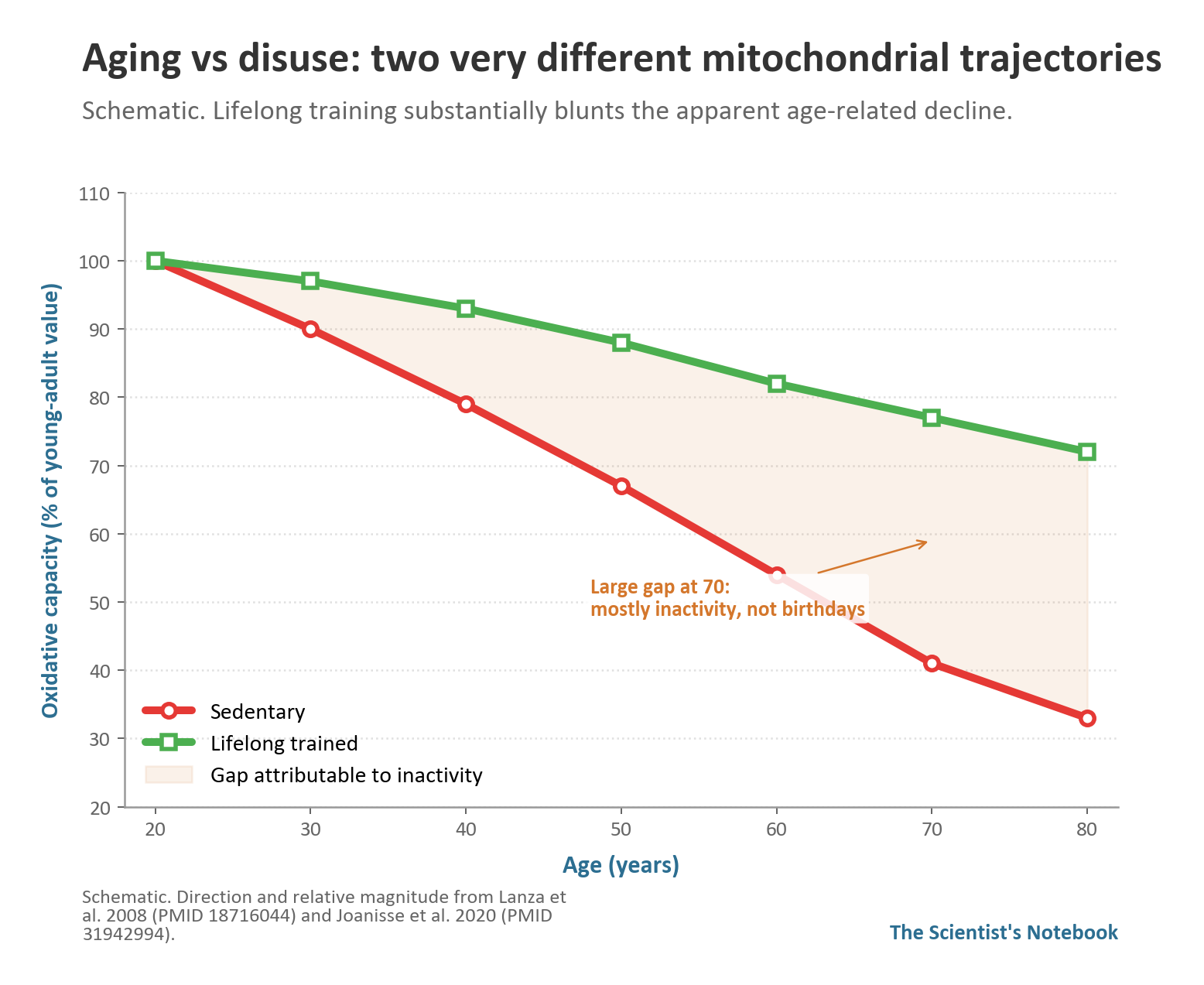
Yet the people who keep training appear to dodge most of it. The interesting scientific question is not whether mitochondria decline with age. It is how much of that decline belongs to the calendar and how much belongs to the couch.
This entry stays in the aging and masters lane.
It covers what happens to mitochondrial density, oxidative enzyme activity, and the central biogenesis signaling pathway as the years pass, and why so much of the population level decline turns out to be deconditioning rather than chronology.
It looks at the quality control systems that keep a mitochondrial pool healthy, and at what high intensity and sustained aerobic work appear to preserve.
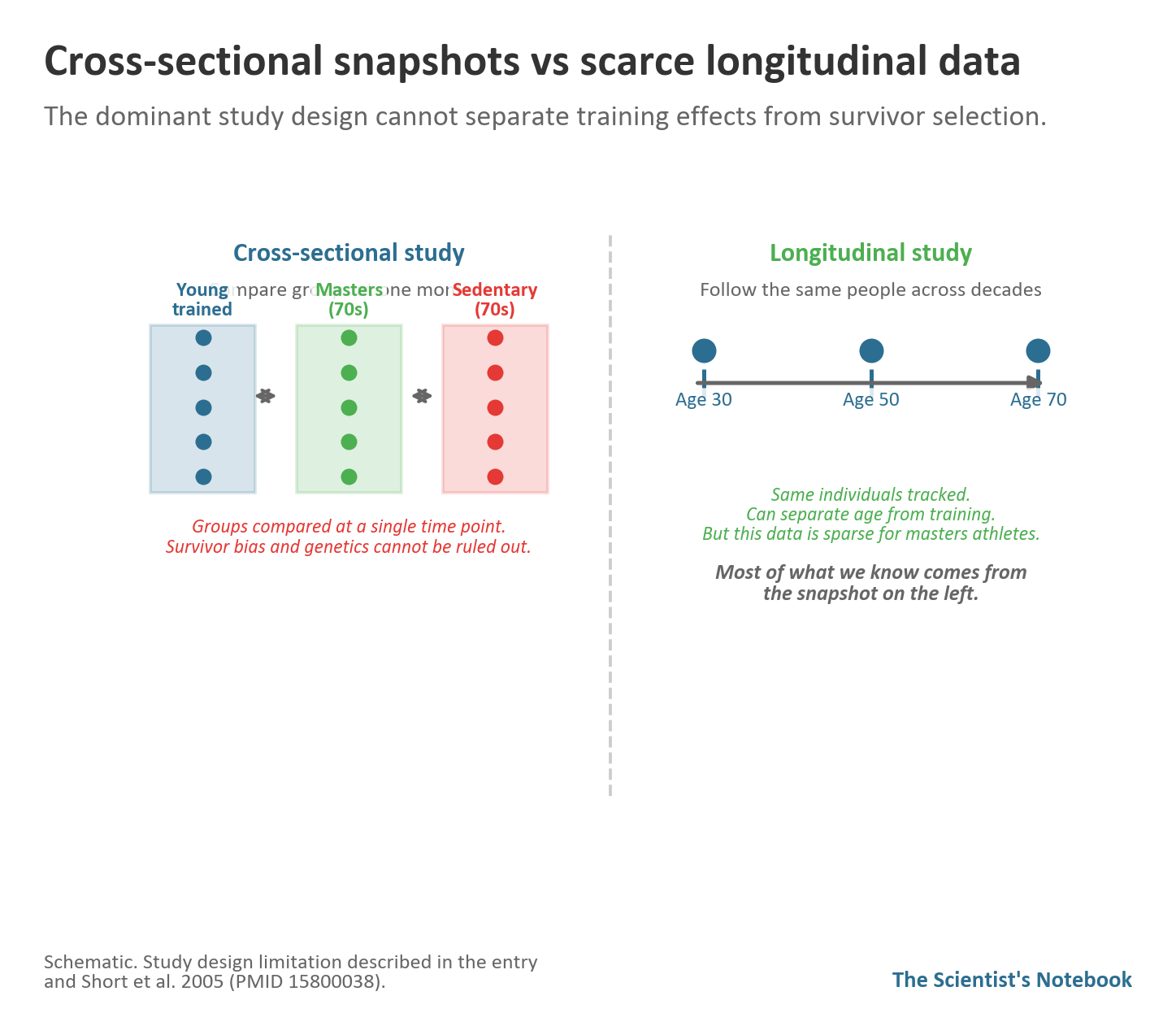
It is also honest about a problem that haunts this whole field: most of the evidence compares trained older people against sedentary older people at a single moment in time, which is a very different thing from following the same person across forty years.
A sibling entry already covered how time spent near maximal oxygen uptake drives mitochondrial building in general athletes, so that ground is left alone here.
The focus is the aging engine itself, and what the people who refuse to stop training can teach us about it.
Gradescale: Your physiology, decoded. Join the waitlist now.
 Thomas Mortelmans
The brief
- Mitochondrial decline is a genuine feature of aging, not an artifact. Oxidative capacity, the small mitochondrial genome, and the signals for building new mitochondria all fall measurably in sedentary people across the adult lifespan.
- Most of the population level decline tracks inactivity rather than chronology. When trained older people are studied, much of the gap between young and old simply disappears, which points the finger at deconditioning.
- Density and enzyme activity are the headline casualties. Sedentary aging muscle shows fewer and smaller mitochondria and lower activity of the enzymes that run aerobic metabolism.
- The master biogenesis signal gets quieter with age but stays responsive. The central transcriptional coactivator that orchestrates mitochondrial building drops in sedentary muscle, yet exercise still drives it upward in older trained muscle.
- The biogenesis pathway is also more redundant than once thought. Animal work shows mitochondria can still be built in response to exercise even when that supposedly essential coactivator is deleted, so backup routes exist.
- Quality control, not just quantity, separates trained from untrained aging. Sustained training keeps the cycle of building, network remodeling, and selective removal of damaged mitochondria running cleanly.
- Masters athletes preserve far more than sedentary peers, but subtle age effects persist. Even lifelong training does not perfectly erase every molecular fingerprint of age.
- The honest weakness is study design. Most masters athlete data are cross sectional snapshots, so cause and survivor effects are hard to disentangle from training itself.
The science at a glance
Foundational Principle 1: Aging genuinely erodes the mitochondrial pool
The sedentary aging signature is consistent across studies. Maximal rates of energy production from isolated mitochondria fall, the activity of core aerobic enzymes drops, and the abundance of the small circular genome that mitochondria carry declines.
That genome is poorly protected and sits next to the very machinery that leaks reactive byproducts, so it accumulates damage faster than the genome in the cell nucleus.
Specific muscle bound genetic changes appear in older tissue that are nearly absent in the young and do not show up in other organs, which suggests a process local to aging muscle rather than a uniform whole body event.
The downstream cost is fewer functional power plants and a muscle that fatigues earlier and recovers slower.
Scientist's Insight: The mitochondrial genome ages faster than the nuclear one because it lives next to the fire and wears no insulation.
Foundational Principle 2: The building signal quiets, and removal of junk slows
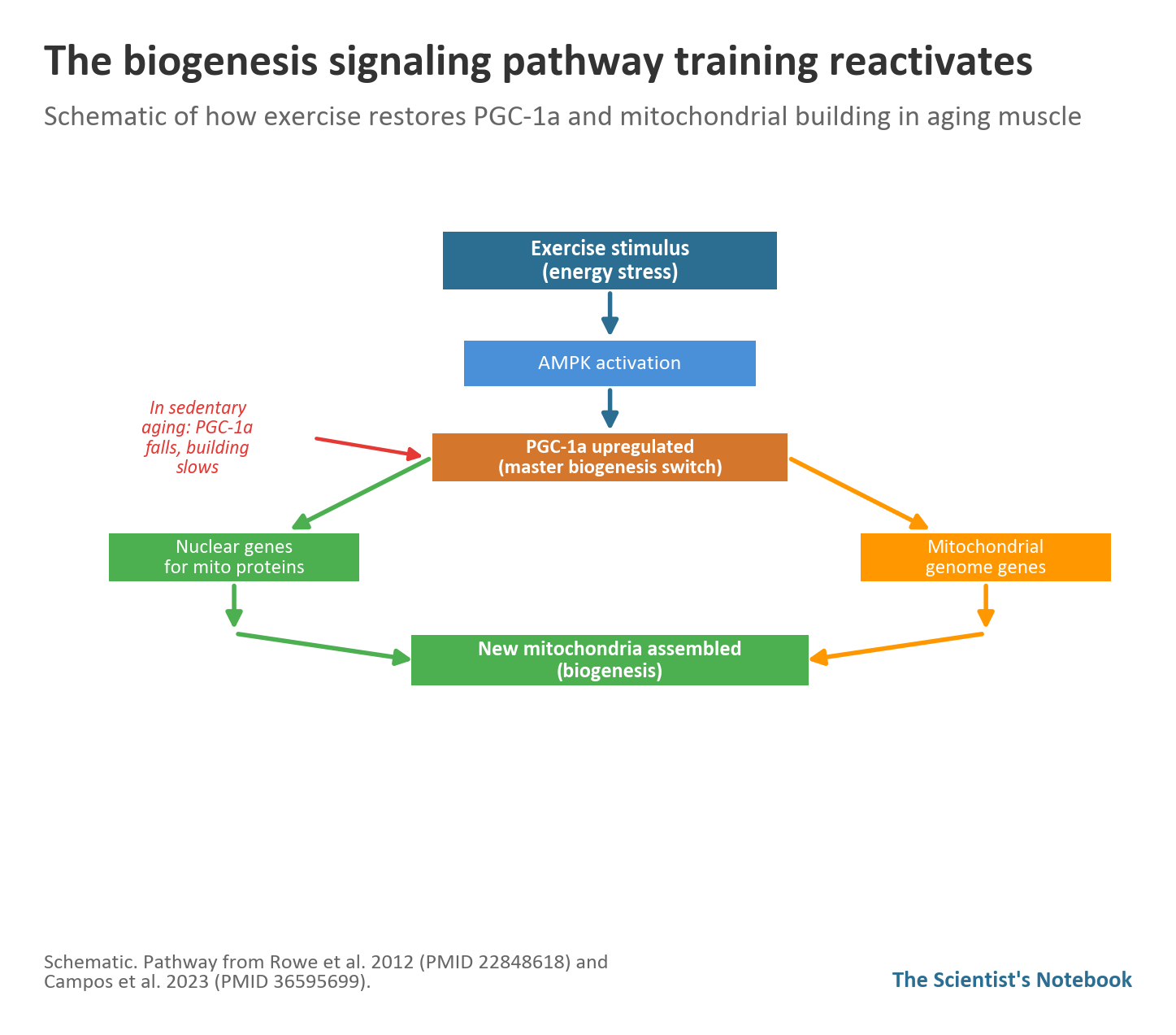
New mitochondria are not bought, they are built on demand, and that construction is coordinated by a central signaling protein that switches on a whole program of nuclear and mitochondrial genes. In sedentary aging muscle the amount of this coordinator falls in both slow and fast fibers, which caps how aggressively the muscle can rebuild when challenged.
At the same time the disposal side falters. Damaged mitochondria are normally tagged and digested, but aged muscle seems to start that tagging without finishing the job efficiently, so broken units linger.
The combination is corrosive: less building, slower clearing, and a slowly degrading network.
Scientist's Insight: Healthy aging muscle is less about never breaking mitochondria and more about clearing the broken ones before they pile up.
Foundational Principle 3: Training rewrites the trajectory, not the starting biology
The striking finding is that endurance training appears to normalize most of what looks like aging.
In trained older people the age related drop in oxidative capacity is largely absent, the biogenesis coordinator stays elevated, and a mitochondrial protective enzyme linked to longevity remains high regardless of age.
Exercise does this by repeatedly triggering an energy stress signal that activates the building program and by enhancing the antioxidant defenses inside the mitochondria themselves. The effect is real but not total.
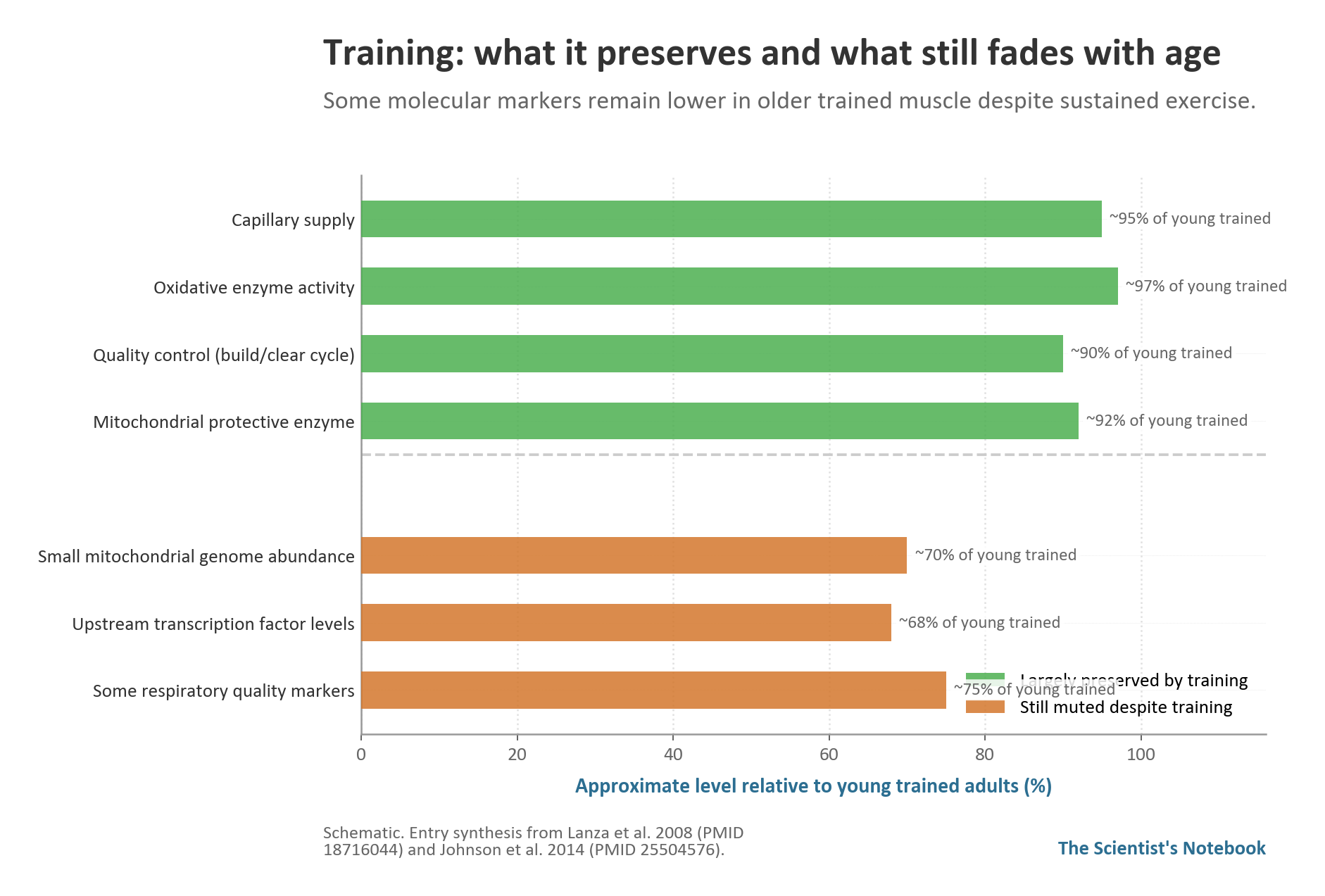
Some molecular markers, particularly the abundance of that small genome and certain upstream transcription factors, stay somewhat lower in older trained muscle, a quiet reminder that age leaves a residue training cannot fully wash out.
Scientist's Insight: Training does not stop the clock, it changes what the clock is allowed to break.
Reading the signals
Lever 1: Density and oxidative enzyme activity
The data: across the adult lifespan, mitochondrial content and the activity of core aerobic enzymes fall steeply in sedentary populations, and this loss tracks closely with reduced aerobic capacity and slower walking speed. In trained older muscle the picture inverts.
Master cyclists studied against young and old non exercisers showed protein levels of the electron transport complexes and the biogenesis coordinator that matched or exceeded the young group, suggesting that maintained density is a product of continued training rather than youth.
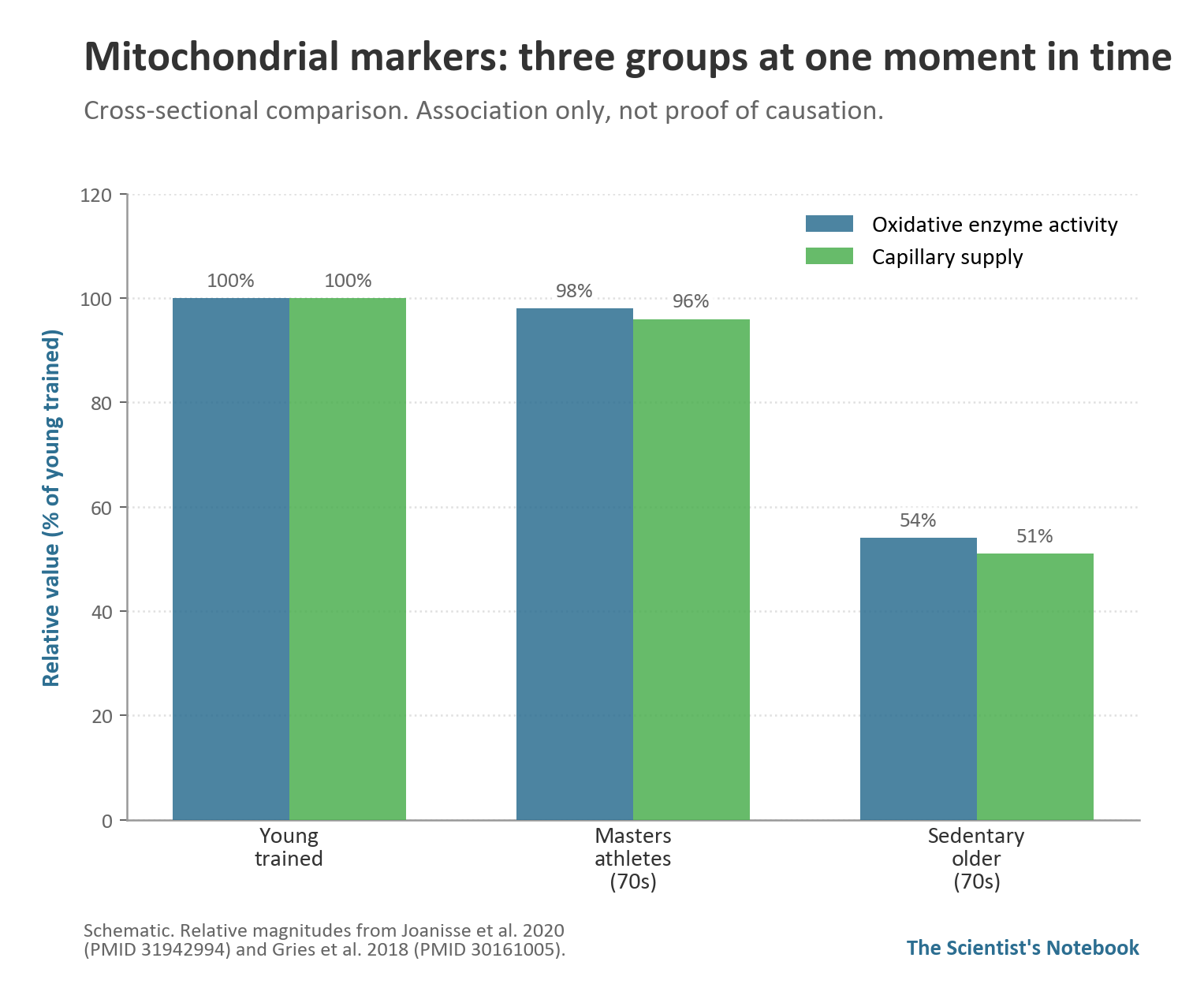
Lifelong exercisers in their seventies showed capillary supply and aerobic enzyme activity preserved at levels comparable to young exercisers and well above sedentary peers.
Where athletes tend to land: the masters athletes who appear in these studies cluster at oxidative enzyme and capillary values far closer to active young adults than to their sedentary age matched controls, while the sedentary older participants cluster at the low end regardless of past athletic history.
Lever 2: Biogenesis signaling and its redundancy
The data: the central coactivator that coordinates mitochondrial building declines in sedentary aging muscle, yet remains responsive to exercise in older trained individuals. Animal studies complicate the simple story.
Mice engineered to lack this coactivator specifically in muscle still built mitochondria in response to exercise and retained normal exercise capacity, which means the cell carries backup pathways.
The practical reading is that the signal weakens with age but the broader building system is more robust and redundant than a single protein view implies.
Where athletes tend to land: in the cross sectional studies, trained older participants show this coordinator at levels above their sedentary peers, though often a step below young trained participants, placing the masters group in an intermediate band that reflects both the benefit of training and the residue of age.
Lever 3: Quality control versus acute overload
The data: sustained training keeps the full quality control cycle running, building new mitochondria, remodeling the network through balanced division and fusion, and clearing damaged units. But the relationship between intensity and mitochondrial health is not linear at the extremes.
When elite endurance athletes added four weeks of intensified training, respiration per unit of mitochondria fell by roughly a fifth and a key enzyme was inactivated by oxidative stress, even as performance improved and antioxidant defenses ramped up.
Mitochondrial volume appeared to expand before respiratory quality fully recovered.
Where athletes tend to land: most masters endurance participants in these studies sit in a sustainable zone where quality control stays optimized, whereas the temporary respiratory dip shows up specifically in cohorts pushed through short, sharp blocks of unusually heavy load.
Join our Discord community:
 Thomas Mortelmans
Method and a worked example
The studies behind these conclusions share a recognizable structure, and understanding it helps explain both what they prove and what they cannot.
Method
- Recruit groups that differ by age and training status, most often young trained, young untrained, old trained, and old untrained, so that age and activity can be separated.
- Take a small muscle sample, usually from the outer thigh, and measure mitochondrial content, enzyme activity, the abundance of the small mitochondrial genome, and the proteins that signal building and removal.
- Measure whole body aerobic capacity and sometimes a performance or insulin sensitivity outcome to anchor the cellular findings to function.
- Compare across groups to ask whether differences track age, training, or both, and in intervention designs, retest the same people after a defined training block.
- Interpret with care, because in the common four group design no one was followed across the decades, so the older trained group is a survivor sample, not a film of one person aging.
A composite case
Consider a generic masters runner who returns to structured training at fifty four after a long, busy gap. Early on the picture is discouraging.
Aerobic capacity sits well below his memory of his thirties, easy runs feel hard, and the first weeks bring more fatigue than fitness, the expected dip as a deconditioned system absorbs an unfamiliar load.
Around the second month the trend bends. Aerobic enzyme activity begins to climb, capillary supply improves, and the easy pace that once spiked his breathing settles into something sustainable.
Then a setback: an enthusiastic block of hard intervals, stacked too quickly, leaves him flat for a fortnight, his legs heavy and his performance stalled.
Had a biopsy been taken at that low point, it might have shown the same paradox seen in overreached elites, expanding mitochondrial volume alongside a temporary dip in respiratory quality.
He backs off, the system recovers, and the gains he had banked reappear with interest.
By the end of the year his oxidative profile looks far younger than his birth date, not because aging reversed, but because the disuse component of his earlier decline was never permanent in the first place.
The realistic arc is not a smooth rise. It is a dip, a setback, and a delayed payoff.
Where this leaves us
The throughline of this evidence is a reframing rather than a miracle. Mitochondrial decay is a real feature of aging, written into the genome, the enzymes, and the signaling. But the version of decline that the general population experiences is substantially inflated by inactivity, and the masters athletes who keep training pull most of that inflated portion back.
Density, enzyme activity, capillary supply, and quality control all respond to a sustained training stimulus far into older age.
What remains after training is a thinner, more stubborn layer of true chronological change, visible in the small mitochondrial genome and a few upstream signals that stay muted no matter how consistent the work.
That distinction matters because it changes the story aging tells about itself. The slope of decline is not fixed at birth. A large share of it is a behavior, and behaviors can be changed.
The trained seventy year old biopsy is not proof that aging can be defeated. It is proof that much of what we attribute to aging was never aging in the first place.
The honest caveat sits in the study design. Most of what is known about masters athletes comes from comparing them, at one moment, against sedentary peers, and that snapshot cannot separate the effect of training from the effect of being the kind of person who survives to old age still able to train.
The cleaner longitudinal evidence, following the same athletes across decades, is sparse, and what exists shows that some functional losses arrive anyway. The truth is almost certainly powerful but less absolute than a single cross sectional contrast suggests.
Best regards,
Dr. Thomas Mortelmans
Limits of Application: The findings summarized here come largely from cross sectional comparisons of small, selected groups of mostly male endurance athletes against sedentary controls, with limited longitudinal follow up, limited representation of women, and almost no data on people who took up training late in life.
Survivor effects, genetic predisposition, and lifestyle factors beyond exercise are difficult to rule out. Several mechanistic claims rest on animal models that may not translate cleanly to humans.
None of this is medical or coaching advice, and individual responses to training vary widely. Anyone with a health condition, or considering a meaningful change in training, should consult a qualified clinician before acting.
References
- Short KR, et al. Decline in skeletal muscle mitochondrial function with aging in humans. Proc Natl Acad Sci U S A. 2005. PMID 15800038. Mitochondrial gene abundance and energy production fall steadily across the adult lifespan in healthy people.
- Short KR, Nair KS. Does aging adversely affect muscle mitochondrial function? Exerc Sport Sci Rev. 2001. PMID 11474959. Oxidative function declines with age alongside reduced mitochondrial protein synthesis, enzyme activity, and energy production.
- Wang Y, et al. Muscle-specific mutations accumulate with aging in critical human mtDNA control sites for replication. Proc Natl Acad Sci U S A. 2001. PMID 11274426. Distinct genetic changes build up in aging muscle that are nearly absent in young tissue and in other organs.
- Kubat GB, et al. Mitochondrial dysfunction and skeletal muscle atrophy: Causes, mechanisms, and treatment strategies. Mitochondrion. 2023. PMID 37451353. Reviews how failing mitochondrial quality control drives muscle loss in aging and disuse.
- Lanza IR, et al. Endurance exercise as a countermeasure for aging. Diabetes. 2008. PMID 18716044. The age related drop in mitochondrial oxidative capacity is absent in endurance trained people, though some age effects persist.
- Johnson ML, et al. Differential Effect of Endurance Training on Mitochondrial Protein Damage, Degradation, and Acetylation in the Context of Aging. J Gerontol A Biol Sci Med Sci. 2014. PMID 25504576. Training raises a key mitochondrial protective enzyme in older muscle even when protein repair responses are blunted.
- Rowe GC, et al. PGC-1alpha is dispensable for exercise-induced mitochondrial biogenesis in skeletal muscle. PLoS One. 2012. PMID 22848618. Mice lacking the supposedly essential biogenesis coactivator still build mitochondria in response to exercise, revealing backup pathways.
- Campos JC, et al. Exercise preserves physical fitness during aging through AMPK and mitochondrial dynamics. Proc Natl Acad Sci U S A. 2023. PMID 36595699. Daily exercise delays the age related loss of mitochondrial network connectivity through an energy sensing pathway.
- Joanisse S, et al. High Levels of Physical Activity in Later Life Are Associated With Enhanced Markers of Mitochondrial Metabolism. J Gerontol A Biol Sci Med Sci. 2020. PMID 31942994. Older master cyclists show electron transport protein and biogenesis coactivator levels matching or exceeding young untrained men.
- Gries KJ, et al. Cardiovascular and skeletal muscle health with lifelong exercise. J Appl Physiol (1985). 2018. PMID 30161005. Fifty years of aerobic exercise fully preserved muscle capillarization and aerobic enzymes in people over seventy.
- Wiswell RA, et al. Maximal aerobic power, lactate threshold, and running performance in master athletes. Med Sci Sports Exerc. 2000. PMID 10862547. Aerobic capacity declines with age in master runners but remains the strongest predictor of their performance.
- Cardinale DA, et al. Short-term intensified training temporarily impairs mitochondrial respiratory capacity in elite endurance athletes. J Appl Physiol (1985). 2021. PMID 34110230. Four weeks of intensified training cut mitochondrial respiration by about a fifth through oxidative stress, even as performance rose.
- Petersen KF, et al. Effect of aging on muscle mitochondrial substrate utilization in humans. Proc Natl Acad Sci U S A. 2015. PMID 26305973. Aged muscle shows a blunted ability to switch from fat to glucose oxidation, a marker of lost metabolic flexibility.
- Sousa CV, et al. Faster and Healthier: Relationship between Telomere and Performance in Master Athletes. Int J Sports Med. 2020. PMID 32045948. Longer telomere length correlated with better relative performance in both endurance and power master athletes.
- Ferguson RA, et al. Blood-flow-restricted exercise: Strategies for enhancing muscle adaptation and performance in the endurance-trained athlete. Exp Physiol. 2021. PMID 33486814. Reviews how training adaptations, including capillary and mitochondrial growth, blunt as training status rises.
---
If you have 60 seconds, I would value your anonymous feedback. You can share it here.
---
Health disclaimer
This post discusses endurance-training science for educational purposes. It is not medical advice, not a diagnosis, and not a substitute for clinical care. Individual response to training, sleep deprivation, and multi-day exertion varies substantially, and what applies to a research cohort or a world-class athlete may not apply to you. Consult a qualified physician, sports medicine specialist, or registered dietitian before changing your training, fuelling, or sleep strategy if you have a cardiovascular, metabolic, psychiatric, or sleep-related condition; are recovering from injury or illness; are pregnant; are on medication that affects heart rate, hydration, glucose regulation, or sleep; or have concerns about exercise tolerance. Ultra-endurance events impose real physiological and psychological loads. Persistent chest pain, fainting, acute confusion beyond the predictable late-race window, severe dehydration, sustained loss of coordination, or any mental-health symptoms that outlast the immediate post-event dip warrant professional care and are not signals to push through. No outcome is guaranteed. The protocols, anchors, and case material in this post are descriptive, drawn from peer-reviewed evidence and a guest contributor's lived experience, and should be treated as inputs to an informed conversation with your own coach and clinicians, not as prescriptions.
Found this useful?
Get articles like this and free training calculators in your inbox every week.
Recommended reads
If this was useful, these are the other research-driven newsletters I actually read.




Member discussion