Snippet #034: Minutes Near the Ceiling: Why Time at VO2max Shapes Aerobic Adaptation
VO2max is the ceiling rate at which the body can use oxygen to fuel muscle. The data show that accumulating a few minutes per session above roughly 90% of that ceiling is among the most potent stimuli the aerobic system receives.
At those intensities, oxygen demand activates PGC-1alpha, a molecular switch that triggers mitochondrial biogenesis, the building of new mitochondria that expand a cell's capacity to make energy aerobically. Buchheit and Laursen (2013) identify this cumulative time above 90% VO2max as the variable interval sessions are built to maximize.
 Thomas Mortelmans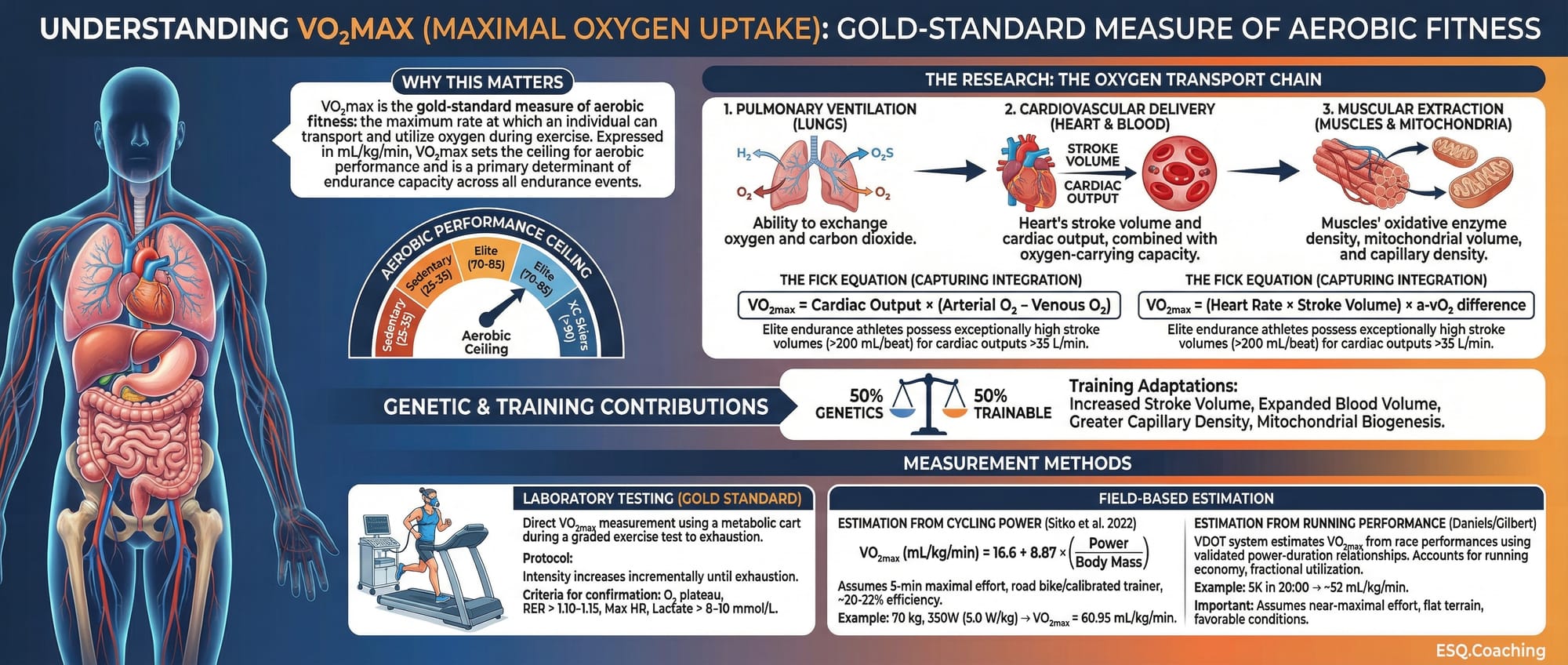
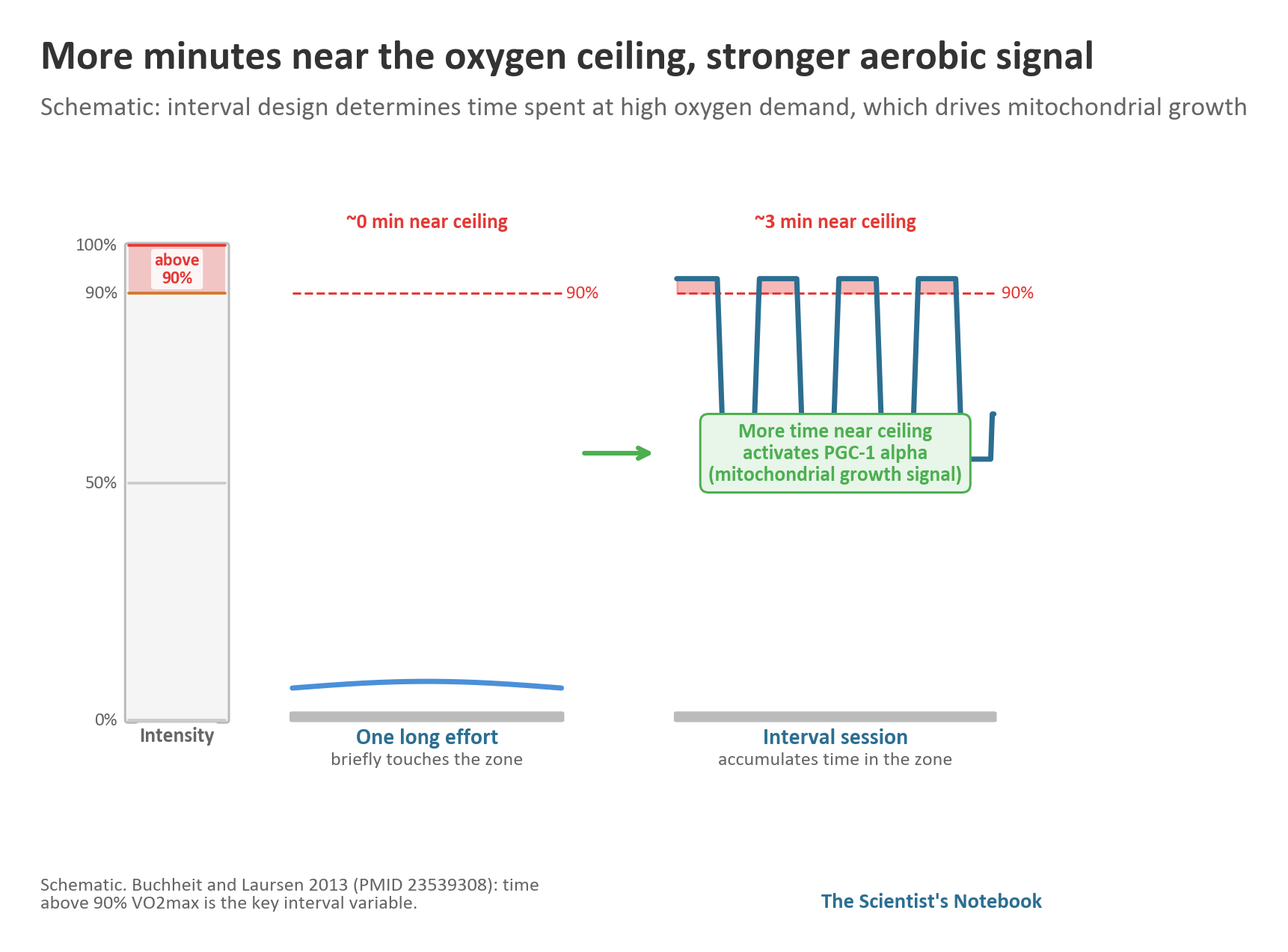
Work duration, rest, and intensity are all levers for pushing more minutes into that zone.
A session that accumulates six to eight minutes near the oxygen ceiling delivers a larger aerobic signaling dose than one long effort that only briefly touches it. Interval design is, at heart, about time in the zone.
The response is not uniform across athletes. Trainability at high intensities is partly heritable, and a solid aerobic base is associated with tolerating repeated near-maximal bouts. The literature treats this as a concentrated, low-frequency stimulus rather than everyday volume.
---
If you have 60 seconds, I would value your anonymous feedback. You can share it here.
---
### Health disclaimer
This post discusses endurance-training science for educational purposes. It is not medical advice, not a diagnosis, and not a substitute for clinical care. Individual response to training, sleep deprivation, and multi-day exertion varies substantially, and what applies to a research cohort or a world-class athlete may not apply to you. > Consult a qualified physician, sports medicine specialist, or registered dietitian before changing your training, fuelling, or sleep strategy if you have a cardiovascular, metabolic, psychiatric, or sleep-related condition; are recovering from injury or illness; are pregnant; are on medication that affects heart rate, hydration, glucose regulation, or sleep; or have concerns about exercise tolerance. > Ultra-endurance events impose real physiological and psychological loads. Persistent chest pain, fainting, acute confusion beyond the predictable late-race window, severe dehydration, sustained loss of coordination, or any mental-health symptoms that outlast the immediate post-event dip warrant professional care and are not signals to push through. > No outcome is guaranteed. The protocols, anchors, and case material in this post are descriptive, drawn from peer-reviewed evidence and a guest contributor's lived experience, and should be treated as inputs to an informed conversation with your own coach and clinicians, not as prescriptions.
Thomas Mortelmans
Related reading
Thomas Mortelmans
Related reading
Keep going
Every number in this piece is one you can compute from your own rides and runs, with the formula and the source shown alongside it.
Training plans built on the same evidence base:
Thomas MortelmansJoin our Discord community:
Thomas MortelmansFound this useful?
Get articles like this and free training calculators in your inbox every week.
Recommended reads
If this was useful, these are the other research-driven newsletters I actually read.

Member discussion