Snippet #001: Reducing Oxygen Diffusion Distance Through Capillary Growth
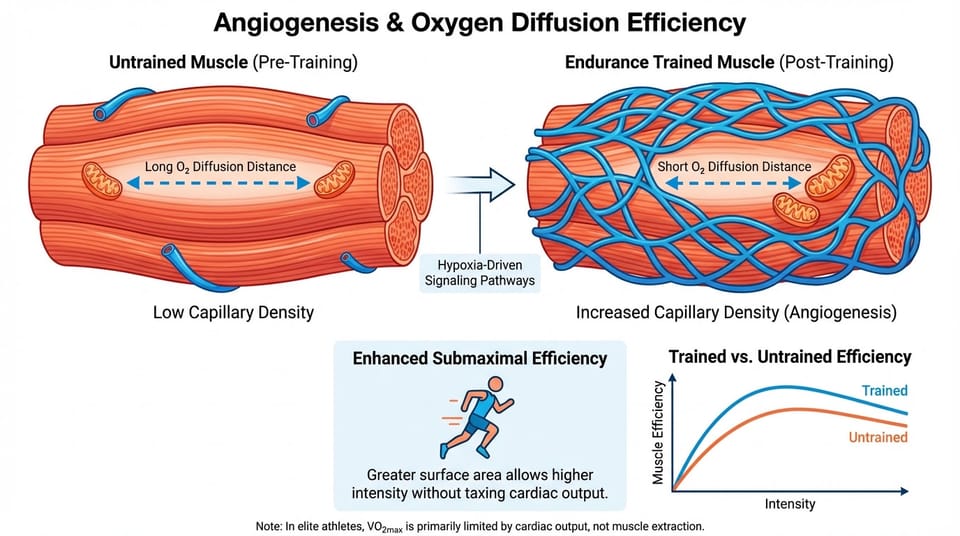
Endurance training stimulates angiogenesis, a biological process that generates new microscopic blood vessels around muscle fibers. This adaptation increases capillary density, which significantly reduces the physical distance oxygen must travel to reach the mitochondria where energy is produced. By expanding the surface area available for diffusion, the muscle becomes more effective at extracting oxygen from the blood, even when flow rates remain constant. This structural change is often driven by signaling pathways that react to the low-oxygen conditions created within the muscle during sustained exercise.
This mechanism highlights a critical distinction in physiology: while the heart determines the absolute ceiling of your aerobic power, muscle structure dictates your efficiency. Improved capillary density allows an athlete to sustain higher submaximal intensities—such as tempo or threshold efforts—without taxing the central cardiovascular system as heavily. This explains why performance metrics can improve even when maximum aerobic capacity plateaus.
It is important to note that for trained athletes, the primary limiter for VO2max specifically remains oxygen delivery via cardiac output rather than the muscle's ability to extract it.
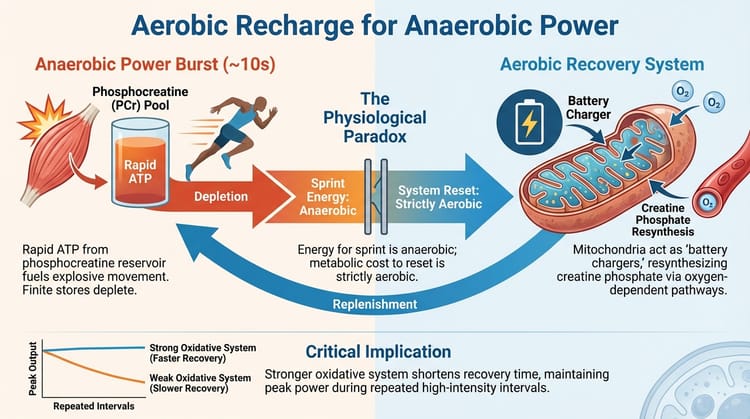
This Margin Snippet is drawn from Entry #002 of The Scientist’s Notebook. The interaction between aerobic and anaerobic energy systems during endurance efforts.
PS: I personally check every response to make this better for you.Drop your anonymous feedback herein just a few clicks!
Found this useful?
Get articles like this and free training calculators in your inbox every week.
Recommended reads
If this was useful, these are the other research-driven newsletters I actually read.
Member discussion