Snippet #047: A Night Without Sleep Cut Treadmill Distance in 11 Men
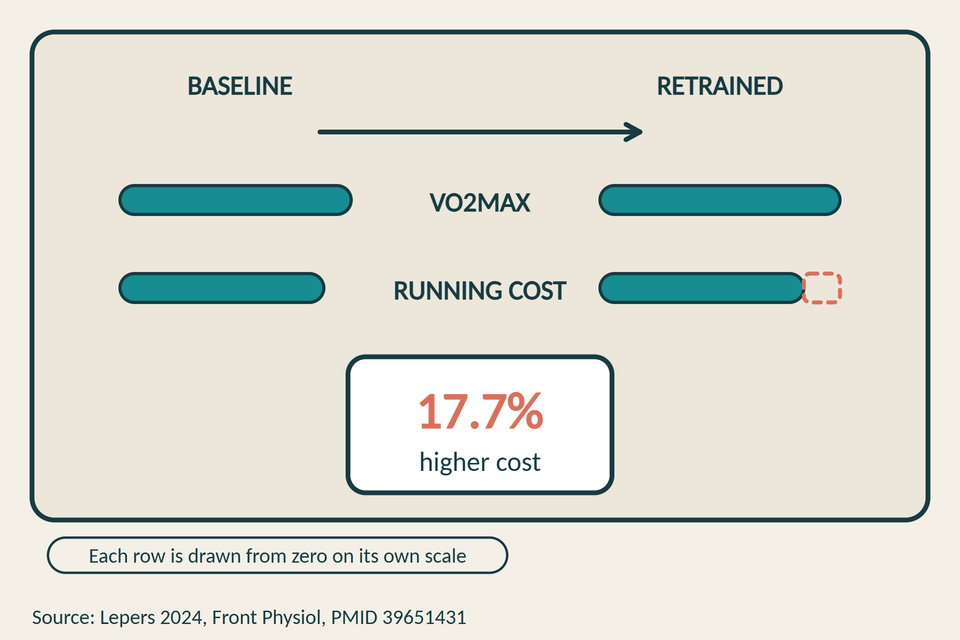
One night without sleep shortened a hard run, but the effort felt the same.
RPE, the rating of perceived exertion, is a score of how hard exercise feels.
In 11 men, 30 hours without sleep cut the average distance covered in a 30-minute self-paced treadmill test to 6,037 meters from 6,224 meters after a normal night (Oliver et al. 2009).
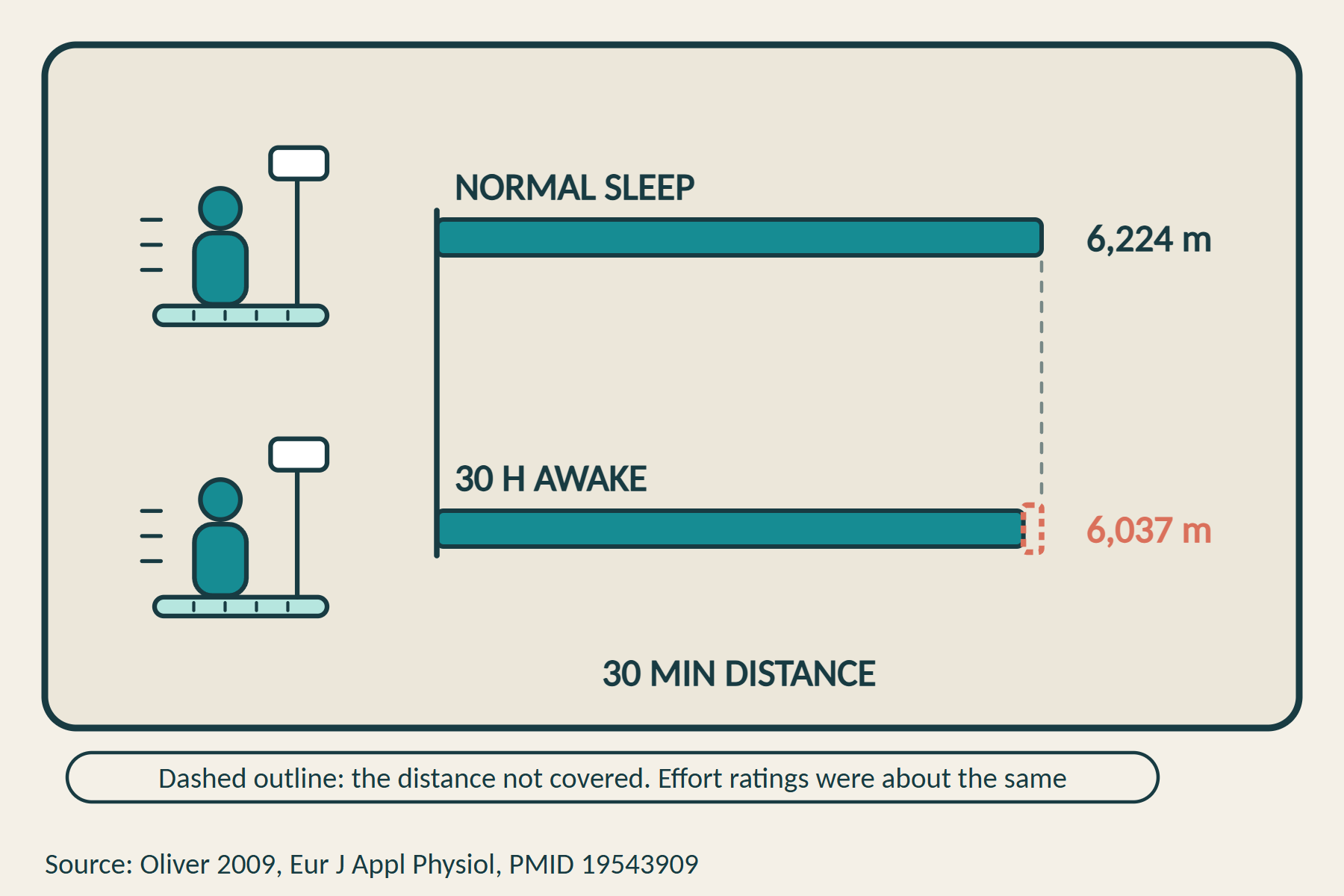
Each test followed a 30-minute pre-load run at 60% of maximal oxygen uptake. Average RPE in the distance test was almost the same, 14.9 after the sleepless night and 14.8 after normal sleep, and most heart and breathing measures did not differ between trials.
The authors suggest that an altered perception of effort may explain the shorter distance.
This is one crossover trial of 11 men, tested a week apart after a normal night and after one night awake.
The effect size was small (d = 0.23, P = 0.016), and the trial says nothing about women, partial sleep loss or longer events.
If you have 60 seconds, I would value your anonymous feedback. You can share it here.
Health disclaimer
This summarizes one small lab study of 11 men. It cannot say how a lost night changes any one athlete's running or health, and it is not sleep or training advice. Not medical advice.
 Thomas Mortelmans
 Thomas Mortelmans
Related reading
Thomas Mortelmans
Related reading
Keep going
Gradescale turns your training history into the models in this piece: power-duration, load balance, and readiness, each with its sources.
Training plans built on the same evidence base:
Thomas MortelmansJoin our Discord community:
Thomas MortelmansFound this useful?
Get articles like this and free training calculators in your inbox every week.
Recommended reads
If this was useful, these are the other research-driven newsletters I actually read.
Member discussion