OpenLab #013: Broccoli sprouts, NRF2, and a measurable shift in blood lactate - with Nomio
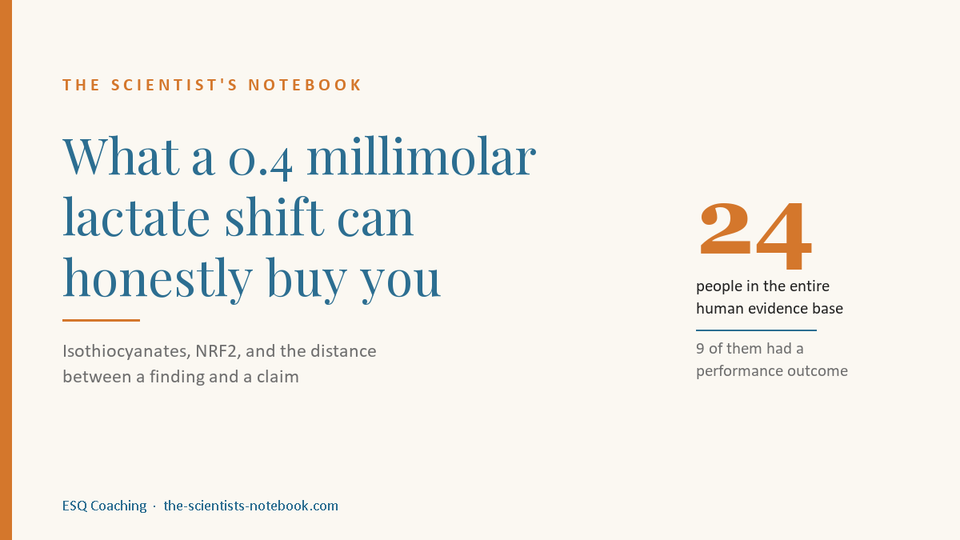
Nine people cycled hard for seven days straight. Half the time they were drinking 150 g of blended broccoli sprouts a day; the other half they were drinking alfalfa blended with apple juice, matched for energy and carrying almost none of the active compound. Neither they nor the people testing them knew which was which, and a full month separated the two arms.
At the end of the sprout arm they held the same blood lactate at 15 to 20 W more power. Their muscle protein carbonyls, a marker of oxidative damage, fell. They lasted longer to exhaustion. And maximal oxygen uptake, citrate synthase activity and mitochondrial respiration did not move at all, which the authors reported as plainly as they reported the rest.
That combination is unusual enough to be worth a proper look. Something changed in how these athletes handled submaximal work, and it was not a bigger engine.
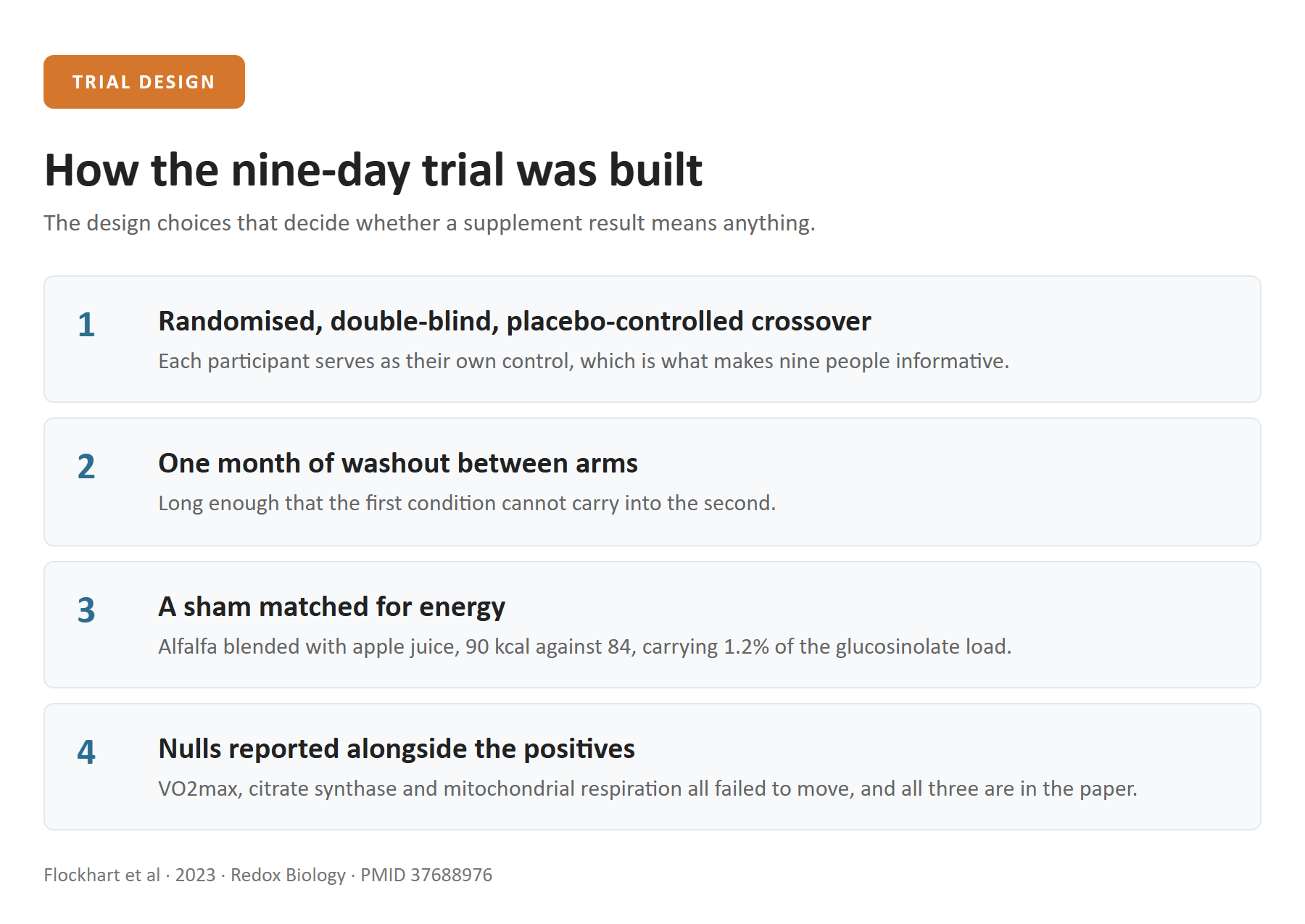
The design choices behind the nine-day trial, including the energy-matched sham and the nulls reported alongside the positives.
The Brief
- Isothiocyanates from cruciferous sprouts activate NRF2, the transcription factor that turns on the body's own antioxidant enzymes. They do not scavenge free radicals directly, which is the distinction that matters most in this story (Brooks 2018 for the lactate side; Ristow 2009 for the contrast).
- In a randomised, double-blind, placebo-controlled crossover with a one-month washout, nine days of sprouts alongside seven days of intense training lowered submaximal lactate and improved time to exhaustion (Flockhart 2023).
- The same trial found no change in maximal oxygen uptake, citrate synthase or mitochondrial respiration, and said so. The effect is not a bigger aerobic engine.
- A single dose lowers lactate acutely too: 0.4 mM at the highest of three submaximal work rates, three hours after 37.5 g of sprouts (Vinge 2025).
- More is not better. The 75 g dose did less than 37.5 g, and an unpublished 150 g pilot arm was poorly tolerated and pushed lactate the wrong way.
- The human evidence is two crossover trials in 24 people, one of them still a preprint. Crossovers make small samples far more informative than the headcount suggests, but this is an early literature, and the people who ran it say so. The same evidence-first way of spending on supplements applies here.
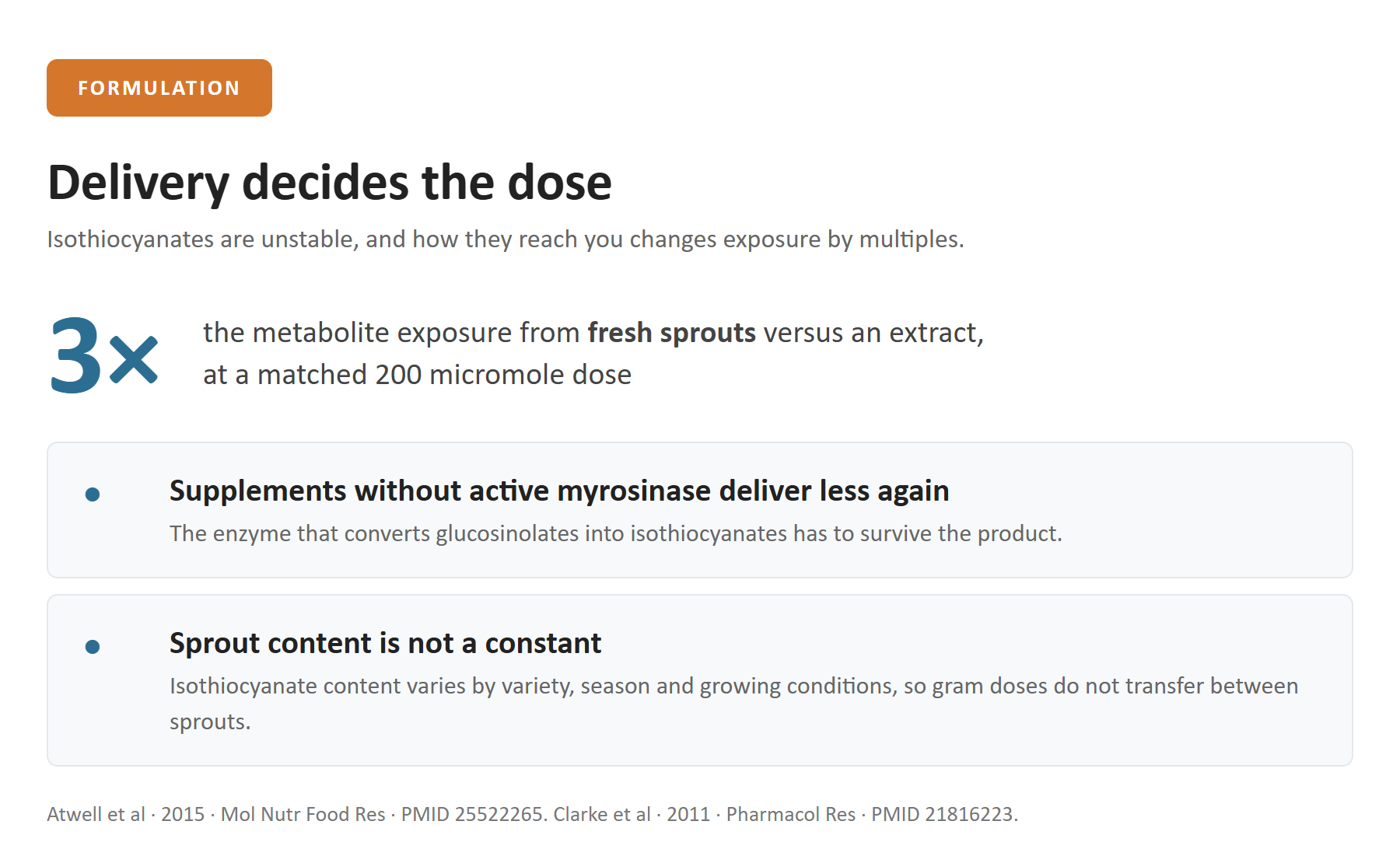
Delivery decides the dose: fresh sprouts produced roughly three times the metabolite exposure of an extract at a matched 200 micromole dose.
The science at a glance
Broccoli, kale and the rest of the cabbage family store compounds called glucosinolates. Chop or chew the plant and an enzyme called myrosinase converts them into isothiocyanates, the molecules responsible for that sharp mustard bite. The best studied one is sulforaphane.
Sulforaphane activates NRF2, the master switch for the body's own antioxidant machinery. Switch it on and cells make more of their own protective enzymes. This matters because hard training generates reactive oxygen species, and those molecules are both the damage and the signal that drives adaptation.
Getting a usable dose into a bottle is genuinely hard, and that deserves credit. Isothiocyanates are unstable, and even at a matched 200 micromole dose, fresh sprouts produced roughly three times the metabolite exposure of an extract (Atwell 2015). Supplements that lack active myrosinase deliver far less again (Clarke 2011). A shelf-stable shot that actually delivers them is a real formulation achievement, and most of this category never solves it.
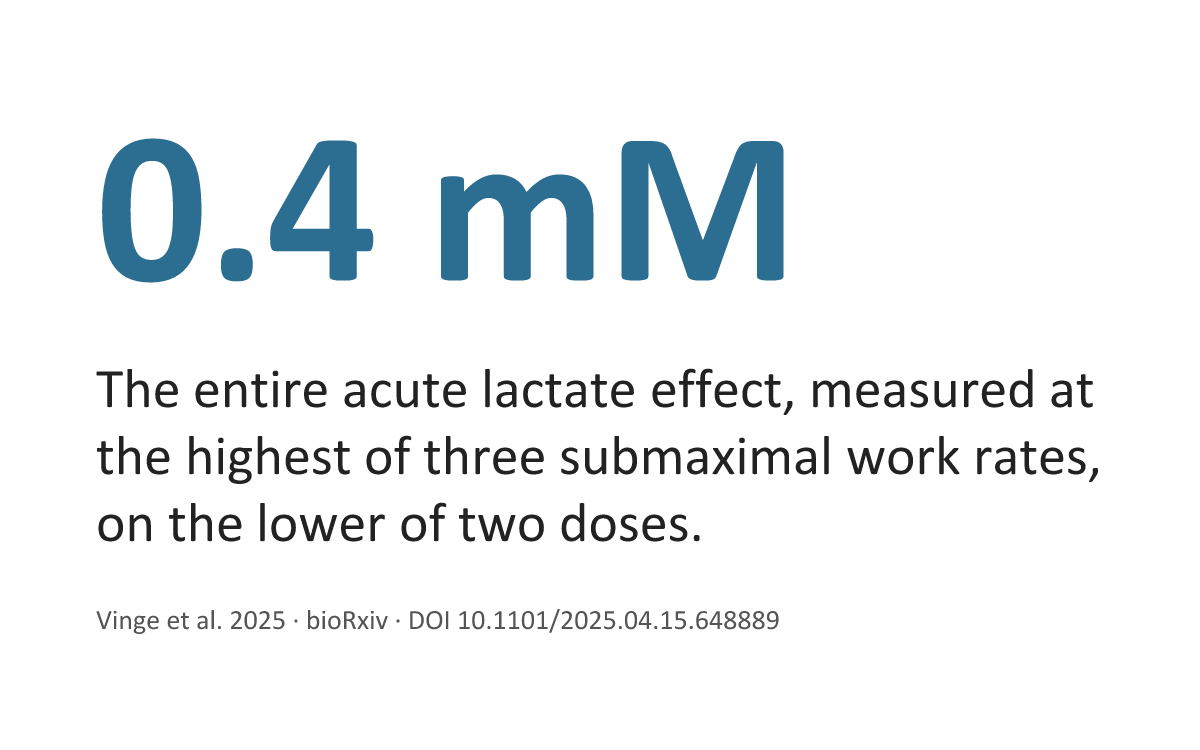
The acute lactate effect, in absolute units.
Principle 1: lactate is a messenger, not the message
The intuition almost every athlete carries is that lactate causes fatigue and less lactate means more fitness. That picture has been obsolete for two decades. Lactate shuttles continuously between producing and consuming tissues under fully aerobic conditions, and lactate in the blood is better read as a marker of strain than of stress (Brooks 2018).
So when a compound lowers blood lactate at a fixed power output, more than one story fits. Muscle might be producing less because glycolytic flux fell. Tissues might be clearing it faster. Or the blood might simply be distributing it differently, since even the gut microbiota metabolise systemic lactate during hard efforts.
Scientist's Insight: a submaximal lactate reading on its own cannot tell you which, and it says nothing about maximal glycolytic capacity, which is what a race-winning surge draws on. The 2023 trial is reassuring on that point, because time to exhaustion went up rather than down, and maximal lactate after ramp tests and short intervals has not fallen in the work done since. The measurement moved in the direction an athlete would want, and the mechanism is now the open question rather than the finding.
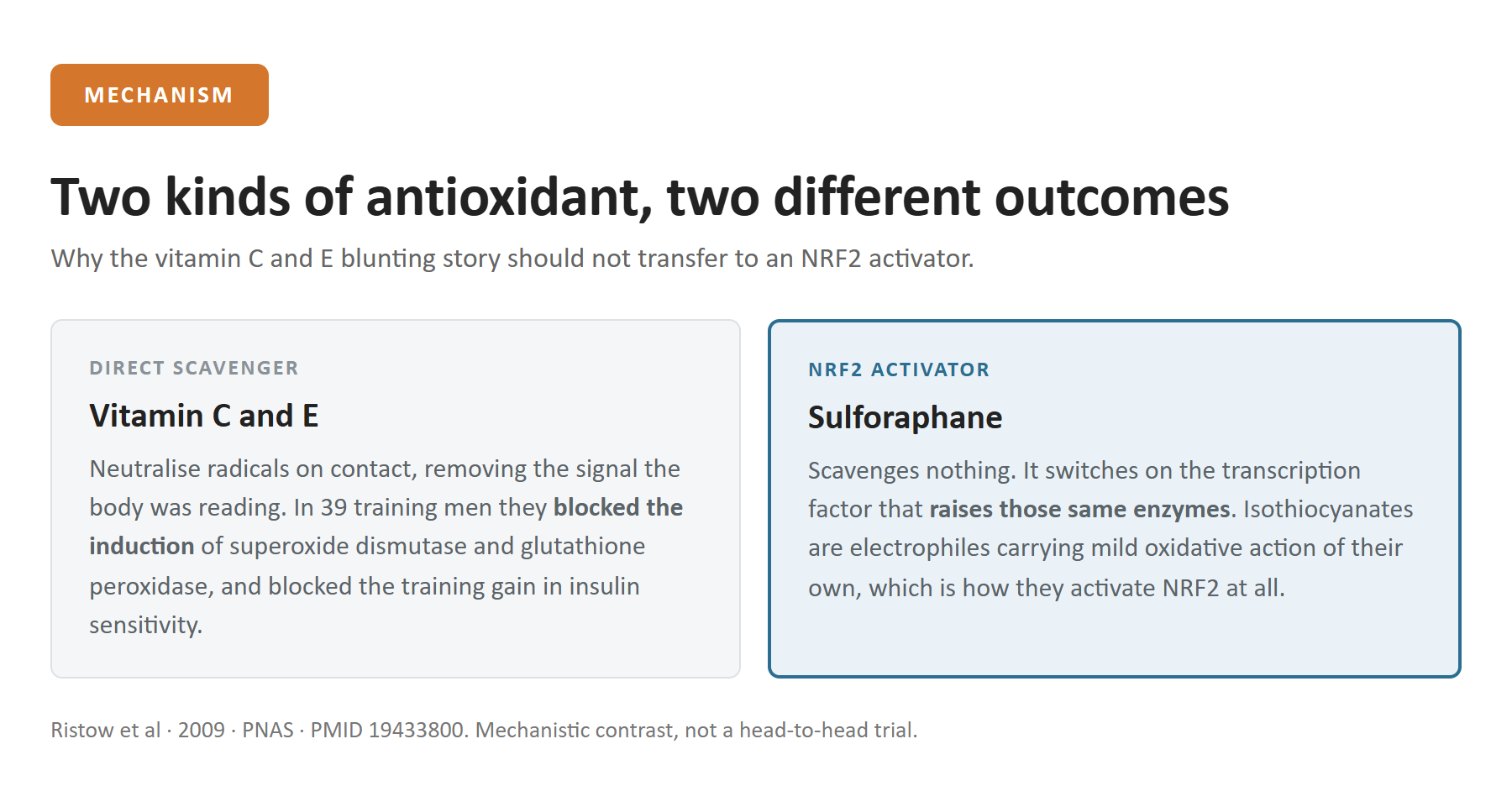
A direct radical scavenger and an NRF2 activator act on the same enzymes in opposite directions.
Principle 2: not all antioxidants blunt adaptation
There is a well known trap here. Four weeks of training in 39 men, with 1000 mg of vitamin C and 400 IU of vitamin E, blocked the training-induced gain in insulin sensitivity (Ristow 2009). Eight weeks of vitamin C blunted the endurance gain (Gomez-Cabrera 2008). Mopping up the reactive oxygen species removes the signal the body was reading.
An NRF2 activator is a different kind of intervention, and this distinction is real. Vitamins C and E are direct scavengers that neutralise radicals on contact. Sulforaphane scavenges nothing. It raises the cell's own defensive capacity.
Scientist's Insight: the detail that makes this more than a talking point sits in the Ristow data. The vitamins blocked the induction of the body's own antioxidant enzymes, superoxide dismutase and glutathione peroxidase among them. An NRF2 activator pushes those same enzymes in the opposite direction. That is a defensible mechanistic argument for why the vitamin C story should not transfer, and it is the strongest theoretical card this compound holds.
What the trials actually measured
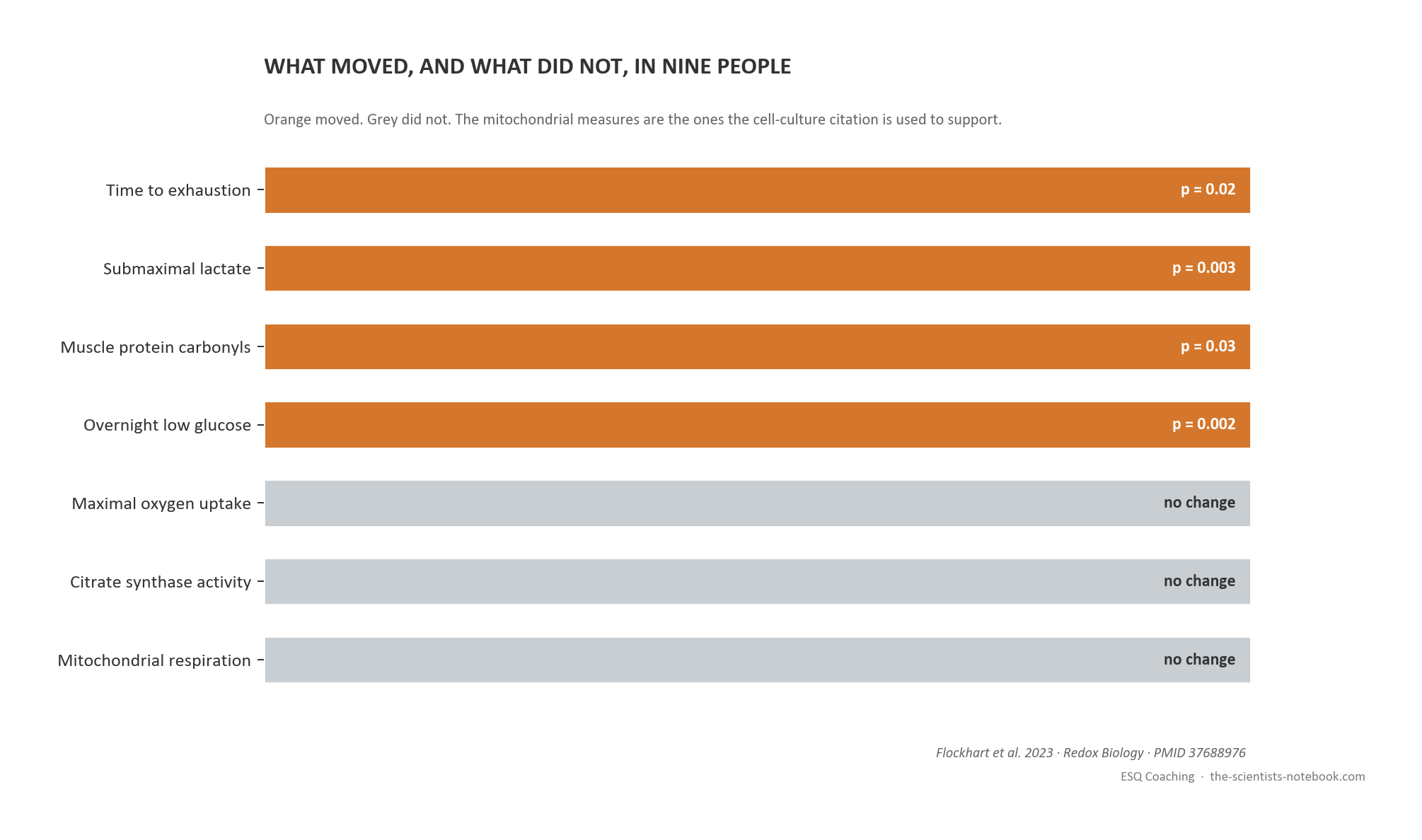
What moved and what did not in the nine-person training trial.
Nine days of sprouts across a hard training week
The 2023 trial is the peer-reviewed one and the only one with a performance outcome. Nine healthy adults took 150 g of glucosinolate-rich broccoli sprouts daily for nine days, with seven days of high-intensity training sitting inside that window. The control arm was alfalfa blended with apple juice, matched for energy at 90 kcal against 84 and carrying just 1.2% of the glucosinolate load. Randomised, double-blinded, crossover, one month of washout between arms.
What moved: work rate at a fixed lactate improved by 15 to 20 W. Muscle protein carbonyls fell from 0.75 to 0.65. Overnight time spent below 4 mM of blood glucose dropped from 5 hours 21 minutes to 2 hours 16 minutes. Maximal heart rate held steady where it fell under placebo. Time to exhaustion improved where placebo did not.
What did not move: maximal oxygen uptake, citrate synthase activity, and mitochondrial respiration. All three are in the paper.
One honest caveat the authors leave visible: time to exhaustion started 21 seconds lower in the treatment arm, and with nine people a baseline gap that size leaves some room for regression to the mean.
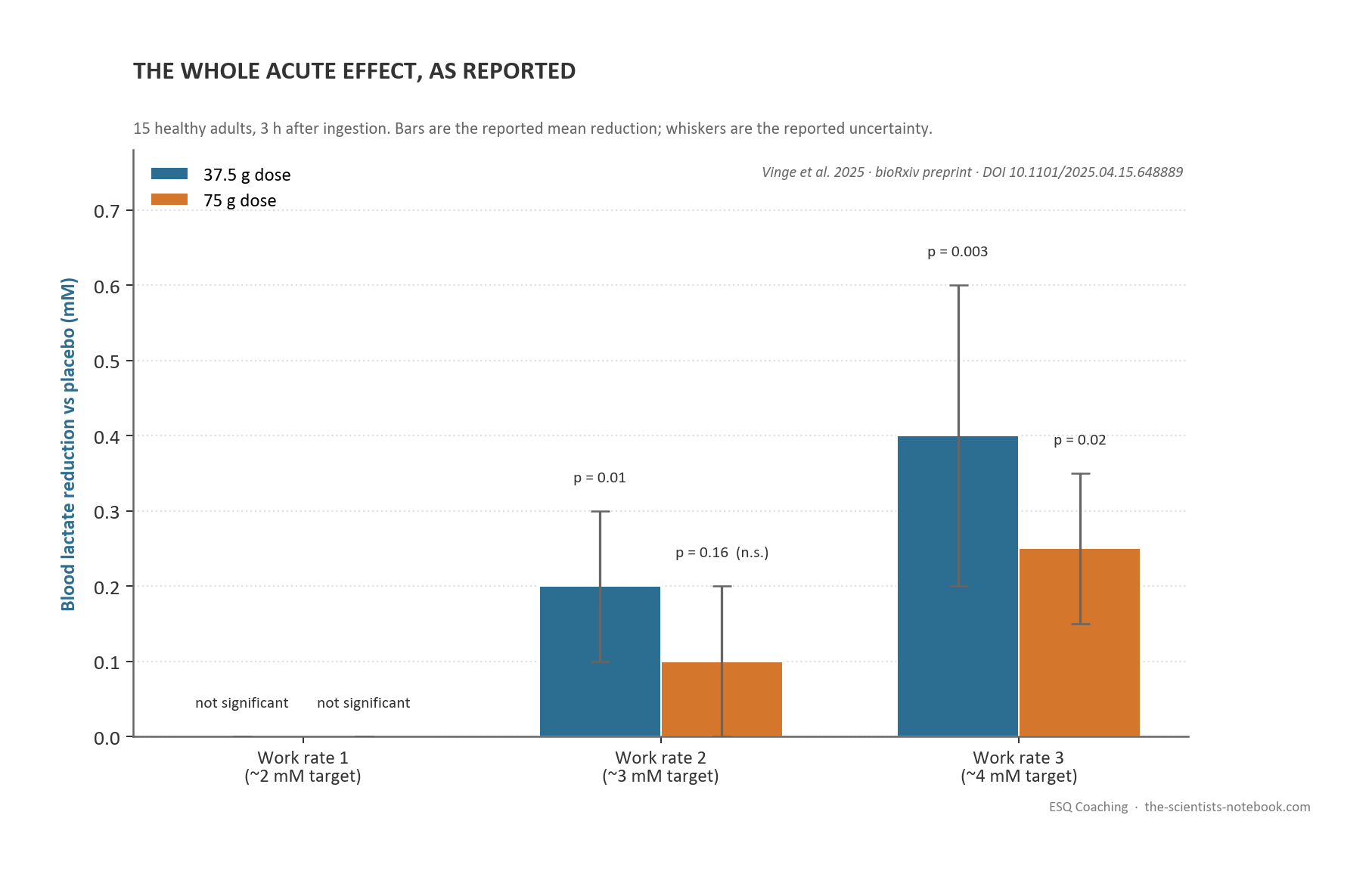
Every reported lactate reduction, by dose and work rate.
A single dose, three hours before
The acute study asked a narrower question. Fifteen healthy adults, eleven of them women, mean maximal oxygen uptake 40.9 ml/kg/min, cycled at three submaximal work rates three hours after taking 37.5 g of red kale sprouts, 75 g, or placebo. Blood lactate fell 0.4 mM at the highest work rate on the lower dose.
No performance outcome was measured in this one, and the cohort is fit-but-untrained rather than competitive. It is a mechanism study, and it reads like one.
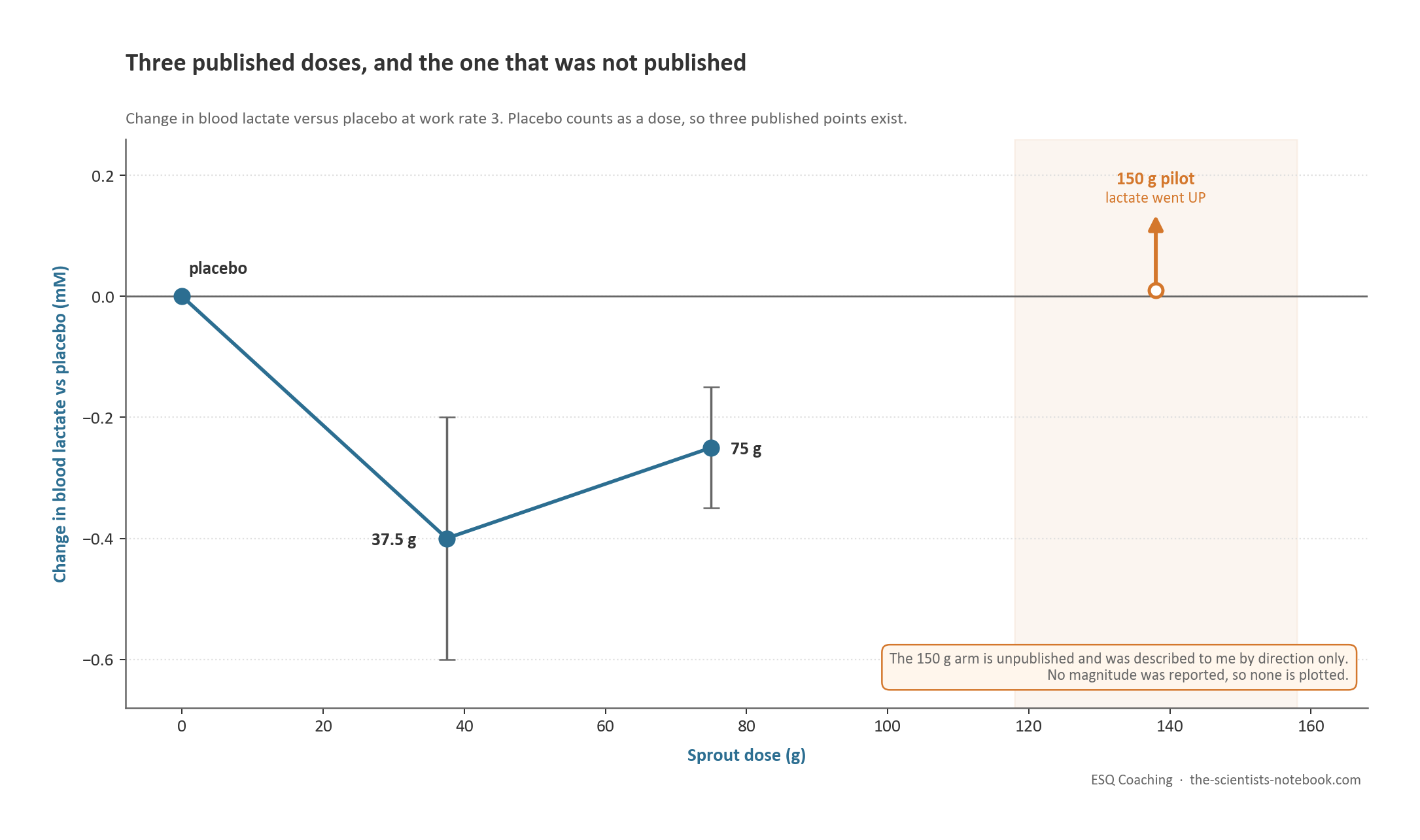
Three published doses, and the 150 g pilot arm that was never published. Direction only; no magnitude was reported.
The dose is not a straight line
The lower dose outperformed the higher dose, which is the sort of result that usually gets quietly dropped. It was not. And when I asked how firm the shape was, the answer went further than the published data does: an unpublished pilot arm at 150 g was poorly tolerated and produced higher lactate at workloads around the threshold.
Volunteering a result that went the wrong way, unasked, tells you something about how this group works. It is also the strongest evidence for the shape of the curve, and it is not in any paper.
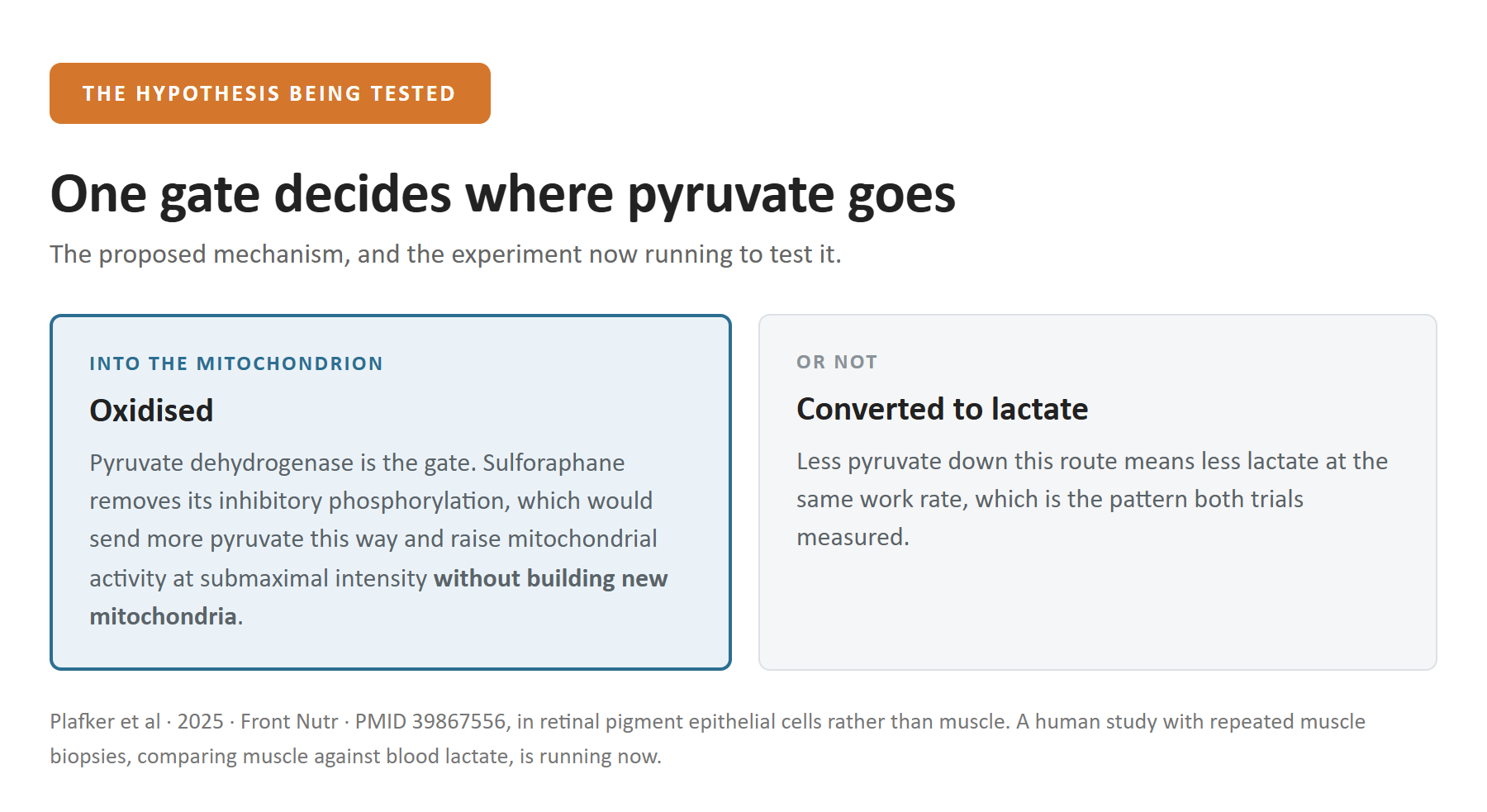
The proposed mechanism: pyruvate dehydrogenase as the gate deciding whether pyruvate is oxidised or converted to lactate.
Where the mechanism goes next
The most pressing question is how a lactate shift becomes performance, and the honest answer from the people running the studies is that they do not know yet.
Their working hypothesis is that isothiocyanates activate pyruvate dehydrogenase, the gate deciding whether pyruvate is oxidised in the mitochondrion or converted to lactate. That would raise mitochondrial activity at submaximal intensity without building any new mitochondria, which fits the 2023 trial's pattern precisely: better submaximal numbers, unchanged mitochondrial content. Sulforaphane has been shown to remove the inhibitory phosphorylation on that enzyme (Plafker 2025).
Two things are worth holding alongside that. The Plafker work used immortalised human retinal pigment epithelial cells rather than muscle, and frames sulforaphane as a fasting mimetic rather than an exercise aid. And there is a live study running with repeated muscle biopsies and muscle-versus-blood lactate measurements, designed to separate reduced production from faster clearance. That experiment is the one that settles it.
Related cell work points the same way: sulforaphane produced mitochondrial adaptations in muscle myotubes with or without contractile activity, which its authors frame as an exercise mimetic (Champsi 2024). Nine days is almost certainly too short to see the human equivalent, so the fair reading is that the cell result is untranslated rather than contradicted.
Where this leaves an athlete
The finding I would defend is narrow and real. In trained-enough people doing hard work, nine days of a well-delivered isothiocyanate dose moved the power at a fixed lactate by 15 to 20 W, halved overnight hypoglycaemia, and left the aerobic machinery untouched. That is a metabolic effect, not a fitness effect, and the distinction is the whole point.
The authors wrote their own conclusion carefully:
"These findings suggest that glucosinolate-rich broccoli sprouts have a lactate-lowering effect during submaximal efforts, which may have important implications for supplementation for improving endurance performance"
Michaela Sundqvist and colleagues (2025 preprint)
The company's own guidance runs the same direction, and it is the most responsible thing anyone in this category has said out loud:
"Our recommendation is not to take it every day. ITCs are an active compound, it's not like a vitamin"
Emil Sjolander, Nomio co-founder (BikeRadar)
That one-to-four-times-a-week advice turns out to be a safety margin rather than a hormesis calculation. Nobody has studied high doses over long periods, so they are staying inside what they have tested.
Limits of Application: this is two crossover trials in 24 people, one of them still a preprint sixteen months after posting, in cohorts that are fit rather than elite. The mechanism is a working hypothesis with a study running to test it. Effects in trained athletes are reported by the researchers as more pronounced, but that data is unpublished and I have not seen it. None of that makes the effect unreal. It makes it early.
Best regards,
Dr. Thomas Mortelmans
Read the research yourself
The primary sources are short and open. The 2023 Redox Biology trial is the peer-reviewed one, and the 2025 acute dose preprint is the acute study. Both are more careful in their own wording than most of what has been written about them since, which is why this piece quotes them directly rather than paraphrasing.
What Nomio's researchers said
On the dose curve
Asked how firm the U-shape is with two active doses and no contrast between them, whether a third dose is coming, and how the serving size was decided.
With 3 doses (0, 37.5 and 75) the resolution of the modelling is only moderately good. There's quite a lot of individual variability but most subjects seem to respond better (larger lactate reduction) to the 37.5 dose compared to the 75g dose. With the data we got, I feel convinced enough to say that more isn't always better and we have tried to optimize the amount of ITC in each Nomio around the dose that seems to give the best effect. In the piloting phase of this study we tried an even higher dose (150g) but that was poorly tolerated and we actually found higher lactate levels at workloads around the threshold. That might seem strange but many redox regulating substances seems to behave in that way. Another thing to note is that although ITCs are present in most cruciferous sprouts the amount varies a lot both between different varities but also between seasons and growing conditions, so the doses above cannot be translated to all sprouts. To make things even more complicated, there are more than 100 different ITCs, sulforaphane is by far the most researched one, but the ITC profile could be an important aspect determining the biological effects.
Filip Larsen
On the population
Asked what data underlies the elite-athlete statement, given the preprint's cohort averaged 40.9 ml/kg/min.
We have done quite a bit of testing in elite athletes with pro cycling teams, national teams in endurance sports but also new research studies in elite studies and it's quite clear that the effect is more pronounced in elites or at least those that train a lot. None of this is published just yet, so you couldn't know about it. I circle back to Emil if any of the teams testing Nomio can be mentioned. We don't have enough data to support it yet but it's reasonable that the ITCs have more pronounced effects in people that have a higher exposure to exercise-induced oxidative stress and fatigue. That's when the Nrf2 system is designed to be activated.
Filip Larsen
On how a lactate shift becomes performance
Asked for the mechanistic account, and how he would separate reduced production from faster clearance.
I agree this is the most pressing question but we don't know the answer yet! We are doing a study right now we multiple supplementation trials and repeated muscle biopsies before, during and after exercise. The working hypothesis is that ITCs activate pyruvate dehydrogenase as has been shown by Plafker et al (ref below). That would shunt more of the pyruvate into mitochondrial oxidation rather than into glycolytic lactate production. That would increase mitochondrial activity at any submax exericse intensity without mitochondrial biogenesis. The other side of that coin is that a lower glyctolytic max capacity could potentially reduce glycolytic power, negatively impacting short bursts of very high intensity work. However, we dont see a reduction in maximal lactate after ramp tests or after short interval work, so the effects seem to be specific at submax intensities around the threshold. In our ongoing studies we will also look at muscle lactate vs blood lactate during exercise and in that way we can get an indication if lactate clearance or transport is changed.
Filip Larsen
On cells versus humans, and hormesis
Asked how much weight the cell data should carry, and whether the one-to-four-times-a-week guidance is partly about not blunting the redox signal.
The mechanistic work in cell cultures done by groups like Hood and the Plafkers is very impressive and adds mechanistic insights that is very hard and sometimes impossible to get from in vivo studies. It is always very tricky to directly translate those findings into human/athlete practice. Regarding the long term effects of ITCs 7 days is often too short to be able to measure any changes in mitochondrial adaptations. Regarding potential blunted redox signalling I don't think that is a big issue as with direct antioxidants like Vitamin C, E or Q10. The reason is that ITCs are elctrophils and have a little bit of oxidative stress action, thats how they seem to activate nrf2 in the first place. To guidelines are there as a safety measure, we haven't studied high doses over longer time periods.
Filip Larsen
References
- Vinge F, Tillqvist E, Horwath O, Apró W, Larsen FJ, Sundqvist ML. A glucosinolate-rich beverage lowers blood lactate concentrations during submaximal exercise. bioRxiv preprint, posted 16 April 2025. Fifteen healthy adults (11 women, 4 men, mean VO2max 40.9 ml/kg/min) cycled at three submaximal work rates three hours after 37.5 g or 75 g of red kale sprouts or placebo. Lactate fell 0.4 mM at the highest work rate on the lower dose. No performance outcome was measured, and the preprint had not appeared in a peer-reviewed journal as of August 2026, 16 months after posting.
- Flockhart M, Nilsson LC, Tillqvist EN, Vinge F, Millbert F, Lännerström J, Nilsson PH, Samyn D, Apró W, Sundqvist ML, Larsen FJ. Glucosinolate-rich broccoli sprouts protect against oxidative stress and improve adaptations to intense exercise training. Redox Biology. 2023. PMID 37688976. Randomized double-blind placebo-controlled crossover in nine healthy adults: 150 g of sprouts daily for nine days alongside seven days of intense training lowered submaximal lactate and muscle protein carbonyls and improved time to exhaustion. VO2max, citrate synthase activity and mitochondrial respiration did not change.
- du Toit L, Sundqvist ML, Redondo-Rio A, et al. The Effect of Dietary Nitrate on the Oral Microbiome and Salivary Biomarkers in Individuals with High Blood Pressure. The Journal of Nutrition. 2024. PMID 39019159. Randomized five-week trial in 70 adults comparing leafy greens against a nitrate salt. Representative of Sundqvist's earlier research line on dietary nitrate, the field that preceded the isothiocyanate work.
- Champsi S, Hood DA. Sulforaphane treatment mimics contractile activity-induced mitochondrial adaptations in muscle myotubes. American Journal of Physiology Cell Physiology. 2024. PMID 39672545. C2C12 mouse muscle cells in culture, electrically stimulated with or without sulforaphane. Sulforaphane raised mitochondrial respiration and biogenesis markers, and produced no measurable difference between stimulated and unstimulated treated cells.
- Liebman SE, Le TH. Eat Your Broccoli: Oxidative Stress, NRF2, and Sulforaphane in Chronic Kidney Disease. Nutrients. 2021. PMID 33477669. Narrative review of NRF2 signalling and sulforaphane in kidney disease. It describes the pathway clearly and contains no exercise or athletic performance data.
- Komine S, Miura I, Miyashita N, Oh S, Tokinoya K, Shoda J, Ohmori H. Effect of a sulforaphane supplement on muscle soreness and damage induced by eccentric exercise in young adults: A pilot study. Physiological Reports. 2021. PMID 34927380. Pilot study in 16 young men doing eccentric elbow-flexion exercise. Two weeks of supplementation lowered muscle soreness and a lipid-peroxidation marker two days after exercise. Arm exercise, not endurance performance.
- Oh S, Komine S, Warabi E, et al. Nuclear factor (erythroid derived 2)-like 2 activation increases exercise endurance capacity via redox modulation in skeletal muscles. Scientific Reports. 2017. PMID 29018242. Mice given injected sulforaphane ran further on a treadmill, and the effect disappeared in NRF2-knockout animals. Injection in rodents, not oral dosing in humans.
- Malaguti M, Angeloni C, Garatachea N, et al. Sulforaphane treatment protects skeletal muscle against damage induced by exhaustive exercise in rats. Journal of Applied Physiology. 2009. PMID 19713431. Rats injected with sulforaphane for three days before exhaustive treadmill running showed lower plasma markers of muscle damage and higher phase II enzyme activity.
- Bose C, Alves I, Singh P, et al. Sulforaphane prevents age-associated cardiac and muscular dysfunction through Nrf2 signaling. Aging Cell. 2020. PMID 33067900. Twelve weeks of dietary sulforaphane in old mice restored NRF2 activity, mitochondrial function and exercise capacity. A rodent ageing study, not a crossover trial and not in cell culture.
- Chen JG, Johnson J, Egner P, et al. Dose-dependent detoxication of the airborne pollutant benzene in a randomized trial of broccoli sprout beverage in Qidong, China. The American Journal of Clinical Nutrition. 2019. PMID 31268126. Randomized trial in 170 adults. Only the highest dose, producing about 25 micromoles of urinary sulforaphane metabolites per day, raised benzene detoxification. Useful as a human dosing anchor; the outcome is pollutant metabolism, not exercise.
- Ristow M, Zarse K, Oberbach A, et al. Antioxidants prevent health-promoting effects of physical exercise in humans. Proceedings of the National Academy of Sciences. 2009. PMID 19433800. Four weeks of training in 39 men, with or without 1000 mg vitamin C and 400 IU vitamin E. The vitamins blocked the training-induced rise in insulin sensitivity and, notably, blocked the induction of the body's own antioxidant enzymes.
- Gomez-Cabrera MC, Domenech E, Romagnoli M, et al. Oral administration of vitamin C decreases muscle mitochondrial biogenesis and hampers training-induced adaptations in endurance performance. The American Journal of Clinical Nutrition. 2008. PMID 18175748. Eight weeks of training in 14 men, five taking 1 g of vitamin C daily. Supplementation reduced the training gain in endurance capacity and suppressed mitochondrial biogenesis signalling.
- Brooks GA. The Science and Translation of Lactate Shuttle Theory. Cell Metabolism. 2018. PMID 29617642. Review establishing lactate as a fuel, a gluconeogenic precursor and a signalling molecule rather than a waste product, and arguing that blood lactate is better read as a marker of strain than of damage.
- Atwell LL, Hsu A, Wong CP, et al. Absorption and chemopreventive targets of sulforaphane in humans following consumption of broccoli sprouts or a myrosinase-treated broccoli sprout extract. Molecular Nutrition and Food Research. 2015. PMID 25522265. At a matched 200 micromole daily dose, fresh sprouts produced roughly three times the plasma and urinary sulforaphane metabolites of an extract. Delivery form changes exposure substantially.
- Clarke JD, Hsu A, Riedl K, et al. Bioavailability and inter-conversion of sulforaphane and erucin in human subjects consuming broccoli sprouts or broccoli supplement in a cross-over study design. Pharmacological Research. 2011. PMID 21816223. Crossover in 12 adults showing that supplements lacking active myrosinase deliver far lower isothiocyanate concentrations than fresh sprouts. Stabilising a bioavailable isothiocyanate is a genuinely hard formulation problem.
- Plafker KS, Georgescu C, Pezant N, Pranay A, Plafker SM. Sulforaphane acutely activates multiple starvation response pathways. Frontiers in Nutrition. 2025. PMID 39867556. Immortalised human retinal pigment epithelial cells, not muscle. Sulforaphane reduced the inhibitory phosphorylation on pyruvate dehydrogenase, which the authors read as pyruvate being directed into the TCA cycle, and it lowered glucose uptake and lactate secretion. The paper frames sulforaphane as a fasting mimetic and closes by noting the same properties could underlie both therapeutic efficacy and potential toxicity. Supplied by Filip Larsen as the basis for the mechanism Nomio's group is testing.
A note on sources and interests
I have no commercial relationship with Nomio: no sponsorship, no payment, no product-for-coverage arrangement, and no editorial control by the company or by the researchers over this text. I have not tested the product. Everything above comes from the published papers, from public documents, and from the answers reproduced in full further up.
Michaela Sundqvist and Filip Larsen hold a patent on isothiocyanates for enhancing training adaptations, and both papers declare that they are co-founders and shareholders in a commercial entity marketing products to augment athletic performance. They declared it in the papers themselves, which is how anyone reading the research would know.
What do broccoli sprouts actually do to blood lactate during exercise?
Isothiocyanates from cruciferous sprouts activate NRF2, which raises the body's own antioxidant enzymes rather than scavenging radicals directly. In a randomised double-blind crossover, nine days of sprouts across a hard training week improved work rate at a fixed lactate by 15 to 20 W and improved time to exhaustion, while maximal oxygen uptake and every mitochondrial measure stayed flat. The effect is metabolic rather than a bigger aerobic engine.
Frequently asked questions
What did the broccoli sprout training trial actually find?
Nine days of glucosinolate-rich sprouts alongside seven days of intense training improved work rate at a fixed blood lactate by 15 to 20 W, lowered muscle protein carbonyls, cut overnight time below 4 mM glucose from 5h21 to 2h16, and improved time to exhaustion. VO2max, citrate synthase and mitochondrial respiration did not change.
Do isothiocyanates blunt training adaptation the way vitamin C and E can?
The mechanism argues against it. Vitamins C and E scavenge radicals directly and were shown to block the induction of superoxide dismutase and glutathione peroxidase. Sulforaphane scavenges nothing; it activates NRF2, which raises those same enzymes. Isothiocyanates are electrophiles with mild oxidative action of their own, which is how they switch NRF2 on.
Is more isothiocyanate better?
No. In the acute study the 37.5 g dose lowered lactate more than 75 g did, and an unpublished pilot arm at 150 g was poorly tolerated and raised lactate at workloads near threshold. The researchers describe the dose modelling as only moderately good and recommend one to four servings a week as a safety margin.
How does a lower lactate reading turn into performance?
That is the open question. The working hypothesis is that isothiocyanates activate pyruvate dehydrogenase, sending more pyruvate into mitochondrial oxidation instead of lactate production, which would raise mitochondrial activity at submaximal intensity without building new mitochondria. A human study with repeated muscle biopsies is running to test it.
How much human evidence is there?
Two crossover trials totalling 24 people, one of them still a preprint. Crossover designs make small samples considerably more informative than the headcount suggests, since each participant is their own control, but this is an early literature and the researchers say so themselves.
If you have 60 seconds, I would value your anonymous feedback. You can share it here.
Health disclaimer
This post discusses isothiocyanates from cruciferous vegetables (broccoli, kale and their relatives), blood lactate, and how to read the evidence behind a supplement claim. It is educational, not medical advice, not a diagnosis, and not a substitute for clinical care. Talk to a physician or a registered dietitian before adding a concentrated cruciferous extract if you have thyroid disease or take thyroid medication, if you take warfarin or another vitamin K sensitive anticoagulant, if you are pregnant or breastfeeding, or if you take any medication cleared through phase II liver enzymes, since isothiocyanates induce those pathways. A shift in blood lactate is a metabolic measurement, not a health outcome. No outcome is guaranteed. The material here is descriptive, drawn from peer-reviewed evidence and from published documents, and is an input to a conversation with your own coach and clinicians rather than a prescription.
Found this useful?
Get articles like this and free training calculators in your inbox every week.
Recommended reads
If this was useful, these are the other research-driven newsletters I actually read.
Member discussion