OpenLab #009: An evidence-first way to spend on supplements
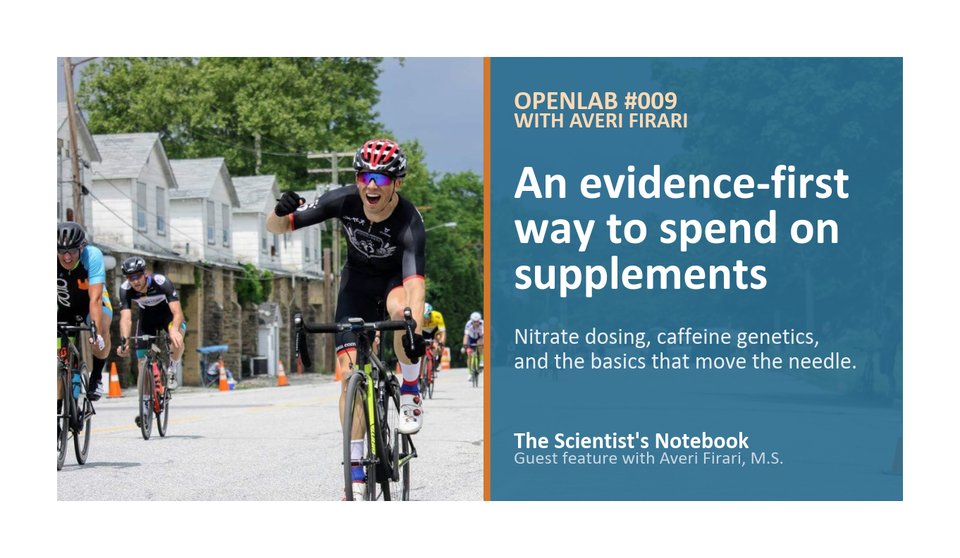
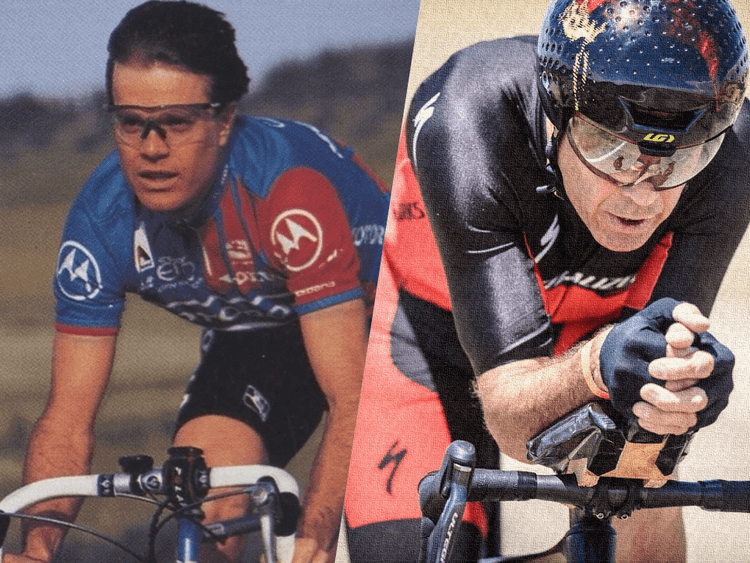
Averi Firari is a USA Cycling-certified endurance coach and kinesiology instructor at James Madison University.
He holds an M.S. in Exercise Physiology and a B.S. in Kinesiology from JMU, where his master's thesis tested the effects of dietary nitrate supplementation on cycling physiology and performance in normoxic and simulated-altitude conditions.
Before the lab, he served seven years on active duty in the U.S. Air Force, reached the rank of Staff Sergeant, and earned a place in the Air Force World Class Athlete Program.
He raced for the U.S. Armed Forces Cycling Team, took a top-10 finish at the Military World Cycling Championships in Belgium, and represented the U.S. National Team at UCI Mountain Bike World Cups from 2014 to 2016, with a palmares that spans road, cross-country, and cyclocross. He has personally completed more than 40 VO2max tests, including approximately a dozen under simulated-altitude conditions.
Today he coaches endurance athletes at Otterhaus and teaches undergraduate kinesiology.
Why this topic
Supplements are the loudest and least honest corner of endurance sport. Marketing sells certainty, labels hide doses, and pros lend their names to products no controlled trial has tested.
We wanted someone who has lived on both sides of that line, an athlete who once supplemented on hope and later measured nitrate in a laboratory, to sort the signal from the noise.
Before completing graduate research on dietary nitrate, Averi Firari was the athlete drinking cold-pressed beetroot juice an hour before a race because he had heard it might help.
Free calculator
He calls that era his vibes-based supplementation phase, and he is almost certainly right that the dose was too small to do anything.
That gap, the distance between a supplement's promise and the dose, timing, and context that decide whether it does anything at all, is where most endurance athletes quietly lose money and attention. Averi's whole approach lives in that gap.
He is not anti-supplement. He is anti-magical thinking, and the difference turns out to matter more than any single product on the shelf.
The Brief
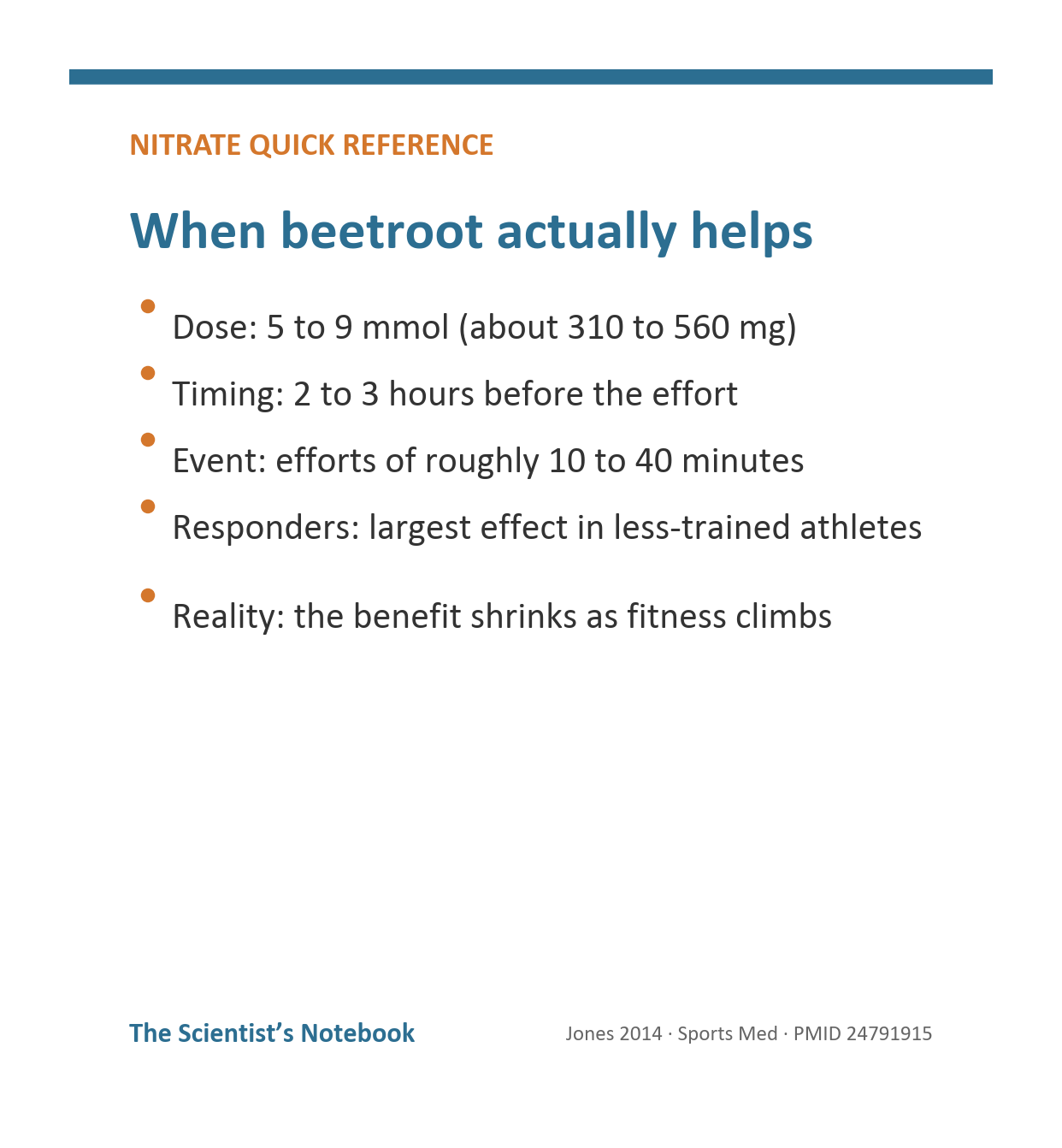
- Dietary nitrate can improve some exercise outcomes, mostly in shorter, high-intensity efforts. A common practical protocol is roughly 6 to 8 mmol taken 2 to 3 hours before exercise, although effective studies have used wider acute and multi-day dosing strategies, and the benefit is less reliable in highly trained endurance athletes.
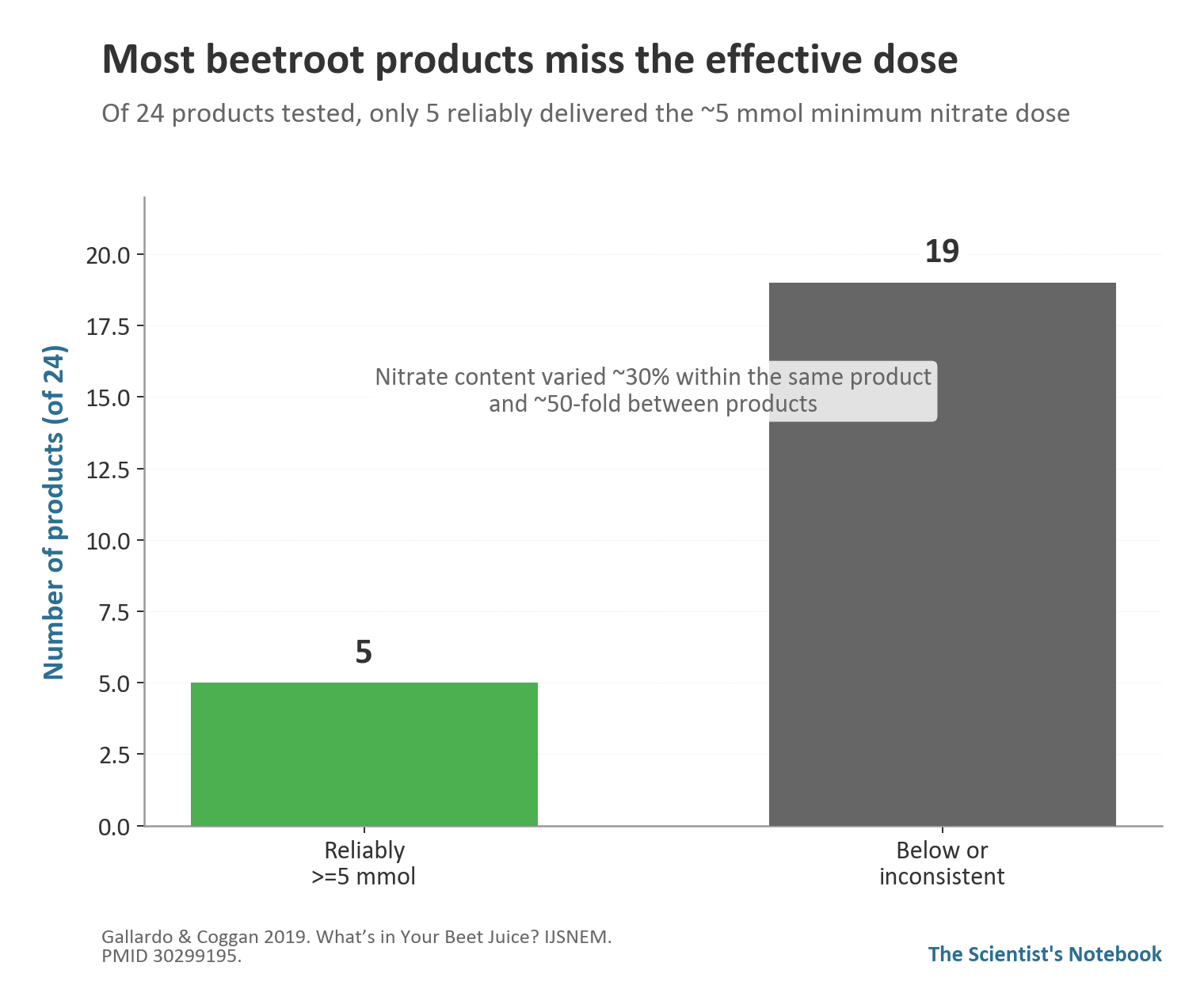
- When researchers tested 24 commercial beetroot products, only 5 reliably delivered the roughly 5 mmol minimum dose, and nitrate content ranged about 50-fold between products. The label often will not tell you what you are getting.
- Caffeine improves endurance performance on average, but individual responses vary. One prominent cycling study found large differences between CYP1A2 genotype groups, including impaired performance in the small CC subgroup, although the broader evidence does not support treating genotype as a deterministic caffeine-response test.
- Ketone monoesters raise blood ketones reliably, yet a 600 mg/kg dose increased breathing, heart rate, and perceived effort during cycling with no time-trial benefit on its own.
- BMI misclassifies muscular athletes, and body-fat readouts from consumer devices carry enough error that chasing the number often adds anxiety without adding information.
- The most common hidden problem is not a missing supplement. It is under-fueling, and appetite-suppressing medications such as GLP-1 agonists can make it harder to meet fueling demand when training load has not changed.
- Spend on the first 20% before the final 1%. Consistent training, enough carbohydrate on the bike, sleep, and honest notes outperform almost anything you can buy.
The Science at a Glance
Supplements sit at the end of a long chain, and the chain decides whether the last link matters. A working body responds to a compound based on dose, timing, training status, and what is already in place.
Nitrate is the cleanest illustration. It feeds the nitrate-nitrite-nitric oxide pathway, which can lower the oxygen cost of submaximal exercise and nudge efficiency upward (Jones 2014).
The mechanism is real. The applied side is where it falls apart.
"It's tied to the nitrate-nitrite-nitric oxide pathway, oxygen cost, blood flow, and exercise efficiency. What surprised me most is how messy the applied side can be. Products vary a lot. Some labels don't clearly tell you how much nitrate you're actually getting."
Averi Firari
That messiness is the theme. A compound can have a plausible mechanism, a real body of evidence, and still do nothing for you if the product is under-dosed, the timing is wrong, or your physiology does not respond.
Three principles carry most of the weight.
Principle 1: The dose you actually get is the dose that matters
Nitrate's effects depend heavily on dose, timing, exercise demands, and training status. The Australian Institute of Sport recommends roughly 6 to 8 mmol taken 2 to 3 hours before exercise (AIS Sports Supplement Framework), while a 2022 expert consensus panel landed on 8 to 16 mmol acutely or 4 to 16 mmol per day chronically, with the final dose 2 to 4 hours before exercise (Shannon 2022).
Pooling 80 trials, the average effect works out to about 3%, concentrated in efforts shorter than roughly 15 minutes and absent in athletes above about 65 mL/kg/min (Senefeld 2020).
Now hold that against the market. When 45 lots across 24 beetroot products were analyzed, only 5 consistently reached the roughly 5 mmol threshold, content within the same product swung by 30% on average, and the gap between the lowest and highest products was close to 50-fold (Gallardo and Coggan 2019).
"One of my favorite papers to send clients is "What Is in Your Beet Juice?" because it gets at that exact issue: if the product doesn't tell you the nitrate dose, you may not actually know what you're taking."
Averi Firari
Scientist's Insight: A product that hides its dose is not a supplement, it is a wager. Averi's master's work put dietary nitrate against cycling performance in normoxic and simulated-altitude conditions, so he reads these labels the way an accountant reads a receipt.
Principle 2: Individual response is the rule, not the exception
Caffeine is ergogenic on average. The strongest evidence generally sits around 3 to 6 mg/kg taken about an hour out, although some athletes benefit from lower doses and higher doses are not necessarily better (Guest 2021; Chen 2024). Averages hide people.
A common variant in the CYP1A2 gene may contribute to differences in caffeine metabolism and exercise response. In a 2012 JMU study by Womack and fellow JMU colleagues, 6 mg/kg cut 40-km time by 4.9% in fast-metabolizer riders versus 1.8% in the rest (Womack 2012).
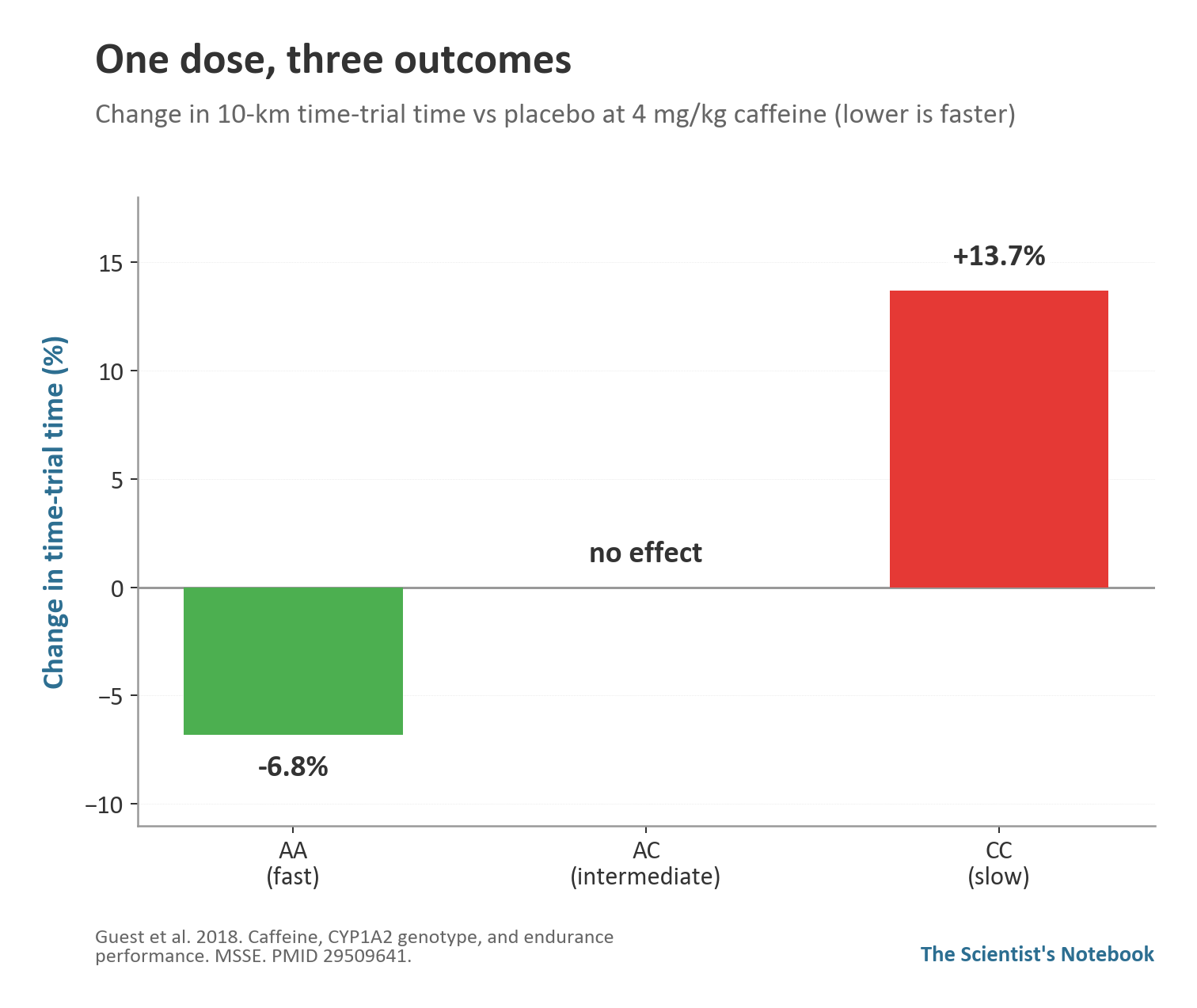
A later trial reported a sharper split, with the small slow-metabolizer group riding 13.7% slower at 4 mg/kg (Guest 2018). The broader evidence still does not support treating genotype as a deterministic caffeine-response test.
"I don't assume everyone responds the same way. Some athletes feel amazing with caffeine. Some get anxious, jittery, have GI issues, sleep worse, or simply don't get much benefit. I like caffeine, but I coach it like a tool."
Averi Firari
The same dose can help one rider and do nothing for another, which is a reason to test it in training before you trust it on a start line.
Principle 3: A supplement is downstream of the basics
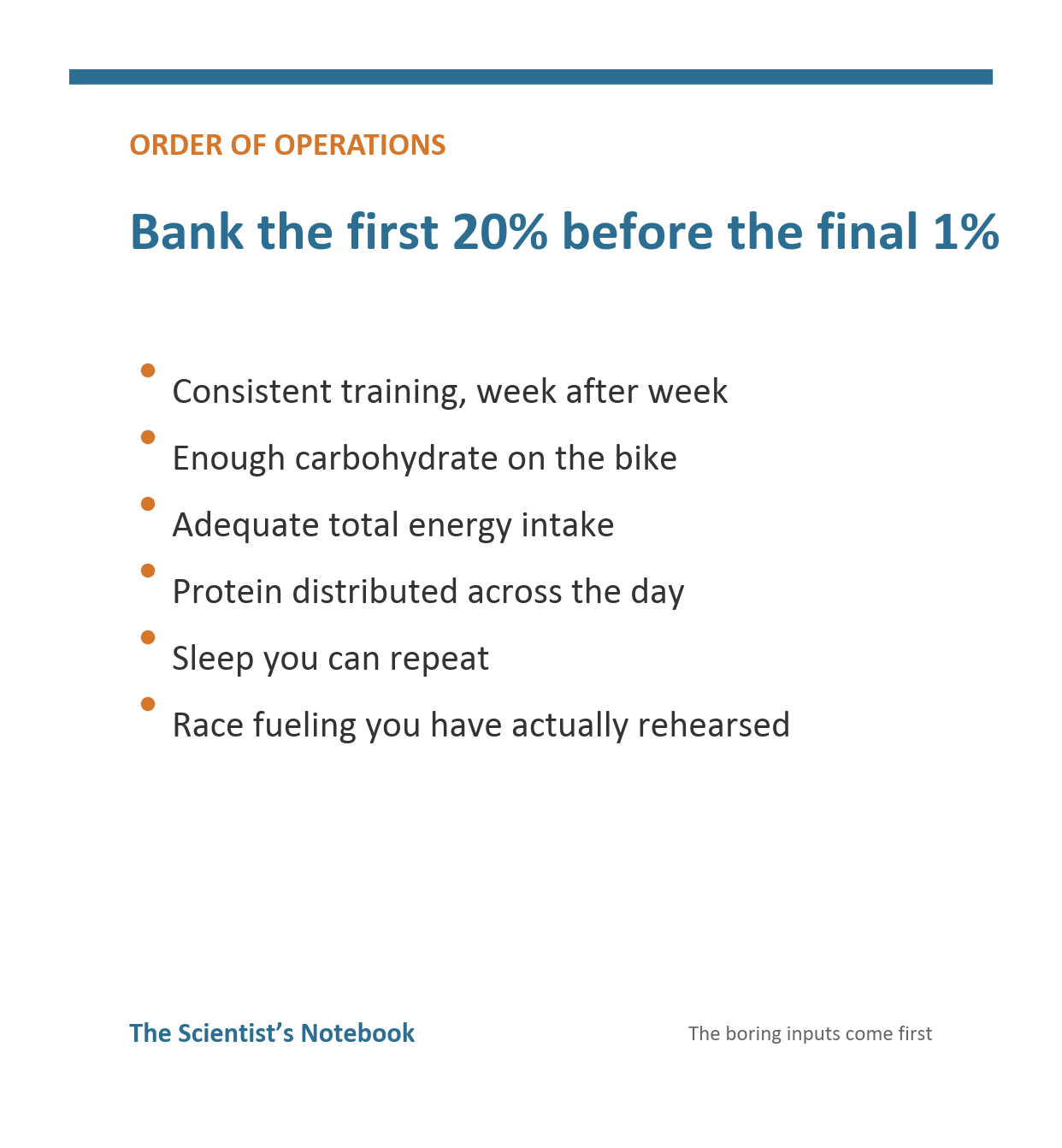
No compound rescues an athlete who is under-slept, under-fueled, and training inconsistently. The order of operations is unforgiving, and it favors the boring inputs.
"I just think athletes should be careful about spending a lot of money to optimize the final 1% when the first 20% is still sitting on the table."
Averi Firari
The marketing works precisely because it inverts this order. It sells the 1% to people who have not banked the 20%, and it uses an elite athlete's name as proof.
The Decision Framework
The levers below are diagnostic, not prescriptive. Each names what the literature observes so a reader can place themselves on the map.
Nitrate and beetroot
The data: the ergogenic signal is real but modest, concentrated in shorter and higher-intensity efforts, and less reliable in highly trained endurance athletes (Shannon 2022; Senefeld 2020). Product labeling is the weak point, with only a handful of tested products reliably hitting the minimum dose (Gallardo and Coggan 2019).
Where athletes tend to land: those relying on undisclosed proprietary blends usually take far less active compound than they assume.
"When I ran the numbers, it looked like the athlete would need to eat nearly the entire bottle of chews just to hit the minimum effective dose of nitrate that might provide even the slightest chance of an ergogenic benefit."
Averi Firari
Caffeine and genotype
The data: 3 to 6 mg/kg taken about 60 minutes out is the most consistently supported range, with genotype, habitual intake, anxiety, and sleep sensitivity all modulating the response (Guest 2021; Womack 2012).
Where athletes tend to land: the same dose that sharpens one rider leaves another jittery or sleeping badly.
Ketones
The data: ketone monoesters raise blood ketones, but a 600 mg/kg dose increased ventilation, heart rate, and perceived exertion during cycling with no time-trial benefit, and in a separate protocol the ester alone did not lift power unless bicarbonate was co-ingested (McCarthy 2021; Poffe 2021).
Where athletes tend to land: the price and the pro endorsements outrun the on-road result.
"I beef with ketones a bit. I'm not saying they do nothing. They clearly can increase blood ketone levels. But I think the performance effect is often embellished, and it doesn't help that pros are promoting them."
Averi Firari
Body composition
Body composition is another number athletes spend money trying to optimize, and it carries the same dose-and-measurement problem as anything on the supplement shelf.
The data: BMI misclassifies athletes with high lean mass as overweight, so it needs to be paired with an actual body-composition measure (Jonnalagadda 2004).
Even then the tools carry error, with consumer bioimpedance devices deviating meaningfully from DXA (Rojano-Ortega 2024), and with hydration, recent food intake, and scan technique moving the number enough that standardized measurement conditions are a precondition for reading any change (Nana 2014).
Where athletes tend to land: those most fixated on a single body-fat percentage are usually over-reading device noise.
Under-fueling and GLP-1 medications
The data: GLP-1 receptor agonists can reduce appetite and food intake (Quast 2021). For endurance athletes, that may increase the risk of under-fueling when training demand remains high, although direct performance research in trained athletes remains limited.
 Thomas Mortelmans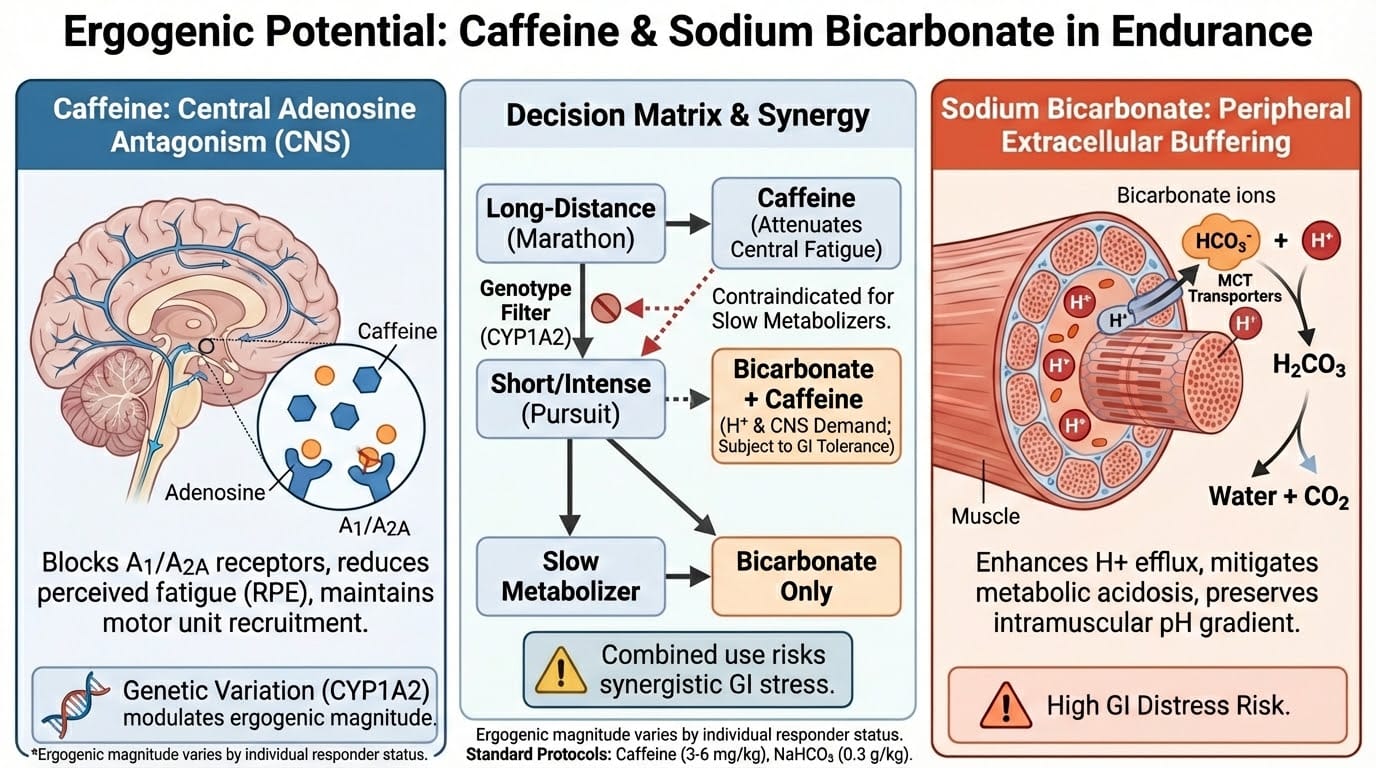
Related reading
Where athletes tend to land: the first visible sign is rarely the medication itself. What follows is a coaching observation rather than a research finding.
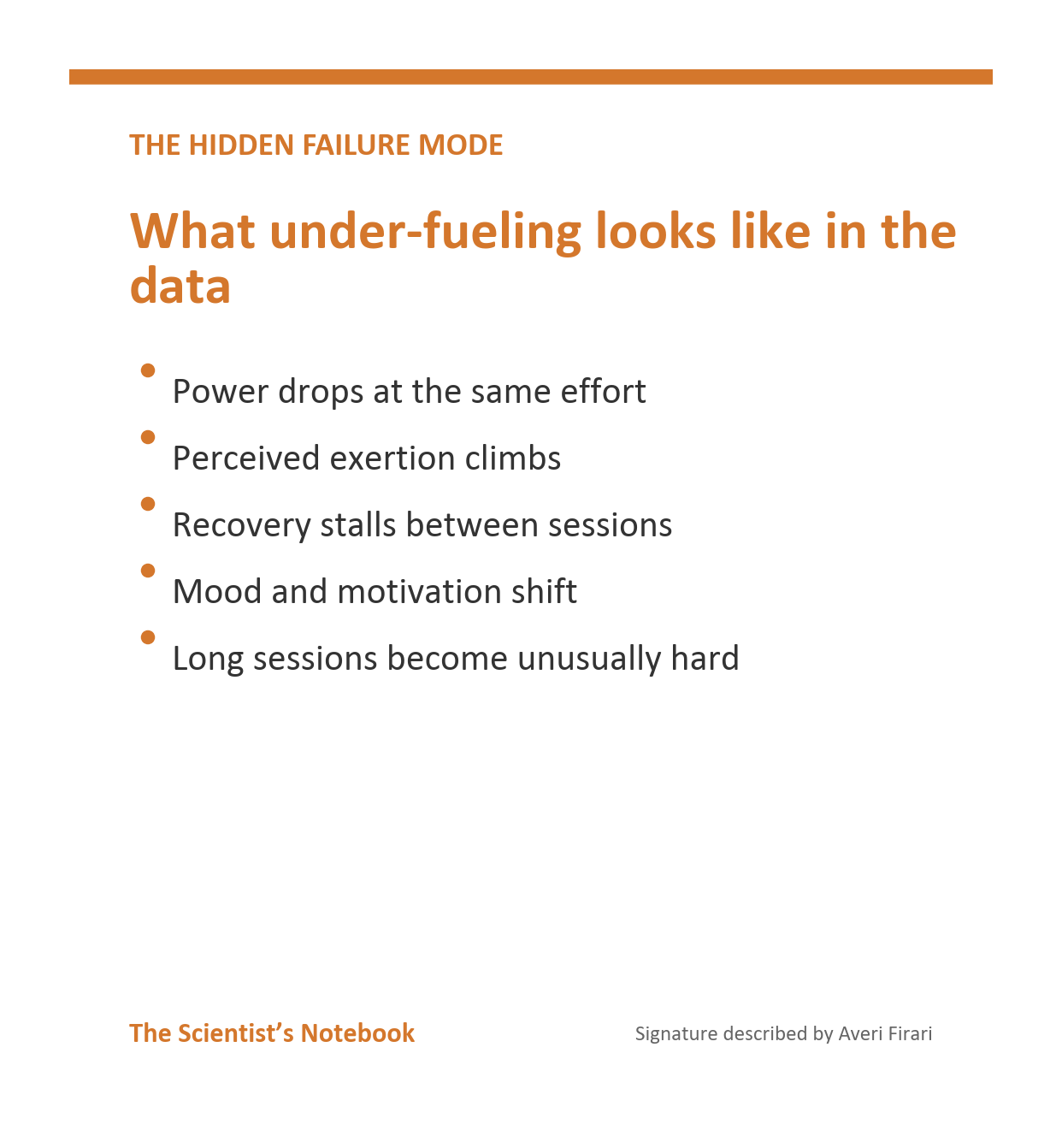
"What I notice first is usually not "this athlete is taking a medication." What I notice is that the training response changes. Power drops. RPE rises. They don't recover. Mood and motivation shift. Long sessions become unusually difficult."
Averi Firari
The Protocol and a Real Case
There is no supplement stack to hand out here, because the useful protocol is a set of questions, not a shopping list. Averi runs a supplement through the same filter every time.
- Confirm the basics are handled first: consistent training, enough carbohydrate on the bike, total energy intake, protein distribution, sleep, and race fueling you have actually rehearsed.
- Find the dose you would actually get, then compare it to the minimum effective dose from the literature. If the label hides the active amount, treat that as a red flag.
- Read the studies the brand cites, not the brand's summary of them.
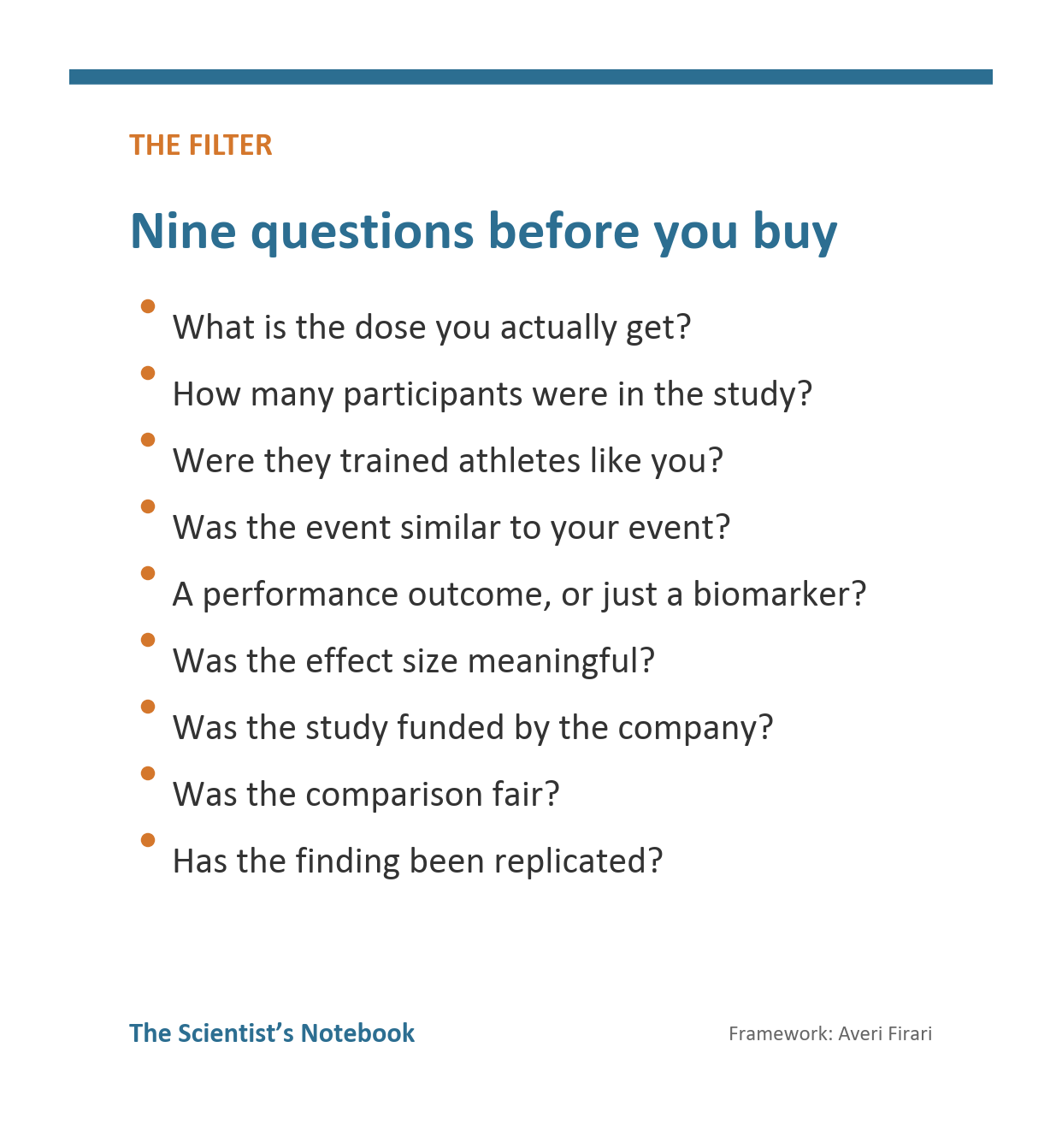
"How many participants were there? Were they trained athletes? Was the study event actually similar to your event? Was it a performance outcome or just a biomarker? Was there a meaningful effect size? Was the study funded by the company? Was the comparison fair? Has the finding been replicated?"
Averi Firari
- Test individual response in training, not for the first time on a start line.
- Weigh dose, timing, population, event type, effect size, cost, and risk together, then decide.
A real case from Averi's coaching
One athlete began coaching with substantial weight-loss, health, and performance goals. The intervention was not a supplement. It was the boring 20%, applied for a year.
"Over the last year, they've lost nearly 80 pounds. But the part that really gets me is not just the weight loss. When we do the math on their watts per kilogram, combining the weight loss with their improved power, they've seen greater than a 100% improvement over the last year."
Averi Firari
The arc was not linear, and that matters. Averi has also coached athletes who began a GLP-1 medication partway through a training block, where appetite fell and fueling got harder while the training load stayed where it was.
Thomas Mortelmans
Related reading
The change in their training response became visible in the data before anyone understood what was contributing to it. A person's medical care is their own; the point is only that a coach can account for the variables that reach them.
A year of handled basics can more than double a rider's power-to-weight, and a single unaccounted variable can quietly undo months of it.
The bottom line
The most expensive mistake in endurance nutrition is not buying the wrong supplement. It is buying any supplement while the fundamentals go unaddressed, then blaming the product when the race goes sideways. Pick one honest question from Averi's filter, the dose you actually get, and ask it of everything currently in your cabinet. Most of it will not survive the question, and your wallet and your training will both be better for it.
Best regards,
Dr. Thomas Mortelmans
Limits of application
The dose ranges here come from trained but often small samples, and individual response is wide by design. Nitrate's benefit is smaller in highly trained athletes, caffeine's effect swings with genotype and habit, and body-composition tools carry real measurement error. Nothing here is medical advice, and decisions about medications such as GLP-1 agonists belong with a physician, not a coach. Take the framework, then let your own training log arbitrate.
A note on our guest contributor
Averi Firari is a USA Cycling-certified endurance coach and JMU kinesiology instructor with an M.S. in Exercise Physiology. His graduate research examined beetroot-derived nitrate supplementation in trained cyclists under normoxic and simulated-altitude conditions. If this sharpened how you think about what you buy, follow his coaching at Otterhaus and on Instagram at @coachaveri.
A closing thought from Averi
"Build the kind of life where the basics are easy to repeat. The boring things are usually not the limiting factor because athletes don't know about them. They're the limiting factor because they're hard to repeat for months and years. That's where the magic is."
Averi Firari
References
- Womack CJ, Saunders MJ, Bechtel MK, et al. The influence of a CYP1A2 polymorphism on the ergogenic effects of caffeine. J Int Soc Sports Nutr. 2012. PMID 22420682. Trained male cyclists on a 40-km time trial; 6 mg/kg caffeine cut time 4.9% in AA homozygotes versus 1.8% in C-allele carriers. The James Madison University study our guest contributor cites.
- Guest N, Corey P, Vescovi J, El-Sohemy A. Caffeine, CYP1A2 genotype, and endurance performance in athletes. Med Sci Sports Exerc. 2018. PMID 29509641. In a 10-km cycling time trial, 4 mg/kg improved time in AA riders but made the smaller CC subgroup 13.7% slower, showing response can be negative.
- Guest NS, VanDusseldorp TA, Nelson MT, et al. ISSN position stand: caffeine and exercise performance. J Int Soc Sports Nutr. 2021. PMID 33388079. Position stand placing the ergogenic dose at 3 to 6 mg/kg about 60 minutes pre-exercise, with genetics and habitual intake driving individual variation.
- Chen B, Ding L, Qin Q, et al. Effect of caffeine ingestion on time trial performance in cyclists: a systematic review and meta-analysis. J Int Soc Sports Nutr. 2024. PMID 38836626. Fifteen studies; in subgroup analysis the 4 to 6 mg/kg dose significantly improved cycling time-trial time and mean power output, while the 1 to 3 mg/kg subgroup did not reach significance. These subgroup boundaries differ from the ISSN position stand's 3 to 6 mg/kg range because the two group doses differently, not because the evidence disagrees.
- Gallardo EJ, Coggan AR. What's in Your Beet Juice? Nitrate and Nitrite Content of Beet Juice Products Marketed to Athletes. Int J Sport Nutr Exerc Metab. 2019. PMID 30299195. Of 24 products, only 5 consistently supplied the ~5 mmol minimum dose; within-product content varied 30% and between products roughly 50-fold.
- Jones AM. Dietary nitrate supplementation and exercise performance. Sports Med. 2014. PMID 24791915. Review of the nitrate-nitrite-nitric oxide pathway; nitrate lowers the oxygen cost of submaximal exercise and can enhance tolerance.
- Shannon OM, Allen JD, Bescos R, et al. Dietary Inorganic Nitrate as an Ergogenic Aid: An Expert Consensus Derived via the Modified Delphi Technique. Sports Med. 2022. PMID 35604567. Twelve-expert Delphi consensus recommending 8 to 16 mmol acutely or 4 to 16 mmol per day chronically, with the final dose 2 to 4 hours pre-exercise, and noting diminished effects above a VO2peak of about 60 mL/kg/min.
- Senefeld JW, Wiggins CC, Regimbal RJ, et al. Ergogenic Effect of Nitrate Supplementation: A Systematic Review and Meta-analysis. Med Sci Sports Exerc. 2020. PMID 32936597. Eighty studies; a small but real average effect (d = 0.174, about 3%), optimal dosing between 5.1 and roughly 25 mmol per day taken 2 to 3.5 hours out, larger benefits in efforts under about 15 minutes, and no effect in athletes above 64.9 mL/kg/min.
- McCarthy DG, Bostad W, Powley FJ, et al. Increased cardiorespiratory stress during submaximal cycling after ketone monoester ingestion in endurance-trained adults. Appl Physiol Nutr Metab. 2021. PMID 33646860. A 600 mg/kg ketone monoester raised ventilation, heart rate, and perceived exertion with no improvement in a subsequent time trial.
- Poffe C, Ramaekers M, Bogaerts S, Hespel P. Bicarbonate unlocks the ergogenic action of ketone monoester intake in endurance exercise. Med Sci Sports Exerc. 2021. PMID 32735112. In this specific protocol the ketone ester alone did not change 15-minute time-trial power; only co-ingestion with bicarbonate produced a gain.
- Quast DR, Nauck MA, Schenker N, et al. Macronutrient intake, appetite, food preferences and exocrine pancreas function after treatment with GLP-1 receptor agonists. Diabetes Obes Metab. 2021. PMID 34189834. In people with type 2 diabetes, GLP-1 receptor agonists reduced appetite, energy, and macronutrient intake. The study did not examine trained athletes or performance outcomes.
- Jonnalagadda SS, Skinner R, Moore L. Overweight athlete: fact or fiction? Curr Sports Med Rep. 2004. PMID 15231223. BMI can misclassify athletes with high lean mass as overweight or obese; body composition should be assessed alongside it.
- Rojano-Ortega D, Moya-Amaya H, Berral-Aguilar AJ, et al. Development and validation of new bioelectrical impedance equations. Nutr Res. 2024. PMID 38281320. Manufacturer bioimpedance equations agreed poorly with DXA; even validated equations carried roughly 3% error and 6% individual variability.
- Nana A, Slater GJ, Stewart AD, Burke LM. Methodology review: using dual-energy X-ray absorptiometry (DXA) for the assessment of body composition in athletes and active people. Int J Sport Nutr Exerc Metab. 2014. PMID 25029265. Reviews the sources of error and variability in body-composition measurement and sets out a best-practice protocol requiring subjects rested, overnight-fasted, in minimal clothing, and consistently positioned.
- Firari A. Effects of beetroot juice supplementation on cycling performance in normoxic and hypoxic conditions. James Madison University M.S. thesis, 2023. Firari's randomized, double-blind, placebo-controlled crossover thesis examined physiological and 4-km cycling performance responses to three days of dietary nitrate supplementation in recreationally and highly trained cyclists under normoxic and simulated-hypoxic conditions.
- Averi Firari, Otterhaus Coaching (USA Cycling certified coach). Our guest contributor's coaching page, covering mountain bike, road, and cyclocross coaching and his athletic and academic background.
- Dietary Nitrate / Beetroot Juice. AIS Sports Supplement Framework, Australian Institute of Sport. Group A classification. Recommends a 6 to 8 mmol (roughly 350 to 500 mg) nitrate dose 2 to 3 hours before exercise, or 6 to 8 mmol daily for several days before competition, with benefit reported in cycling and running events of 4 to 30 minutes and in intermittent team-sport protocols. An institutional practice recommendation rather than a peer-reviewed study.
How should endurance athletes decide which supplements are worth the money?
Supplement value comes down to three questions the marketing skips: the dose you actually get, whether you personally respond, and whether the basics are handled first. Nitrate helps in a narrow practical window but most beetroot products underdose it, caffeine response varies between individuals, and ketones are often oversold. Bank consistent training, fueling, and sleep before spending on the final 1 percent.
Frequently asked questions
How much nitrate do you need from beetroot juice?
A common practical protocol is roughly 6 to 8 mmol taken 2 to 3 hours before exercise. A 2022 expert consensus recommends 8 to 16 mmol acutely or 4 to 16 mmol per day chronically, with the final dose 2 to 4 hours out. When 24 products were tested, only 5 reliably reached the roughly 5 mmol minimum.
Why does caffeine help some athletes and not others?
Response varies between individuals. A common CYP1A2 variant may contribute to differences in caffeine metabolism and exercise response, and one cycling study found large differences between genotype groups, but the broader evidence does not support treating genotype as a deterministic caffeine-response test.
Do ketone supplements improve endurance performance?
Acute ketone monoester ingestion has not consistently improved endurance performance, and several studies have reported no benefit or impaired performance. Outcomes appear sensitive to dose, exercise protocol, co-ingestion, and acid-base effects.
Is BMI useful for athletes?
BMI misclassifies muscular athletes as overweight, so it needs a body-composition measure alongside it. Consumer body-fat devices carry real error, and hydration, recent food intake and technique all move the number.
What matters more than supplements?
The basics: consistent training, enough carbohydrate on the bike, total energy intake, protein distribution, sleep, and rehearsed race fueling.
---
If you have 60 seconds, I would value your anonymous feedback. You can share it here.
---
Health disclaimer
This post discusses dietary supplements and endurance-training science for educational purposes. It is not medical advice, not a diagnosis, and not a substitute for clinical care. Individual response to any supplement varies widely, and a dose studied in a research cohort may not suit you. Supplements can interact with prescription medication and with existing medical conditions. Dietary nitrate affects blood pressure and can interact with blood-pressure and nitrate-based heart medication. Caffeine sensitivity varies with genetics, habitual intake, anxiety and sleep, and high doses carry cardiovascular and sleep costs. GLP-1 receptor agonists are prescription medicines whose dosing, appetite effects and fueling implications belong with the prescribing clinician, not a coach. Talk to a qualified physician or a registered dietitian before adding, changing or stopping any supplement, particularly if you take regular medication, are pregnant or breastfeeding, have a cardiovascular, metabolic, renal, gastrointestinal or psychiatric condition, or have a history of disordered eating. Body-composition targets in particular warrant professional guidance rather than a consumer device reading. The supplement market is inconsistently regulated and product contamination or mislabelling is a documented risk, including substances banned in sport. Athletes subject to anti-doping rules are responsible for what they ingest and should prefer third-party-tested products. No outcome is guaranteed; everything here is descriptive and is an input to a conversation with your own coach and clinicians, not a prescription.
Keep going
Carbohydrate per hour depends on duration and intensity together, not on a single number. Gradescale works it out from your own race profile.
Training plans built on the same evidence base:
Thomas MortelmansJoin our Discord community:
Thomas MortelmansFound this useful?
Get articles like this and free training calculators in your inbox every week.
Recommended reads
If this was useful, these are the other research-driven newsletters I actually read.

Member discussion