Snippet #042: Caffeine Blocks Adenosine and Makes the Same Power Feel Easier
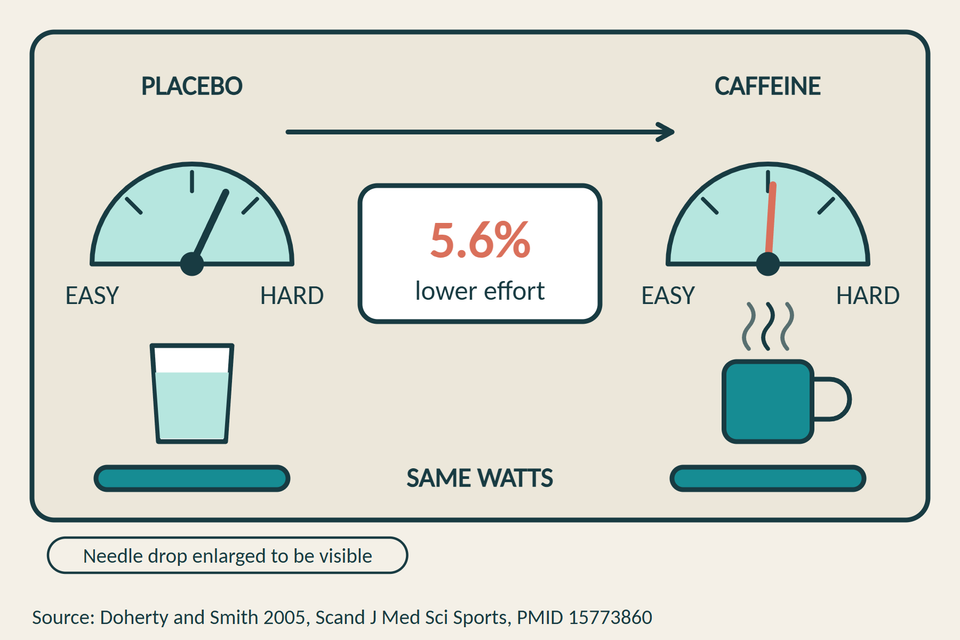
The same watts can feel lighter after caffeine.
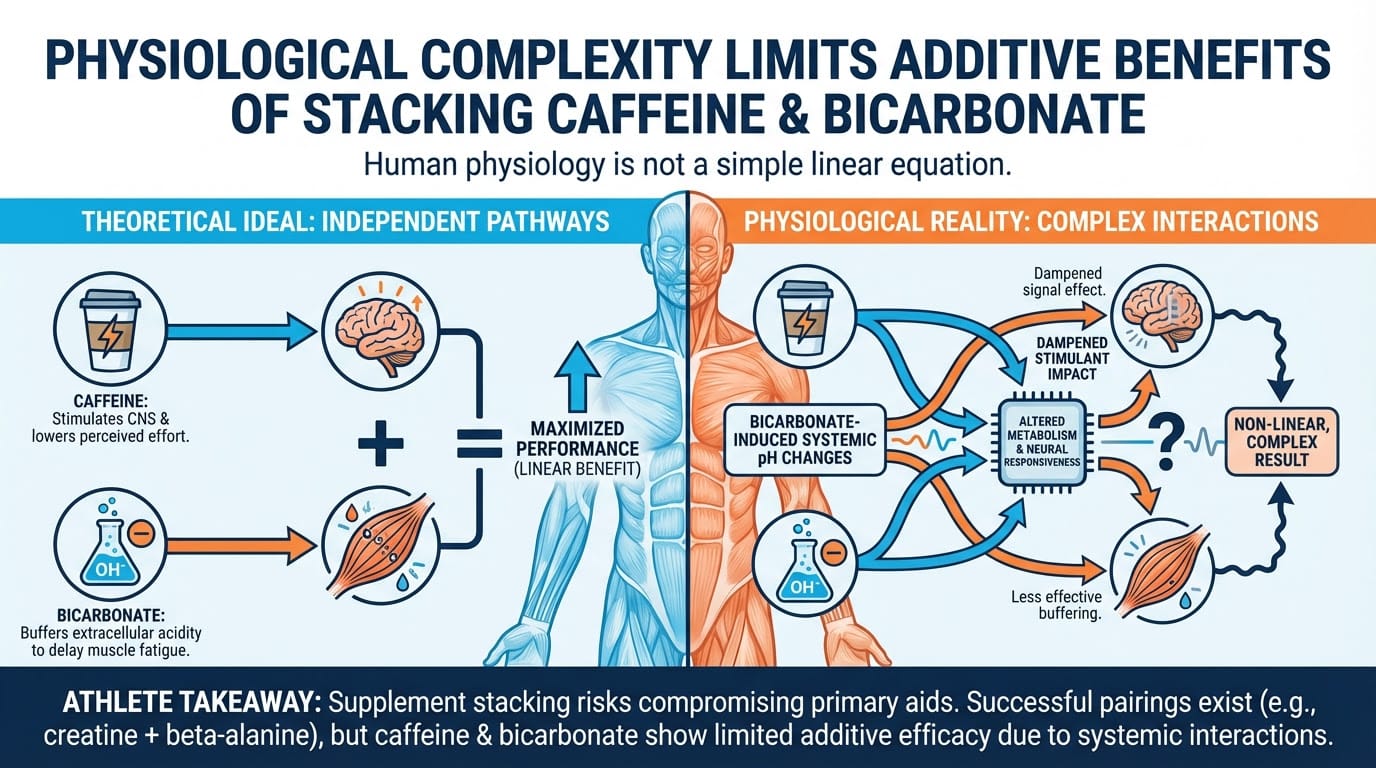
Adenosine, a molecule thought to build up in the brain during long efforts and linked to tiredness, binds to receptors on nerve cells, and caffeine occupies those receptors without switching them on.
Pooled across 21 studies, caffeine lowered ratings of perceived exertion during constant-load exercise by 5.6% compared with placebo, even though the workload itself stayed the same (Doherty and Smith 2005).
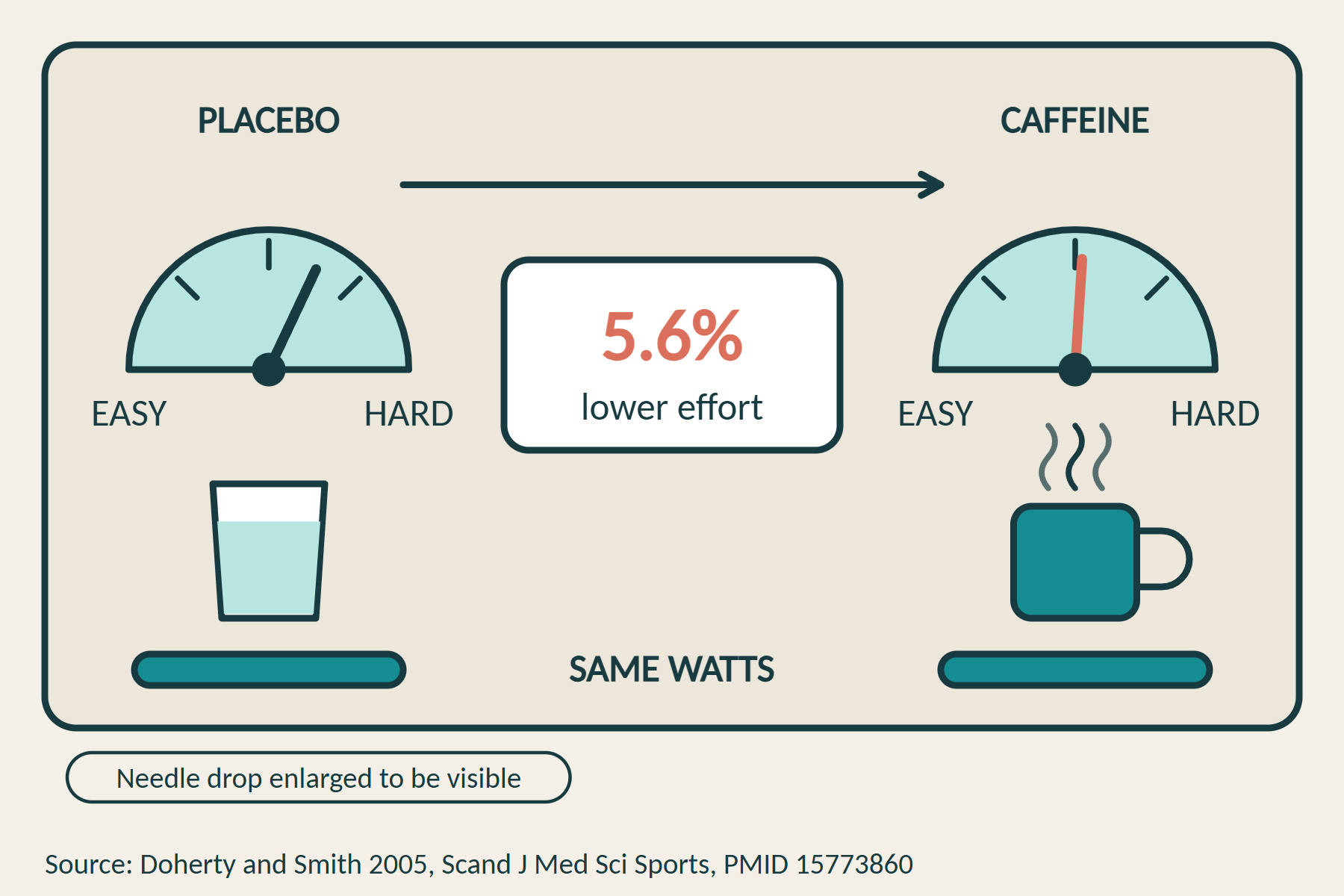
Perceived effort is one of the main signals athletes pace by, so a quieter signal at the same output changes how sustainable an intensity feels.
 Thomas Mortelmans
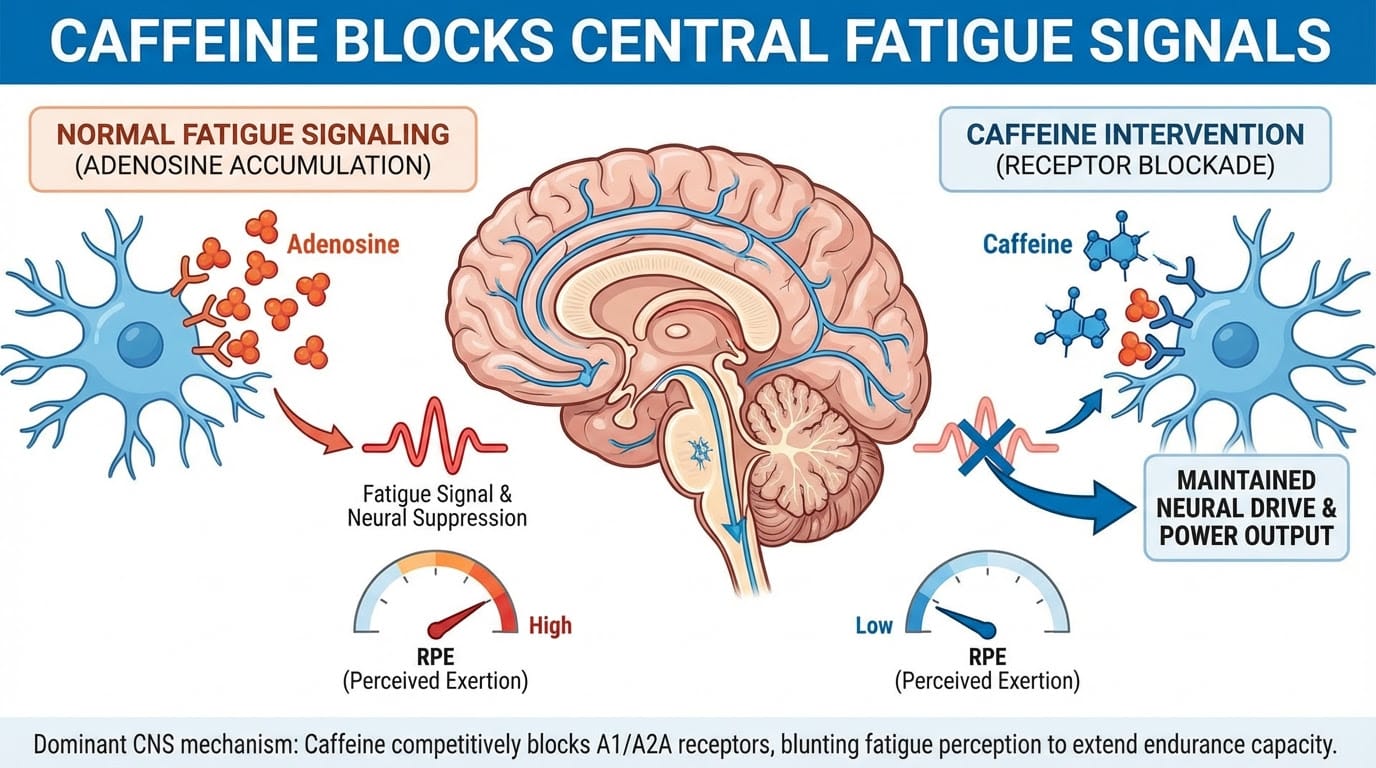
Ratings taken at the point of exhaustion did not differ from placebo, so the limit itself felt just as hard.
In that analysis, the drop in perceived exertion during exercise accounted for roughly 29% of the variance in performance gains across studies, which links the sensation to the result without fully explaining it.
The data come mostly from laboratory studies of healthy adults, and the adenosine pathway is inferred rather than measured in these trials.
Individual responses to caffeine vary, partly through genetics.
If you have 60 seconds, I would value your anonymous feedback. You can share it here.
Health disclaimer
This summarizes pooled laboratory results on perceived effort. It is not advice to use caffeine. Sensitivity to caffeine differs between people. Not medical advice.
Thomas Mortelmans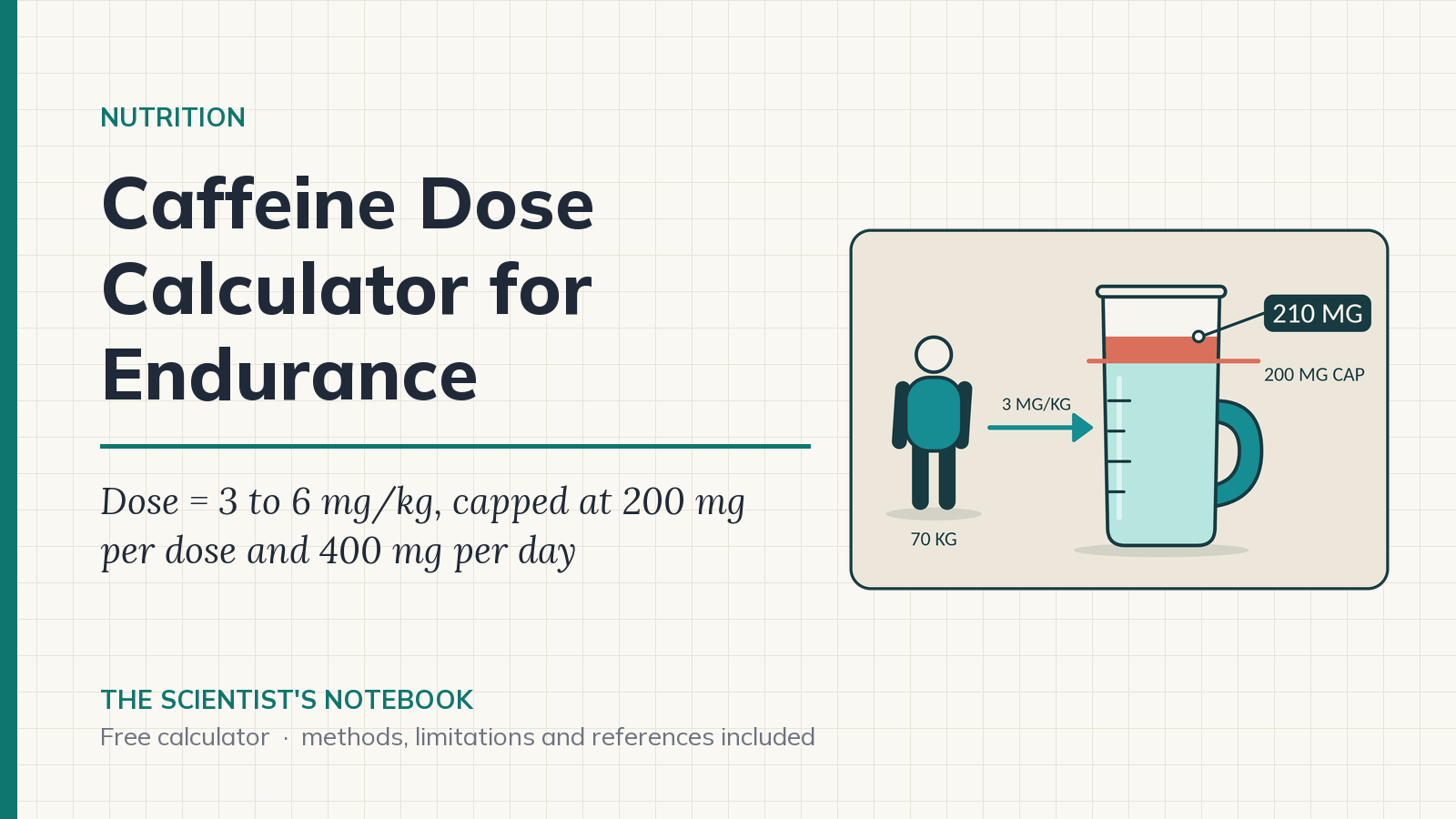 Thomas Mortelmans
Keep going
Gradescale turns your training history into the models in this piece: power-duration, load balance, and readiness, each with its sources.
Training plans built on the same evidence base:
Thomas MortelmansJoin our Discord community:
Thomas MortelmansFound this useful?
Get articles like this and free training calculators in your inbox every week.
Recommended reads
If this was useful, these are the other research-driven newsletters I actually read.
Member discussion