Entry #045: What the Cell Keeps: Muscle Memory, Mitochondria, and the Long Reward of Consistency
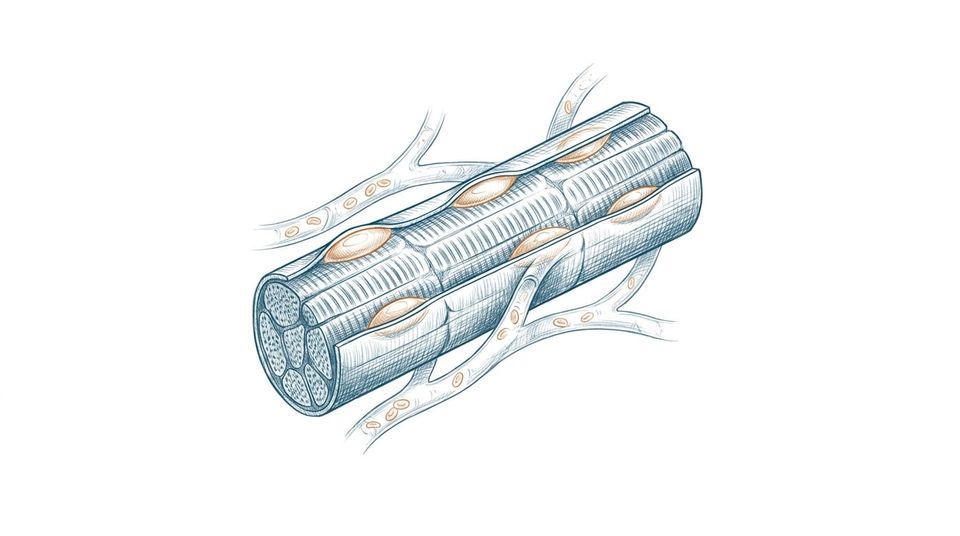
A cyclist takes eight weeks off with a broken wrist and comes back braced for the worst. Two months later the power is back, and it returned faster than it ever arrived the first time.
The legs did not simply re-learn the work. Something inside the muscle had kept a record of it. That record is real, it is molecular, and the most striking proof of how long it can last comes from athletes in their seventies who still ride like the decades did not happen.
The question this piece follows is a single thread: what exactly does a trained cell keep, and how long does it keep it.
Gradescale: Your physiology, decoded. Join the waitlist now.
 Thomas Mortelmans

Executive Summary - The Brief:
- Previously trained muscle regains size and strength faster than naive muscle, and the old explanation (permanently retained extra nuclei) is contested: a synthesis of 147 data sets found myonuclei decline during detraining in humans (Rahmati 2022).
- After high-intensity training, thousands of DNA-methylation marks shifted, and a core set stayed shifted through a 3-month break and into retraining (Pilotto 2024).
- The marks cluster on metabolic machinery, above all PGC-1alpha, the master switch for building mitochondria (Jacques 2019).
- A previously trained limb came back with leaner wiring: it changed 822 genes during retraining where the untrained side changed 1338, and adapted at least as well (Cumming 2024).
- A single bout of resistance work raised histone H3 acetylation at activated genes, and the trained state kept that openness (Lim 2020).
- Master endurance athletes preserve this machinery for decades, and how fast their aerobic capacity falls tracks how much they keep training, with the best-maintained losing as little as about 5% of VO2max per decade (Burtscher 2022).
The Science at a Glance:
For decades the textbook story of muscle memory was about nuclei. Build muscle, add nuclei to feed the growing fiber, keep those nuclei forever, and the cell holds a permanent blueprint it can rebuild from.
The idea was tidy, and the human evidence has since complicated it. A meta-analysis spanning 147 human and animal data sets found that in people, myonuclear number falls when muscle shrinks, even when the loss is modest, which is hard to square with permanent retention (Rahmati 2022).
A controlled within-person study, training one arm and leaving the other, reached a more nuanced verdict: the added nuclei were largely kept through detraining, yet the faster comeback leaned on a sharper transcriptional response rather than on raw nuclear count (Cumming 2024).
The nuclei debate is genuinely unsettled. What is not in doubt is that something beyond spare nuclei carries part of the memory.
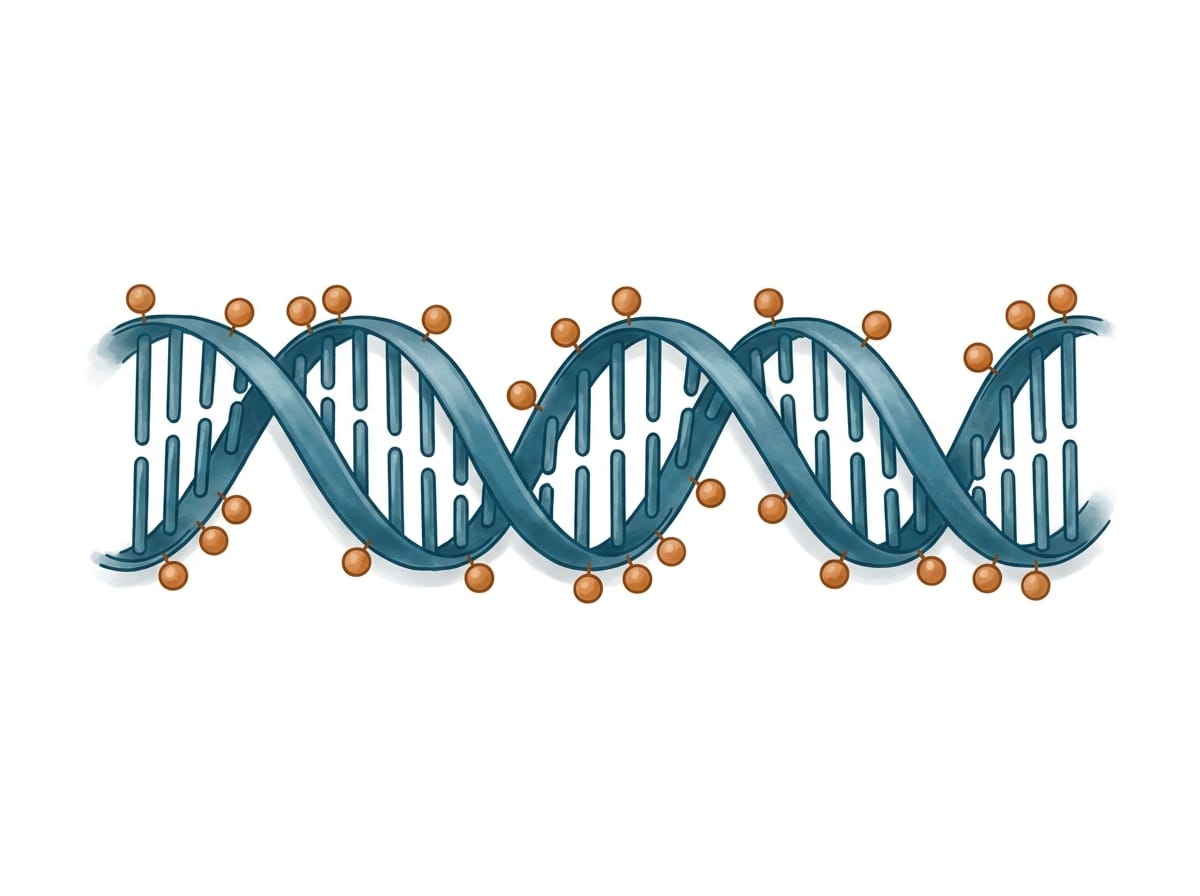
That something is the epigenome, the layer of chemical tags sitting on top of the genes that decides which ones are read, without altering the underlying sequence (Jacques 2019). Training writes on this layer in at least three hands at once: it strips methyl groups off the promoters of metabolic genes to switch them on, it acetylates histones to loosen the DNA spool and expose those genes, and it shifts the small regulatory RNAs that fine-tune how strongly each gene speaks (Jacques 2019). The surprise is how long the writing lasts after the pen is put down.
Foundational Principles:
The first principle is that the memory is written in metabolism. When researchers tracked DNA methylation across a full cycle of training, three months off, and retraining, the marks that survived sat on genes for lactate transport and calcium handling, and the master metabolic regulator carried the same retained, switched-on pattern even after the layoff (Pilotto 2024). Five genes in particular held a hypomethylated, higher-expression signature all the way through detraining and into retraining.
Scientist's Insight: PGC-1alpha is the master regulator of mitochondrial biogenesis, the gene that orchestrates building new mitochondria. If the durable part of muscle memory lives on the genes that build mitochondria, then muscle memory is, in large part, mitochondrial memory. That single reframing is what connects an eight-week layoff to a fifty-year career.
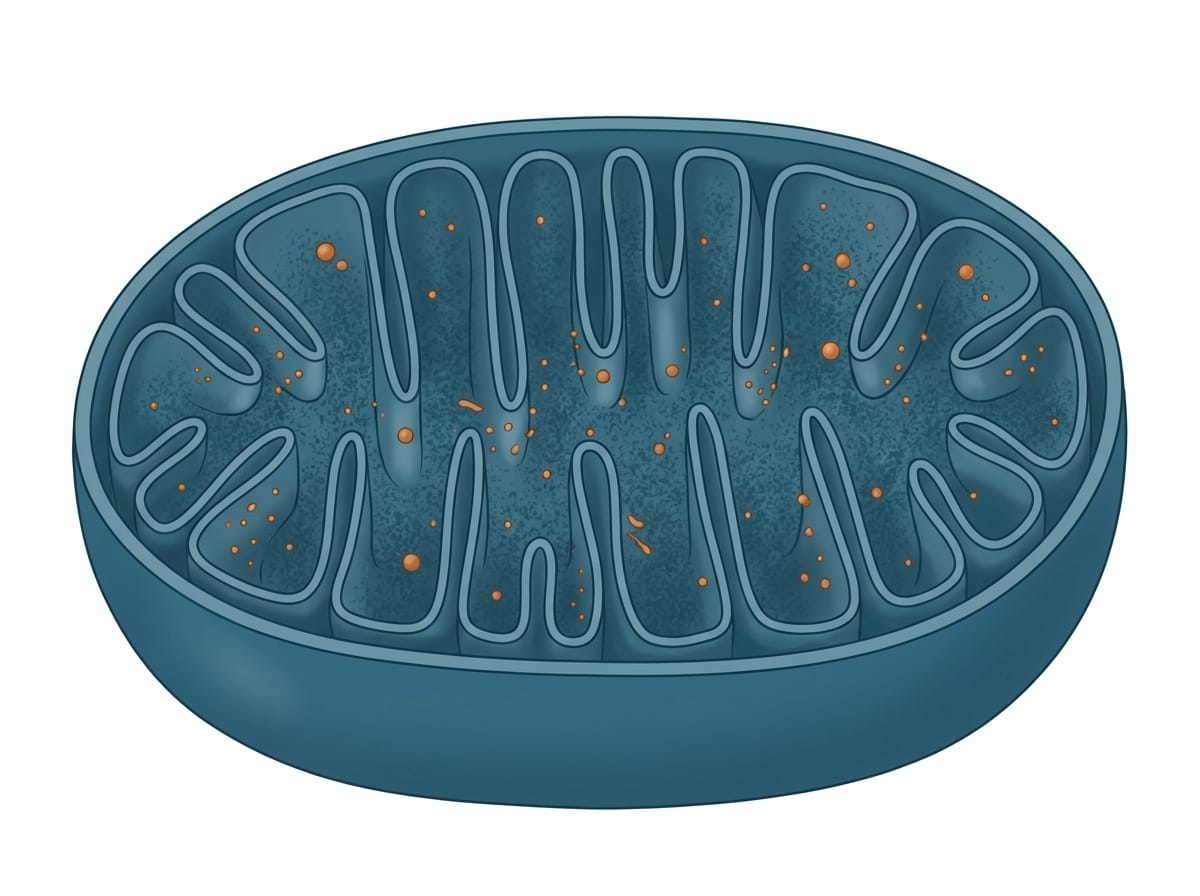
The second principle is that the trained cell does more with less. Comparing a previously trained limb against a naive one during retraining, the trained muscle changed the expression of 822 genes while the untrained changed 1338, and still adapted at least as well (Cumming 2024).
The priming does not shout louder. It aims more precisely, reaching for a smaller, better-chosen set of genes because the relevant ones are already poised to fire. Efficiency, not amplitude, is the signature of a remembered adaptation.
The third principle is that the marks ride on real chemistry, not willpower. A single bout of resistance exercise raised acetylation on histone H3 at the genes being switched on, physically opening the chromatin so the transcription machinery can reach them, and the trained state kept that acetylation elevated rather than letting it relax back (Lim 2020).
Underneath, the cell's energy sensors stay partly engaged in previously trained muscle because the mitochondria they helped build are still there, which keeps the enzymes that maintain these marks at low idle. The pattern holds because the machinery it describes keeps signaling, a quiet loop that needs no workout to refresh it.
The Decision Framework - Observational Levers:
What a layoff does to the record
The data: across a training-detraining-retraining cycle, exercise-induced hypomethylation at metabolic genes persisted through roughly 3 months without training, and the associated genes stayed more strongly expressed even while the athlete sat idle (Pilotto 2024).
Where athletes tend to land: those returning after a few weeks to a few months often find fitness comes back faster than it first arrived, which is exactly what a record that survives short breaks predicts. There is also a resensitization effect, where a brief removal of the chronic stimulus seems to restore the muscle's responsiveness, so the first weeks back can outpace the same weeks of the original build.
What the data does not show: it has not established how many years of marks survive, or whether a single training history is enough to last a lifetime, since the controlled work spans months, not decades.
 Thomas Mortelmans
Related reading
What decades of consistency preserve
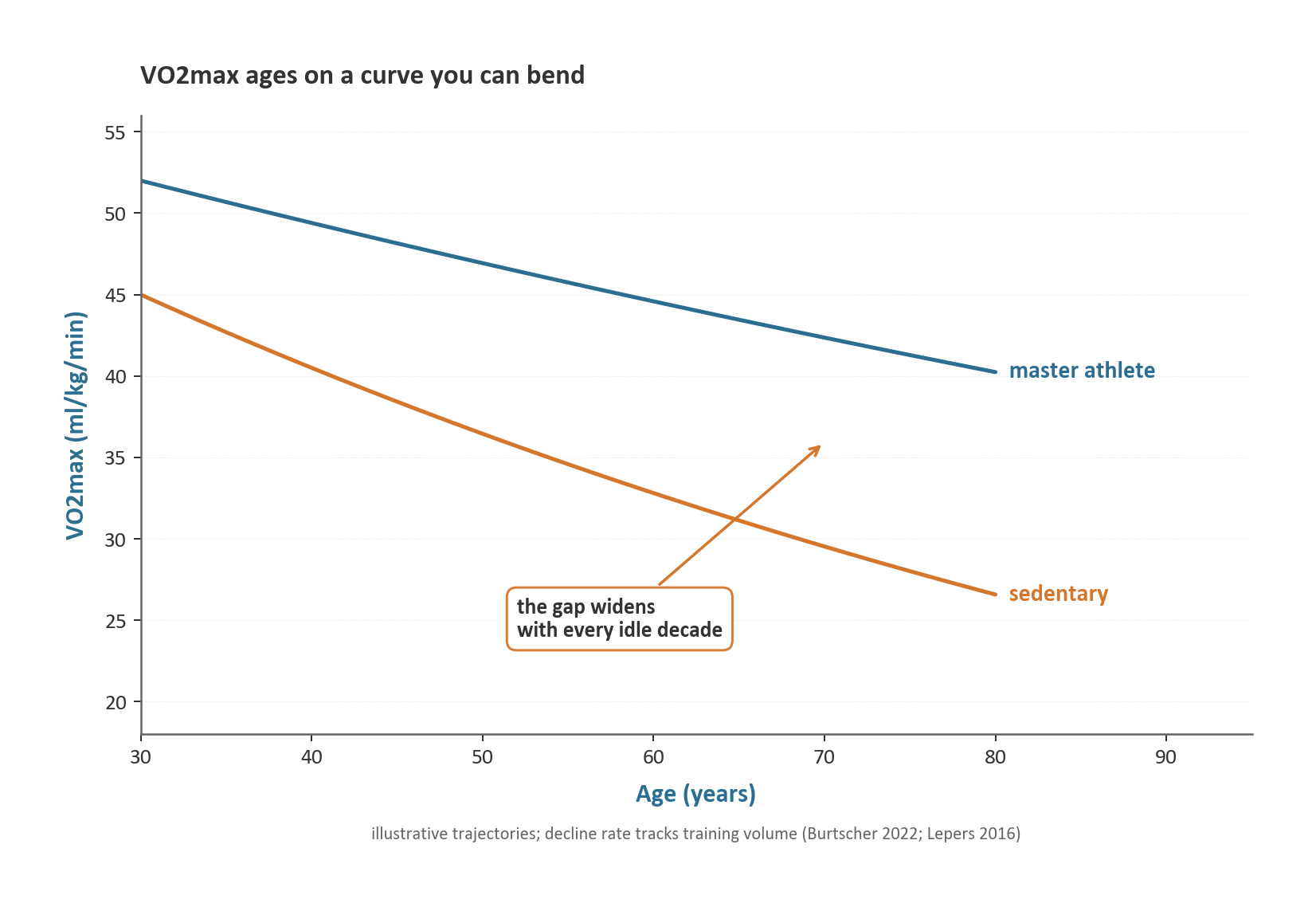
The data: master endurance athletes carry substantially more mitochondrial enzyme activity and content than untrained age-matched peers, and when they stop training, that enzyme activity drops in step with their aerobic capacity, only to recover when training resumes (Burtscher 2022). The same review shows the rate of VO2max decline is closely tied to how much training volume an athlete keeps, with much of the variation between athletes explained by that single factor.
Where athletes tend to land: those who never fully stop age along a shallower curve, and how shallow tracks how much they keep training, since VO2max is the determinant most altered by age while economy and the sustainable fraction of it hold up better (Lepers 2016). The decades-long version of muscle memory is not a stored peak. It is a machinery that keeps being rebuilt because it keeps being used.
Thomas Mortelmans
Related reading
Where the limits sit
The data: the preservation is large but not total. Even in masters athletes, some molecular markers such as mitochondrial DNA copy number and certain upstream transcription factors can remain below young-trained levels, and sustained training does not erase every age-related change.
The honest framing in the literature is that aging-related mitochondrial decline is substantially driven by inactivity rather than chronology, which makes it largely modifiable, while stopping short of calling it fully reversible (Burtscher 2022).
What the data does NOT show: it does not promise that any amount of training freezes the clock, only that it bends the curve.
The Protocol:
- Treat consistency itself as the asset, since the durable epigenetic record is built by years of repeated stimulus rather than by any single block, however hard.
- Read a planned break as a pause on the record rather than an erasure, because the metabolic marks tolerate weeks to a few months, and the machinery is waiting to be reactivated rather than rebuilt from zero.
- Expect retraining to be efficient, not effortless, and let the early return run a little quicker than the first build did, then converge toward the prior ceiling rather than overshoot it.
- Keep some stimulus through the decades you care about, because the masters-athlete advantage is maintained, not banked, and it tracks ongoing volume more than past glory. Each step is bounded: none of this stops detraining, the early speed-up is partial, and individual responses vary, since the size of the epigenetic response itself differs between people.
Case Study: A 58-year-old masters rider fractures a wrist and loses ten weeks. Her coach resists the urge to rebuild her from scratch, treating the layoff as a pause rather than a reset. The first three weeks back feel ordinary and a little discouraging. Then the power curve lifts sharply, and by week six she is near her pre-injury numbers, ahead of where the same six weeks landed when she first took up cycling in her forties. Nothing magical happened. The muscle did not regrow a stored peak.
It reopened a set of metabolic genes that had stayed poised the whole time, on top of a mitochondrial base that her decades of consistent riding had been quietly defending against age. The record was never the size of the muscle. It was the wiring underneath it.
Muscle memory is not nostalgia for a fitter past. It is a physical archive, written mostly on the genes that build mitochondria, opened and closed by chemistry rather than effort, and the masters-athlete data is the long-form proof of how much that archive is worth.
The reward for consistency is not only the fitness you can measure today. It is the speed of every return you have not had to make yet, and the shallower slope of the decline you are already, quietly, bending.
Best regards, Dr. Thomas Mortelmans
Limits of Application: this synthesis rests on small human cohorts, cross-sectional comparisons of self-selected masters athletes, and detraining windows measured in months rather than years. The mechanisms are consistent across studies, but the causal chain from a single methylation mark to a faster comeback remains partly inferred, the myonuclear question is unresolved, and individual responses to both training and detraining vary widely. None of this is medical or training advice for an individual.
References:
- Rahmati M, McCarthy JJ, Malakoutinia F. 2022. Myonuclear permanence in skeletal muscle memory: a systematic review and meta-analysis. J Cachexia Sarcopenia Muscle. Across 147 data sets, human myonuclei are lost during atrophy and ageing, arguing against myonuclear permanence as the basis of muscle memory and pointing toward epigenetics.
- Cumming KT, et al. 2024. Muscle memory in humans: myonuclear permanence and long-term transcriptional regulation after strength training. J Physiol. In a one-arm model, myonuclei were maintained through detraining, and the previously trained arm changed 822 genes versus 1338 in the control during retraining.
- Pilotto AM, et al. 2024. Human skeletal muscle possesses an epigenetic memory of high-intensity interval training. Am J Physiol Cell Physiol. Thousands of methylation marks were hypomethylated after HIIT and retained through a 3-month break; five genes kept a hypomethylated, higher-expression memory into retraining.
- Jacques M, et al. 2019. Epigenetic changes in healthy human skeletal muscle following exercise: a systematic review. Epigenetics. Reviews the DNA methylation, histone modifications, and microRNA changes that exercise induces in skeletal muscle.
- Lim C, et al. 2020. Adaptive responses of histone modifications to resistance exercise in human skeletal muscle. PLoS One. Acute resistance exercise raised H3 acetylation at activated genes, and training kept acetylation elevated relative to total H3.
- Abraham MJ, et al. 2023. Restoring epigenetic reprogramming with diet and exercise to improve health-related metabolic diseases. Biomolecules. Diet and exercise reshape the epigenome toward a healthier metabolic state.
- Burtscher J, et al. 2022. The impact of training on the loss of cardiorespiratory fitness in aging masters endurance athletes. Int J Environ Res Public Health. VO2max decline tracks training volume, and training cessation reduces citrate synthase and mitochondrial oxidative capacity, recoverable with retraining.
- Lepers R, Stapley PJ. 2016. Master athletes are extending the limits of human endurance. Front Physiol. VO2max is the determinant most altered by age, and maintaining training stimulus is the strongest lever limiting endurance decline.
PubMed attribution: reference metadata verified via PubMed; DOIs link to the source articles.
Why does fitness come back faster the second time?
Trained muscle keeps a molecular record of past training. The durable part is epigenetic, sitting mainly on PGC-1alpha, the gene that builds mitochondria, so previously trained muscle re-activates its metabolic machinery faster. Master athletes show the same wiring preserved for decades, which is why their aerobic capacity ages far more slowly.
Thomas Mortelmans
Frequently asked questions
Is muscle memory about extra nuclei?
The evidence is mixed. A synthesis of 147 data sets found myonuclei decline during detraining in humans, so the durable memory is increasingly attributed to epigenetics.
How long does muscle memory last?
Metabolic methylation marks survived a three-month break in controlled studies, and masters-athlete data suggests the wiring can be preserved across decades of consistent training.
What is actually remembered?
Mostly metabolic machinery. The marks cluster on genes like PGC-1alpha that build mitochondria, so muscle memory is largely mitochondrial memory.
Does training slow mitochondrial aging?
Sustained endurance training preserves mitochondrial content and enzyme activity, and how fast VO2max falls in masters athletes tracks how much they keep training.
If you have 60 seconds, I would value your anonymous feedback: link.
Health disclaimer
This post discusses endurance-training science for educational purposes. It is not medical advice, not a diagnosis, and not a substitute for clinical care. Individual response to training, sleep deprivation, and multi-day exertion varies substantially, and what applies to a research cohort or a world-class athlete may not apply to you.
Consult a qualified physician, sports medicine specialist, or registered dietitian before changing your training, fuelling, or sleep strategy if you have a cardiovascular, metabolic, psychiatric, or sleep-related condition; are recovering from injury or illness; are pregnant; are on medication that affects heart rate, hydration, glucose regulation, or sleep; or have concerns about exercise tolerance.
Ultra-endurance events impose real physiological and psychological loads. Persistent chest pain, fainting, acute confusion beyond the predictable late-race window, severe dehydration, sustained loss of coordination, or any mental-health symptoms that outlast the immediate post-event dip warrant professional care and are not signals to push through.
No outcome is guaranteed. The protocols, anchors, and case material in this post are descriptive, drawn from peer-reviewed evidence and a guest contributor's lived experience, and should be treated as inputs to an informed conversation with your own coach and clinicians, not as prescriptions.
Keep going
Every number in this piece is one you can compute from your own rides and runs, with the formula and the source shown alongside it.
Training plans built on the same evidence base:
Thomas MortelmansJoin our Discord community:
Thomas MortelmansFound this useful?
Get articles like this and free training calculators in your inbox every week.
Recommended reads
If this was useful, these are the other research-driven newsletters I actually read.

Member discussion