Snippet #026: Strategic Fiber Intake Stabilizes Energy by Slowing Gastric Emptying
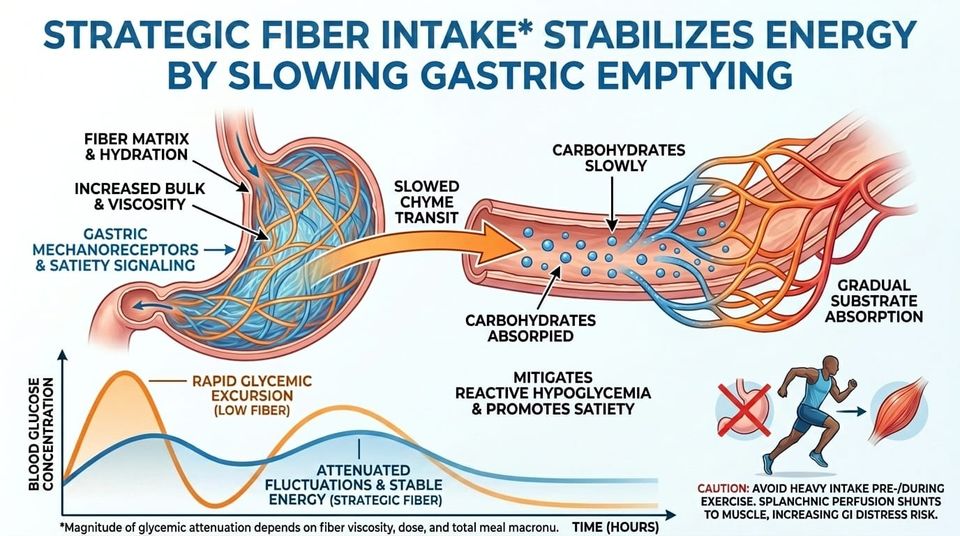
Dietary fiber acts as a structural and viscous matrix in the digestive tract, attenuating the rate at which chyme leaves the stomach, a physiological process known as gastric emptying.
As dietary fibers hydrate and increase luminal bulk, they enhance the activation of gastric mechanoreceptors—stretch-sensitive vagal afferents in the stomach wall that project to the central nervous system to contribute to satiety signaling.
Concurrently, this modulation of transit time facilitates a more gradual intestinal absorption of carbohydrates into the systemic circulation.
 Thomas Mortelmans
This protracted substrate absorption can help mitigate the reactive decreases in blood glucose that are frequently associated with compensatory overeating.
By attenuating sharp fluctuations in circulating substrate levels, individuals can more effectively manage spontaneous energy intake and support sustained recovery without experiencing the pronounced subjective hunger often reported during heavy training blocks.
Because the gastrointestinal transit and mechanical processing of bulk-forming fibers demand sustained splanchnic perfusion (the blood flow to the abdominal visceral organs—specifically the stomach, intestines, liver, spleen, and pancreas), heavy intake immediately before or during exercise—when systemic blood flow is preferentially shunted away from the gut to working skeletal muscle—frequently increases the risk of gastrointestinal distress rather than conferring any acute ergogenic benefit.
References
- Giuntini et al. 2022, The Effects of Soluble Dietary Fibers on Glycemic Response: An Overview and Futures Perspectives
- Slavin & Green 2007, Dietary Fibre and Satiety
- de Oliveira & Burini 2014, Gastrointestinal Complaints During Exercise: Prevalence, Etiology, and Nutritional Recommendations
PS! Your thoughts mean the world to me. Tell me how I did today in under 60 seconds (it is 100 percent anonymous).
Found this useful?
Get articles like this and free training calculators in your inbox every week.
Recommended reads
If this was useful, these are the other research-driven newsletters I actually read.




Member discussion