Snippet #037: Fasted Training and the Fat-Oxidation Shift
Starting an exercise session with low carbohydrate availability, such as a fasted morning ride, shifts the body away from burning glucose and toward burning fat.
The key driver is a signaling molecule called AMPK (think of it as a low-fuel sensor), which activates genes that build fat-burning machinery inside muscle cells.
Studies report that roughly 78% of train-low interventions raise oxidative enzyme activity in skeletal muscle compared to training with high carbohydrate availability.
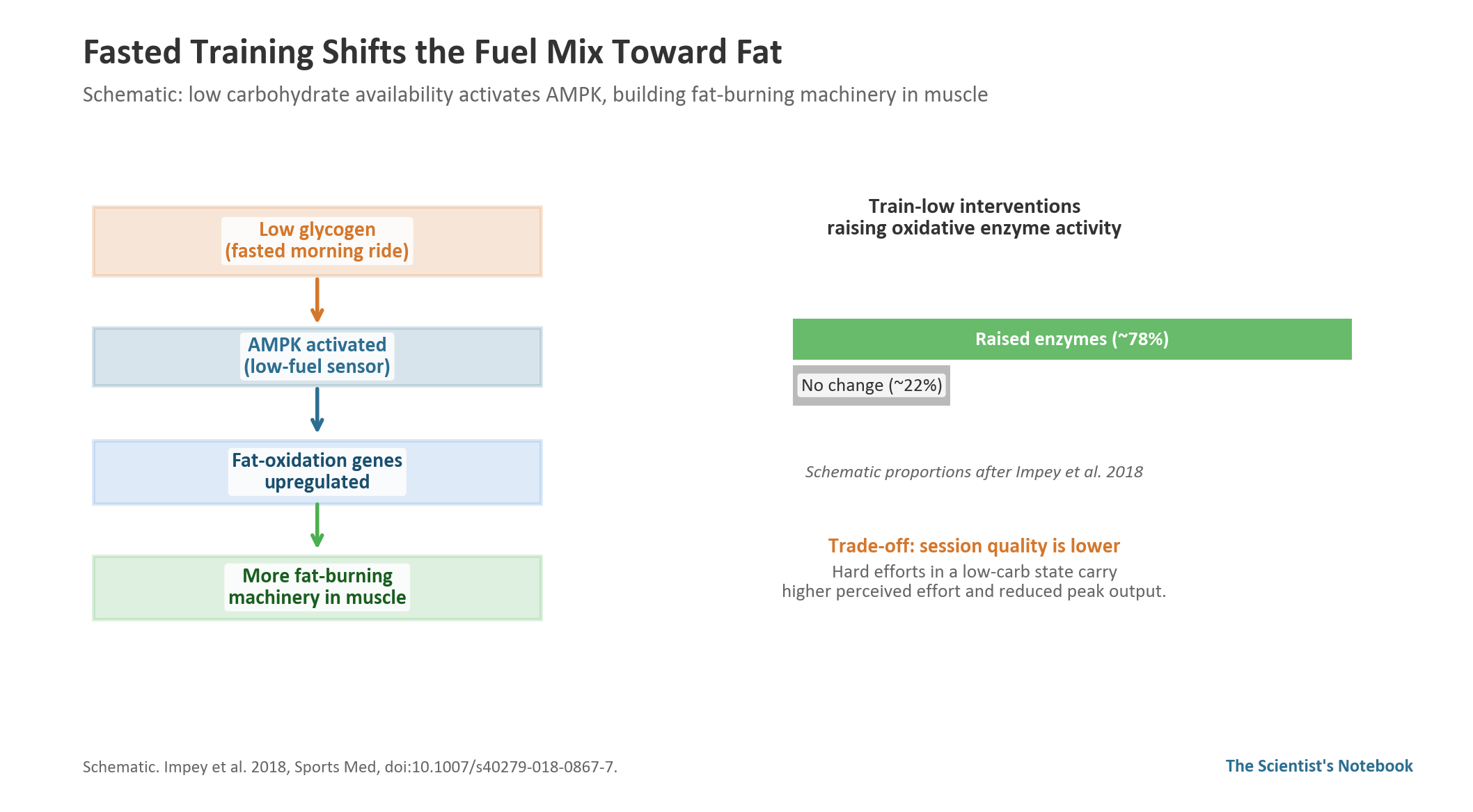
The adaptation is real, but it comes at a cost. Hard sessions completed in a low-carbohydrate state are typically lower in quality: athletes report higher perceived effort and are less able to hit the intensities that drive the biggest fitness gains.
The signaling benefits and the session-quality cost coexist, which is what makes strategic timing of fasted sessions meaningful.
According to Impey et al. 2018, these molecular adaptations do not reliably translate into improved performance. Fewer than half of train-low trials show a performance benefit, and individual responses vary considerably, with the size of the adaptation appearing to depend on how far muscle glycogen is actually depleted during the session.
---
If you have 60 seconds, I would value your anonymous feedback. You can share it here.
---
### Health disclaimer
This post discusses endurance-training science for educational purposes. It is not medical advice, not a diagnosis, and not a substitute for clinical care. Individual response to training, sleep deprivation, and multi-day exertion varies substantially, and what applies to a research cohort or a world-class athlete may not apply to you. > Consult a qualified physician, sports medicine specialist, or registered dietitian before changing your training, fuelling, or sleep strategy if you have a cardiovascular, metabolic, psychiatric, or sleep-related condition; are recovering from injury or illness; are pregnant; are on medication that affects heart rate, hydration, glucose regulation, or sleep; or have concerns about exercise tolerance. > Ultra-endurance events impose real physiological and psychological loads. Persistent chest pain, fainting, acute confusion beyond the predictable late-race window, severe dehydration, sustained loss of coordination, or any mental-health symptoms that outlast the immediate post-event dip warrant professional care and are not signals to push through. > No outcome is guaranteed. The protocols, anchors, and case material in this post are descriptive, drawn from peer-reviewed evidence and a guest contributor's lived experience, and should be treated as inputs to an informed conversation with your own coach and clinicians, not as prescriptions.
 Thomas Mortelmans
 Thomas Mortelmans
Related reading
Thomas Mortelmans
Related reading
Keep going
Every number in this piece is one you can compute from your own rides and runs, with the formula and the source shown alongside it.
Training plans built on the same evidence base:
Thomas MortelmansJoin our Discord community:
Thomas MortelmansFound this useful?
Get articles like this and free training calculators in your inbox every week.
Recommended reads
If this was useful, these are the other research-driven newsletters I actually read.
Member discussion