Snippet #039: Protecting Muscle While Losing Fat in Endurance Athletes
A sustained caloric shortfall drives fat loss, but some weight shed in a deficit can come from lean tissue rather than fat alone.
Research shows that protein intake well above standard recommendations, paired with a strength stimulus, is associated with preserving lean tissue while fat mass falls.
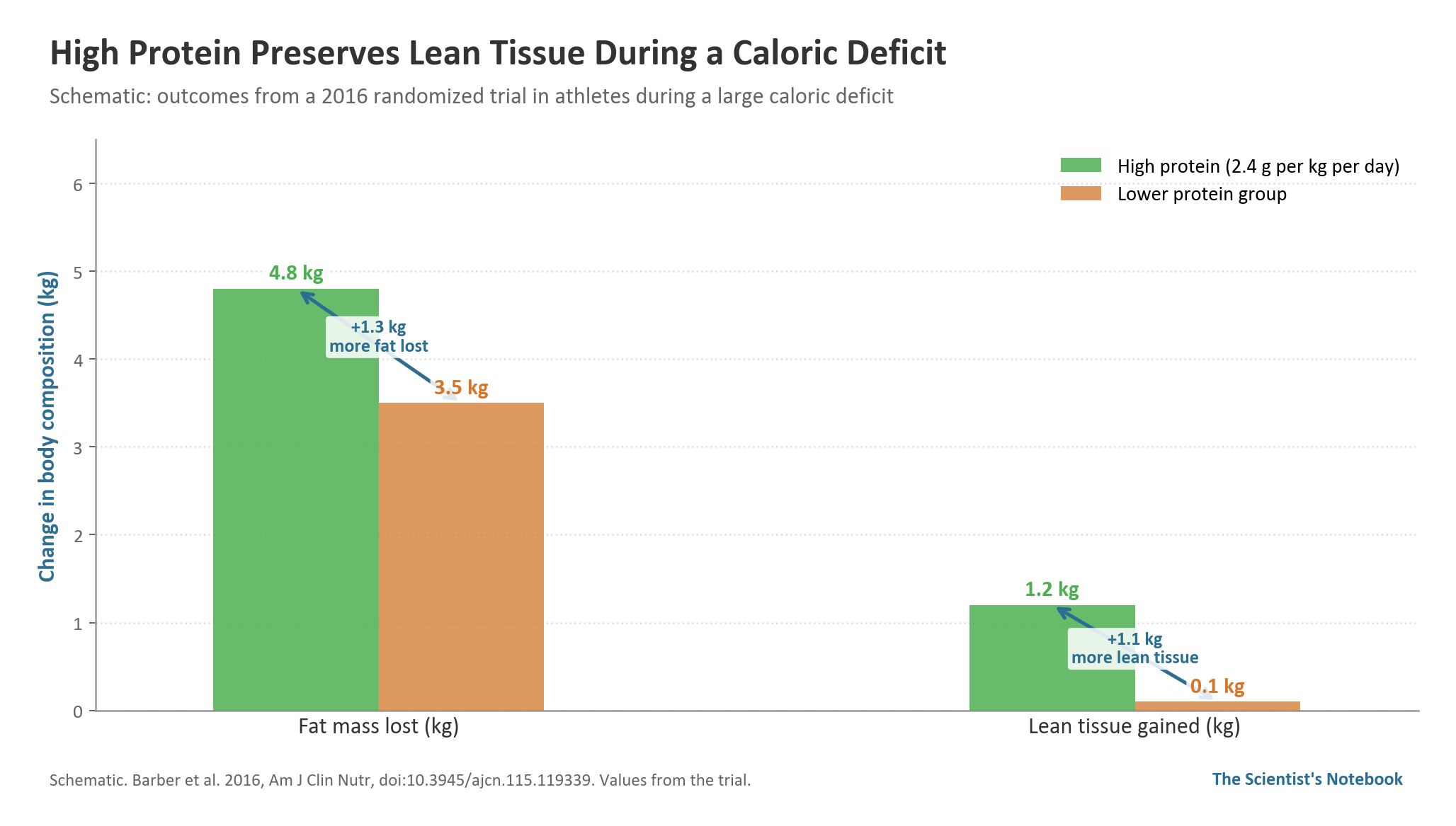
A 2016 randomized trial found that participants eating 2.4 g of protein per kilogram per day during a large caloric deficit gained 1.2 kg of lean tissue and lost 4.8 kg of fat, compared to gains of only 0.1 kg lean tissue and 3.5 kg fat loss in a lower-protein group.
Very aggressive deficits carry a greater risk of lean tissue loss regardless of training status.
The size of the caloric shortfall appears to matter as much as its presence. Studies report that moderate deficits combined with adequate protein and a strength-training stimulus produce more favorable body composition changes than large deficits built on endurance work alone.
Individual responses vary with sex, age, training history, and initial body composition. Most available evidence is short-term and drawn largely from young, trained males.
---
If you have 60 seconds, I would value your anonymous feedback. You can share it here.
---
### Health disclaimer
This post discusses endurance-training science for educational purposes. It is not medical advice, not a diagnosis, and not a substitute for clinical care. Individual response to training, sleep deprivation, and multi-day exertion varies substantially, and what applies to a research cohort or a world-class athlete may not apply to you. > Consult a qualified physician, sports medicine specialist, or registered dietitian before changing your training, fuelling, or sleep strategy if you have a cardiovascular, metabolic, psychiatric, or sleep-related condition; are recovering from injury or illness; are pregnant; are on medication that affects heart rate, hydration, glucose regulation, or sleep; or have concerns about exercise tolerance. > Ultra-endurance events impose real physiological and psychological loads. Persistent chest pain, fainting, acute confusion beyond the predictable late-race window, severe dehydration, sustained loss of coordination, or any mental-health symptoms that outlast the immediate post-event dip warrant professional care and are not signals to push through. > No outcome is guaranteed. The protocols, anchors, and case material in this post are descriptive, drawn from peer-reviewed evidence and a guest contributor's lived experience, and should be treated as inputs to an informed conversation with your own coach and clinicians, not as prescriptions.
 Thomas Mortelmans
 Thomas Mortelmans
Related reading
Thomas Mortelmans
Related reading
Keep going
Every number in this piece is one you can compute from your own rides and runs, with the formula and the source shown alongside it.
Training plans built on the same evidence base:
Thomas MortelmansJoin our Discord community:
Thomas MortelmansFound this useful?
Get articles like this and free training calculators in your inbox every week.
Recommended reads
If this was useful, these are the other research-driven newsletters I actually read.
Member discussion