Snippet #038: Carbohydrates Refill Your Fuel Tank. Protein Repairs the Engine.
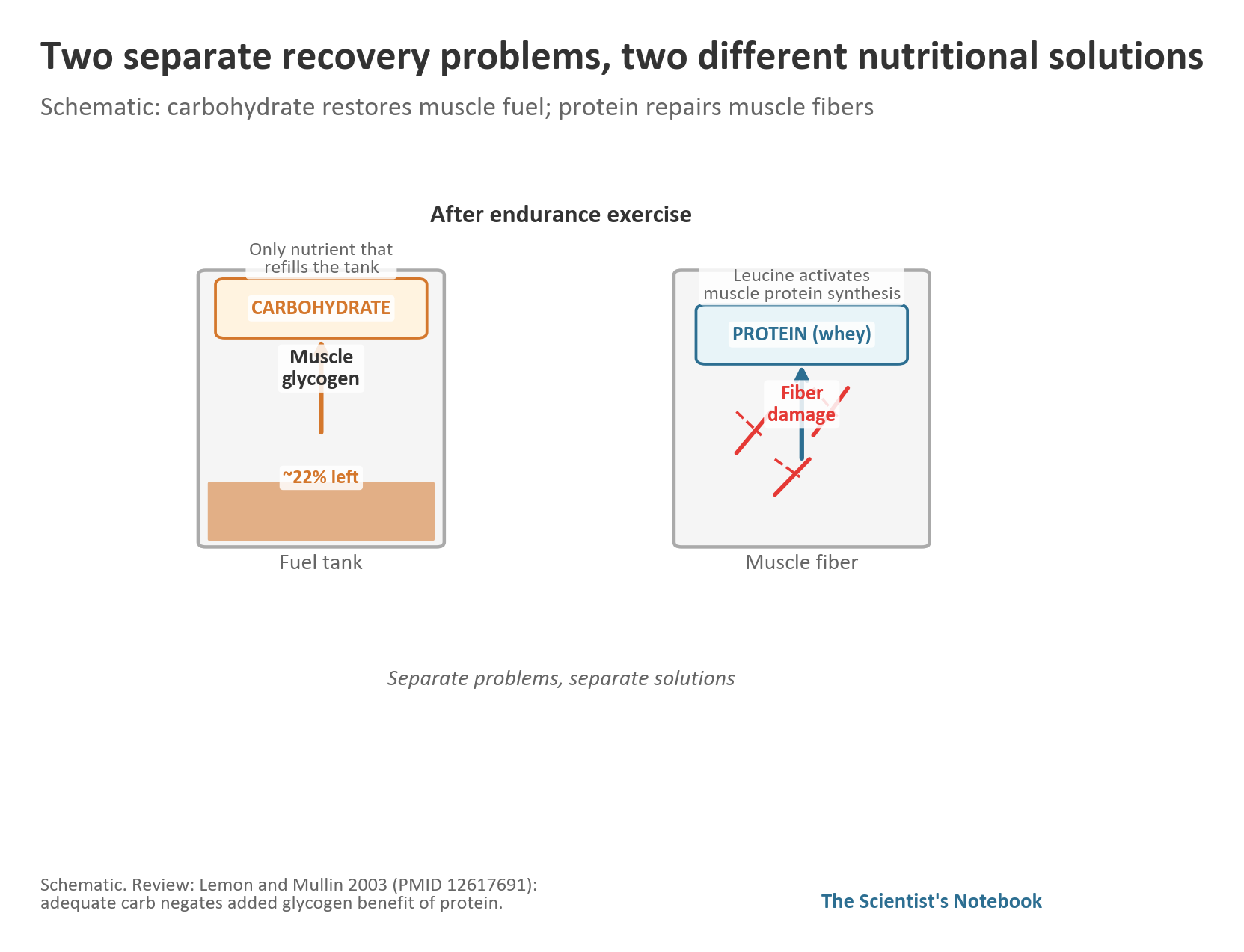
After endurance exercise, stored muscle fuel (called glycogen) is what powered you, and carbohydrate is the only nutrient that refills it. Protein, especially whey, is rich in the amino acid leucine, which activates muscle protein synthesis: the cellular process that repairs and remodels muscle fibers.
These are two separate recovery problems with different nutritional solutions. A 2003 review in Sports Medicine confirmed that when carbohydrate intake is adequate, adding protein is not associated with meaningfully faster glycogen rebuilding.
For athletes with back-to-back sessions, refilling glycogen takes priority because muscles cannot sustain high-intensity effort without stored fuel. Protein supports the repair process and is associated with reduced markers of muscle damage, but that is a slower, longer-horizon benefit.
 Thomas Mortelmans
Related reading
Which nutrient to emphasize depends on how much time separates sessions, total daily intake, and individual training load; protein's repair role becomes more prominent when recovery windows extend beyond 24 hours.
---
If you have 60 seconds, I would value your anonymous feedback. You can share it here.
---
### Health disclaimer
This post discusses endurance-training science for educational purposes. It is not medical advice, not a diagnosis, and not a substitute for clinical care. Individual response to training, sleep deprivation, and multi-day exertion varies substantially, and what applies to a research cohort or a world-class athlete may not apply to you. > Consult a qualified physician, sports medicine specialist, or registered dietitian before changing your training, fuelling, or sleep strategy if you have a cardiovascular, metabolic, psychiatric, or sleep-related condition; are recovering from injury or illness; are pregnant; are on medication that affects heart rate, hydration, glucose regulation, or sleep; or have concerns about exercise tolerance. > Ultra-endurance events impose real physiological and psychological loads. Persistent chest pain, fainting, acute confusion beyond the predictable late-race window, severe dehydration, sustained loss of coordination, or any mental-health symptoms that outlast the immediate post-event dip warrant professional care and are not signals to push through. > No outcome is guaranteed. The protocols, anchors, and case material in this post are descriptive, drawn from peer-reviewed evidence and a guest contributor's lived experience, and should be treated as inputs to an informed conversation with your own coach and clinicians, not as prescriptions.
Thomas Mortelmans Thomas Mortelmans
Related reading
Free calculator
Keep going
Daily intake targets follow from what was actually trained, not from a generic table. Gradescale computes them from your own sessions.
Training plans built on the same evidence base:
Thomas MortelmansJoin our Discord community:
Thomas MortelmansFound this useful?
Get articles like this and free training calculators in your inbox every week.
Recommended reads
If this was useful, these are the other research-driven newsletters I actually read.
Member discussion