OpenLab #006: When the Climb Stops Giving Back: Durability and the Long Game, with Carolina Karlsson
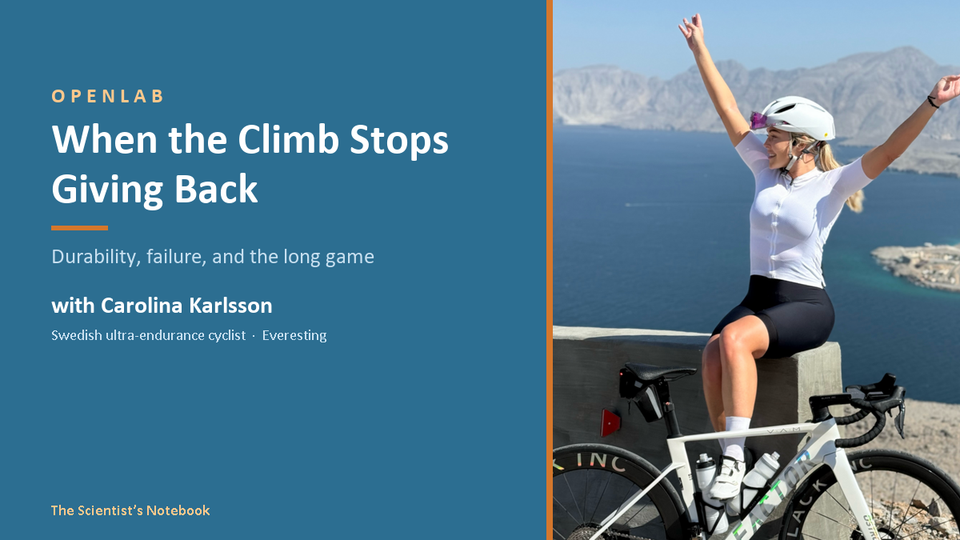
Carolina is a Swedish ultra-endurance cyclist based in Dubai. Her signature challenge is Everesting, climbing the full 8,848 m of Mount Everest on a single hill without stopping the clock.
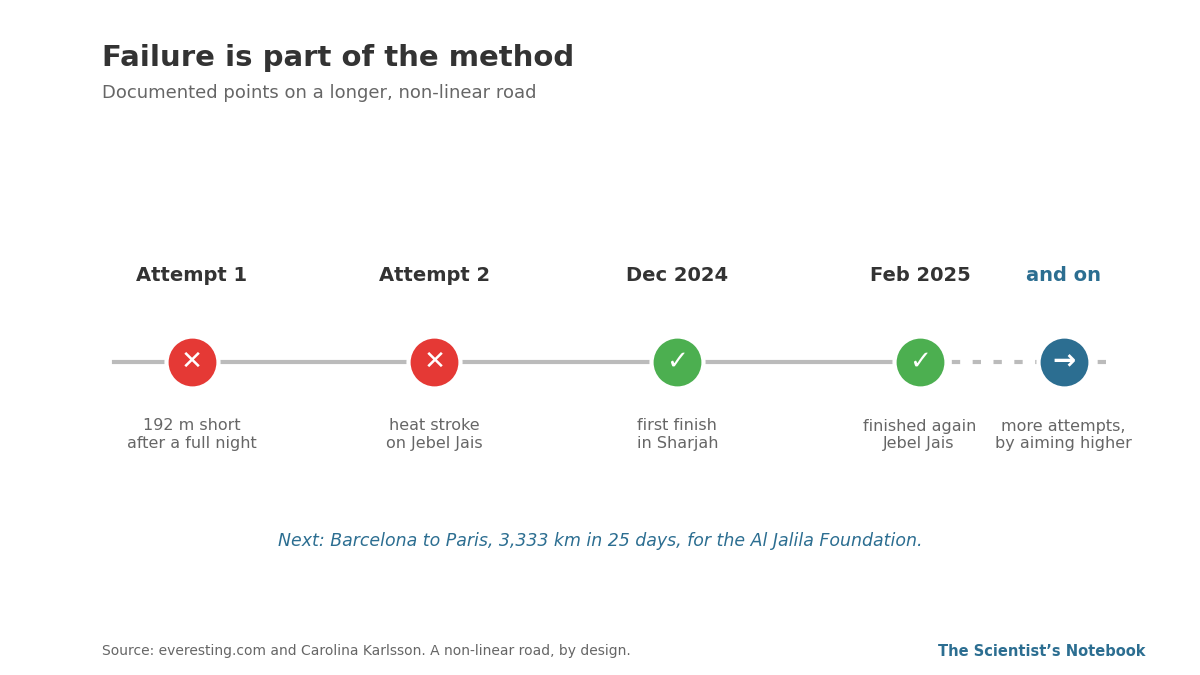
She did not get there cleanly, and she still does not. Her first attempt ended 192 m short after a full night on the bike. Another, on Jebel Jais, ended in heatstroke in the desert heat. She completed her first Everesting in December 2024 on a climb in Sharjah, then went back to Jebel Jais in February 2025 and finished it in a completely different way, much more experienced.
She has failed since, too, because she keeps aiming at things she is not yet sure she can do:
For me, doing something outstanding means being willing to risk failure. You cannot only choose goals you already know you can achieve. You only discover your real potential when you are willing to aim high enough that failure becomes a real possibility. - Carolina
She also rides for a reason beyond herself, raising money for cancer research through the Al Jalila Foundation (see more below). We reached out because her racing is, without meaning to be, a clean experiment in the one quality most endurance metrics miss.
Durability is not just fitness. It is the ability to keep adapting, to keep fuelling, and to keep making the right decisions when both the body and the mind are being tested. It is usually sold as an easy-pace virtue, the thing that keeps your heart rate flat on a long ride.
Carolina learned it bites hardest at the sharp end, when you are already deep and the climb stops giving back. We wanted to know why, and what the science says about the place where her engine ran out.
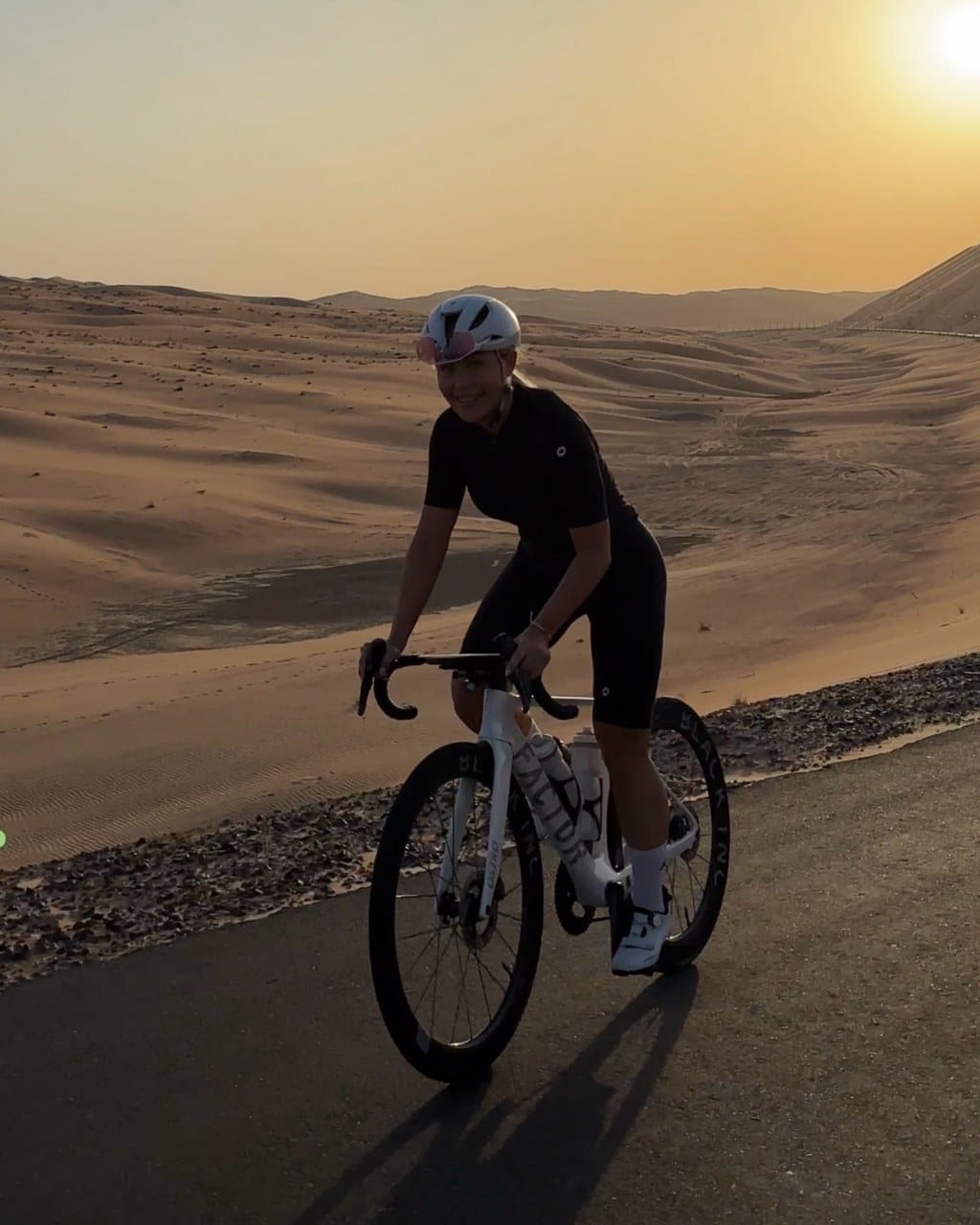
This is also a post about failure, because durability and failure are the same story told from two sides. You do not find the edge of how long you can hold without going past it, and you do not go past it without sometimes coming up short.
Carolina has done both in public, more than once, which is exactly why her story is useful.
The scientific brief
Here is the short version before the long one.
- Durability is the fourth pillar of endurance, sitting alongside maximal oxygen uptake, economy, and threshold. It measures how well your physiology resists drifting after hours of load, and it does not correlate with the other three. A high threshold buys you nothing if it collapses at hour six.
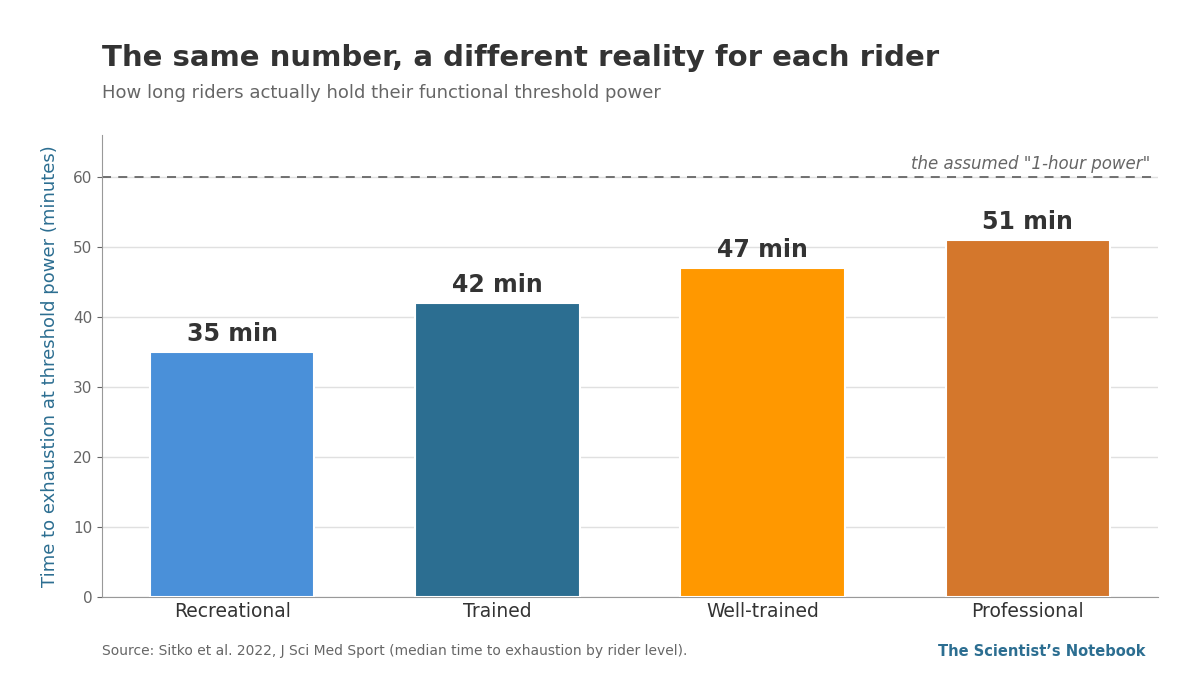
- Threshold power is a snapshot taken fresh. Time to exhaustion at that power runs from about 35 minutes in recreational riders to roughly 51 minutes in professionals, so the same number means very different things depending on who holds it and how deep they already are.
- You cannot find your full potential without being willing to fail. The only way to map where durability ends is to ride toward the place where it does, and sometimes not make it back.
- Failure is information. It shows what was missing at the time, in the body, the head, the plan, or the fuelling, and what to change before the next attempt.
- Fuelling correctly does not only let you go long at an easy pace. Done well, it lets you hold a harder effort for far longer, which is where Carolina's biggest gains came from.
- Mindset and decision-making are what keep the wheels turning once motivation runs out, and they are trainable too.
The science at a glance
For two decades, endurance physiology ran on three numbers: how much oxygen you can use, how economically you use it, and the fraction of that ceiling you can hold at threshold. The model worked until it didn't. Riders with near-identical lab profiles kept finishing long races minutes apart, and the three pillars had nothing to say about why.
Gradescale: Your physiology, decoded. Join the waitlist now.
 Thomas Mortelmans
The missing pillar is durability, sometimes called fatigue resistance or physiological resilience. It describes how well your lactate threshold, critical power, and efficiency survive after hours of work, rather than how high they sit when you are fresh. The uncomfortable finding is that durability is largely independent of the classic markers. In well-trained amateurs, neither maximal oxygen uptake nor relative threshold power predicts how much an athlete fades late in a long effort. You can be strong on paper and fragile on the road.
Threshold itself hides this. The popular idea that functional threshold power is a one-hour power holds mainly for professionals. When time to exhaustion at threshold is actually measured, recreational riders last around 35 minutes, well-trained riders around 47, and only professionals approach the assumed 51 to 60. The number on the screen is the same shape for everyone and a different reality for each rider.
The mechanism behind durability is a slow erosion, not a cliff. As an effort extends, muscle glycogen falls, fatiguing metabolites accumulate, the nervous system loses some of its drive, and the same power slowly costs more oxygen and more heartbeats. That drift between effort and cost has a name, and it is the most useful durability signal an athlete owns.
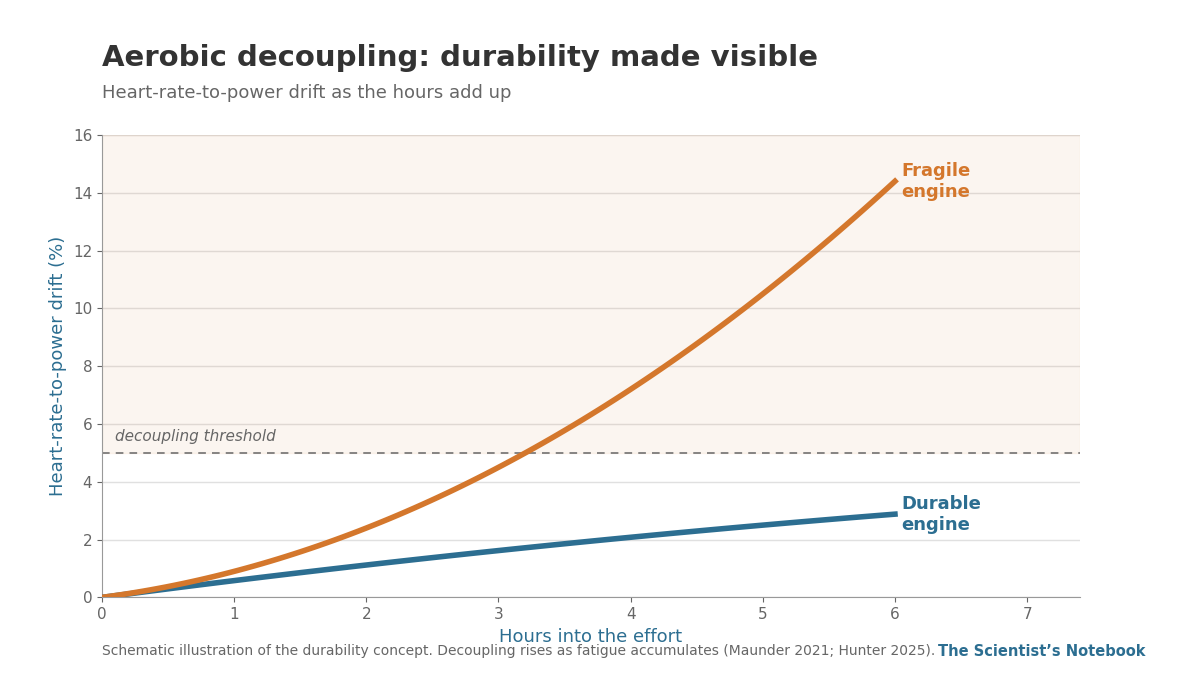
Scientist's Insight: Aerobic decoupling, the gap that opens between heart rate and power as the hours pass, is durability made visible. A flat trace at hour five means the engine is holding its shape. A rising one means the deal is quietly changing under you. It is the cheapest fatigue-resistance test in the sport, and it needs no laboratory.
Reading the signals
Durability is not a thing you do, it is a thing you can read, and two signals do most of the work.
The first is aerobic decoupling, the drift of heart rate away from power as the hours pass. Riders with strong fatigue resistance hold a flat trace across three to six hours, while those built mostly on short, hard sessions look excellent fresh and come apart once the effort runs long. Under-fuelling and heat can hold that drift down for a while and then let it break suddenly, so a clean first half is not a promise about the second.
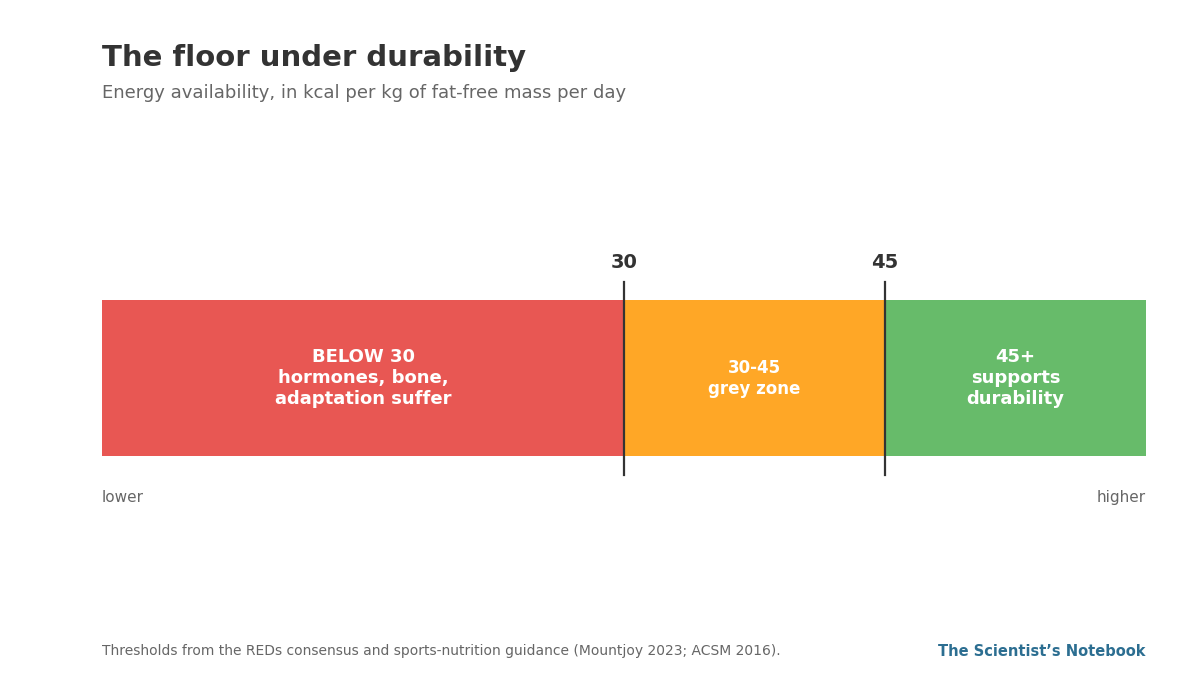
The second is fuelling. In efforts beyond 90 minutes, higher carbohydrate intakes track better-maintained power and a smaller late decline in threshold, and the harder the effort, the more carbohydrate the muscles can actually use. Athletes who defend their energy availability over weeks rather than starving it tend to stay durable. Those carrying a quiet deficit often present first not as illness but as a durability that simply will not improve no matter how the training is arranged.
Carolina's road to it
The research describes a recognisable pattern in athletes who hold the long stuff well: a wide aerobic base from many low-intensity hours, a smaller dose of hard intervals kept distinct from the volume, carbohydrate carried through the effort rather than rationed, a heat runway when the event is hot, and enough energy for the system to keep adapting between sessions.
None of it guarantees a finish. Carolina's road ran through every one of those levers the hard way.
Aim high enough to fail
Carolina raised this before durability, before any of the physiology:
"If you want to do something outstanding, you have to be willing to risk failing. You cannot only choose goals you already know you can complete."
Carolina Karlsson
This is the part most performance writing skips: you cannot learn where your durability ends by choosing efforts you are certain to finish. Carolina's first Everesting attempt ended 192 m short of the 8,848 she needed, after riding through the night. That is not a fitness gap you can see in a threshold test.
That is the engine holding for hours and then, in the last fraction, running out of whatever it was running on.
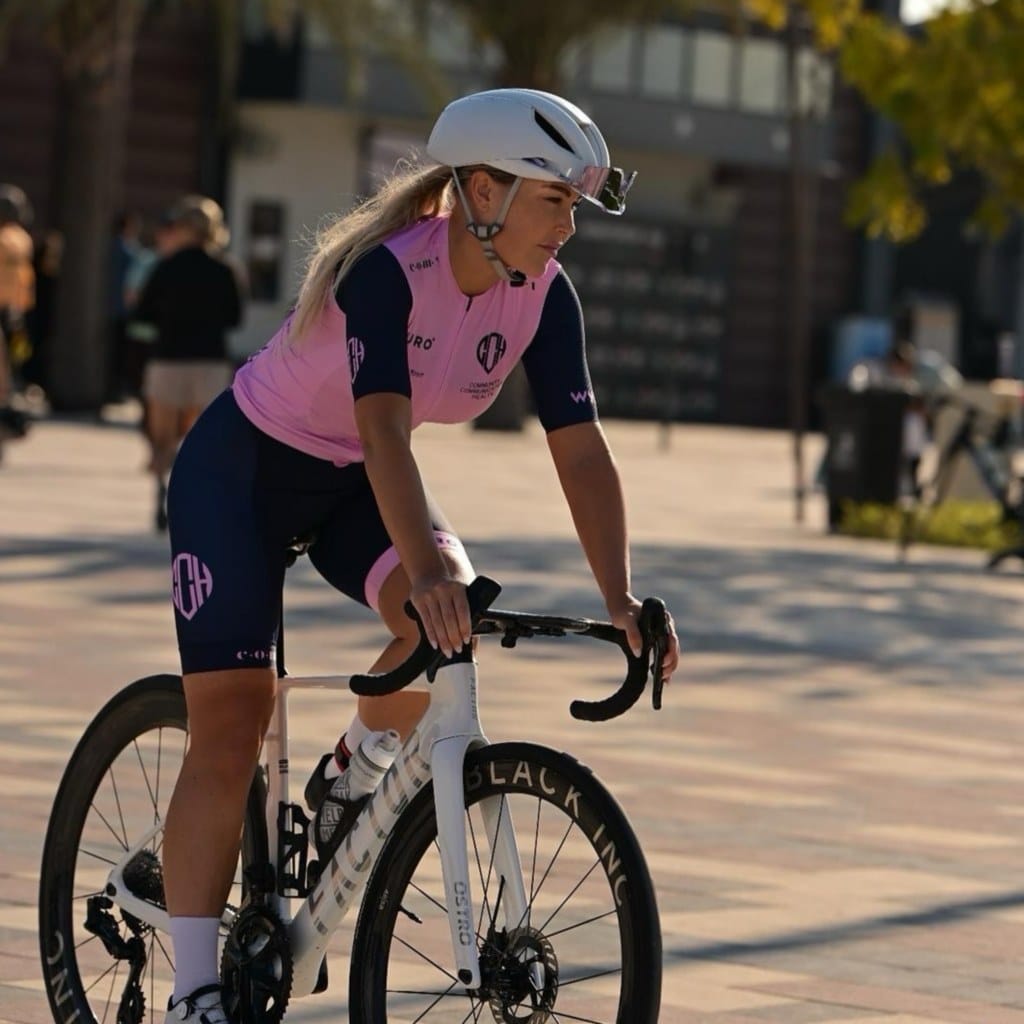
And the failures did not stop once she started finishing. She has come up short on attempts since, because she keeps pointing at things she is not yet sure she can do, as she loves pushing her limits.
She is precise about what that costs and what it returns:
"For me, failure usually means that something was missing at that time. Maybe I was not ready physically, mentally, or strategically."
Carolina Karlsson
Read that way, every failure is a list of what to fix. The clearest example is not even an Everesting. Her first 1,000 km ride took around 42 hours. A later one took around 32 hours, at a higher power, and felt like a different sport.
Nothing about the distance had become easy. She had simply learned how to fuel it, pace it, and keep performing when the hours stack up, and the ten hours she saved were the learning made visible.
 Thomas Mortelmans
Fuel the hard part, not just the easy part
The single biggest change was fuelling, and the lesson surprised her:
"When you fuel correctly, you can sustain much longer efforts even at a higher intensity."
Carolina Karlsson
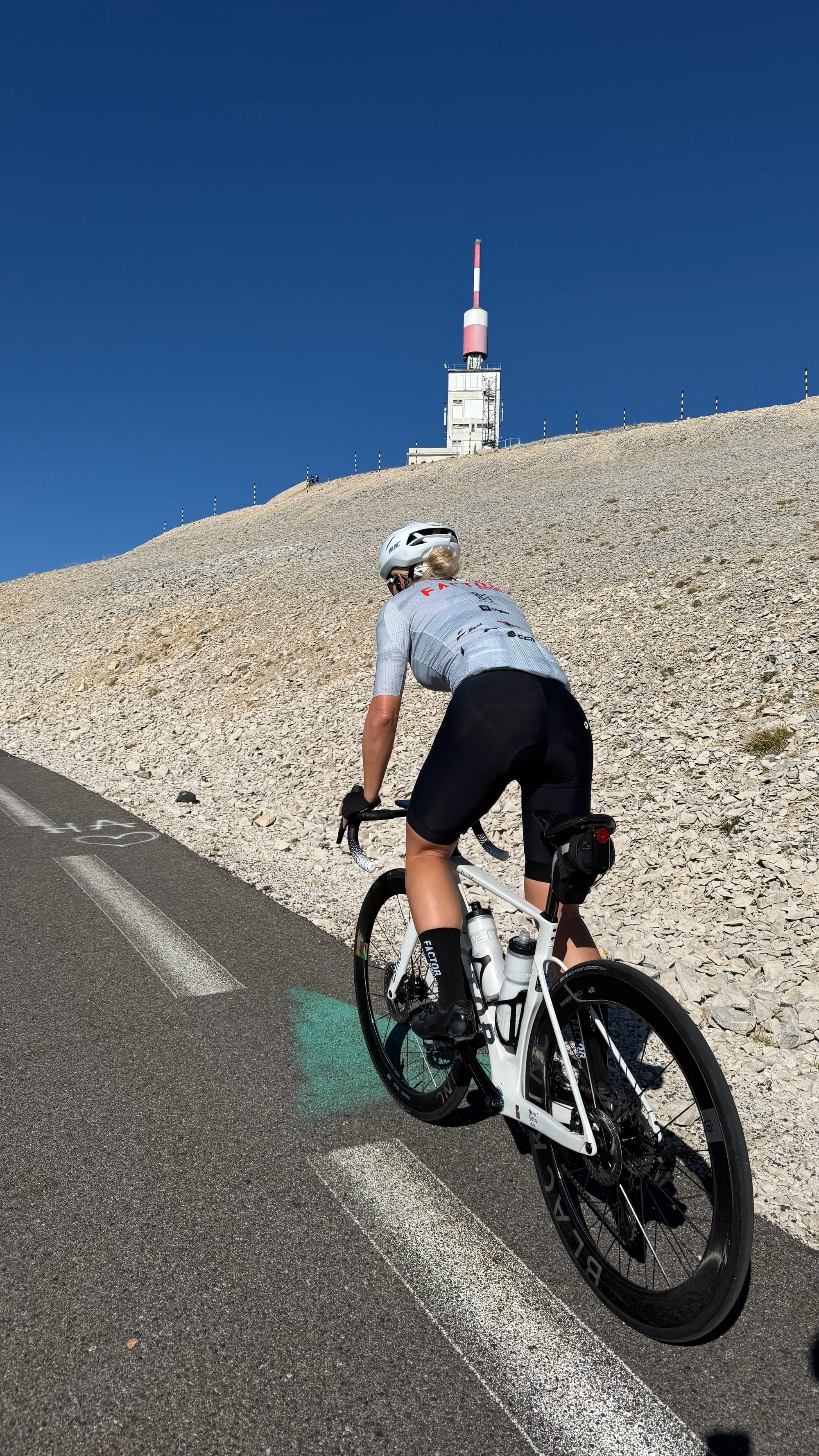
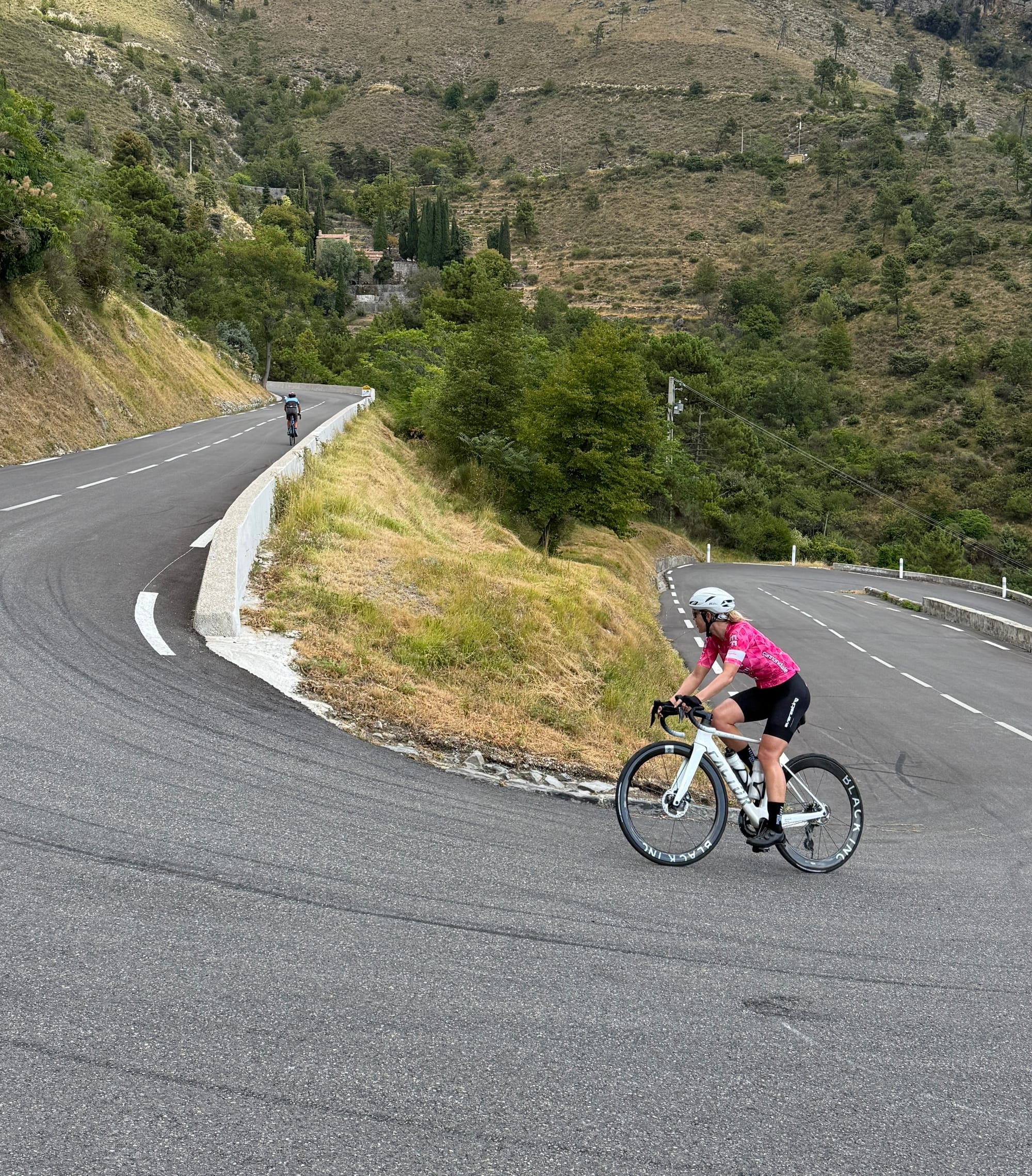
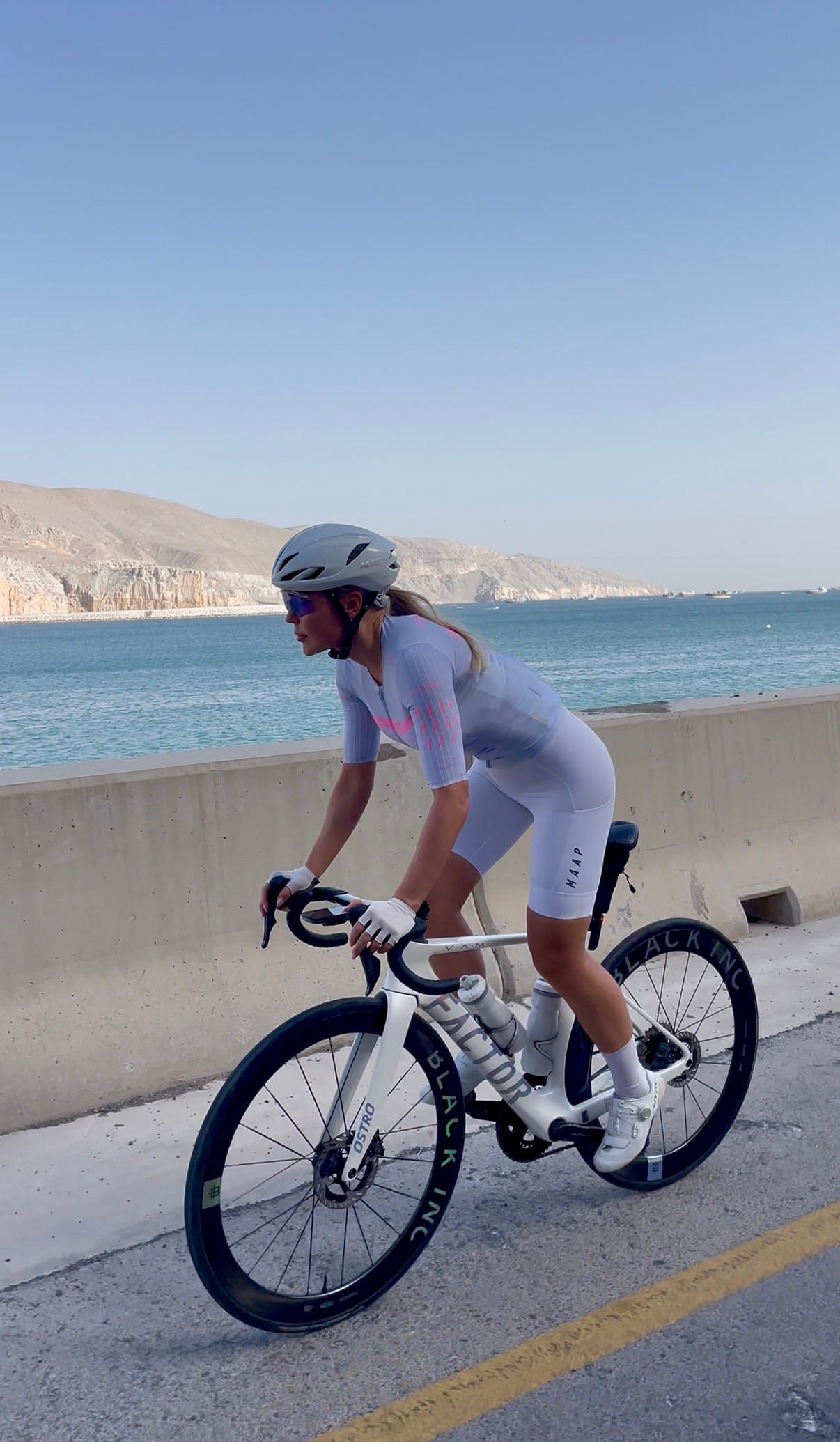
On her early Everesting attempts she took in around 40 g of carbohydrate per hour. Now she rides at closer to 100 g per hour, which sits at the top of what the ultra-endurance literature describes and is only reachable with a gut trained to absorb it. The effect is not only that she can go longer. It is that she can hold a harder effort while she does.
Her indoor vEveresting was ridden at tempo, not at an easy endurance pace, and the fuel was what made that sustainable.
Carbohydrate, fed at the right rate, raised the intensity she could defend for hours, not just the time she could spend soft-pedalling.
Train the heat, and keep absorbing fuel
Heat is where one of her attempts ended, on Jebel Jais, in heatstroke. The physiology is unforgiving here. As core temperature climbs, blood is pulled toward the skin to shed heat and away from the working muscle and the gut, drift accelerates, and the same power costs more.
Push far enough and it stops being a performance problem and becomes a medical one.
What Carolina learned is that heat tolerance is not fixed:
The following year she came back fully heat-adapted, and finished Everestings in heat that touched 45 degrees.
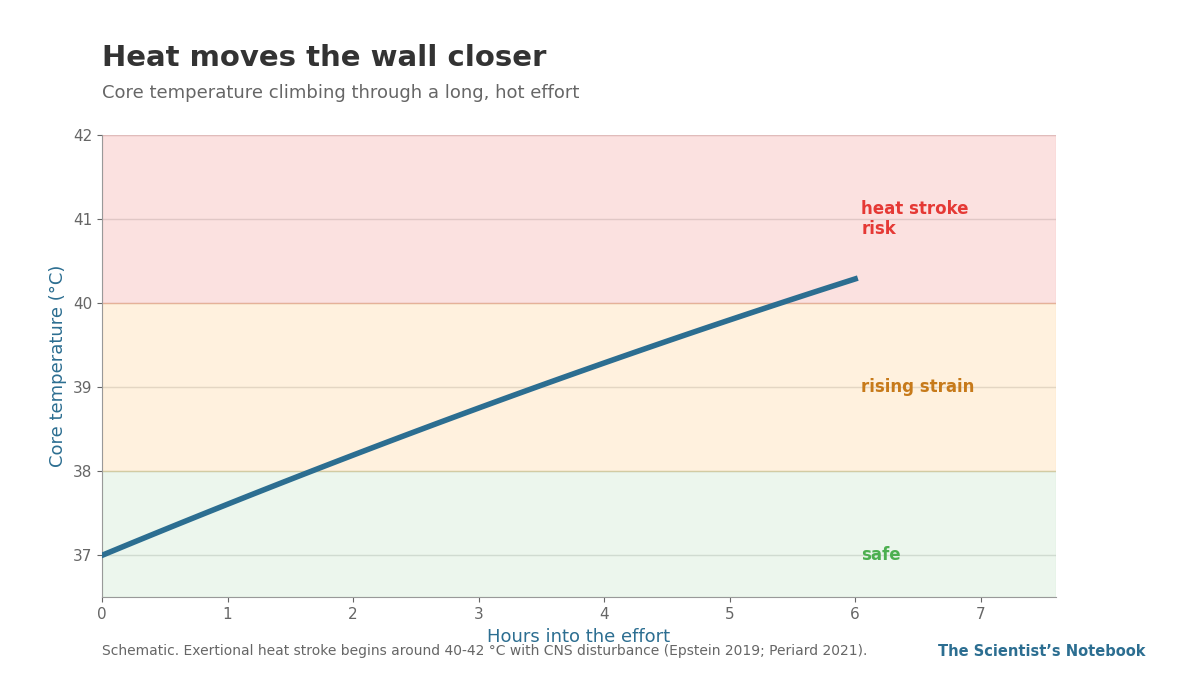
The adaptation is real and trainable, on the order of one to two weeks of deliberate exposure, and it lets a rider run cooler, sweat earlier, and hold power an unacclimated rider loses.
She added a practical layer on top, packing ice inside her bibs to hold her core temperature down. That is not only about comfort. Heat stress throttles the gut first, and the hotter a rider runs, the less of the carbohydrate she worked so hard to take in she can actually absorb. Staying cool was, in part, how she kept fuelling.
Decide your way through the bad patches
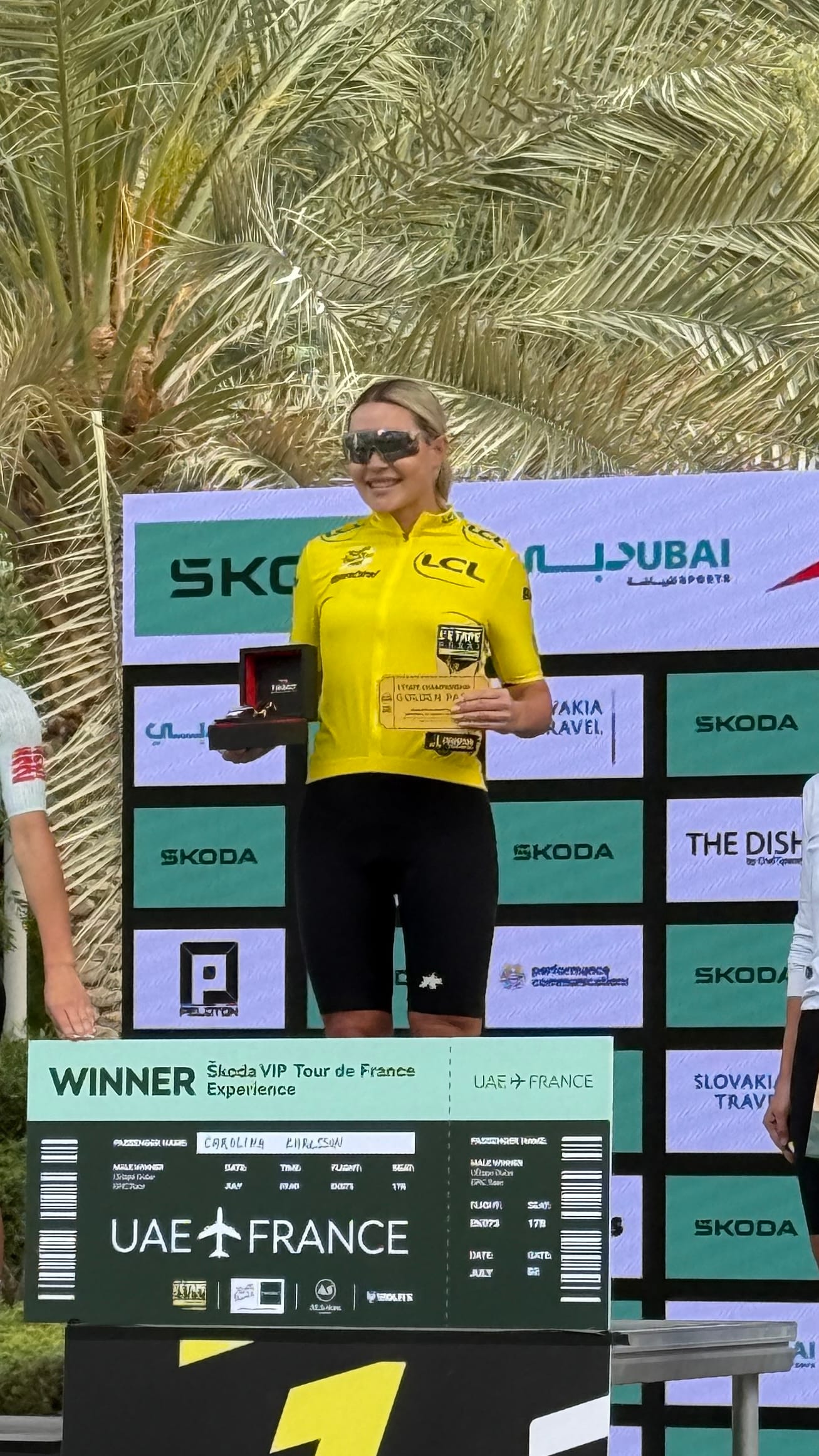
The last lever is the one no metric records. Durability is also a string of decisions made while tired, scared, and a long way from the finish.
The sport psychology literature has a careful version of this. When an athlete reframes a hard effort as a challenge to be met rather than a threat to be survived, the body shifts in a more performance-friendly direction, and a history of getting through hard things feeds the self-belief that makes the reframing possible.
The effects are real but small and vary between people, so we will not oversell them. The structural point is harder to argue with. The riders who hold on longest are the ones who have practised holding on, and who have failed enough times to read a bad patch as information rather than a verdict.
That is what durability actually looks like from the inside.
Where this leaves us
Durability is the quiet pillar. It does not photograph well, and it is the one that decides long days.
Carolina's racing is a reminder of what it really is: not just fitness, but the willingness to keep adapting, fuelling, and deciding well when the body and the mind are both being tested, and the willingness to fail on the way to finding the edge.
That is rarer than a high threshold, and it matters more.
Best regards,
Carolina Karlsson and Dr. Thomas Mortelmans
A note on our guest
Carolina Karlsson is a Swedish ultra-endurance cyclist based in Dubai whose edge is exactly the thing this post is about: holding an effort together when it gets long, hot, and frightening, learned the hard way through more failed attempts than finishes, and improved every time.
You can follow her riding on Instagram at @carolinaack and read the full account of her Everesting journey at everesting.com.
Ride with a purpose
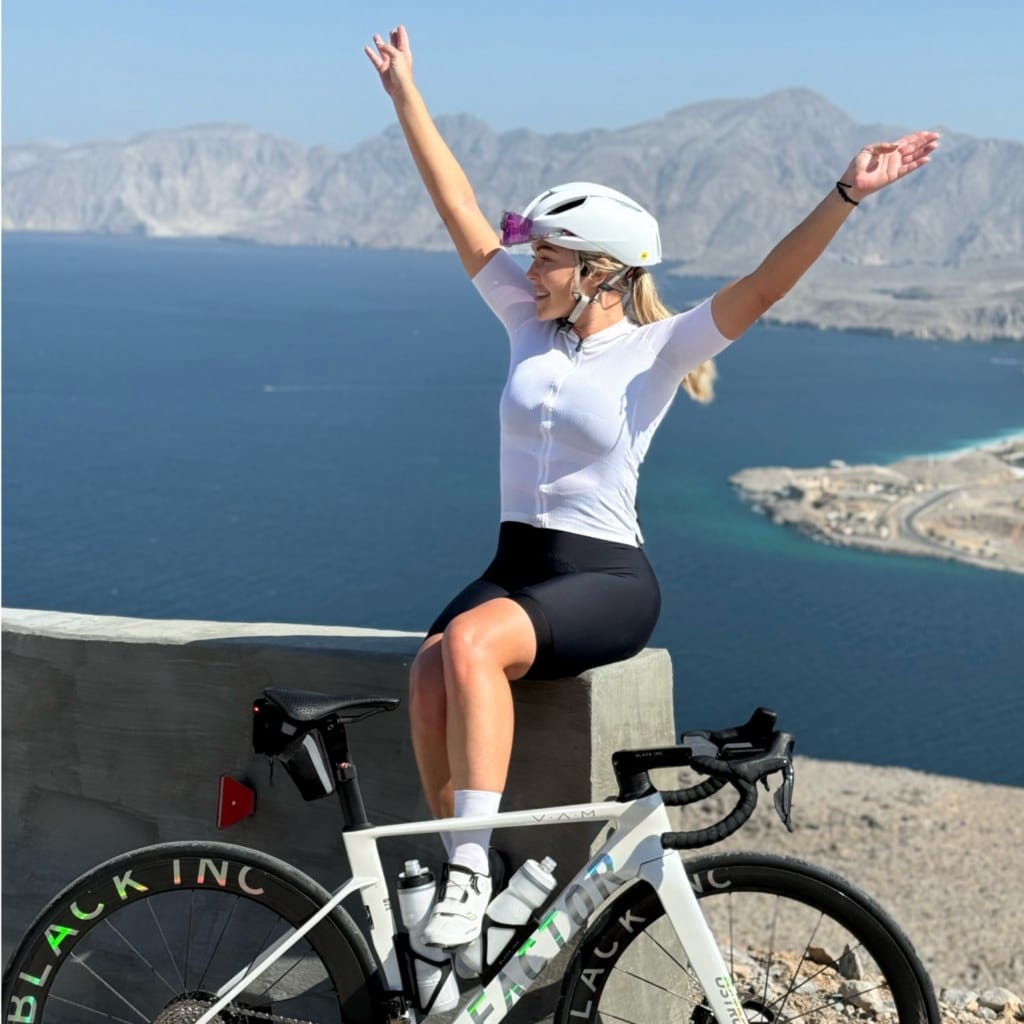
Carolina's next durability test is not for a Garmin number. On 1 July 2026 she rides with CycleAgainstCancer from Barcelona to Paris, 3,333 km and roughly 54,000 m of climbing over 25 days, in support of cancer patients through the Al Jalila Foundation. As she puts it:
"However relentless the challenge may be, it cannot compare to the reality faced by those affected by cancer."
Carolina Karlsson
If this post was worth your time, her fundraiser is worth a look: hopasports.com/en/carolina.
Limits of application
Most of the durability research sits in cyclists and runners, with smaller numbers of women than men, so the female-specific findings are promising rather than settled. The fuelling and heat numbers are population averages and danger thresholds, not prescriptions or targets to chase, and the very high carbohydrate intakes only work with a gradually trained gut. Treat all of it as a map of tendencies, not a plan for any one rider.
References
- Maunder E, Seiler S, Mildenhall MJ, Kilding AE, Plews DJ. The Importance of 'Durability' in the Physiological Profiling of Endurance Athletes. Sports Med. 2021. PMID 33886100. Profiling an athlete when fresh misses how the same numbers sag during long efforts; the paper names that sag durability and argues it should be measured directly.
- Jones AM. The fourth dimension: physiological resilience as an independent determinant of endurance exercise performance. J Physiol. 2023. PMID 37606604. Critical power can fall by an average of 10 percent after two hours of hard cycling, and the drop ranges from under 1 percent to about 32 percent between riders, which is why resilience is proposed as a fourth pillar.
- Hunter B, Maunder E, Jones AM, Gallo G, Muniz-Pumares D. Durability as an index of endurance exercise performance: methodological considerations. Exp Physiol. 2025. PMID 40150840. A methods review of how durability is measured, including why the fatiguing protocol and conditions like nutrition and heat must be controlled before athletes can be compared.
- Sitko S, Cirer-Sastre R, Lopez-Laval I. Time to exhaustion at estimated functional threshold power in road cyclists of different performance levels. J Sci Med Sport. 2022. PMID 35835698. Measured time to exhaustion at threshold power ran from about 35 minutes in recreational riders to 51 in professionals, so the one-hour assumption holds mainly for elites.
- Ansdell P, Thomas K, Hicks KM, Hunter SK, Howatson G, Goodall S. Physiological sex differences affect the integrative response to exercise: acute and chronic implications. Exp Physiol. 2020. PMID 33002256. Reviews how female skeletal muscle tends to resist fatigue better during equivalent high-intensity work, and what that means for training adaptation.
- Mountjoy M, Ackerman KE, Bailey DM, et al. 2023 International Olympic Committee's (IOC) consensus statement on Relative Energy Deficiency in Sport (REDs). Br J Sports Med. 2023. PMID 37752011. The consensus linking low energy availability to disrupted hormones, weakened bone, and blunted adaptation in female and male athletes.
- Thomas DT, Erdman KA, Burke LM. American College of Sports Medicine Joint Position Statement. Nutrition and Athletic Performance. Med Sci Sports Exerc. 2016. PMID 26891166. The joint position stand on sports nutrition, including carbohydrate targets near 30 to 90 g per hour for long efforts and the energy-availability foundation underneath them.
- Jeukendrup AE. A step towards personalized sports nutrition: carbohydrate intake during exercise. Sports Med. 2014. PMID 24791914. Sets carbohydrate targets by duration and intensity: about 60 g per hour for two to three hour efforts and around 90 g per hour for ultra-endurance, drawn from multiple transportable carbohydrates so the gut can absorb them, with intake scaling up as intensity and oxidation rise.
- Urdampilleta A, Arribalzaga S, Viribay A, Castañeda-Babarro A, Seco-Calvo J, Mielgo-Ayuso J. Effects of 120 vs. 60 and 90 g/h Carbohydrate Intake during a Trail Marathon on Neuromuscular Function and High Intensity Run Capacity Recovery. Nutrients. 2020. PMID 32679728. In elite trail runners, taking in 120 g of carbohydrate per hour limited neuromuscular fatigue and improved recovery compared with 90 and 60 g per hour, showing a gut-trained athlete can use intakes above the old ceiling.
- Periard JD, Eijsvogels TMH, Daanen HAM. Exercise under heat stress: thermoregulation, hydration, performance implications, and mitigation strategies. Physiol Rev. 2021. PMID 33829868. A comprehensive review of how heat pulls blood toward the skin, speeds cardiovascular drift, and impairs performance, plus the adaptations and cooling strategies that blunt it.
- Tyler CJ, Reeve T, Hodges GJ, Cheung SS. The Effects of Heat Adaptation on Physiology, Perception and Exercise Performance in the Heat: A Meta-Analysis. Sports Med. 2016. PMID 27106556. Across 96 studies, 7 to 14 days of heat adaptation improved performance in the heat, raised power at lactate threshold, and spared glycogen, with longer blocks more effective.
- Epstein Y, Yanovich R. Heatstroke. N Engl J Med. 2019. PMID 31216400. A clinical review of heatstroke, defined by a high core temperature with central nervous system disturbance, and the risk factors that precede it.
- Costa RJS, Gaskell SK, McCubbin AJ, Snipe RMJ. Exertional-heat stress-associated gastrointestinal perturbations during Olympic sports: management strategies for athletes preparing and competing in the 2020 Tokyo Olympic Games. Temperature (Austin). 2019. PMID 32166105. Reviews how exercise in the heat reduces blood flow to the gut and impairs digestion and absorption in proportion to the heat strain, which is why staying cool helps an athlete keep taking on fuel.
- Sim M, Garvican-Lewis LA, Cox GR, Govus A, McKay AKA, Stellingwerff T, Peeling P. Iron considerations for the athlete: a narrative review. Eur J Appl Physiol. 2019. PMID 31055680. Iron deficiency affects roughly 15 to 35 percent of female endurance athletes versus 5 to 11 percent of men, and a true deficiency lowers endurance performance by 3 to 4 percent.
- Jones MV, Meijen C, McCarthy PJ, Sheffield D. A Theory of Challenge and Threat States in Athletes. Int Rev Sport Exerc Psychol. 2009. Describes how appraising a hard task as a challenge to meet rather than a threat to survive shifts the body toward a more performance-friendly response.
- Everesting. Carolina Karlsson, UAE: a story of failure, heat, and finishing.. Carolina's own account of her Everesting journey, the source of her on-the-record quotes and the documented failures and finishes.
- Carolina Karlsson. CycleAgainstCancer fundraiser, Al Jalila Foundation.. Carolina's fundraising page for the Barcelona to Paris ride, with her statement on riding for a cause beyond herself.
- Carolina Karlsson (@carolinaack). Instagram.. Carolina's Instagram, where she shares her ultra-endurance riding and the reflections she contributed directly to this piece.
---
If you have 60 seconds, I would value your anonymous feedback. You can share it here.
---
Health disclaimer
This post discusses endurance-training science for educational purposes. It is not medical advice, not a diagnosis, and not a substitute for clinical care. Individual response to training, sleep deprivation, and multi-day exertion varies substantially, and what applies to a research cohort or a world-class athlete may not apply to you. Consult a qualified physician, sports medicine specialist, or registered dietitian before changing your training, fuelling, or sleep strategy if you have a cardiovascular, metabolic, psychiatric, or sleep-related condition; are recovering from injury or illness; are pregnant; are on medication that affects heart rate, hydration, glucose regulation, or sleep; or have concerns about exercise tolerance. Ultra-endurance events impose real physiological and psychological loads. Persistent chest pain, fainting, acute confusion beyond the predictable late-race window, severe dehydration, sustained loss of coordination, or any mental-health symptoms that outlast the immediate post-event dip warrant professional care and are not signals to push through. No outcome is guaranteed. The protocols, anchors, and case material in this post are descriptive, drawn from peer-reviewed evidence and a guest contributor's lived experience, and should be treated as inputs to an informed conversation with your own coach and clinicians, not as prescriptions.
Found this useful?
Get articles like this and free training calculators in your inbox every week.
Recommended reads
If this was useful, these are the other research-driven newsletters I actually read.

Member discussion