Snippet #040: Why the Same Training Produces Such Different Results
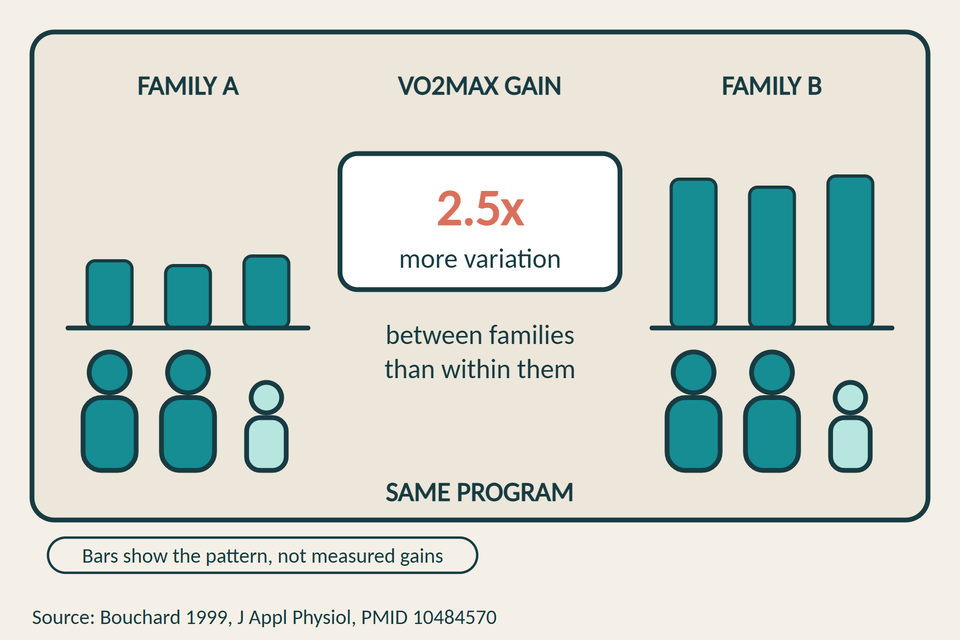
Give hundreds of sedentary adults the same 20-week aerobic program and the spread of outcomes is striking.
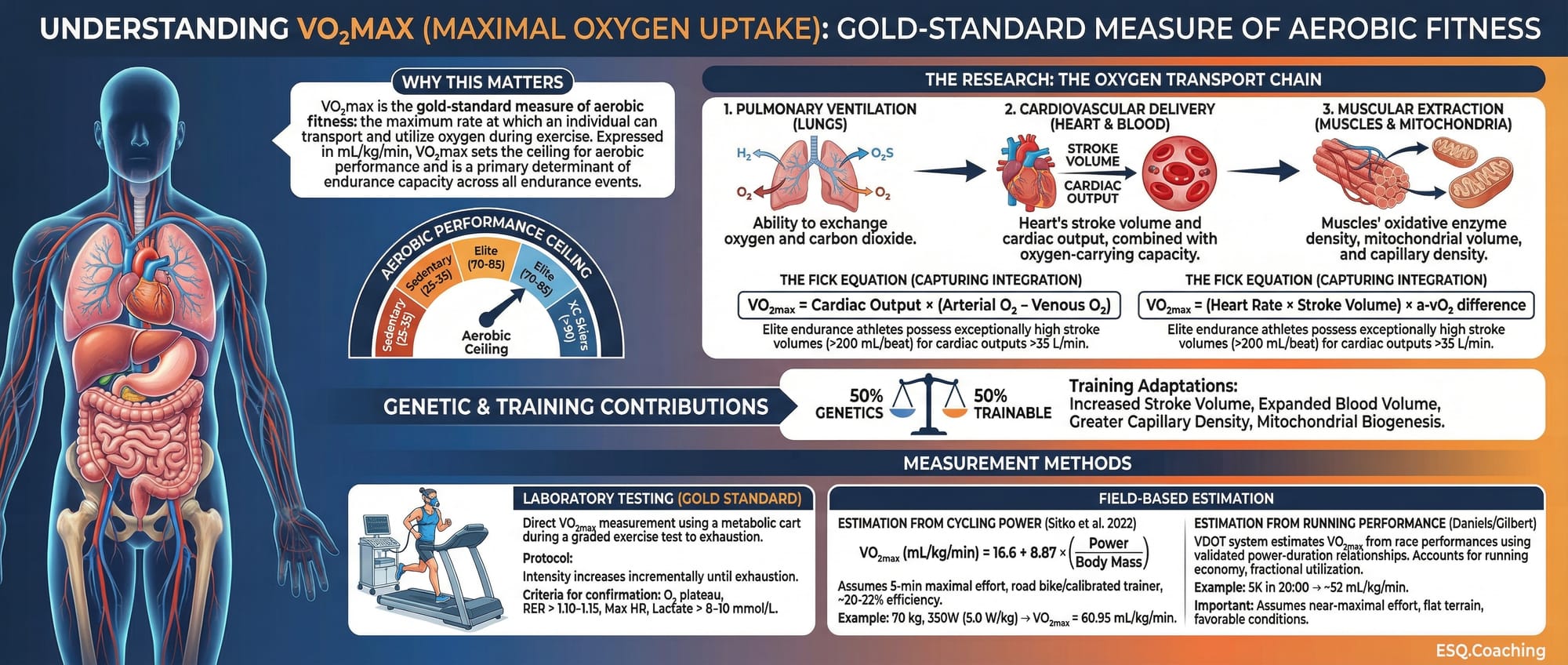
In the HERITAGE Family Study, the average gain in maximal oxygen uptake (VO2max, a measure of how much oxygen the body can use at peak effort) was roughly 400 ml/min.
But the range ran from near zero to more than a liter per minute.
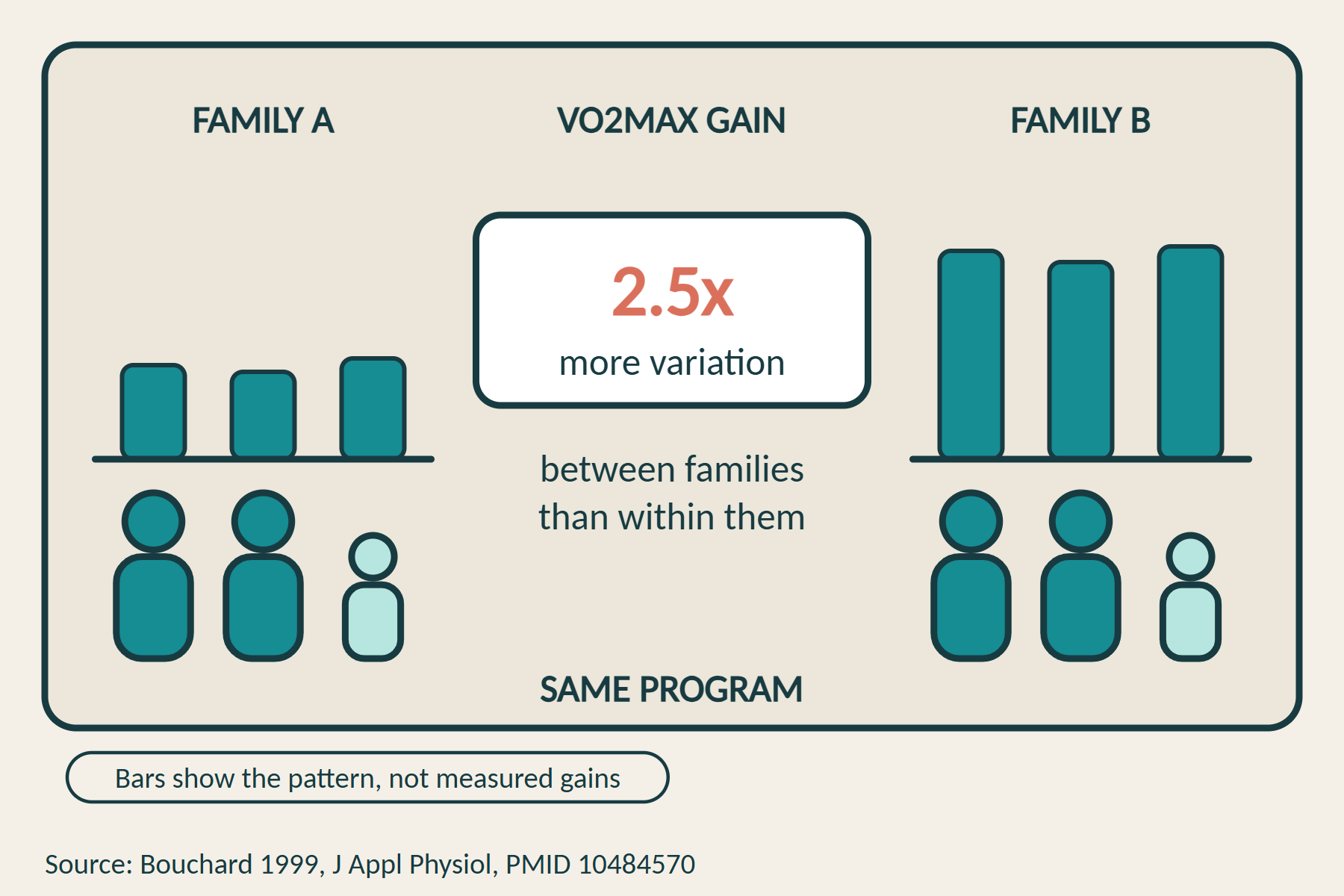
Bouchard and colleagues found about 2.5 times more of that variation between families than within them, pointing to a maximal heritability estimate of 47% for VO2max trainability (Bouchard et al. 1999).
This matters because group averages routinely bury individual biology.
A person who sees a modest VO2max gain from a standard endurance block is not necessarily a poor responder to training as a whole.
The paper analyzed only oxygen uptake, so it says nothing about strength, movement economy, or power output.
Low VO2max trainability reflects one trait, not overall athletic potential.
Heritability describes variation across a group, not how much of one person's gain comes from genes.
The study tested one standardized program, so it cannot say how training volume, intensity, or method would shift an individual's gain.
If you have 60 seconds, I would value your anonymous feedback. You can share it here.
Health disclaimer
This summarizes one study of 481 sedentary white adults from 98 families on one 20-week program. It cannot say how any one person would respond, and it is not training advice. Not medical advice.
 Thomas Mortelmans
 Thomas Mortelmans
 Thomas Mortelmans
Keep going
Gradescale turns your training history into the models in this piece: power-duration, load balance, and readiness, each with its sources.
Training plans built on the same evidence base:
Thomas MortelmansJoin our Discord community:
Thomas MortelmansFound this useful?
Get articles like this and free training calculators in your inbox every week.
Recommended reads
If this was useful, these are the other research-driven newsletters I actually read.
Member discussion