Snippet #002: Separating the Fuel Source From the Fatigue Mechanism During Intensity
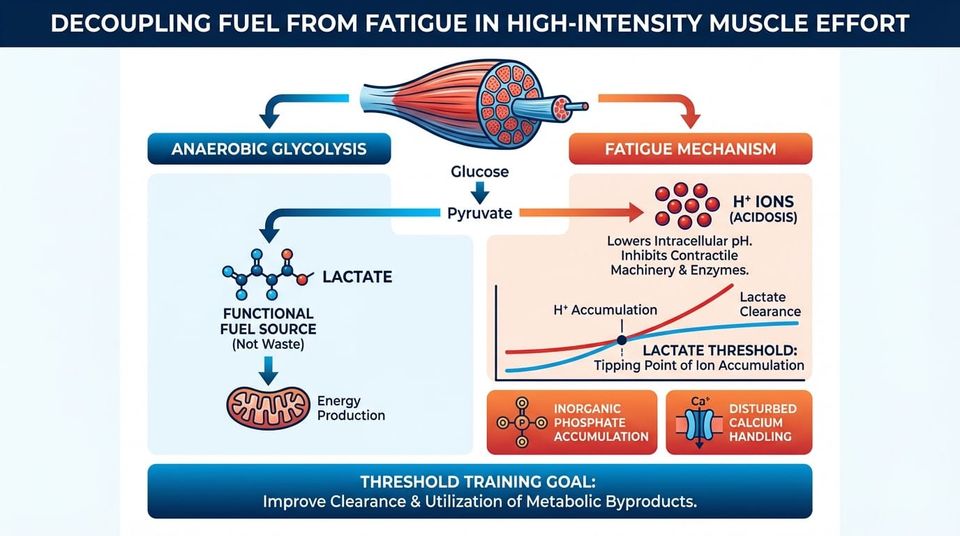
During high-intensity effort, skeletal muscle relies on anaerobic glycolysis to generate energy rapidly. While this process produces lactate, research confirms that lactate itself is a functional fuel source rather than a fatigue-inducing waste product.
The actual driver of the burning sensation and performance decline is the simultaneous accumulation of hydrogen ions, which lowers intracellular pH. This acidic environment physically interferes with the muscle's contractile machinery and inhibits the enzymes responsible for energy production.
Understanding this distinction clarifies that the goal of threshold training is not to eliminate a toxin, but to improve the body's ability to clear and utilize metabolic byproducts. The lactate threshold remains a critical metric because it accurately marks the tipping point where these fatigue-inducing ions begin to accumulate faster than the body can buffer them.
While acidosis is a primary factor in high-intensity fatigue, performance limits are multifactorial and also involve the accumulation of inorganic phosphate and disturbances in calcium handling within muscle fibers.
This Margin Snippet is drawn from Entry #002 of The Scientist’s Notebook. The interaction between aerobic and anaerobic energy systems during endurance efforts
PS: Your honesty helps me grow.Let me know what you think(completely anonymous) in under 30 seconds!
Found this useful?
Get articles like this and free training calculators in your inbox every week.
Recommended reads
If this was useful, these are the other research-driven newsletters I actually read.


Member discussion