Snippet #036: When the Gut Wall Cracks Under Heat and Effort
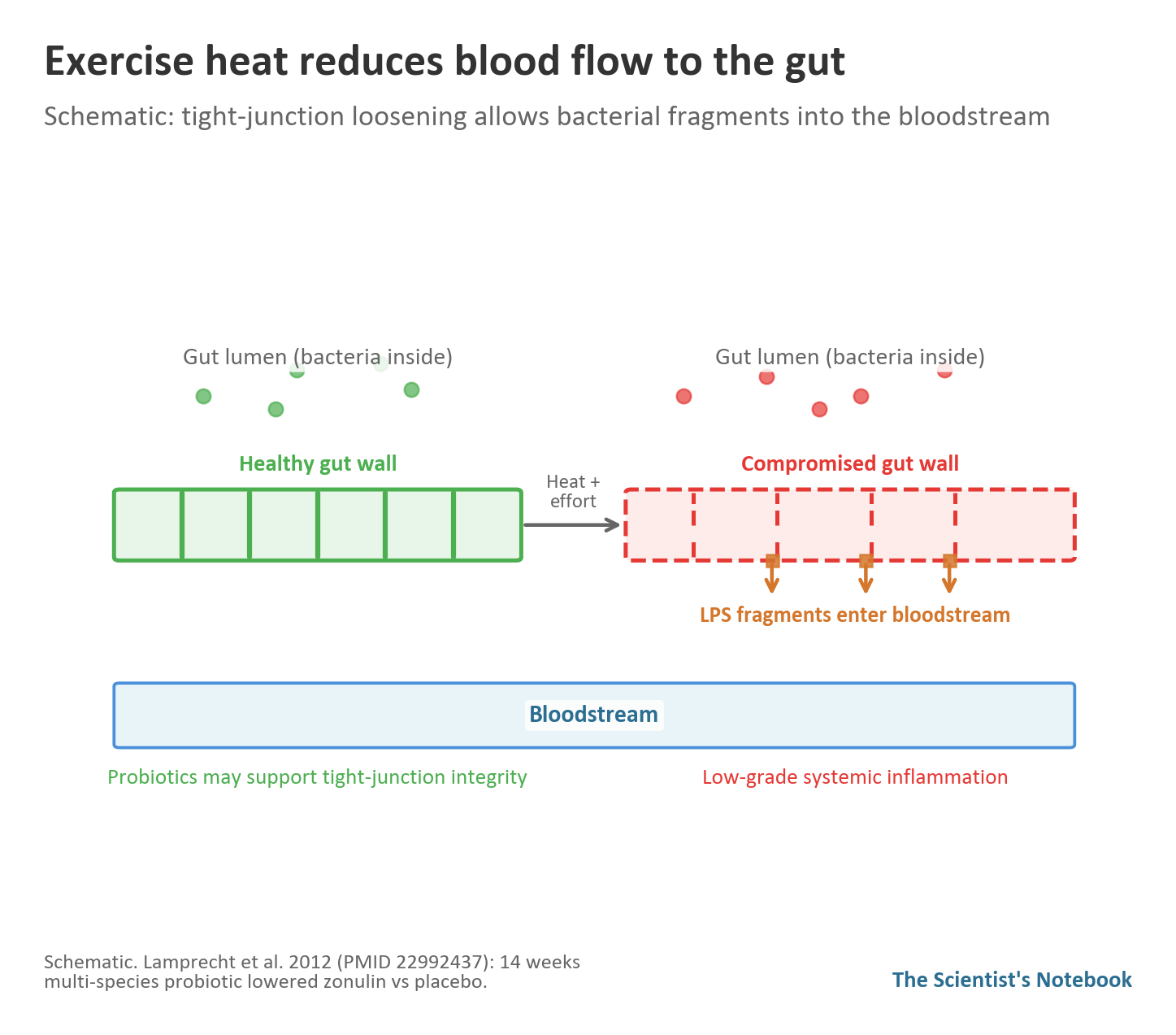
During prolonged or intense exercise, especially in the heat, blood is redirected away from the digestive tract toward working muscles. That reduced blood flow loosens the tight-junction proteins that hold intestinal lining cells together, producing a more permeable gut wall.
The result is that fragments of gut bacteria, specifically lipopolysaccharide (a bacterial endotoxin), can seep into the bloodstream, a condition known as exercise-induced endotoxemia. This leakage triggers a low-grade systemic inflammatory response studies associate with nausea, cramping, and fatigue during long efforts.
In a randomized trial in trained men, fourteen weeks of multi-species probiotic supplementation lowered zonulin, a fecal marker of gut leakage, relative to placebo (Lamprecht et al. 2012).
Even modest gut-barrier disruption can cut short a well-paced race or training session. The inflammatory signal from circulating endotoxin compounds the physical stress of the effort itself, making the gut a hidden limiting factor in prolonged heat exercise.
 Thomas Mortelmans
Effects appear to be strain-specific, and the current evidence remains mixed across protocols and populations. A probiotic does not compensate for under-fueling or dehydration, which independently accelerate gut-barrier breakdown.
---
If you have 60 seconds, I would value your anonymous feedback. You can share it here.
---
### Health disclaimer
This post discusses endurance-training science for educational purposes. It is not medical advice, not a diagnosis, and not a substitute for clinical care. Individual response to training, sleep deprivation, and multi-day exertion varies substantially, and what applies to a research cohort or a world-class athlete may not apply to you. > Consult a qualified physician, sports medicine specialist, or registered dietitian before changing your training, fuelling, or sleep strategy if you have a cardiovascular, metabolic, psychiatric, or sleep-related condition; are recovering from injury or illness; are pregnant; are on medication that affects heart rate, hydration, glucose regulation, or sleep; or have concerns about exercise tolerance. > Ultra-endurance events impose real physiological and psychological loads. Persistent chest pain, fainting, acute confusion beyond the predictable late-race window, severe dehydration, sustained loss of coordination, or any mental-health symptoms that outlast the immediate post-event dip warrant professional care and are not signals to push through. > No outcome is guaranteed. The protocols, anchors, and case material in this post are descriptive, drawn from peer-reviewed evidence and a guest contributor's lived experience, and should be treated as inputs to an informed conversation with your own coach and clinicians, not as prescriptions.
Thomas Mortelmans
Related reading
Thomas Mortelmans
Related reading
Keep going
Every number in this piece is one you can compute from your own rides and runs, with the formula and the source shown alongside it.
Training plans built on the same evidence base:
Thomas MortelmansJoin our Discord community:
Thomas MortelmansFound this useful?
Get articles like this and free training calculators in your inbox every week.
Recommended reads
If this was useful, these are the other research-driven newsletters I actually read.


Member discussion