Entry #037: The Hydration Line: Sweat Rate, Sodium, and Why Overdrinking Is the Dangerous Mistake
A few summers ago I weighed two athletes on the same scale, before and after the same two-hour ride, in the same heat. One came back three pounds lighter despite drinking steadily.
The other came back half a pound heavier (or 250g) having drained two bottles he never really wanted.
Same workout, same weather, two bodies behaving like different species.
That morning crystallized something I now treat as a first principle: hydration is not one number you can hand to a roomful of people. It is a personal physiology, and the spread between individuals is enormous.
This entry is about that spread and what the literature actually shows. I want to walk through three things that get flattened in popular advice.
First, how widely sweat rate and sweat sodium concentration vary, both between athletes and within the same athlete from day to day.
Second, the contested question of how much body-mass loss really costs in performance, and why the laboratory answer and the field answer keep disagreeing.
Third, and most important for safety, the opposite failure mode: exercise-associated hyponatremia, the dilution of blood sodium that comes from drinking too much, which is rare but can be fatal.
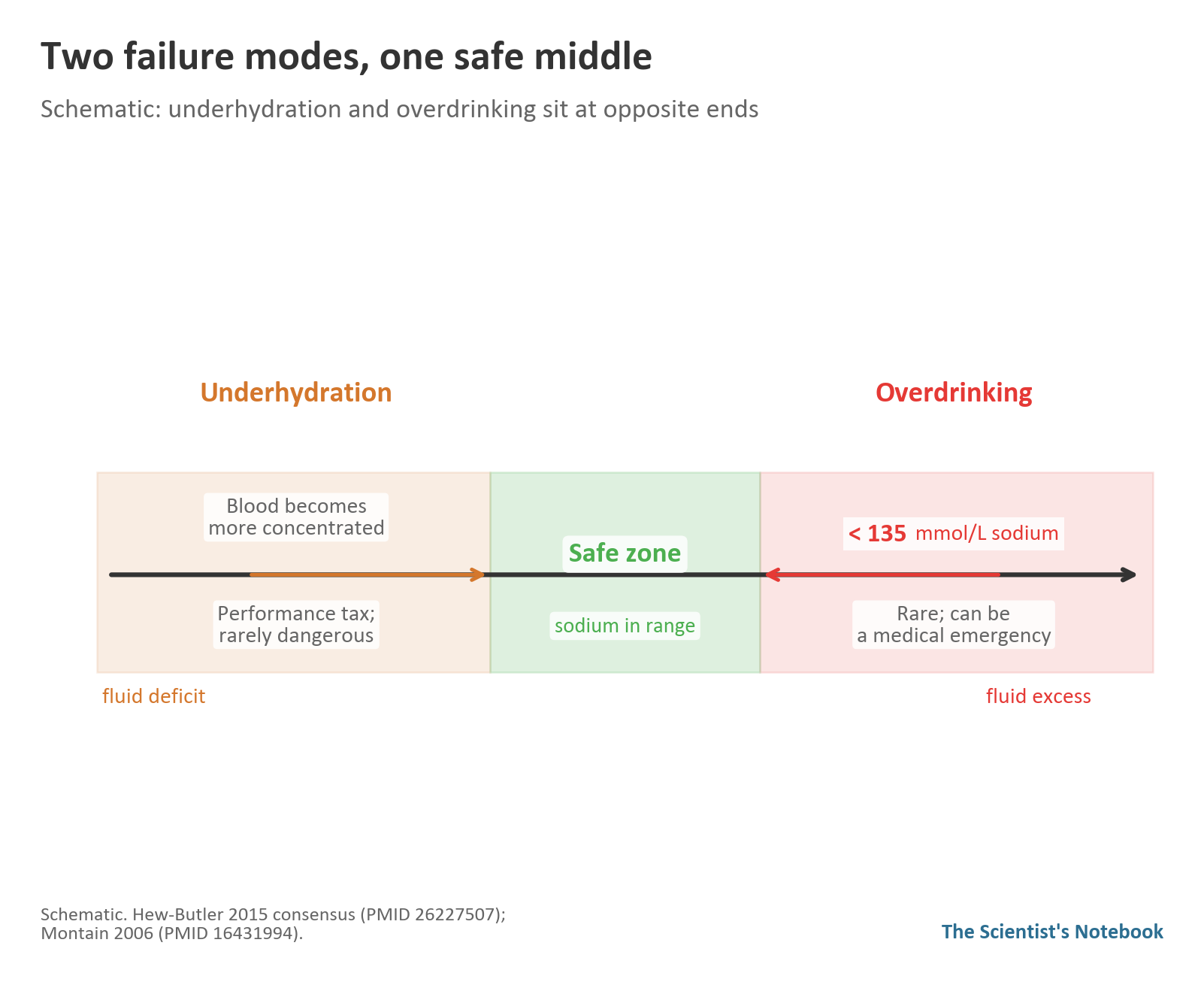
The reason these belong in one entry is that they are the same coin. Underdrinking and overdrinking sit on a single axis, and the body defends a narrow band of blood concentration in the middle.
Too far toward fluid deficit is a performance tax. Too far toward fluid excess is a medical emergency.
The interesting science lives in where that band sits, how the body signals its edges, and why the old advice to drink on a fixed schedule pointed athletes toward the more dangerous edge.
I am deliberately leaving some neighbors for other notebooks. Heat acclimatization as a training tool, post-exercise rehydration, and carbohydrate co-ingestion each deserve their own treatment.
Here the spine is fluid and sodium balance during the effort itself. My aim is to inform how the variability and the two-sided risk are understood, not to write anyone a fluid plan.
That distinction matters most where the stakes are highest.
The brief
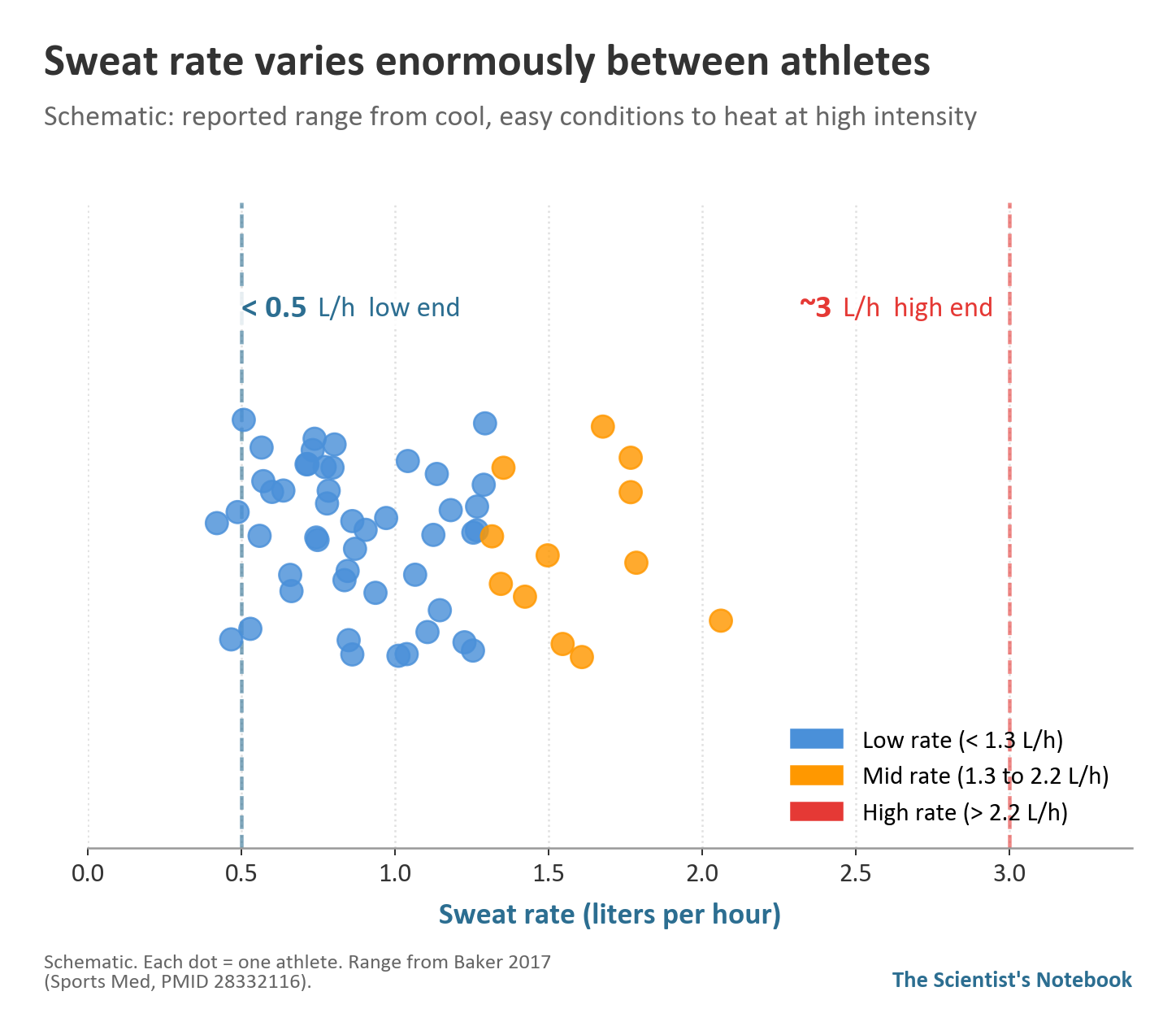
- Sweat rate spans roughly an order of magnitude across athletes. Reported values run from under half a liter per hour in cool, easy conditions to near three liters per hour in heat at high intensity.
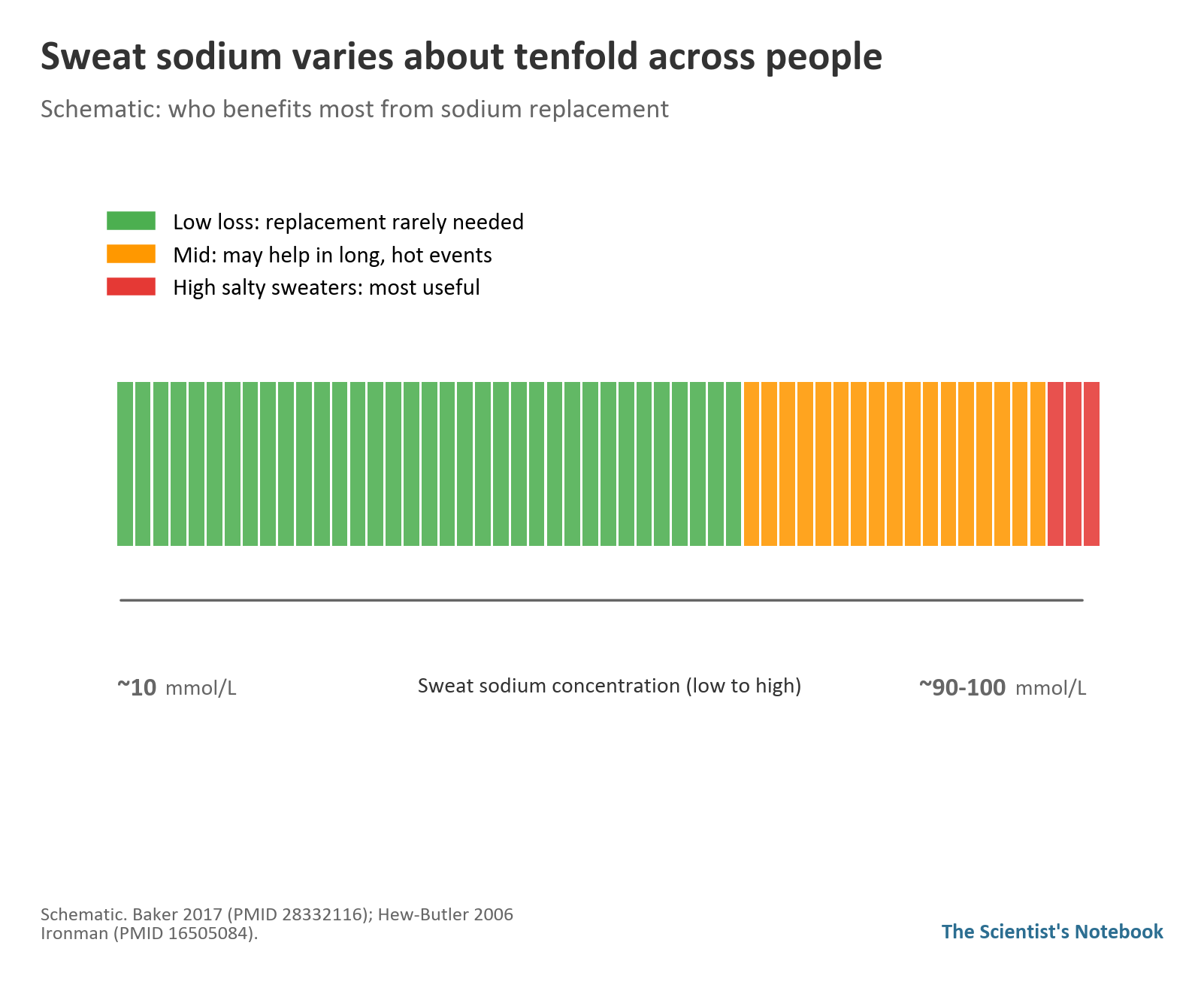
- Sweat sodium concentration varies about tenfold between individuals. Some athletes lose sweat near ten millimoles per liter of sodium, others near ninety to one hundred, reshaping their salt accounting entirely.
- The most accurate field method for sweat rate is change in body mass. Weigh before and after, account for fluid in and urine passed, then divide net loss by exercise hours.
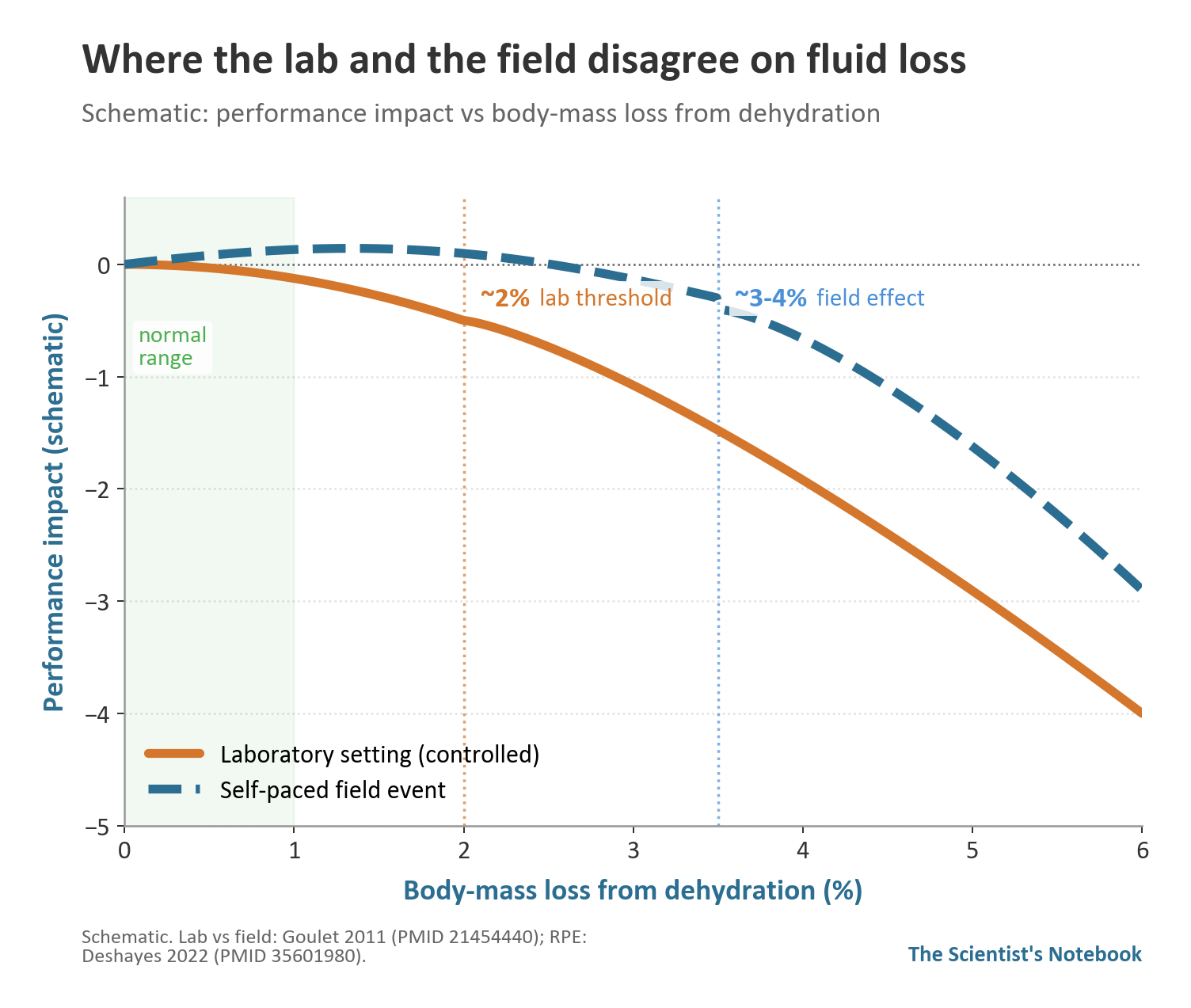
- Dehydration past about two percent of body mass tends to cost performance, but the magnitude is debated. Laboratory effects look larger than self-paced field effects, where intensity and duration dominate.
- The field has shifted from drinking to a fixed schedule toward drinking to thirst. Thirst individualizes intake and guards against the overdrinking that schedules encourage.
- Exercise-associated hyponatremia is the dangerous opposite of dehydration. Blood sodium falls below 135 millimoles per liter, driven mainly by overdrinking, sometimes compounded by inappropriate antidiuretic hormone secretion.
- Sodium replacement helps in long, hot efforts but does not cancel overdrinking. Salt supplements blunt sodium depletion in salty sweaters, yet they cannot prevent dilutional hyponatremia if fluid intake exceeds losses.
- Heat acclimatization lowers sweat sodium and expands plasma volume. Adaptation conserves salt and stabilizes circulation across a couple of weeks.
The science at a glance
Foundational Principle 1: The body defends concentration, not volume
The physiology that governs hydration is built around a tightly held target: the concentration of solutes in the blood, dominated by sodium. At rest the body keeps plasma osmolality inside a narrow window, and sodium sits in a similarly tight band.
Specialized sensors in the brain detect tiny shifts in blood concentration and respond with two tools at once. They generate the conscious sensation of thirst, and they release antidiuretic hormone, which instructs the kidney to reabsorb free water and concentrate the urine.
When concentration drifts up, the body conserves water and seeks more. When it drifts down, the body sheds water.
Volume matters too, through a separate set of pressure sensors, but the headline variable is concentration. This is why both extremes of hydration are framed around sodium concentration rather than around how much fluid sits in the tank.
Scientist's Insight: The regulated quantity is the saltiness of the blood, so every hydration decision is really a bet about concentration.
Foundational Principle 2: Sweat is the leak, and its composition is individual
Sweat is the engine of thermoregulation and the main route of fluid and electrolyte loss during exercise.
The fluid leaving the sweat gland starts close to the saltiness of plasma, then loses much of its sodium as it travels up the duct, where channels actively reabsorb sodium back into the body.
Gradescale: Your physiology, decoded. Join the waitlist now.
 Thomas Mortelmans
The efficiency of that reabsorption is what makes one athlete a salty sweater and another not. It depends on sweating rate, hormonal state, heat adaptation, and genetics. Higher sweat rates tend to outrun the reabsorption machinery, so the final sweat carries more sodium.
The practical upshot is that two people in the same race can lose wildly different amounts of both water and salt, and neither the volume nor the concentration can be guessed reliably from the outside.
Measurement, repeated across conditions, is the only way to characterize an individual.
Scientist's Insight: Sweat composition is a personal signature written by duct reabsorption, not a constant the textbooks can supply.
Foundational Principle 3: Thirst is a sensor, with known blind spots
Thirst is not a vague urge. It is the readout of the same concentration sensors that drive hormone release, integrated with signals about blood volume and pressure.
For most efforts it tracks fluid need well enough to keep concentration in range without prompting excess, which is the case for trusting it as the default guide.
The honest caveat is that thirst has blind spots. It can be overridden by habit, by social pressure, or by explicit instructions to drink more. It can lag behind true deficit during very long efforts, and it can be muted by a full stomach.
So thirst is a good sensor, neither perfect nor immune to being talked over.
Scientist's Insight: Thirst is an accurate enough instrument for most efforts, but it can be drowned out by instruction, fatigue, or a full gut.
Reading the signals
Lever 1: How much body-mass loss actually matters
The data: dehydration is conventionally flagged once body-mass loss from fluid passes about two percent, and laboratory studies show rising cardiovascular strain, higher core temperature, greater perceived effort, and more glycogen use as deficit grows.
A meta-analysis of self-paced cycling time trials told a more nuanced story. Across out-of-door conditions, fluid deficits up to roughly four percent did not measurably slow performance, and intensity and duration drove the outcomes far more than the deficit did.
Reviews of perceived exertion converge on a similar threshold near three percent.
Where athletes tend to land: in controlled laboratory work the athletes cluster around modest deficits near two percent, and many show measurable strain, especially in heat.
In real competition the same loss often appears without a clear penalty, and the best finishers in some field studies are among the more dehydrated, not the most topped up.
The literature describes an inverted-U shape, with athletes performing best at small losses of one to three percent and worst at either extreme.
Lever 2: Drinking to a schedule versus drinking to thirst
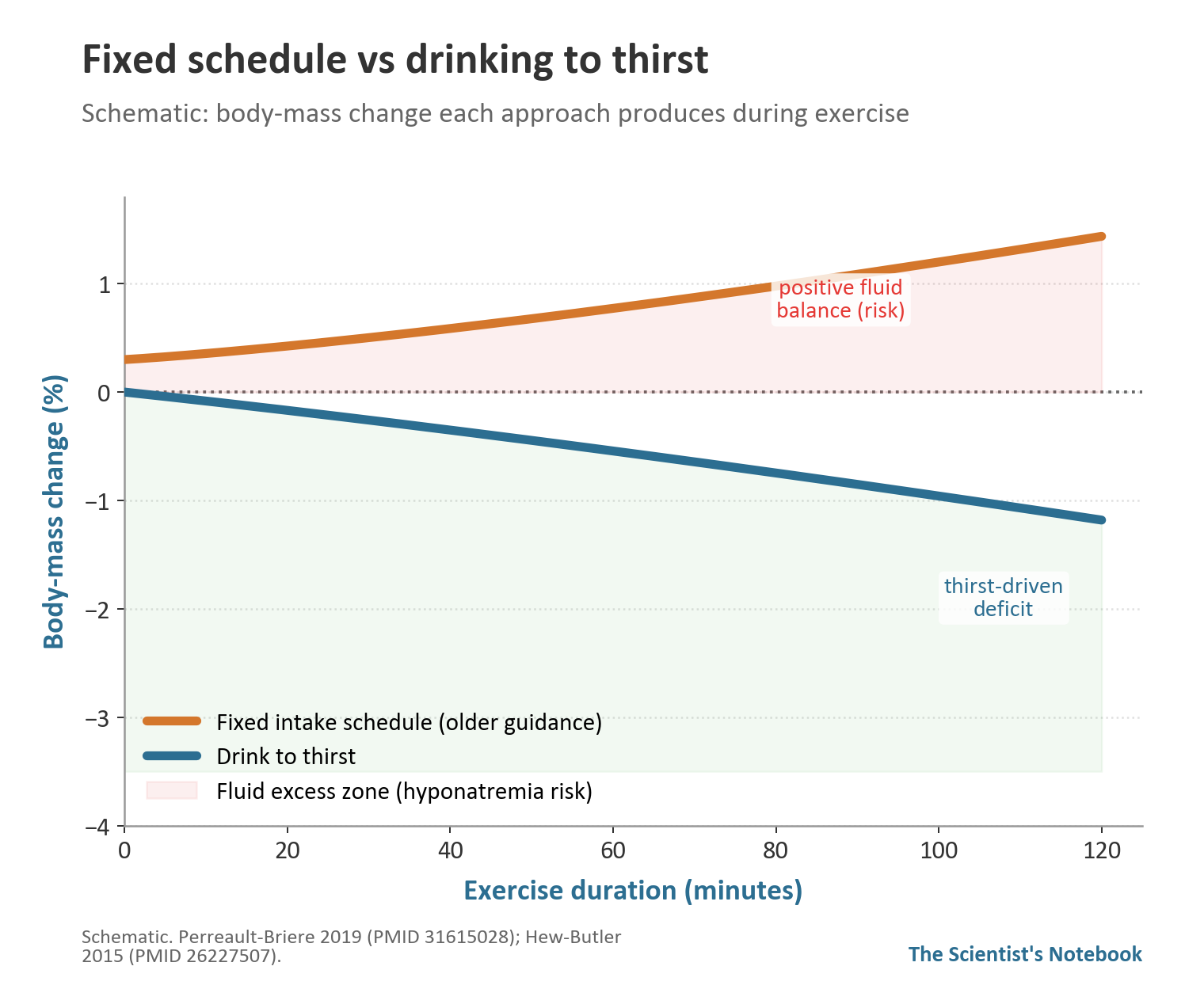
The data: older guidance pushed programmed intake aimed at replacing most or all sweat losses, and in laboratory settings that approach can preserve plasma volume and protect power output.
Field research complicates the picture. In real ultra-endurance events with variable terrain and intermittent fluid access, thirst-driven intake produced performance equivalent to programmed intake without raising the incidence of hyponatremia or dehydration illness.
A controlled one-hour time-trial comparison found no meaningful separation between no fluid, thirst-driven fluid, and programmed fluid, undercutting the idea that aggressive replacement is reliably superior.
Where athletes tend to land: the athletes in thirst-guided trials self-select modest deficits, typically a couple of percent of body mass, and finish without the fluid overload that schedules can produce.
Reviews of prevention describe drinking to thirst as the safest physiologically grounded default for most athletes in efforts under roughly seventeen hours in temperate conditions, reserving programmed strategies for documented high sweat rates or extreme heat.
 Thomas Mortelmans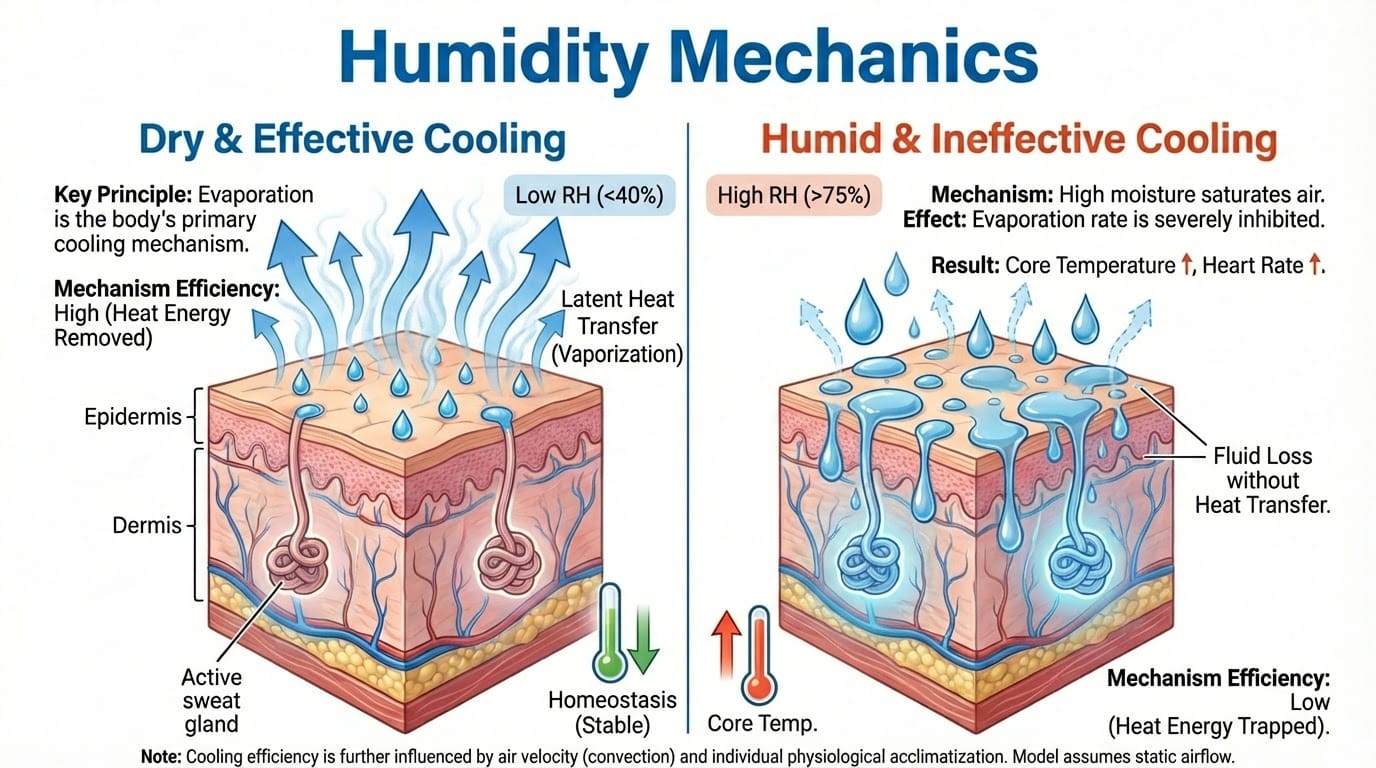
Related reading
Lever 3: Sodium replacement and where it helps
The data: sweat sodium losses can be large in salty, high-rate sweaters, with the most extreme documented cases in equipment-laden team-sport players losing amounts that are impractical to fully replace.
Modeling and trials separate two questions. Sodium supplementation can blunt the fall in blood sodium and may aid fluid retention and circulatory stability in long, hot events.
A randomized trial across an Ironman-distance race, however, found that salt supplements were not necessary to maintain blood sodium in athletes who were not overdrinking, and an ultramarathon study found no link between sodium intake and performance.
Where athletes tend to land: the athletes who benefit most from added sodium cluster among the salty, high-volume sweaters in prolonged heat, where depletion is real.
Across broader endurance populations the studied benefit of supplemental sodium on performance is small or absent, and the literature is consistent that sodium does not rescue an athlete who is drinking past their losses.
Method and a worked example
Most of what we know about individual fluid balance comes from a repeatable measurement structure, so it helps to see how those studies are built before watching one athlete move through it.
Method
- Weigh the athlete with minimal, consistent clothing immediately before exercise to fix a clean baseline body mass.
- Record every fluid taken in during the session, and note each urination, since both must be added back to isolate true sweat loss.
- Hold the exercise stimulus, intensity, duration, and environment as steady as the protocol allows, so the measured loss reflects known conditions.
- Weigh again immediately after, then compute net fluid loss as the mass change corrected for intake and urine, divided by exercise hours to give sweat rate.
- Repeat across several sessions spanning cooler and warmer conditions and different intensities, because a single trial captures one point on a moving distribution.
A composite case
Consider a generic endurance athlete, unnamed, preparing for a hot late-summer race. The first sweat-rate session lands in cool morning air and returns a comfortable looking number near one liter per hour.
Free calculator
Reading that as the whole truth was the early misstep, because it understated what the heat would later demand.
A second session in warmer conditions nearly doubled the figure, and the gap between the two readings was the first lesson: the distribution was wide, and one measurement was a poor summary of it.
The mid-block setback arrived during a long brick session in real heat. Acting on an old instinct to stay ahead of thirst, the athlete drank aggressively to a self-imposed schedule and finished heavier than at the start, faintly nauseated, with a dull headache.
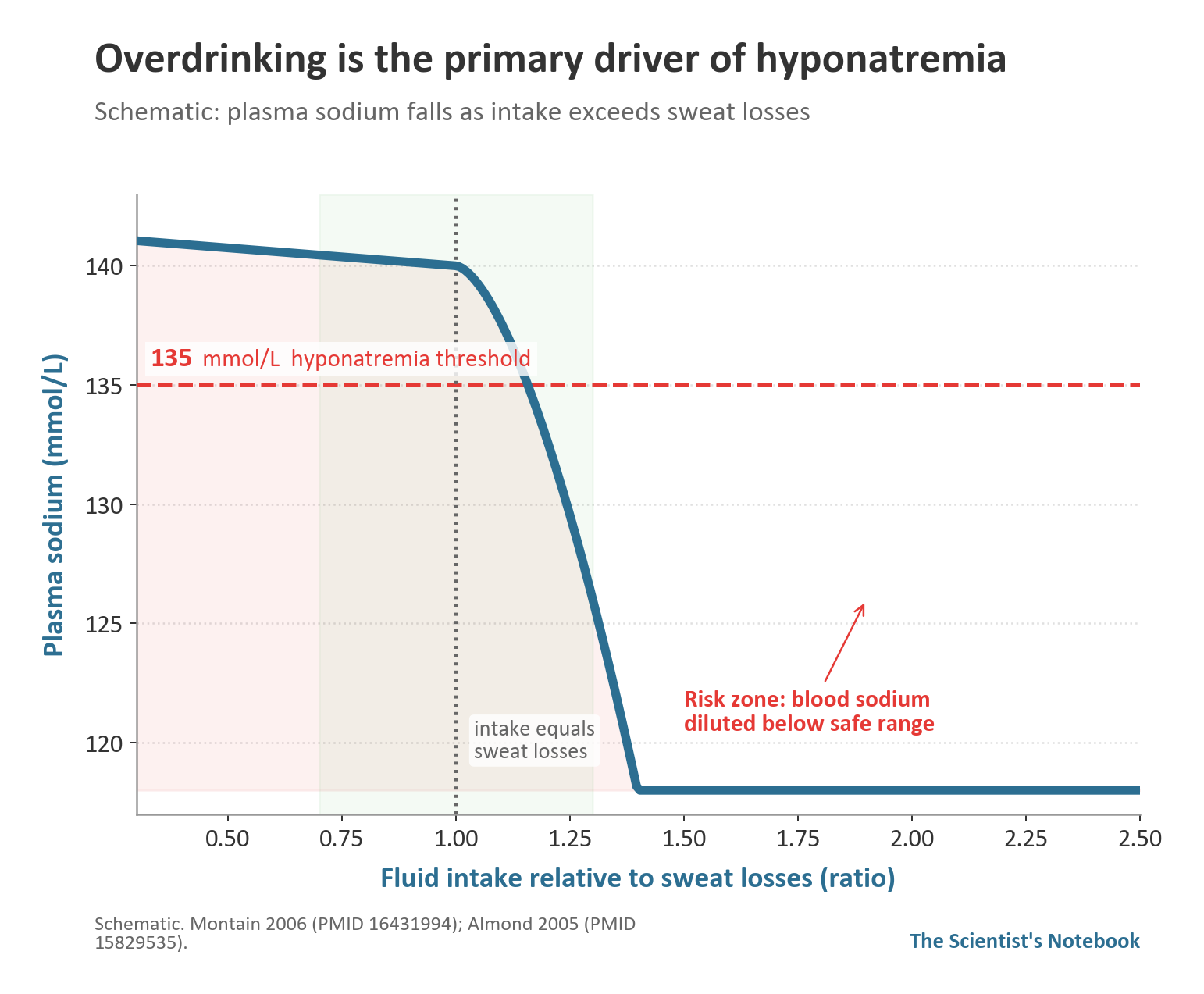
Nothing dangerous that day, but the weight gain signaled fluid moving in faster than it left. It was the textbook early warning of overhydration, and it reframed the goal from chasing maximal replacement toward respecting the body's own accounting.
The payoff was delayed and undramatic, which is how real adaptation usually looks.
Over the following weeks of consistent heat exposure the same effort produced sweat that felt less salt-crusted on the skin and a circulation that held steadier, the visible face of acclimatization lowering sweat sodium and expanding plasma volume.
By race week the athlete had stopped treating hydration as a single prescribed number and started treating thirst as the primary instrument, checked against the known range of sweat rates from testing. The composite point is not that one strategy won.
The useful knowledge was the personal distribution and the two-sided risk, learned through repetition rather than handed over as a rule.
Where this leaves us
Pulling these threads together, the picture that survives scrutiny is one of individuality bounded by a shared danger. Sweat rate and sweat sodium vary so much that population averages are nearly useless for any single athlete, which is why measurement beats memorized targets.
Dehydration imposes a real but contested performance tax, larger in the laboratory than in self-paced competition, and modest deficits appear to be tolerated and sometimes accompany the best field performances.
The asymmetry is the part I keep returning to. Underdrinking, within reason, tends to cost seconds. Overdrinking can cost a life.
Exercise-associated hyponatremia is uncommon, but it is a genuine medical emergency, driven mainly by taking in more fluid than the body sheds, sometimes amplified by hormone signals that hold water back when they should let it go.
That is why the shift toward drinking to thirst is more than a fashion. It steers athletes away from the dangerous edge while still individualizing intake, and it explains why salt is not a license to drink past one's losses.
If there is a single organizing idea, it is that the body already runs a sophisticated fluid-balance system around blood concentration, and the athlete's job is to inform that system rather than override it. Thirst is the readout most worth trusting for most efforts, with measured sweat data as context and respect for the rare but serious failure mode of dilution.
Best regards,
Dr. Thomas Mortelmans
Limits of Application: The studies behind this entry skew toward trained adults, often men, in marathon, triathlon, and laboratory cycling contexts, so the magnitudes may not transfer cleanly to women, youth, masters athletes, or very long multi-day events.
Thomas Mortelmans
Related reading
Sweat and sodium figures are population ranges, not personal values, and individual testing carries its own measurement error. Most importantly, exercise-associated hyponatremia is a medical condition whose recognition and treatment belong with qualified clinicians.
Nothing here is medical advice or a fluid plan for any individual. This entry informs how the science is understood.
It does not prescribe what to drink, how much, or when, and anyone with a history of hyponatremia or any concerning symptom during exercise should seek professional medical guidance.
References
- Baker LB. Sweating Rate and Sweat Sodium Concentration in Athletes: A Review of Methodology and Intra/Interindividual Variability. Sports Med. 2017. PMID 28332116. Documents how widely sweat rate and sweat sodium vary within and between athletes and how to measure them in the field.
- Baker LB, et al. Physiological mechanisms determining eccrine sweat composition. Eur J Appl Physiol. 2020. PMID 32124007. Explains how duct reabsorption of sodium sets final sweat composition and why it differs between individuals.
- Baker LB. Physiology of sweat gland function: The roles of sweating and sweat composition in human health. Temperature (Austin). 2019. PMID 31608304. Reviews sweat gland physiology, including why sweat sodium concentration is not a reliable proxy for hydration status.
- Hew-Butler T, et al. Statement of the 3rd International Exercise-Associated Hyponatremia Consensus Development Conference, Carlsbad, California, 2015. Br J Sports Med. 2015. PMID 26227507. Consensus framing of exercise-associated hyponatremia, its mechanisms, and prevention through avoiding overdrinking.
- Montain SJ, Cheuvront SN, Sawka MN. Exercise associated hyponatraemia: quantitative analysis to understand the aetiology. Br J Sports Med. 2006. PMID 16431994. A mathematical model showing overdrinking relative to sweat rate is the primary driver of hyponatremia, with salty sweat as a modifier.
- Goulet EDB. Effect of exercise-induced dehydration on time-trial exercise performance: a meta-analysis. Br J Sports Med. 2011. PMID 21454440. Finds that fluid deficits up to about four percent did not impair self-paced cycling, with intensity and duration dominating.
- Perreault-Briere M, et al. Effect of Thirst-Driven Fluid Intake on 1 H Cycling Time-Trial Performance in Trained Endurance Athletes. Sports (Basel). 2019. PMID 31615028. Reports no meaningful performance difference between no fluid, thirst-driven fluid, and programmed fluid over a one-hour trial.
- Deshayes TA, Pancrate T, Goulet EDB. Impact of dehydration on perceived exertion during endurance exercise: A systematic review with meta-analysis. J Exerc Sci Fit. 2022. PMID 35601980. Shows the effect of dehydration on perceived effort is unlikely to be meaningful until body-mass loss reaches about three percent.
- Hew-Butler T. Arginine vasopressin, fluid balance and exercise: is exercise-associated hyponatraemia a disorder of arginine vasopressin secretion? Sports Med. 2010. PMID 20524712. Details how inappropriate non-osmotic antidiuretic hormone secretion contributes to dilutional hyponatremia during exercise.
- Tyler CJ, et al. The Effects of Heat Adaptation on Physiology, Perception and Exercise Performance in the Heat: A Meta-Analysis. Sports Med. 2016. PMID 27106556. Quantifies heat-adaptation benefits, including lowered sweat sodium, expanded plasma volume, and improved cardiovascular stability.
- McDermott BP, et al. National Athletic Trainers' Association Position Statement: Fluid Replacement for the Physically Active. J Athl Train. 2017. PMID 28985128. Position statement balancing the risks of underhydration and overhydration and endorsing individualized fluid practices.
- Godek SF, et al. Sweat rates and fluid turnover in professional football players: a comparison of National Football League linemen and backs. J Athl Train. 2008. PMID 18345344. Documents very high sweat rates and substantial sodium losses in large equipment-laden athletes during heat.
- Hew-Butler TD, et al. Sodium supplementation is not required to maintain serum sodium concentrations during an Ironman triathlon. Br J Sports Med. 2006. PMID 16505084. A randomized trial finding ad libitum salt supplements were not needed to maintain blood sodium when athletes did not overdrink.
- Almond CSD, et al. Hyponatremia among runners in the Boston Marathon. N Engl J Med. 2005. PMID 15829535. Field study linking hyponatremia to weight gain, longer racing time, and body-mass-index extremes rather than to sodium intake.
- Seal AD, Kavouras SA. A review of risk factors and prevention strategies for exercise associated hyponatremia. Auton Neurosci. 2021. PMID 35016044. Summarizes hyponatremia risk factors, including hormone secretion, exercise duration, body mass, and anti-inflammatory drug use.
---
If you have 60 seconds, I would value your anonymous feedback. You can share it here.
---
Health disclaimer
This post discusses endurance-training science for educational purposes. It is not medical advice, not a diagnosis, and not a substitute for clinical care. Individual response to training, sleep deprivation, and multi-day exertion varies substantially, and what applies to a research cohort or a world-class athlete may not apply to you. Consult a qualified physician, sports medicine specialist, or registered dietitian before changing your training, fuelling, or sleep strategy if you have a cardiovascular, metabolic, psychiatric, or sleep-related condition; are recovering from injury or illness; are pregnant; are on medication that affects heart rate, hydration, glucose regulation, or sleep; or have concerns about exercise tolerance. Ultra-endurance events impose real physiological and psychological loads. Persistent chest pain, fainting, acute confusion beyond the predictable late-race window, severe dehydration, sustained loss of coordination, or any mental-health symptoms that outlast the immediate post-event dip warrant professional care and are not signals to push through. No outcome is guaranteed. The protocols, anchors, and case material in this post are descriptive, drawn from peer-reviewed evidence and a guest contributor's lived experience, and should be treated as inputs to an informed conversation with your own coach and clinicians, not as prescriptions.
Keep going
Carbohydrate per hour depends on duration and intensity together, not on a single number. Gradescale works it out from your own race profile.
Training plans built on the same evidence base:
Thomas MortelmansJoin our Discord community:
Thomas MortelmansFound this useful?
Get articles like this and free training calculators in your inbox every week.
Recommended reads
If this was useful, these are the other research-driven newsletters I actually read.
Member discussion