Snippet #037: Fasted Training and the Fat-Oxidation Shift
Starting an exercise session with low carbohydrate availability, such as a fasted morning ride, shifts the body away from burning
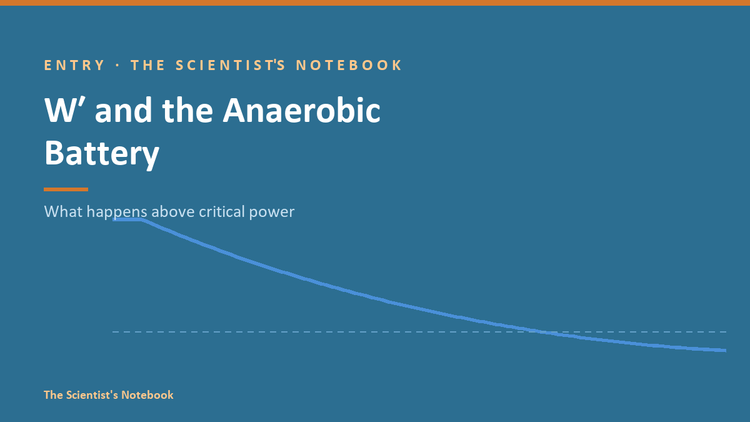
Entry #039: W′ and the Anaerobic Battery: What Happens Above Critical Power
There is a moment in almost every hard race where the body stops feeling like it belongs to you. The
Snippet #036: When the Gut Wall Cracks Under Heat and Effort
During prolonged or intense exercise, especially in the heat, blood is redirected away from the digestive tract toward working muscles.
Entry #038: Heart Rate Variability for Endurance Athletes: What It Measures, When It Helps, and Where It Is Just Noise
You wake up, reach for your phone, and lie still for sixty seconds while a strap or a camera lens
Snippet #035: Phosphocreatine: The Muscle's Instant ATP Battery
Creatine accumulates in muscle mainly as phosphocreatine (PCr), a high-energy compound that rapidly re-donates a phosphate group to
The athletes at the end of the alphabet
Bruna Maia is a runner, a data scientist and an electrical engineer. She played tennis at international level for a
Entry #037: The Hydration Line: Sweat Rate, Sodium, and Why Overdrinking Is the Dangerous Mistake
A few summers ago I weighed two athletes on the same scale, before and after the same two-hour ride,
Snippet #034: Minutes Near the Ceiling: Why Time at VO2max Shapes Aerobic Adaptation
VO2max is the ceiling rate at which the body can use oxygen to fuel muscle. The data show that accumulating
Entry #036: Nitrate, Bicarbonate, Beta-Alanine: The Big Three, and Where Each One Actually Helps
There is a shelf in my pantry that tells a small, slightly embarrassing story about endurance science. A purple bottle
Snippet #033: What Your Muscle Oxygen Sensor Is Actually Reading
Near-infrared spectroscopy (NIRS) shines near-infrared light through skin into muscle and reads how much hemoglobin and myoglobin is